Agent-Native
GitHub
A new open-source framework called Agent-Native lets devs write one action that works as UI, API, CLI, and AI agent tool. No more building separate versions for humans and bots.
Based on reporting by GitHub — read the original for the full story.
Summary, retelling and take written by AI under human oversight; images are AI-generated illustrations. How we work · Report an error
Every developer who's tried to bolt an AI agent onto an existing app knows the pain: you write your business logic once for the UI, then rewrite it again for the API, then again for whatever tool-calling format your agent framework demands. Agent-Native, a new open-source framework, is betting that this duplication is unnecessary and, frankly, a waste of everyone's time.
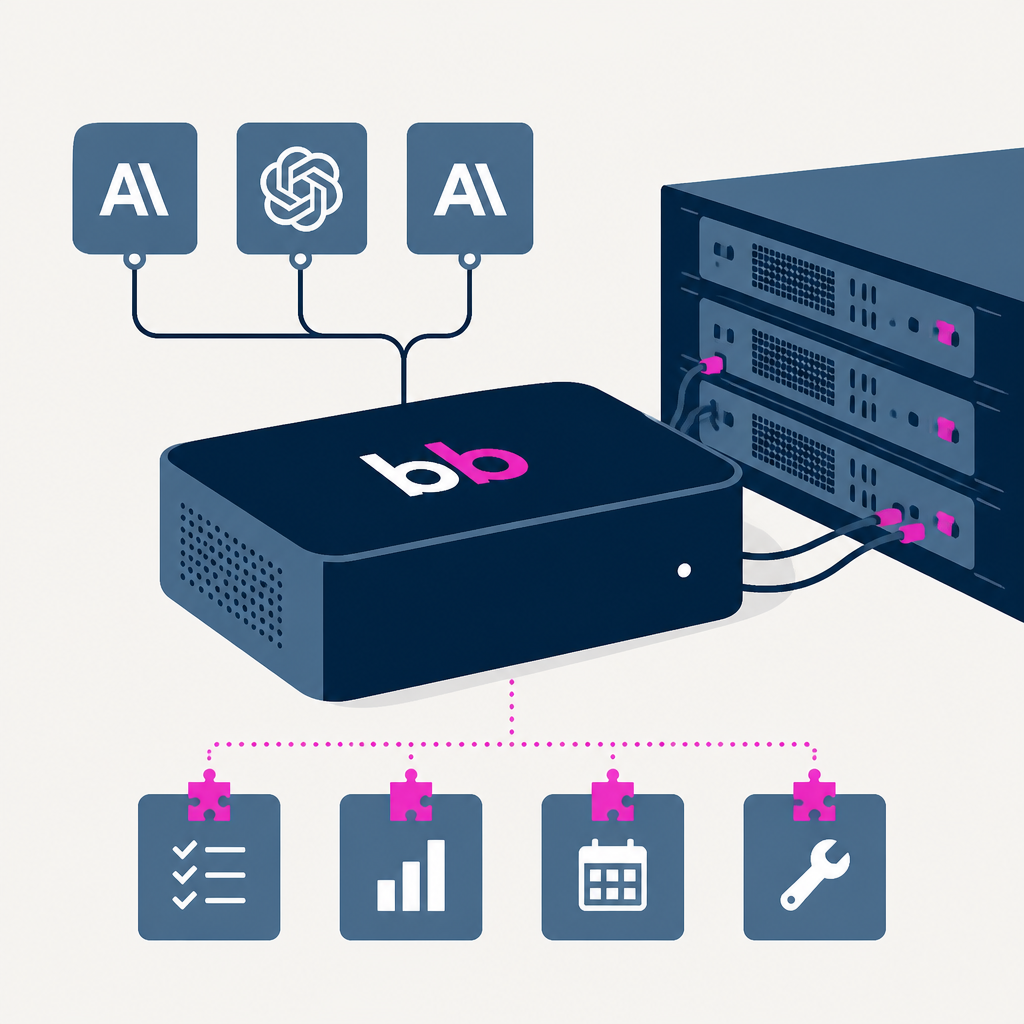
The core idea is simple. You define a single action — say, replying to an email — with a schema and a run function, using familiar tools like Zod for validation and Drizzle for the database layer. That one definition then becomes usable from six different surfaces: a web UI, an HTTP endpoint, a CLI command, an AI agent's tool call, MCP (Model Context Protocol), and A2A (agent-to-agent) communication. Write it once, and both your human users and your AI agents can call it.
Beyond the action system, the framework bundles a full agent runtime out of the box: chat interfaces, tool access, skills, memory, background jobs, observability, and handoffs between agents. It's backend agnostic, so any SQL database supported by Drizzle and any host compatible with Nitro should work. There's also a set of reusable toolkits for things like team collaboration, sharing permissions, and settings screens, so builders aren't reinventing plumbing that every multi-user app needs anyway.
To prove the concept isn't just theoretical, the team shipped a gallery of working templates: a Figma-like collaborative design tool, a Notion/Obsidian-style content editor, an open-source alternative to Amplitude and FullStory for analytics, and a minimal ChatGPT-style chat app. The pitch is that you start from one of these, then let an agent modify and extend it live — customizing the app by talking to it rather than hand-coding every change.
Getting started takes one command — npx @agent-native/core@latest create my-app — with flags for templates, headless mode, or standalone setups. The project is MIT-licensed, has docs at agent-native.com, and runs an active Discord for people building on it, which suggests this is aiming to be more than a weekend side project.
My take — AI-written commentary, not fact-checked reporting
This is the right instinct — the split between 'apps for humans' and 'tools for agents' was always going to collapse into one abstraction, and I'd rather see it happen in an open, MIT-licensed framework than locked inside some vendor's proprietary agent platform. The real test is whether backend-agnostic and framework-agnostic claims hold up once people try to bolt this onto messy, existing codebases instead of greenfield demos.
Read more about this at: GitHub