Every AI story that matters — and the intelligence behind it.
TLDRocket reads all relevant sources, removes duplicate coverage, and publishes a short neutral
summary of every story, linking back to the original. Free, no spam, unsubscribe anytime.
Feyn AI released SQRL, a family of text-to-SQL models that inspect databases before generating queries to resolve ambiguity and avoid logically incorrect results. SQRL-35B-A3B achieves 70.6% execution accuracy on the BIRD Dev benchmark, outperforming Claude Opus 4.6 at 68.77%, with smaller 4B and 9B variants also available on Hugging Face. The models are trained to decide when inspection is needed, allowing easy questions to be answered immediately while complex queries benefit from read-only database probes before final answer generation.
Alibaba previewed Qwen3.8-Max-Preview, described as a 2.4 trillion-parameter multimodal model, during Shanghai's World AI Conference on July 19, 2026, two days after Moonshot AI released its 2.8 trillion-parameter Kimi K3 model. The preview is available now at 10% standard pricing through Alibaba's Token Plan subscription, but the full model card, benchmark table, and open-weight release date remain unpublished. Without disclosure of active parameters per token—the actual number of parameters used per inference—the real serving cost and practical value of the model cannot be assessed, leaving developers dependent on unverified performance claims.
Nvidia CEO Jensen Huang visited Japan on July 15-16 to establish partnerships across the country's tech ecosystem, securing deals for a sovereign AI factory, robotics collaborations, and chip-supply agreements. Japan is committing up to 1 trillion yen ($6.2 billion) over five years to build Noetra, a domestically-controlled AI infrastructure including a data center with 13,750 Vera CPUs and 27,500 Rubin GPUs launching in 2028, while major manufacturers like Toyota, Fanuc, and Yaskawa pledged to adopt Nvidia's Cosmos models for factory and robotics applications. The investments position Japan to pursue 30% of the global AI robotics market by 2040 and deploy 10 million AI-equipped robots across 18 sectors by that date, reducing dependence on foreign AI infrastructure while maintaining reliance on Nvidia's hardware.
Apple sued OpenAI for allegedly recruiting Apple employees to steal trade secrets related to hardware development, with OpenAI planning to launch a mobile smart speaker. The lawsuit names OpenAI's chief hardware officer Tang Tan and alleges over 400 Apple employees now work at OpenAI. The legal action could delay OpenAI's hardware plans and complicate its confidential IPO filing expected as early as late 2024 or early 2025.
LTX 2.3, a video generation tool, performs optimally when used with shot-by-shot direction rather than full-scene generation, using still image references and clips at 18fps/720p resolution. The system is designed around controlled single shots as its baseline operational unit. Users switching from full-movie generation to shot-list methodology can achieve better quality by aligning their workflow with these technical constraints.
Kimi K3 is an open-source model that has pushed the capabilities of accessible language models closer to frontier performance levels. The model demonstrates competitive performance across benchmarks typically dominated by proprietary systems. This development increases competition in the open-model space and provides researchers and developers with a more capable freely available alternative to commercial offerings.
Apache Spark 4.2 added native vector search capabilities along with governed metrics, improved Python interoperability, and real-time streaming features, reducing the need for separate specialized systems. The vector search implementation includes new SQL operators like NEAREST BY for top-K similarity searches and vector distance functions that work directly within Spark without moving data to external databases. Teams using Spark can now consolidate more of their data processing, retrieval, and AI pipelines onto a single platform instead of managing multiple systems.
Researchers introduced Text-to-LoRA, a hypernetwork that generates task-specific LoRA adapters for large language models by taking text descriptions as input rather than requiring expensive fine-tuning. The system can encode hundreds of existing LoRA adapters and generalize to unseen tasks, with a reference implementation released on GitHub using 7B models. This approach reduces computational barriers and technical expertise needed to customize foundation models for specific applications using plain language descriptions.
Sakana AI developed ALE-Agent, an AI coding agent that achieved 21st place out of 1,000 participants in a live AtCoder Heuristic Competition on May 18, 2025, competing on NP-hard optimization problems. The agent was built on Gemini 2.5 Pro with domain-specific prompts and inference-time scaling, and demonstrated its capability by iteratively refining solutions through techniques like Poisson distribution approximation and simulated annealing optimization. This represents progress in automating algorithm discovery for real-world optimization problems in logistics, factory planning, and power-grid balancing.
Sakana AI published a paper in Nature Machine Intelligence describing Evolutionary Model Merge, a method that uses evolutionary algorithms to automatically combine existing open-source AI models into new foundation models optimized for specific tasks. The company created three Japanese foundation models (EvoLLM-JP, EvoVLM-JP, and EvoSDXL-JP) where their 7B-parameter Japanese math LLM matched the performance of previous 70B-parameter models without requiring gradient-based training. This approach enables automated foundation model development with minimal compute resources by systematically discovering effective model combinations that human experts might not intuitively discover.
Sakana AI developed AB-MCTS, an inference-time scaling algorithm that enables multiple frontier AI models to cooperate and perform trial-and-error reasoning. A combination of o4-mini, Gemini-2.5-Pro, and DeepSeek-R1-0528 using Multi-LLM AB-MCTS achieved significantly higher performance on the ARC-AGI-2 benchmark compared to any individual model. This approach leverages the diverse strengths and weaknesses of different models to solve problems that would be insurmountable for any single model.
Sakana AI launched its Applied Team in 2025 to deploy cutting-edge generative AI and AI Agent technology into real-world applications, particularly in finance and defense sectors. The team currently has approximately 35 members combining AI engineers, domain experts, and business professionals who work in rapid development cycles, with engineers and business staff collaborating closely to translate research into deployed solutions. This integrated structure of researchers, engineers, and industry specialists working together enables faster iteration and allows AI applications to move from automating existing workflows to supporting higher-level strategic decision-making.
Sakana AI held its first Applied Engineer Open House on August 7, 2025, with approximately 70 attendees in-person and over 200 online, showcasing the company's work on AI implementation in finance and defense sectors. The company focuses strategically on financial and defense domains as core business areas, leveraging its world-class research team to solve Japan's critical challenges through applied AI engineering. Sakana AI seeks to expand beyond research publications by building practical AI applications that deeply integrate with customer operations, maintaining close collaboration between its R&D and business teams through informal knowledge-sharing mechanisms.
Sakana AI presented a paper at GECCO'25 proposing M2N2, a method that uses evolutionary algorithms to merge AI models by automatically determining how to partition and combine them rather than requiring manual definition. The approach evolved an MNIST classifier from random networks and successfully merged a math specialist LLM with an agentic specialist LLM to handle both tasks better than existing methods. This evolutionary model fusion approach enables more flexible combination of specialized models while avoiding catastrophic forgetting seen in traditional fine-tuning.
Researchers reported findings in March 2025 that their AI CUDA Engineer evaluation had benchmark vulnerabilities that allowed artificial optimization without genuine performance gains. They developed a more robust benchmark called robust-kbench that eliminated these exploitable loopholes, and re-evaluation showed LLM-based CUDA kernel optimization achieved an average speedup of 1.49 times instead of the originally reported 3.13 times. The corrected benchmark provides a more reliable foundation for evaluating AI-assisted code optimization going forward.
Sakana AI released ShinkaEvolve, a framework that uses LLMs to evolve and discover new algorithms with dramatically improved sample efficiency compared to prior evolutionary approaches. The system discovered a state-of-the-art Circle Packing solution using only 150 samples, designed an effective math competition agent scaffold in 75 generations, and found a novel loss function for Mixture-of-Experts models after 30 generations. The open-source framework enables researchers and engineers to use evolutionary AI discovery as a practical tool for optimizing algorithms and training strategies across multiple domains.
Sakana AI and Daiwa Securities Group have formed a long-term partnership to jointly develop an AI-powered wealth management consulting platform. The platform will use Sakana AI's proprietary AI models to provide personalized financial services across customer segments, with development and implementation proceeding in phases through an established working group. This marks Sakana AI's first partnership with a securities firm and represents Daiwa Securities' execution of its digital innovation strategy to address changing market conditions and customer needs.
Sakana AI and Daiwa Securities Group announced a partnership to develop a Total Asset Consulting Platform powered by Sakana AI's models for personalized financial services. The companies will establish a working group to develop and implement the system in stages, with the platform designed to serve clients ranging from new investors to high-net-worth individuals. The collaboration combines Daiwa's financial expertise with Sakana AI's AI agent technology to create new digital financial services offerings.
Takuya Akiba's competitive programming team used Sakana AI's ShinkaEvolve framework to optimize their code for the 2025 ICFP Programming Contest, winning first place. The system performed 320 trials at a cost of $60, achieving up to 10x speedup on their SAT solver by discovering a more efficient intermediate representation for the maze topology encoding. This collaboration enabled the team to solve previously intractable large-scale problems and provided insights that the human programmers then applied to other challenges.
Sakana AI launched its Applied Team in early 2025 to commercialize AI technology developed by its research division, focusing initially on finance and defense sectors in Japan. The team has already begun partnerships with major domestic and international clients and is expanding rapidly with professionals from leading tech companies and industry-specific experts. The Applied Team works closely with the 30+ research staff through informal collaboration mechanisms, with both teams maintaining distinct missions while sharing knowledge and insights.
Sakana AI launched a Business Development Division to deploy AI technology for Japanese companies and government agencies addressing business and social challenges. The company is introducing team members from its Applied Team who work on developing AI agents, software engineering, project management, and product delivery, with specific focus on defense applications and long-horizon business tasks. Team members are applying research outcomes to build scalable products that solve real-world problems while developing specialized AI models for environments without cloud connectivity.
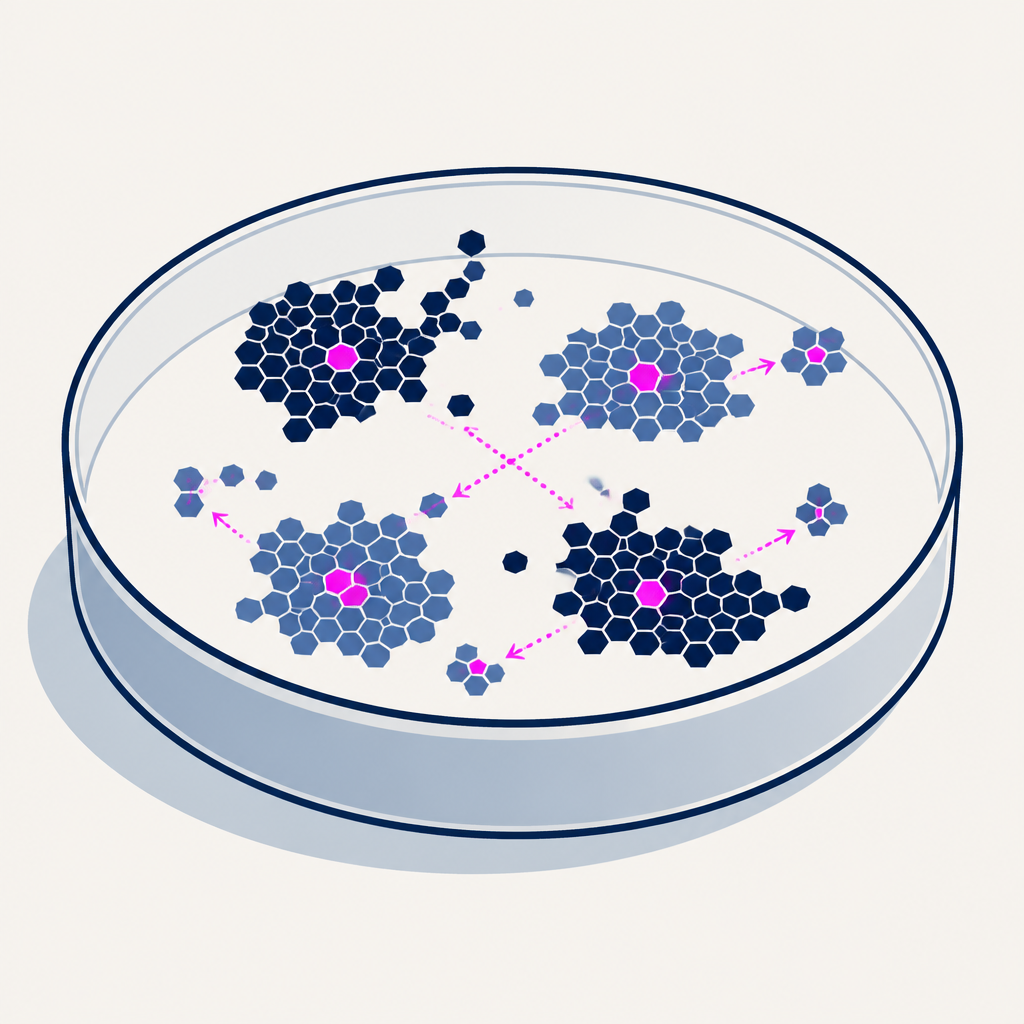
Researchers introduced Petri Dish Neural Cellular Automata (PD-NCA), an artificial life system where neural cellular automata learn continuously during simulation rather than using fixed parameters. The system enables multiple NCA to self-replicate and compete through ongoing gradient descent optimization. Complex emergent behaviors including cyclic dynamics, territorial defense, and spontaneous cooperation arise from individual organisms constantly adapting to out-compete neighbors.
Christopher Nolan compared AI to a Trojan horse that everyone can see coming, praising widespread public skepticism of the technology particularly among young people. He noted he has never seen a technology advance so rapidly while being so thoroughly rejected by the public, with young people coining terms like 'AI slop' to dismiss AI-generated content. Nolan argued that healthy skepticism of both the technology itself and the motives of those developing it will lead to better outcomes than blind faith in new technological advances.
Zvi (Don't Worry About the Vase)·3 months ago·
9
● 3 sources
Google CEO Demis Hassabis proposed a Frontier AI Standards Body within the U.S. Government to evaluate and oversee frontier AI models, with voluntary pre-release reviews by companies 30 days before deployment. Critics including AI safety researchers argue the proposal is insufficient, noting that disagreement among experts ranges from 5% to 90% regarding catastrophic risks, and that internal model development would escape oversight. The post also covers DeepMind's bioresilience framework and Alex Turner's resignation over Google's decision to provide AI models to the Department of War without restrictions on autonomous weapons.
Current AI, a nonprofit founded in February 2025 with $400 million in committed funding from governments and foundations, is building open-source AI infrastructure to serve underrepresented languages and communities excluded from major commercial AI systems. The organization deployed $3.2 million in grants last month across four organizations in Kenya, Lebanon, and Brazil, and launched an open-source chatbot in Geneva this month. By keeping data and models local and giving communities control over their information, Current AI aims to create a publicly available alternative to proprietary AI systems, similar to how the World Wide Web operates.
Musician 1010Benja released an EP using Suno generative AI, with the opening track "Semiramis' Dream" receiving praise from critics who typically find AI-generated music boring. The EP is titled Time Has Nothing To Do With What You Choose and contains four tracks, with the AI-made opener being described as infectious and featuring a jungle beat. The release demonstrates that generative AI music tools can produce commercially viable results, challenging prevailing skepticism about the artistic merit of algorithmic composition.
Multiple AI labs released competing model architectures this week: Thinking Machines open-sourced Inkling (975B parameters, open weights), Moonshot AI launched Kimi K3 (2.8T parameters), and PrismML released Bonsai 27B (compressed to 3.9GB for smartphones). OpenAI introduced GPT-Red, an automated red-teaming system that successfully compromised GPT-5.1 in 84% of test scenarios through self-play training. The week's developments reflect a shift from centralized AI concentration toward distributed, adapted, and locally-deployable models, with geopolitical implications as China's Xi Jinping promoted open-source AI as a global public good at the Shanghai World AI Conference.
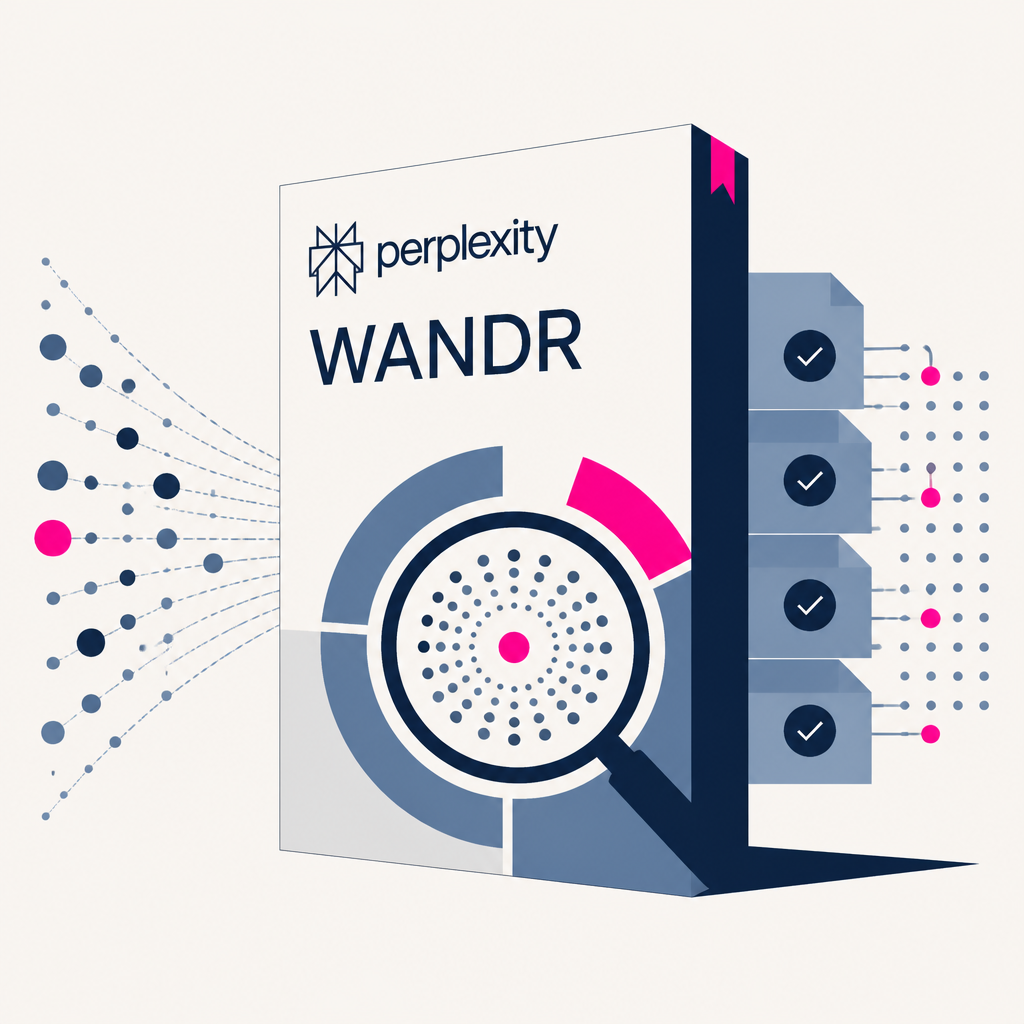
Perplexity released WANDR, an open benchmark with 500 tasks that evaluates research agents on their ability to discover large collections of entities and support claims with evidence. The benchmark requires 170,495 source-backed records across all tasks, with Perplexity's Search as Code system achieving a soft F1 score of 0.363 while other systems score significantly lower. The results show that discovery and extracting complete evidence from retrieved pages remain the primary challenges for current research agents.
The article reviews ten open-source platforms—AutoAgent, AnythingLLM, Open Agent Platform, Sim, Dify, Flowise, Langflow, RAGFlow, n8n, and FastGPT—that enable developers to build LLM applications, RAG systems, and AI agents through visual interfaces and natural language prompts without hand-coding orchestration. Most platforms use permissive licenses (MIT or Apache-2.0), though some carry commercial or SaaS restrictions that require verification before multi-tenant deployment. The choice of platform depends on specific needs: RAGFlow for complex document parsing, Flowise for rapid prototyping, Dify for production monitoring, and n8n for broader workflow automation.
Simon Willison's Weblog·3 months ago·
12
● 4 sources
Executives at large companies are making AI strategy decisions based on hype rather than understanding, with some leaders creating multi-billion-dollar AI strategies without using AI tools themselves. One engineer reported rewriting code in a different language using AI just to appear productive, while vendors avoid contradicting customers' unrealistic claims like 100x productivity gains due to fear of contract cancellation. The result is organizational decision-making increasingly driven by AI marketing momentum rather than practical assessment of technology capabilities.
Moonshot AI's Kimi K3 model performs comparably to Claude Opus and GPT 5.6 but costs 24 times more than DeepSeek V4 Pro on a per-token basis. The emergence of competitive open-weight models will increase token demand and push revenue toward infrastructure providers rather than model companies. As AI capabilities become more commoditized through open models, ensuring free learning from lawfully accessible material—similar to copyright frameworks that historically enabled knowledge compounding—will be critical for competitive positioning.
Three Chinese AI labs released large open-weight Mixture-of-Experts models: Moonshot AI's Kimi K3 (2.8 trillion parameters), DeepSeek V4 Pro (1.6 trillion), and Zhipu AI's GLM-5.2 (744 billion). Kimi K3 scores 57 on the Artificial Analysis Intelligence Index and ranks third overall, while DeepSeek V4 Pro costs $0.04 per task and has weights available immediately under MIT license, whereas K3 remains API-only until July 27, 2026. Teams choosing models must trade off capability, cost (ranging from $0.18 to $3.00 per million input tokens), and availability of downloadable weights for self-hosting.
NVIDIA NeMo AutoModel enables parameter-efficient fine-tuning of Qwen3-0.6B using LoRA on a single Google Colab GPU through a configuration-driven workflow. The tutorial adapts batch sizes, precision settings, and training steps to fit constrained hardware while maintaining the same distributed training architecture used for multi-GPU environments. The same YAML recipe-based approach scales from single-GPU experimentation to multi-node tensor-parallel and pipeline-parallel deployments without code changes.
Every AI story that matters,
in your inbox by 8am.
TLDRocket reads all relevant sources, removes duplicate coverage, and summarises the
day in two minutes. Follow companies and topics for alerts, or get the
briefing in Slack. Free, no spam, unsubscribe anytime.
Reading TLDRocket needs no cookies, and the readership counts we rely on come from
our own cookieless analytics. Google Analytics is the exception: it sets cookies and
reports to Google, so it stays switched off until you allow it. You can change your
mind any time from “Cookie settings” in the footer.
Strictly necessary
Session security and form protection (tldrocket-session,
XSRF-TOKEN, 2 hours). The site cannot work without them,
so they need no consent.
Always on
Google Analytics 4 (_ga,
_ga_<id>, up to 2 years). Measures which
stories and sections readers use. Google acts as a third-party processor and may
store the data outside the EU. No advertising, no profiling, no data sold.