Competition and Attraction Improve Model Fusion
Sakana AI ● Covered by 3 sources
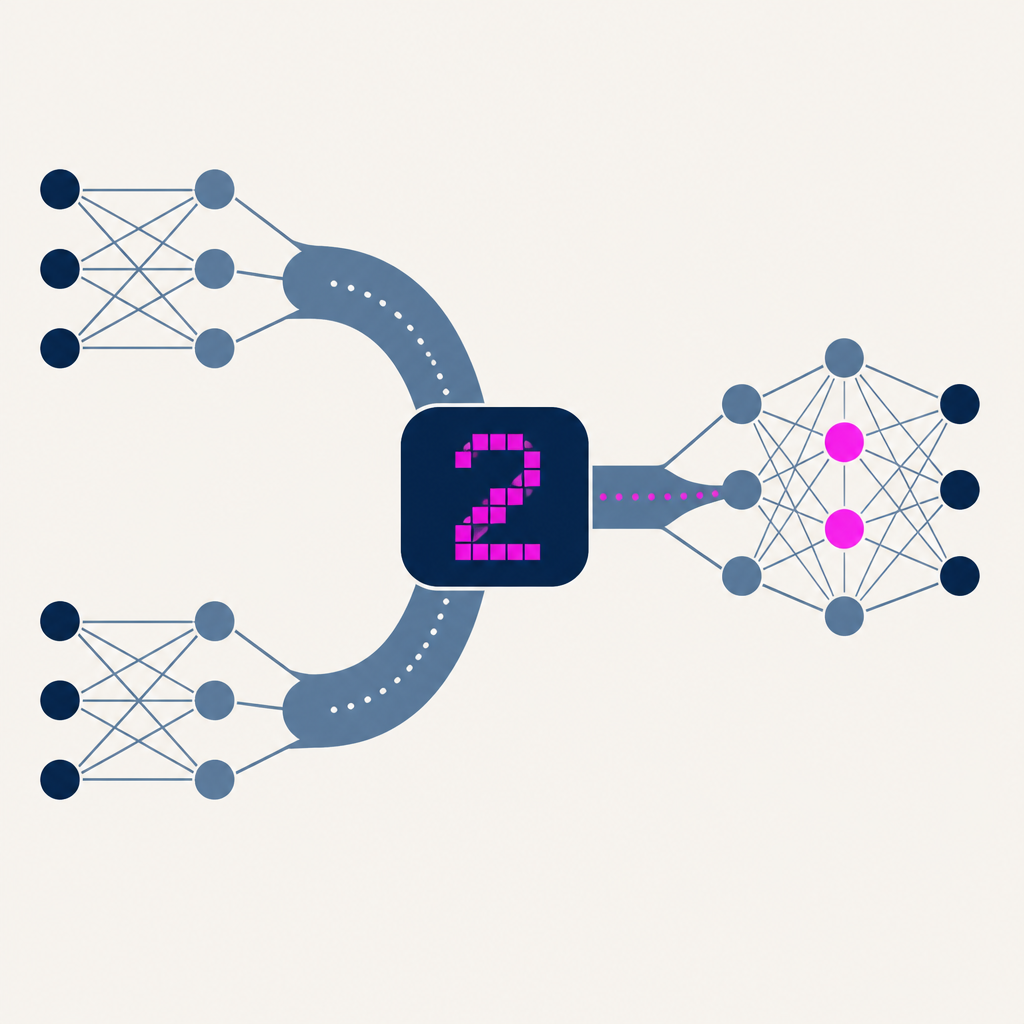
Sakana AI built a system that merges AI models using evolution-style competition instead of manual rules. It's the first time model merging evolved networks from scratch, and it beat other methods on math, shopping and image tasks.
Based on reporting by Sakana AI — read the original for the full story.
Summary, retelling and take written by AI under human oversight; images are AI-generated illustrations. How we work · Report an error
Sakana AI has a new paper out, and it's a bit of a departure from just making bigger models. The paper, called "Competition and Attraction Improve Model Fusion," was presented at GECCO'25 and landed as a runner-up for best paper. The core idea borrows from biology: instead of building one giant monolithic AI, let a bunch of specialized models compete, combine, and evolve, the way organisms do in an ecosystem.
The method is called M2N2, short for Model Merging of Natural Niches. It builds on two earlier Sakana projects, one on using evolution to find good merging recipes (published in Nature Machine Intelligence) and another on preserving diversity while acquiring new skills in LLMs (from ICLR 2025). Previous merging techniques had a real limitation: someone had to manually decide how to split models apart, by layer or by block, before merging them. M2N2 removes that manual step and lets the split points emerge through evolution itself.
The results Sakana points to are notable for a specific reason: this is the first time model merging has been used to evolve networks entirely from scratch, rather than combining models that already exist. In one test, M2N2 started from random networks and evolved an MNIST classifier that matched CMA-ES in performance while using far less compute. That's a different kind of proof point than just merging two strong pretrained models together.
But M2N2 also works at larger scale. Sakana merged a math-specialist LLM with an agentic-specialist LLM and got a combined model that handled both math problems and web shopping tasks well, outperforming other merging methods in the process. The flexible splitting was apparently the key ingredient there. A similar trick showed up with text-to-image models: when Sakana adapted several models for Japanese prompts and merged them with M2N2, the result got better at Japanese without losing its English ability, sidestepping the catastrophic forgetting that plain fine-tuning tends to cause.
Sakana frames all this as part of a bigger bet that AI's future looks less like one enormous model and more like a colony of specialized ones that cooperate and combine traits. Whether that vision scales past research demos is still an open question, but the underlying method, letting evolution decide how models fit together rather than dictating it by hand, is a genuinely different lever to pull.
My take — AI-written commentary, not fact-checked reporting
Model merging has mostly been a manual, fiddly process, so automating the split points with evolutionary competition is a smart unlock rather than just an incremental tweak. The math-plus-agentic-LLM result matters more than the MNIST demo, since it shows the approach scaling to models people actually use, not just toy networks. Sakana's broader pitch, that ecosystems of specialized models beat one giant model, is exactly the kind of counter-narrative the industry needs more of right now, given how much money is being poured into scaling single monolithic systems instead of cheaper, more efficient combinations of existing ones.
Read more about this at: Sakana AI