Text-to-LoRA: Instant Transformer Adaption
Sakana AI ● Covered by 2 sources
Sakana AI built a system that generates custom LLM adapters just from a text description of the task, no training data needed. That means anyone could specialize an AI model in seconds, just by typing what they want.
Based on reporting by Sakana AI — read the original for the full story.
Summary, retelling and take written by AI under human oversight; images are AI-generated illustrations. How we work · Report an error
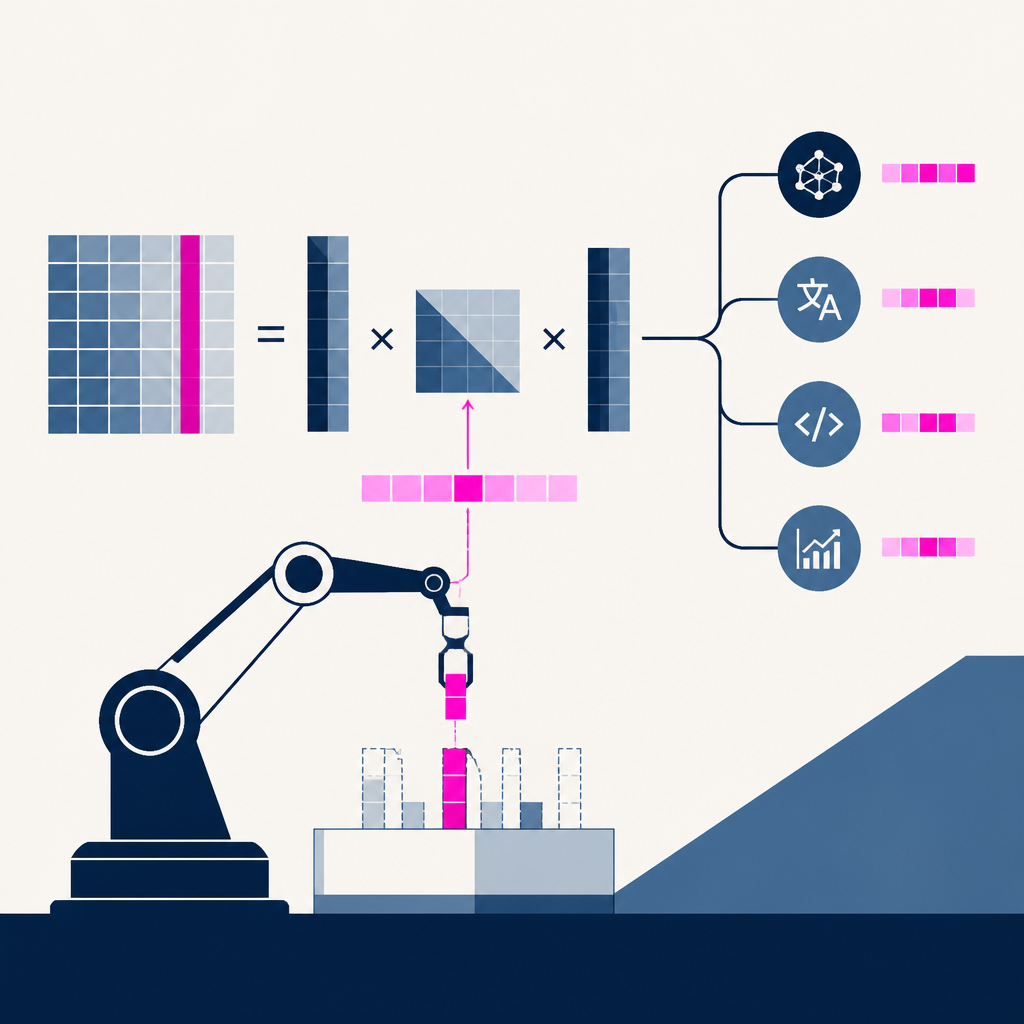
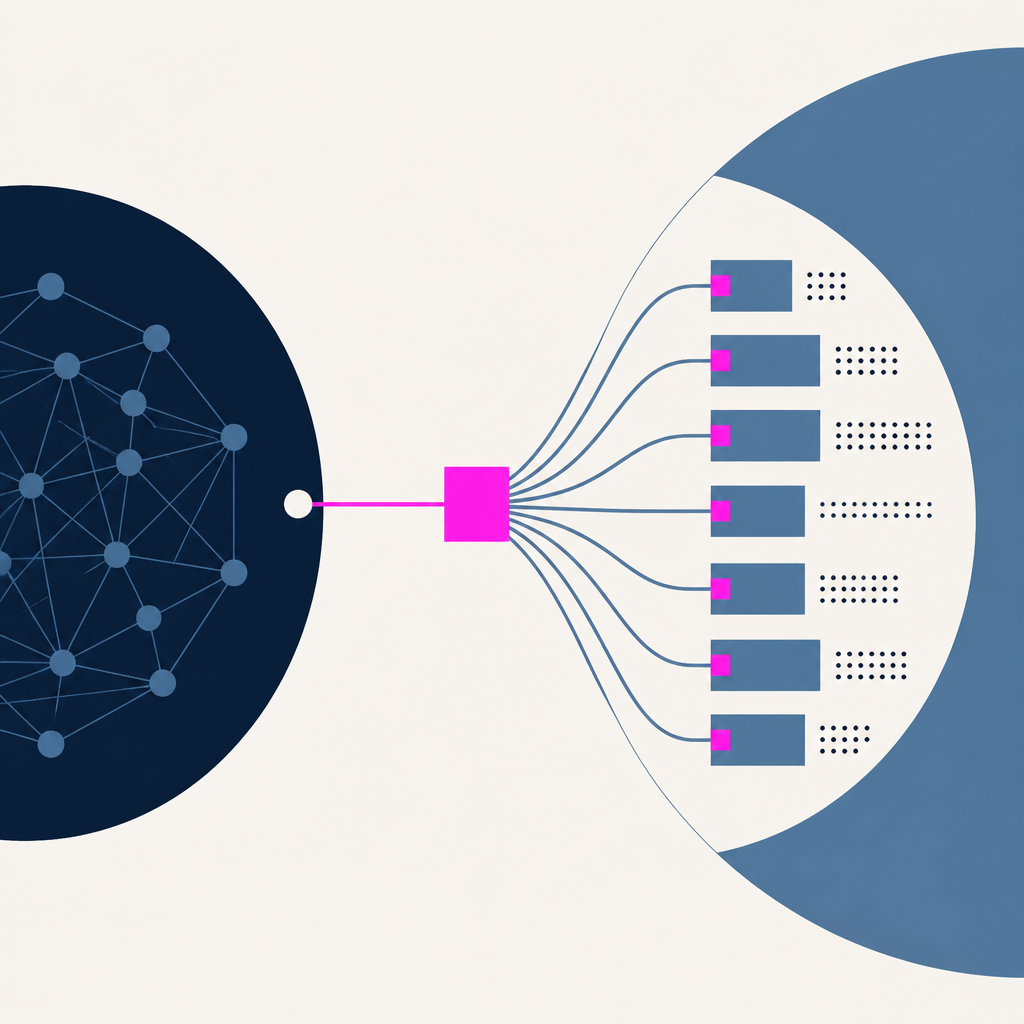
Sakana AI's latest project has a clunky name, Text-to-LoRA, but a pretty elegant idea underneath. LoRAs, or low-rank adapters, are the small bolt-on modules people use to specialize a big language model without retraining the whole thing. Normally you still need a dataset and a training run to make one. Sakana's hypernetwork skips that step entirely: feed it a plain-language description of a task, and it spits out a working LoRA in a single forward pass.
The team trained this hypernetwork on hundreds of existing LoRA adapters, essentially teaching it the mapping between task descriptions and the weight patterns that solve them. The compression is lossy, they admit, so a generated adapter won't always match the performance of one painstakingly fine-tuned for that exact job. But in their tests it comes close enough, and it holds up even on tasks the hypernetwork never saw during training, as long as you can describe the task in words.
What makes this notable isn't raw performance, it's speed and accessibility. Producing a task-specific adapter the old way means gathering examples, setting up a training pipeline, and burning compute for hours. T2L collapses that into one cheap inference step. Sakana is pitching this as a way to let people without machine learning backgrounds customize foundation models just by typing a sentence, rather than hiring an engineer or renting a GPU cluster.
They've backed the ICML2025 paper with a working proof of concept on GitHub, running locally on 7B-parameter models with a chat interface. It's small enough to poke at on a laptop, which is presumably the point, showing this isn't just a theoretical trick but something you can try today.
My take — AI-written commentary, not fact-checked reporting
I like this because it attacks the actual bottleneck in LLM customization, which has never been model capability, it's been the friction of fine-tuning. If a hypernetwork can turn a sentence into a usable adapter, that's a real democratization step, not just a research curiosity. Lossy compression means it won't replace serious fine-tuning jobs anytime soon, but for the long tail of small, specific use cases, this could quietly become the default way normal people shape models.
Read more about this at: Sakana AI