Feyn AI Releases SQRL, a Text-to-SQL Model Family That Inspects the Database Before Writing a Query
MarkTechPost Asif Razzaq
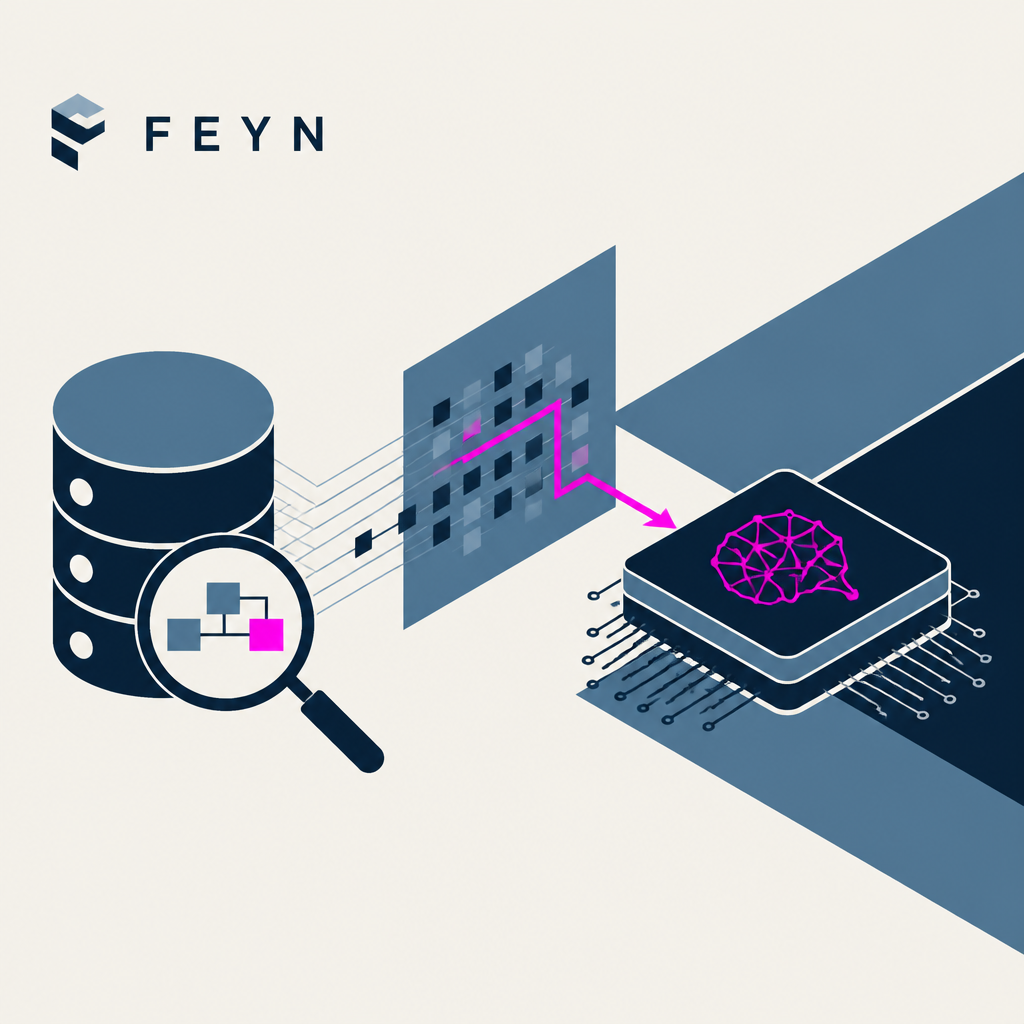
Feyn AI's new SQRL models check the database before writing SQL, instead of guessing blind. Its 35B version beats Claude Opus 4.6 on accuracy, and a 4B version small enough to self-host ties it.
Based on reporting by MarkTechPost, Asif Razzaq — read the original for the full story.
Summary, retelling and take written by AI under human oversight; images are AI-generated illustrations. How we work · Report an error
Text-to-SQL has always been sold as a translation problem: take English, spit out SQL. Feyn AI, a YC-backed startup, thinks that framing is the whole reason these systems keep failing in quiet, unglamorous ways. A query can run perfectly, return rows, throw no errors, and still be wrong — because it joined the wrong tables or assumed "Alameda" and "Alameda County" mean the same thing. A schema can't tell you that. Only the actual data can.
So Feyn built SQRL, a family of three models (4B, 9B, and a 35B mixture-of-experts that only activates about 3B parameters per token) that can pause and look before answering. Given a question and a schema, SQRL either answers immediately if the question is simple, or fires off read-only exploration queries — up to five rounds — to check what values actually exist before committing to a final query. It's a small architectural trick with an outsized effect: on the BIRD Dev benchmark, the flagship 35B-A3B model hits 70.6% execution accuracy, edging out Claude Opus 4.6's 68.77% on the same test. Even the tiny 4B checkpoint matches Opus, at a fraction of the compute.
Getting a model to know when to look, rather than just being allowed to, turned out to be the hard part. Feyn scrubbed the BIRD and Spider training sets of reference queries that were themselves wrong (a nontrivial problem when your reward signal depends on execution matching), using three separate model judges to filter bad examples. The 35B teacher model trained with CISPO, a reinforcement learning method borrowed from MiniMax's M1 work, generating eight attempts per question and learning specifically from the
My take — AI-written commentary, not fact-checked reporting
I'll take a benchmark-topping open model over a frontier API any day when the numbers hold up, and letting SQL models poke at the actual data before answering is exactly the kind of unglamorous engineering that beats brute-forcing bigger context windows. The real headline here isn't 70.6% versus 68.77% — it's that a 4B model you can run on your own box now matches a closed frontier model, which is the trend that should worry anyone selling API tokens by the million.
Read more about this at: MarkTechPost