Every AI story that matters — and the intelligence behind it.
TLDRocket reads all relevant sources, removes duplicate coverage, and publishes a short neutral
summary of every story, linking back to the original. Free, no spam, unsubscribe anytime.
Google announced a frozen Multi-Token Prediction architecture for Gemini Nano models on Pixel 9 and 10 devices that speeds up on-device text generation by attaching a lightweight prediction head to the existing model without retraining it. The approach achieves 50% or more speedup compared to standalone drafters and uses a zero-copy architecture that saves 130MB of memory per instance by leveraging the main model's cached computations. This enables faster execution of features like AI Notification Summaries and Proofread with reduced energy consumption and battery drain.
Deep Learning Weekly Issue 461 covers recent AI developments including Anthropic's Claude Tag for Slack integration, Google's integration of computer use into Gemini 3.5 Flash, and Qwen's release of Qwen-AgentWorld, a language world model that outperforms GPT-4 and Claude on agent environment benchmarks. Qwen-AgentWorld was trained on seven different agent environments and achieved superior performance on the AgentWorldBench evaluation compared to existing models. The developments enable more autonomous AI agents with better reasoning capabilities, cost tracking, and memory management systems for production deployments.
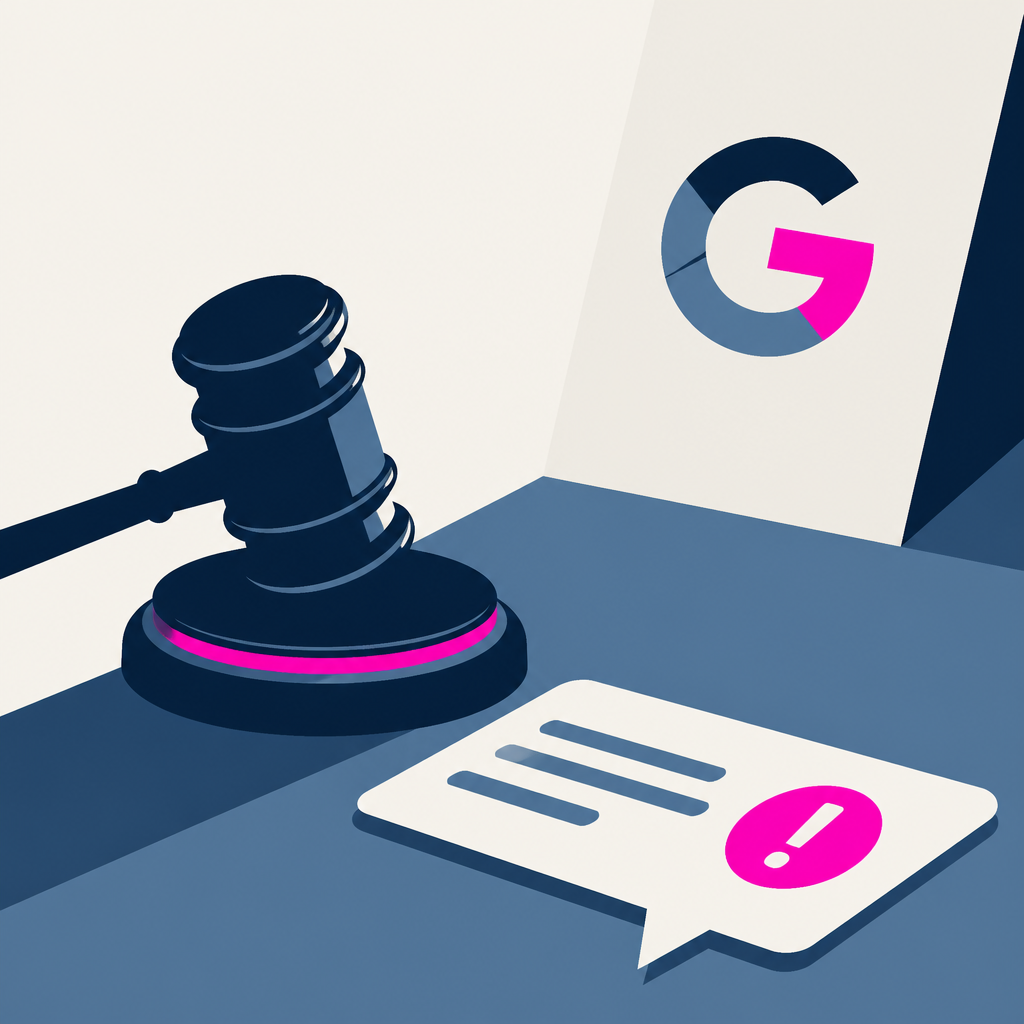
A German court ruled that Google is liable for inaccuracies in its AI search summaries, treating the AI-generated content as Google's editorial responsibility rather than protected speech. Google's AI Overviews make errors in roughly 10% of cases, producing approximately 16,000 incorrect summaries per second across 5 trillion annual searches. If the ruling holds, companies deploying AI agents will face legal accountability for their outputs, potentially making some AI applications commercially unviable unless accuracy improves significantly.
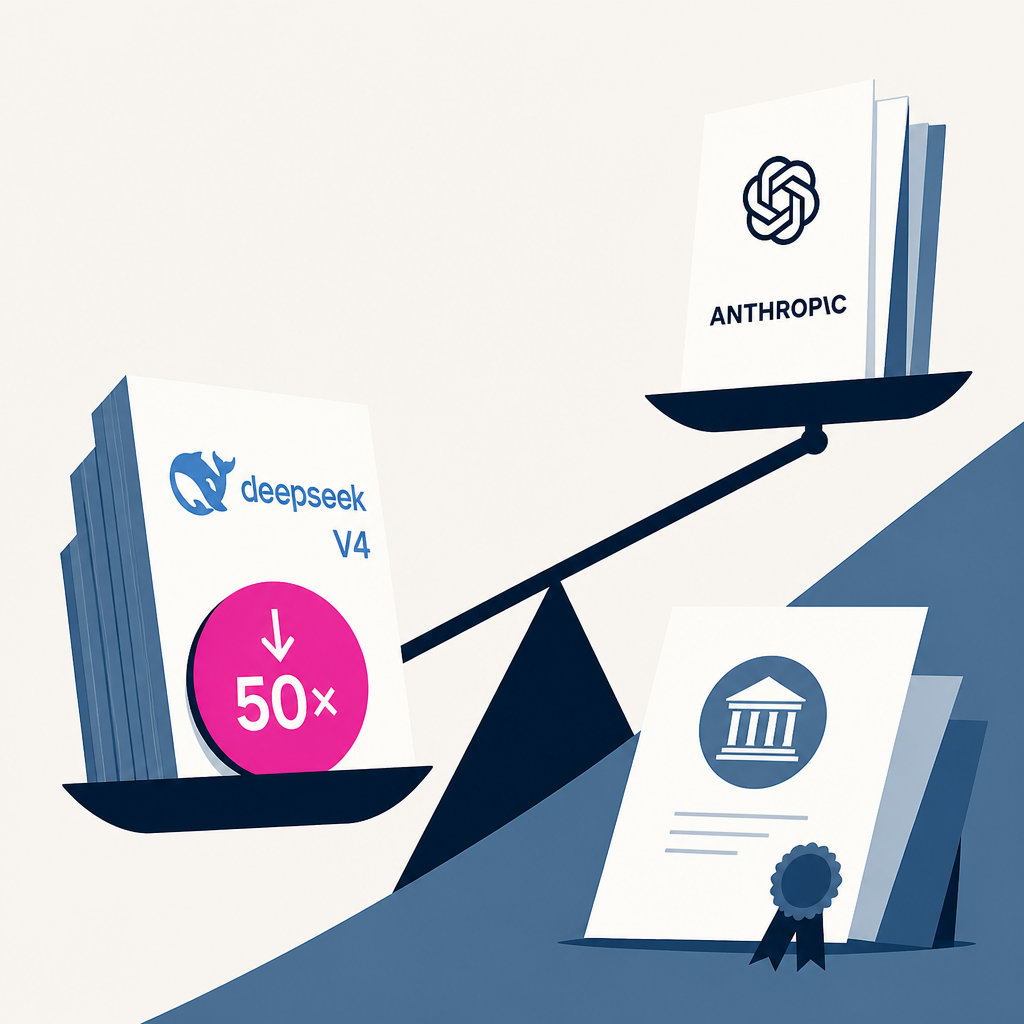
DeepSeek V4 and other open-weight models cost roughly 50 times less per token than OpenAI and Anthropic's frontier models, prompting questions about whether the established companies can compete on price or will rely on luxury positioning and potential regulatory barriers instead. The author notes that open-weight models from DeepSeek and Xiaomi's Mimo achieve low costs through stress-testing by multiple users, while OpenAI and Anthropic maintain high prices by restricting access and cultivating premium brand status. True open-source competition—with training data pipelines fully released—remains limited, though initiatives like Allen AI's OLMo and an NSF-Nvidia partnership for fully open AI represent potential future directions.
OpenSEO is an open-source SEO tool designed as a cheaper alternative to Semrush and Ahrefs, offering pay-as-you-go pricing through DataForSEO API integration starting at $10/month for hosted versions. The tool integrates with AI agents via Model Context Protocol (MCP) and supports self-hosting through Docker or Cloudflare, with users paying only for actual API usage rather than fixed subscriptions. This shifts SEO tooling toward modular, agent-integrated workflows where users control their own infrastructure and can customize features through open-source code.
The author argues that AI proficiency is creating a fundamental divide between people who integrate AI into their work and life and those who avoid it, claiming AI-native individuals are significantly more productive and have better opportunities. The author observes this divide among both technical and non-technical workers, noting that AI-native people accomplish substantially more each week across various professions. People who dismiss or reject AI are likely to face serious disadvantages in coming years, and the author recommends treating AI adoption as nearly binary—either adopt it for yourself and those you care about, or risk struggling.
Self-driving labs integrate AI with automated experimental hardware to enable systems that autonomously choose their next experiments rather than following predetermined scripts. A self-driving lab completes cycles of design, manufacturing, testing, and learning to redirect research toward promising candidates, whereas traditional automation merely executes predefined instructions. This shift from automated execution to autonomous decision-making allows laboratories to adapt their experimental strategy in real-time based on results.
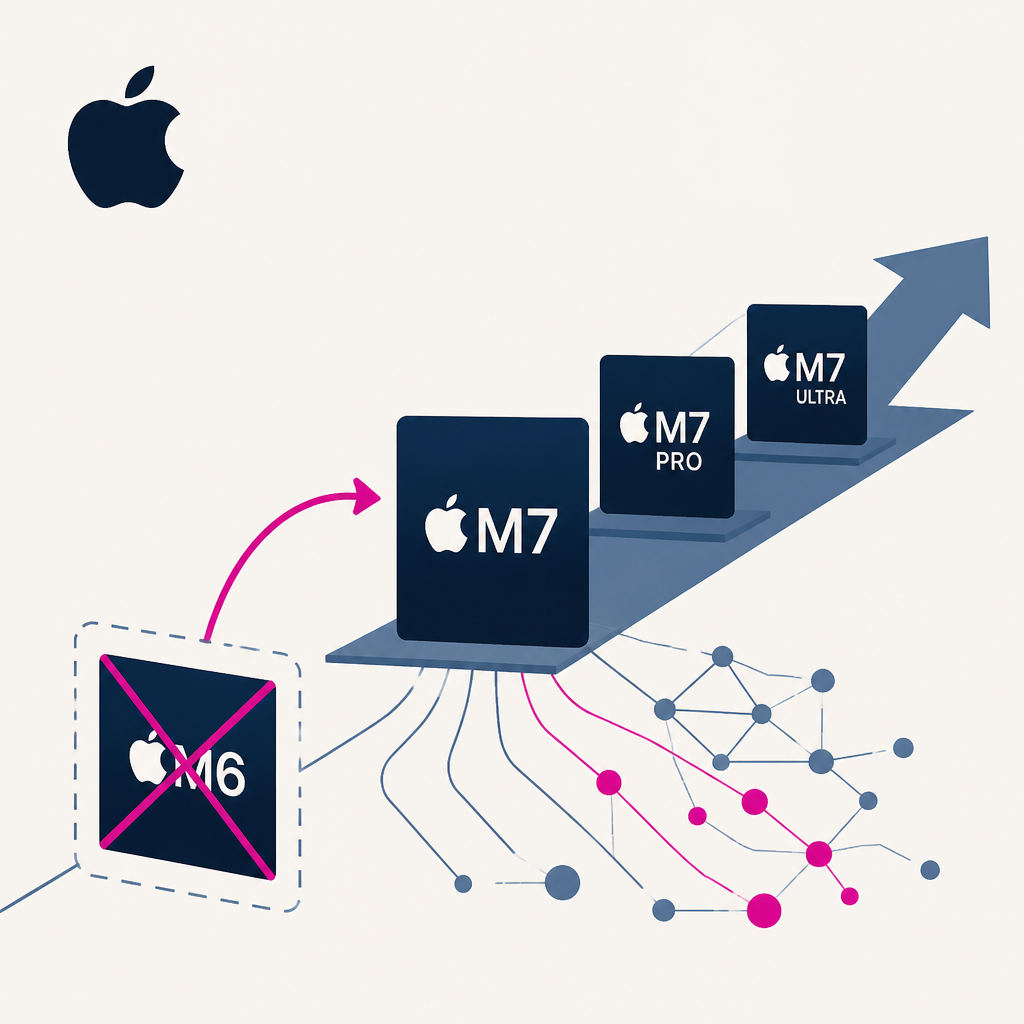
Apple plans to skip the M6 chip line entirely and move directly to M7 processors designed with AI capabilities as the primary focus. The M7 Pro and M7 Max chips are expected in late 2027, with the M7 Ultra arriving in 2028. This shift means Apple's high-end Mac lineup will prioritize AI workloads over the traditional performance increments that typically defined each generation.
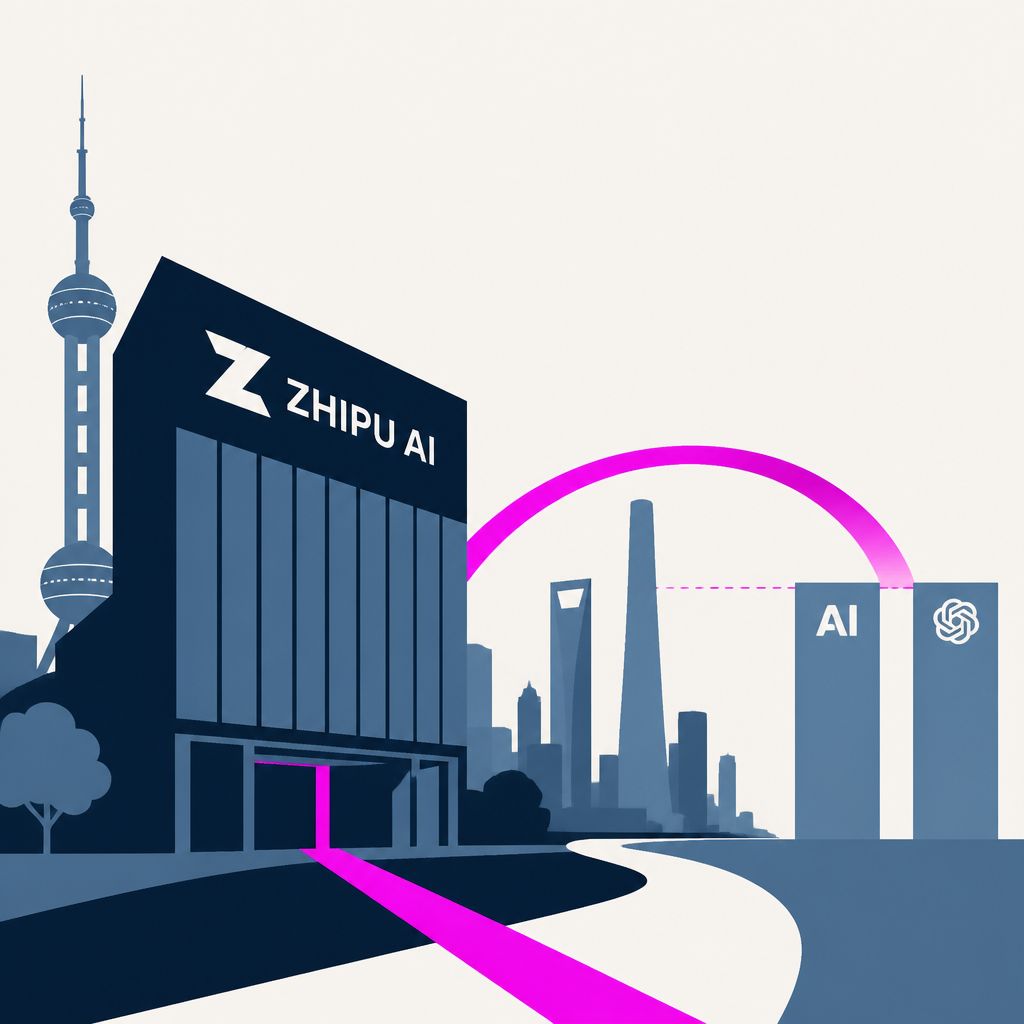
Zhipu AI released GLM-5.2, an open source model achieving performance near Anthropic's Claude models while remaining unrestricted by US regulations. The model costs less and has entered the top 10 most-used open source models globally. This allows developers outside the US to access capable AI without facing regulatory or export barriers that restrict Anthropic and OpenAI models.
Google's Gemini 3.5 Flash model includes a native Computer Use feature that lets developers control Android devices by having the model analyze screenshots and issue commands like taps and text input through ADB. The implementation uses a loop where Gemini receives a screenshot and goal, returns structured function calls (click at y=300 x=500), the developer's code executes those actions via ADB, and sends back a new screenshot for the model to continue. This enables fully automated task completion on Android emulators or physical devices, with supported actions including app launching, typing, swiping, long-pressing, and key presses on a normalized 0-999 coordinate grid.
A software engineer reflects on how LLMs have compressed the cost of implementing standard software, causing the market to reprice implementation-heavy generalist roles as lower-value work while rewarding deep domain expertise and systems knowledge. The late-2010s funding boom created demand for generalists who could ship features quickly across any technology stack, but LLMs now handle standardized CRUD apps, API integration, and framework-heavy work that once required teams. Going forward, competitive advantage shifts from breadth and implementation throughput to specialized expertise in domains where correctness, reliability, scale, and operational complexity matter.
IBM announced a new chip architecture called nanostack that can fit nearly 100 billion transistors on a fingernail-sized chip, roughly double the density of its previous generation. The company projects the 0.7-nanometer node design could deliver 50 percent higher computing performance or 70 percent greater energy efficiency compared to its 2-nanometer chips, with particular benefits for AI data center SRAM scaling. Commercial production of chips using this technology could begin within five to ten years as foundries adopt the nanostack architecture to replace current nanosheet designs.
Apple increased prices on Mac computers by 15–20% and iPads by 15–25%, citing rising component costs and memory and storage chip prices that have roughly quadrupled due to AI demand. Specific models saw increases of $200 or more. Consumers will pay significantly more for new Apple devices as component supply tightens.
The Trump administration asked OpenAI to release its GPT-5.6 model to a limited group of trusted partners first before wider availability, with 20 initial partners gaining access via Amazon's Bedrock platform. The staggered release model provides early access to 20 selected partners rather than immediate public availability. This approach allows the government oversight of model deployment and gives partners time to test capabilities before broader market release.
I cannot complete this task because the article provided contains only a headline and a single summary sentence, with no substantive content about the model's specifications, capabilities, benchmarks, dates, or concrete details. To write an accurate three-sentence summary following the guidelines, I would need the full article text with factual information.
A new Discord bot called Antibot uses AI to generate hype and manage community engagement in Discord servers. The bot was launched recently and targets Discord communities seeking automated content management. Server owners can now delegate routine community moderation and promotional tasks to this AI-powered tool.
Hugging Face Jobs now allows users to deploy a vLLM server with a single command that creates an OpenAI-compatible endpoint on HF infrastructure without manual server provisioning. The service costs $1.50 per hour for an a10g-large GPU flavor and bills per second of usage. Users can query the endpoint from any location using curl or the OpenAI Python client with token-based authentication, making it suitable for testing, evaluations, and batch generation workloads.
Every AI story that matters,
in your inbox by 8am.
TLDRocket reads all relevant sources, removes duplicate coverage, and summarises the
day in two minutes. Follow companies and topics for alerts, or get the
briefing in Slack. Free, no spam, unsubscribe anytime.
Reading TLDRocket needs no cookies, and the readership counts we rely on come from
our own cookieless analytics. Google Analytics is the exception: it sets cookies and
reports to Google, so it stays switched off until you allow it. You can change your
mind any time from “Cookie settings” in the footer.
Strictly necessary
Session security and form protection (tldrocket-session,
XSRF-TOKEN, 2 hours). The site cannot work without them,
so they need no consent.
Always on
Google Analytics 4 (_ga,
_ga_<id>, up to 2 years). Measures which
stories and sections readers use. Google acts as a third-party processor and may
store the data outside the EU. No advertising, no profiling, no data sold.