The Unbearable Cheapness of Open Weight Models
TLDR Dev ● Covered by 3 sources
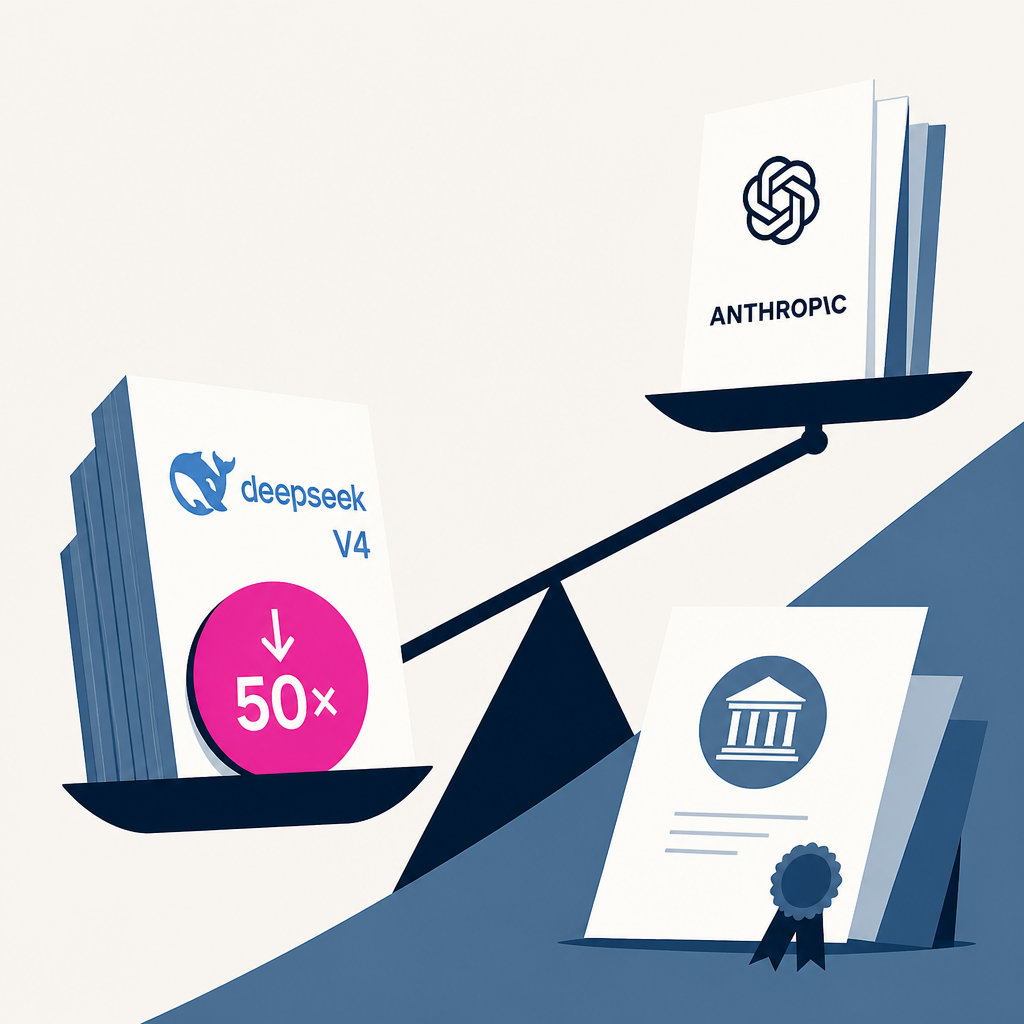
DeepSeek V4 is roughly 50x cheaper than frontier models from OpenAI and Anthropic, based purely on token pricing. That price gap raises a real question: are closed labs selling scarcity, not intelligence?
I was wiring up Hermes for a web-research task today and grabbed DeepSeek V4 for the job, mostly because I know it's cheap. What I didn't expect was just how cheap, once you set its pricing next to Anthropic and OpenAI's top-tier offerings. We're talking something close to a 50x gap on token costs alone, and that's before you factor in how much extra 'thinking' the frontier models tend to burn through on the same request.
That gap should worry the incumbents more than it seems to. OpenAI and Anthropic have built businesses around expensive compute and premium positioning, and it's genuinely unclear whether they could slash prices 20x to 50x even if they wanted to compete head-on with DeepSeek or Xiaomi's Mimo. Their cost structures, their margins, their whole go-to-market story assumes a certain price floor. Dropping below it isn't a pricing decision, it's a business model decision.
There's a simpler explanation for why open weight models run so cheap: thousands of people stress-testing them across every GPU, laptop, and cloud instance under the sun tends to squeeze out inefficiency fast. Or maybe some of these releases are loss leaders, priced to buy market share now and figure out margin later. Either way, the classic move for anyone who can't compete on price is to manufacture scarcity instead. Gate the good stuff behind higher walls, wrap it in premium branding, sell it like a Hermès bag rather than a commodity. It's a strategy with a long history in industries that have nothing to do with software.
What's harder to shake off is the suspicion that national security framing could become part of that scarcity play, using China-related fears to push regulatory limits on open weight models. Meanwhile the open release calendar tells its own story: Google put out Gemma 4 in April 2026, Meta's Llama has gone quiet, OpenAI's last open weight GPT dropped back in 2025, and Anthropic has never shipped an open weight model at all. The real frontier for genuine openness, though, might not be model weights but full pipelines. Allen Institute's OLMo project already publishes its training data alongside the weights, even if its knowledge cutoff sits back in December 2024. And now NSF and Nvidia have partnered with Allen AI specifically to push toward a model that's open end to end, not just open in name.
My take
I'll say the quiet part out loud: if a US lab can't out-build DeepSeek, the next move is always to out-lobby it, and dressing that up as national security should fool nobody paying attention. Open weight and open source aren't charity projects, they're what happens when the market actually works, and a country that invented the open source ethos shouldn't need Congress to protect its incumbents from cheaper, faster competitors.
Read more about this at: TLDR Dev