Scientists identified the submerged remnants of Gondwana and reconstructed its contours using data from over 25,000 rocks to confirm it was a supercontinent linked to the Cambrian explosion of complex life. Gondwana made up roughly 80 percent of Earth’s landmass between 550 and 500 million years ago. The new global crustal map and isotope evidence tie deep-Earth tectonic processes to the timing of early animal diversification and will be refined with a larger rock database to improve reconstructions.
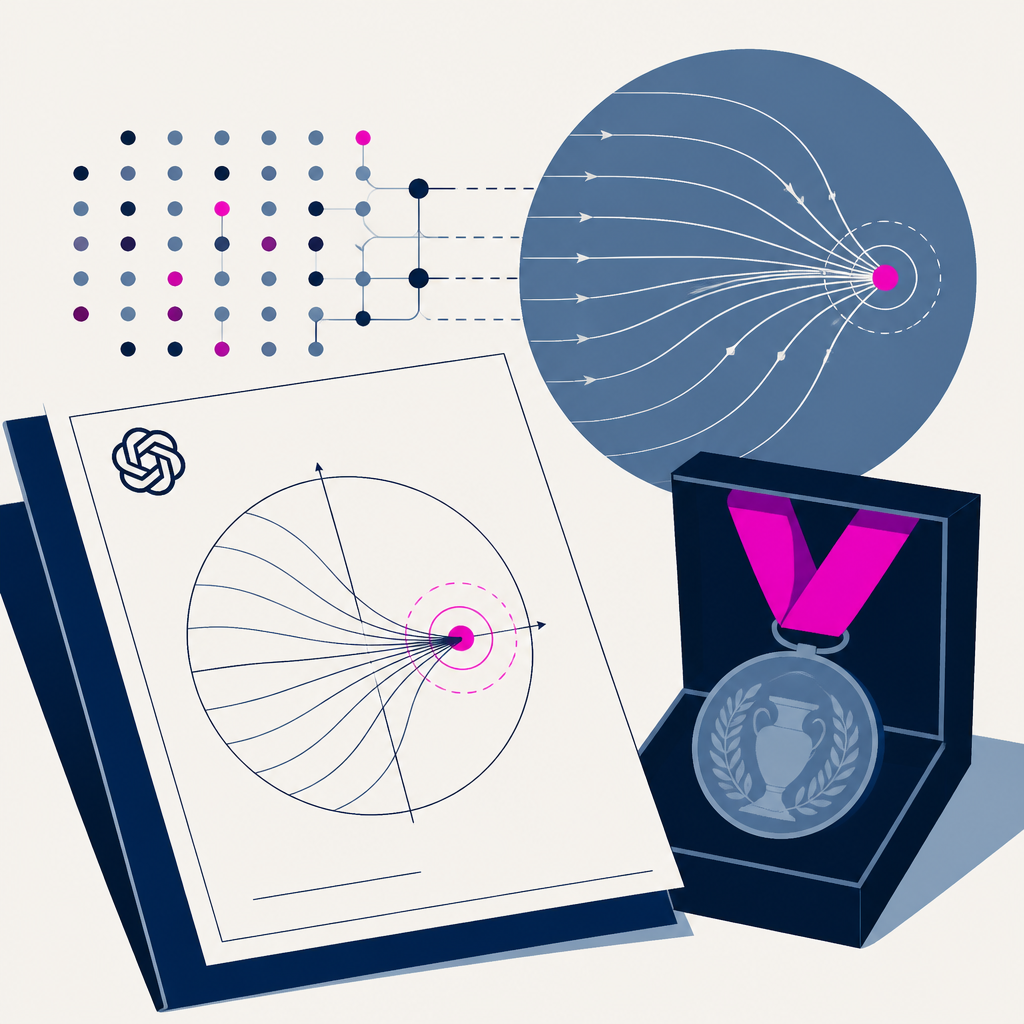
OpenAI announced it solved a Millennium Prize mathematics problem, sparking debate over how the work was pursued before formal release. The company’s announcement came on Tuesday. As a result, academia is disputing whether the effort involved scooping or spying, even as AI is increasingly credited with accelerating mathematical progress.
Google announced AlphaGenome Atlas, a system meant to predict the effects of every possible single-base change in the human genome. It scales the work to about 9 billion one-base variants by checking three alternate bases across roughly 3 billion reference positions. This provides a single software resource for evaluating non-coding DNA functions, which may speed up how biologists identify regulatory sequence variants.
AI reportedly finished solving a Clay Institute million-dollar math problem involving the Navier-Stokes equations, after a mathematician alleged its LLM was used to complete a proof started with “forcing.” The key date given is August 15, when Buckmaster and Alpöge proved that the Euler equations blow up using the same approach. As a result, credit and authorship disputes emerged and mathematicians are debating whether the full Clay question is truly resolved or only solved with a loophole, potentially reshaping how math is done.
OpenAI announced that its internal AI model proved the Navier-Stokes equations are fatally flawed, drawing controversy over whether the work was influenced by mathematicians Tristan Buckmaster and Levent Alpöge.
OpenAI-linked accounts circulated a claim that an AI-assisted system produced a Navier–Stokes result related to the Millennium Problem using multi-agent collaboration. The process was described as involving about 10,000 agents, trained over roughly 1 year and using about 130B tokens (over $40M). The public discussion shifted toward whether large-scale inference-time compute and agentic coordination can contribute to hard science, while stressing that no theorem or formal verification material was provided for independent confirmation.
Simon Willison’s Weblog·1 month ago·
22
● 11 sources
Terence Tao warned that the spread of AI-powered efforts can cause promising research problems to be “flattened” before their original work reaches full potential. The risk is triggered even by the rumor that someone is working on a given problem, which can unleash a massive amount of AI effort. He says incentives may shift toward not sharing promising directions, reversing open-science traditions and harming the field long term.
Every AI story that matters,
in your inbox by 8am.
TLDRocket reads all relevant sources, removes duplicate coverage, and summarises the
day in two minutes. Follow companies and topics for alerts, or get the
briefing in Slack. Free, no spam, unsubscribe anytime.
Reading TLDRocket needs no cookies, and the readership counts we rely on come from
our own cookieless analytics. Google Analytics is the exception: it sets cookies and
reports to Google, so it stays switched off until you allow it. You can change your
mind any time from “Cookie settings” in the footer.
Strictly necessary
Session security and form protection (tldrocket-session,
XSRF-TOKEN, 2 hours). The site cannot work without them,
so they need no consent.
Always on
Google Analytics 4 (_ga,
_ga_<id>, up to 2 years). Measures which
stories and sections readers use. Google acts as a third-party processor and may
store the data outside the EU. No advertising, no profiling, no data sold.