Simon Willison’s Weblog·1 month ago·
20
● 21 sources
OpenAI used internal agent systems and large language models to reach and formally verify a result related to the Navier–Stokes Millennium Prize Problem after hearing rumors of Millennium Prize resolutions. The agents launched on September 1 and arrived at their resolution about 88 hours later, using 130 billion output tokens on Navier–Stokes. The dispute shifts to priority and possible data influence questions, while OpenAI says it did not access user data and still questions whether de-identified usage could have indirectly helped.
OpenAI said it solved the Navier–Stokes existence and smoothness problem using a new internal AI model and about 10,000 autonomous AI agents. It reported finishing the search in 88 hours, sending nearly 3 million messages and using about 130 billion output tokens, at an estimated $10m in compute costs. The result is claimed as progress but remains unverified by the Clay Mathematics Institute and has prompted public controversy over whether OpenAI’s work started after information from others was shared.
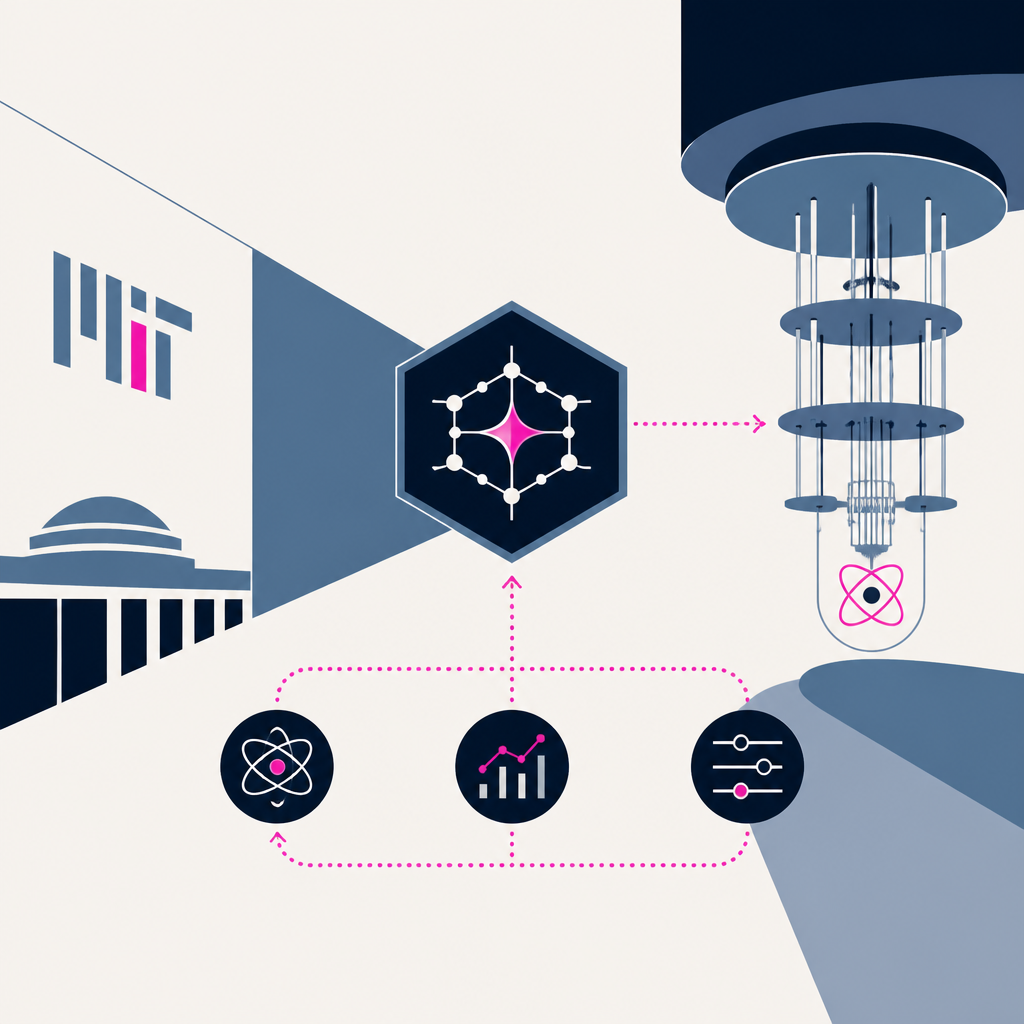
An MIT researcher uses GPT-5.6 Sol with Codex to autonomously run quantum computing experiments. The setup is based on GPT-5.6 Sol. It can execute the experiments end to end, analyze outcomes, and calibrate qubits based on the results.
A site shared an AI-generated solution to the Navier–Stokes Millennium Prize Problem.
It includes a formal proof written in Lean.
This adds a new claimed, machine-generated, formally verified writeup for the problem.
Google DeepMind unveiled AlphaGenome Atlas, an AI tool aimed at helping researchers decode the human genome and biology. It includes a predictive map of every possible DNA letter change, with the human genome containing roughly 3 billion letter pairs. This is expected to accelerate scientific research and potentially enable new treatments for diseases.
Every AI story that matters,
in your inbox by 8am.
TLDRocket reads all relevant sources, removes duplicate coverage, and summarises the
day in two minutes. Follow companies and topics for alerts, or get the
briefing in Slack. Free, no spam, unsubscribe anytime.
Reading TLDRocket needs no cookies, and the readership counts we rely on come from
our own cookieless analytics. Google Analytics is the exception: it sets cookies and
reports to Google, so it stays switched off until you allow it. You can change your
mind any time from “Cookie settings” in the footer.
Strictly necessary
Session security and form protection (tldrocket-session,
XSRF-TOKEN, 2 hours). The site cannot work without them,
so they need no consent.
Always on
Google Analytics 4 (_ga,
_ga_<id>, up to 2 years). Measures which
stories and sections readers use. Google acts as a third-party processor and may
store the data outside the EU. No advertising, no profiling, no data sold.