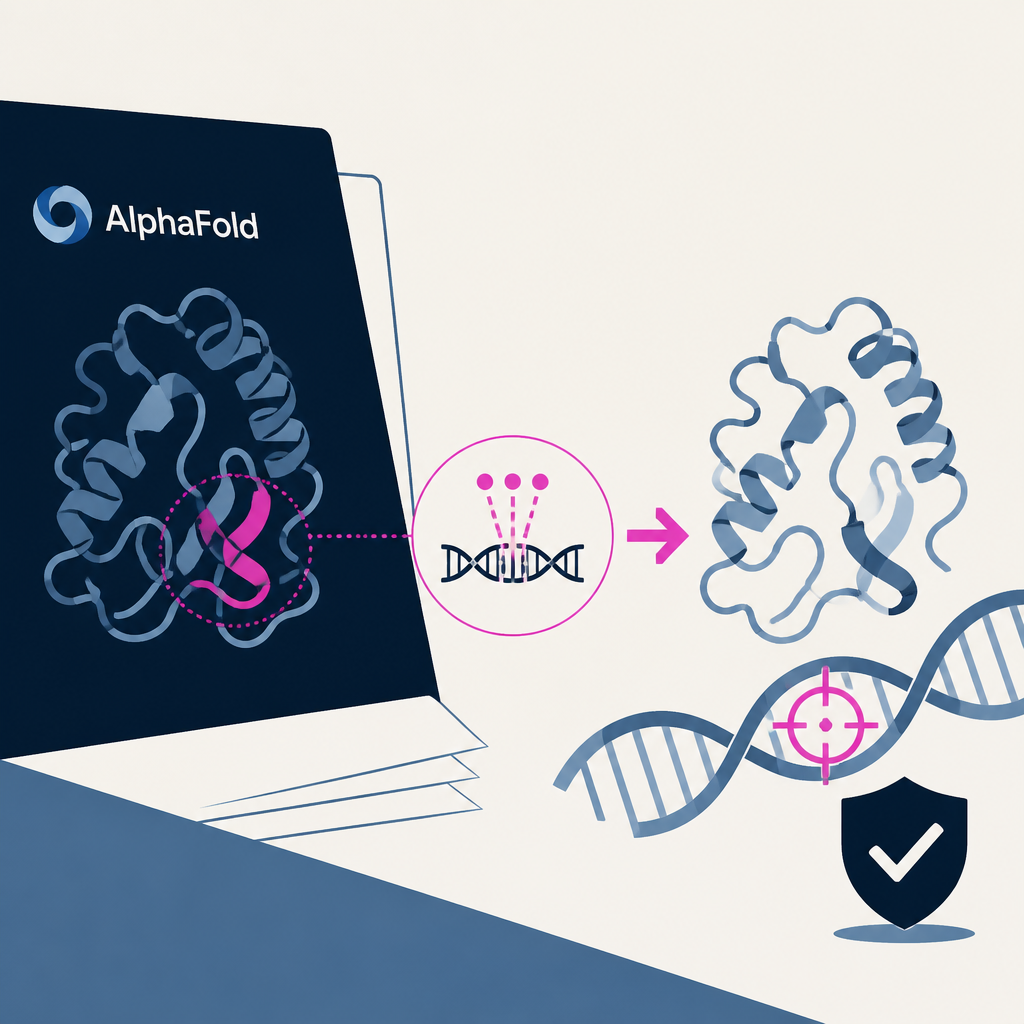
Google's AI genome system evaluates every possible one-base change
Ars Technica John Timmer ● Covered by 6 sources
Google launched AlphaGenome Atlas to test every single-base change in human DNA. It could help sort useful non-coding DNA from genomic junk, but only real use will show what it’s worth.
Based on reporting by Ars Technica, John Timmer — read the original for the full story.
Summary, retelling and take written by AI under human oversight; images are AI-generated illustrations. How we work · Report an error
Google said Tuesday that AlphaGenome Atlas can estimate what happens when any one DNA base in the human genome is swapped for another. That sounds small until you remember the scale: the human genome is about 3 billion bases long, and each position can change into three other bases. Run that math all the way through and the system has to reason over 9 billion possible base changes.
The point of the tool is not protein-coding DNA, which gets most of the attention in genetics. AlphaGenome is aimed at non-coding DNA, the huge stretch that does not make proteins but still carries a lot of the instructions that matter. Some of it helps control when and where cells make messenger RNAs and how those RNAs are processed into mature protein-coding forms.
And some of it is basically debris. The source describes a lot of non-coding DNA as leftovers from viruses and other molecular parasites, which is a polite way of saying the genome is full of ancient clutter. That is exactly why a system that can separate the interesting bits from the junk has appeal.
Google is also pitching this as a single software package that can do the analysis in one place, rather than forcing researchers to stitch together several tools. That may be the practical win here, more than any grand promise about reading the genome like a book.
But there’s still a big asterisk. Until biologists actually use AlphaGenome heavily, nobody will know how much it adds beyond what can already be squeezed out of the training data. For now it is an ambitious sweep across the genome, not proof that the hard part is solved.
My take — AI-written commentary, not fact-checked reporting
This is classic AI biology: impressive on paper, helpful in principle, and still waiting for the lab bench to do the real talking. The field keeps acting like bigger coverage automatically means better insight, when biology usually rewards the ugly middle ground where models meet messy evidence. A single package is nice; a single package that actually earns trust is rarer.
Read more about this at: Ars Technica