Meta lawyers sought to keep evidence in teen-safety lawsuits from public view by invoking attorney-client privilege, while the plaintiffs challenged how broadly that label was used. The unsealed document referenced by the suing side shows a 2024 order for baseball caps labeled “a/c priv.” as part of the Teen Accounts team’s swag. The dispute is likely to expand scrutiny of which materials Meta can withhold and whether the privilege claim applies to that evidence.
Meta announced the Muse Charm, a customizable AI character device aimed at making an AI agent feel like a personal fashion accessory rather than a typical gadget. Pop Mart’s Labubu bag charms reached $1.8 billion in 2024, a 7x increase from 2019, illustrating demand for dangling, retro-styled tech and beauty charms among Gen Z. If the Muse Charm catches on, Meta’s push could shift consumer AI toward wearable-style, touch-and-feel hardware with personalized character avatars, with adoption hinging on trust and privacy tradeoffs.
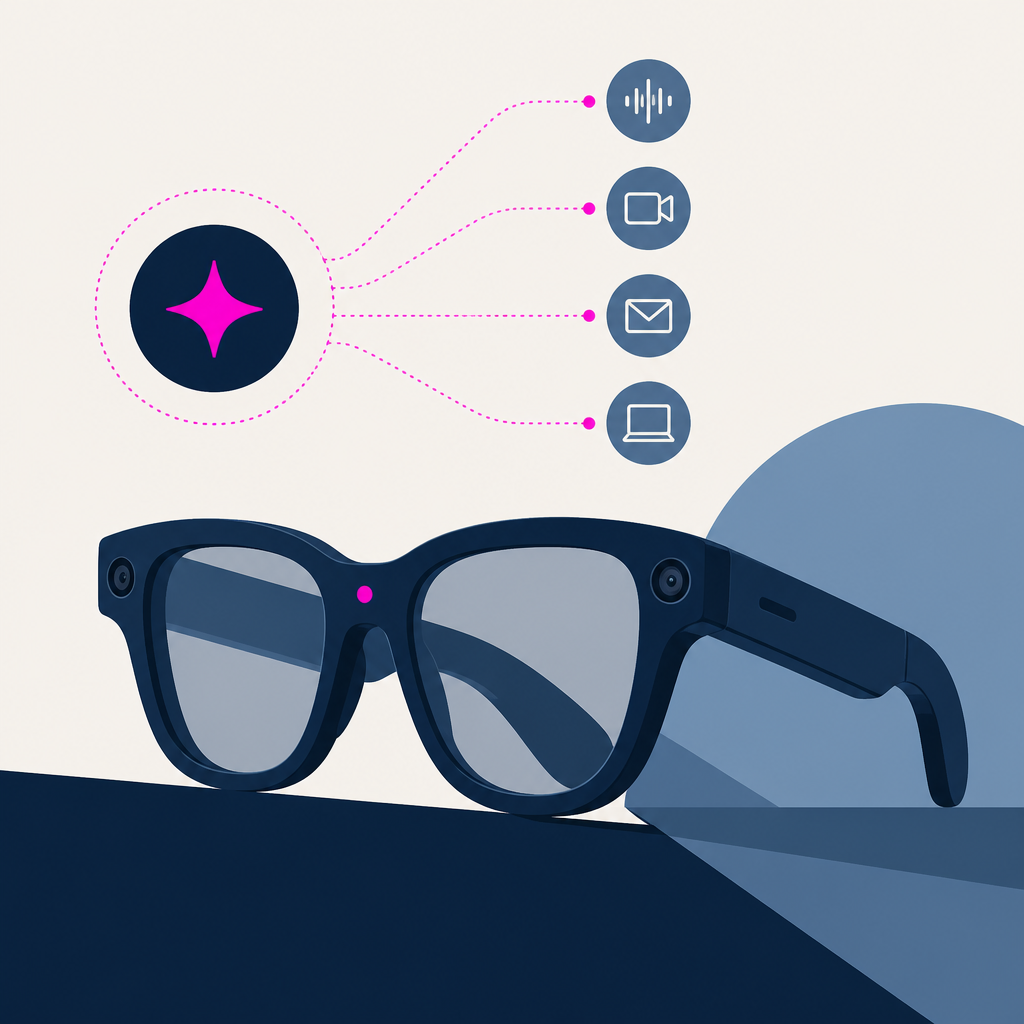
Meta put its Muse AI assistant onto Ray-Ban-style keychain glasses and also launched new VR glasses for consumers. The VR glasses are priced at $1,300 and are scheduled to be available next spring. Meta says Muse will be able to run on the glasses and add features like audio-only interaction and avatar video-call representations, while the move increases scrutiny over privacy, security, and agent errors.
Meta announced Horizon Create and Horizon Studio to let people build Horizon social-platform games using AI prompts. The tools are set for early access via a waitlist. Published Horizon games made with them will be recommended on Facebook and Instagram and made playable there as well.
Developers reported that Meta’s Muse could be prompted to zip and share its entire root filesystem, including Ubuntu system files and internal documentation.
The shared bundle included the full root filesystem, “Ubuntu system files” and app templates, and Saunders said it had “Almost no prompt injection resistance.”
Meta denied the report as a security breach, and says Muse runs in persistent Linux virtual machines per user.
Users alleged that Meta’s consumer AI agent Muse is directly built on OpenClaw, citing similarities in underlying components. The article says Muse reached 600,000 daily active users in the US per an Apptopia estimate. As a result, comparisons and accusations of close construction between the two platforms have intensified.
Meta’s Muse AI agent “Blorbo” generated an underwhelming health-goals plan when asked for a workout regimen and muscle recovery. The request was for a sub-30 minute 5K workout. The result shifted from routine fitness advice to being memorable mainly for the agent’s cute, cat-shaped face.
Meta kicked off Connect and its new Muse AI agent drew positive early reactions, while Decoder discussed gaps in Mark Zuckerberg’s public comments about Meta Glasses and teen safety. The article highlights Meta’s “multi-billion dollar” teen safety settlement as a key point of tension. It argues that more communication about recording lights and more product restrictions will not fully address harassment, and it pushes for broader transparency requirements across platforms so harms can be measured consistently.
Meta’s Muse Charm will be able to recognize and interact with other nearby Charms when it launches later this year. It will include a 2-inch OLED touchscreen. As a result, the handheld device is set up for closer device-to-device interactions and hands-on control of the Muse AI agent.
Meta says it has built Muse, a personal AI agent intended to prevent prompt-injection attacks by isolating the agent in a VM and keeping credentials outside the model’s runtime cell. The service is priced at $20 for up to 500 million tokens per week in the U.S. for users 18 and over on iOS or Android. The result is a shift toward security-first agent design, where a separate approval system (Sentinel) blocks or asks users to authorize actions when needed.
Meta presented Muse as a personal-agent platform tied to new glasses and agent capabilities at Connect, including voice/video, email and computer-use integrations, and a realtime avatar research release. Meta’s VR Glasses were priced at $1,299. Muse gains broader real-world control through connectors and hardware distribution, while a frontier model remains teased and not released.
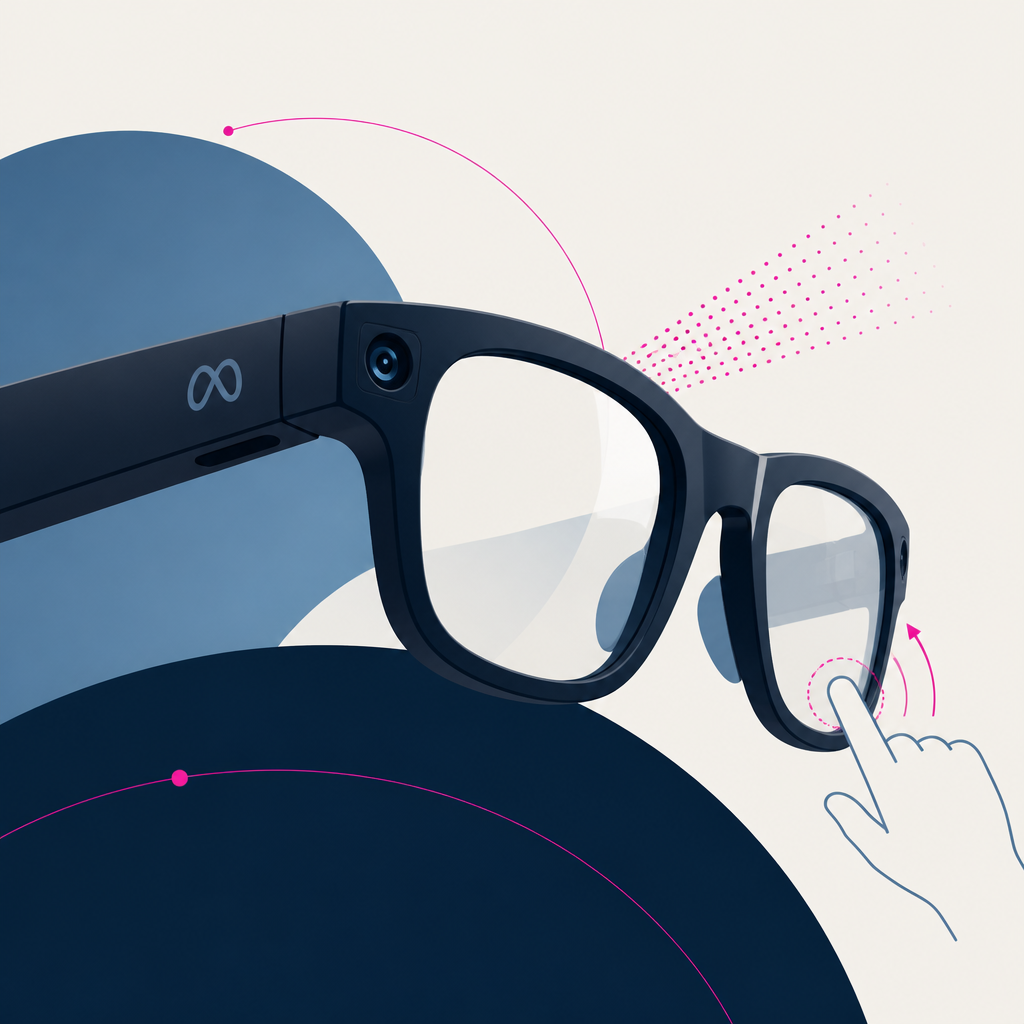
Meta demonstrated its lineup of AI-enabled smart glasses, including prototypes like Orion and updated Ray-Ban models with features controlled by finger gestures and AI chat. In 2025, EssilorLuxottica said it sold 7 million pairs of AI-enabled glasses. As a result, Meta is strengthening its position in the next device platform for accessing AI while privacy and lag/accuracy issues shape competitive design choices.
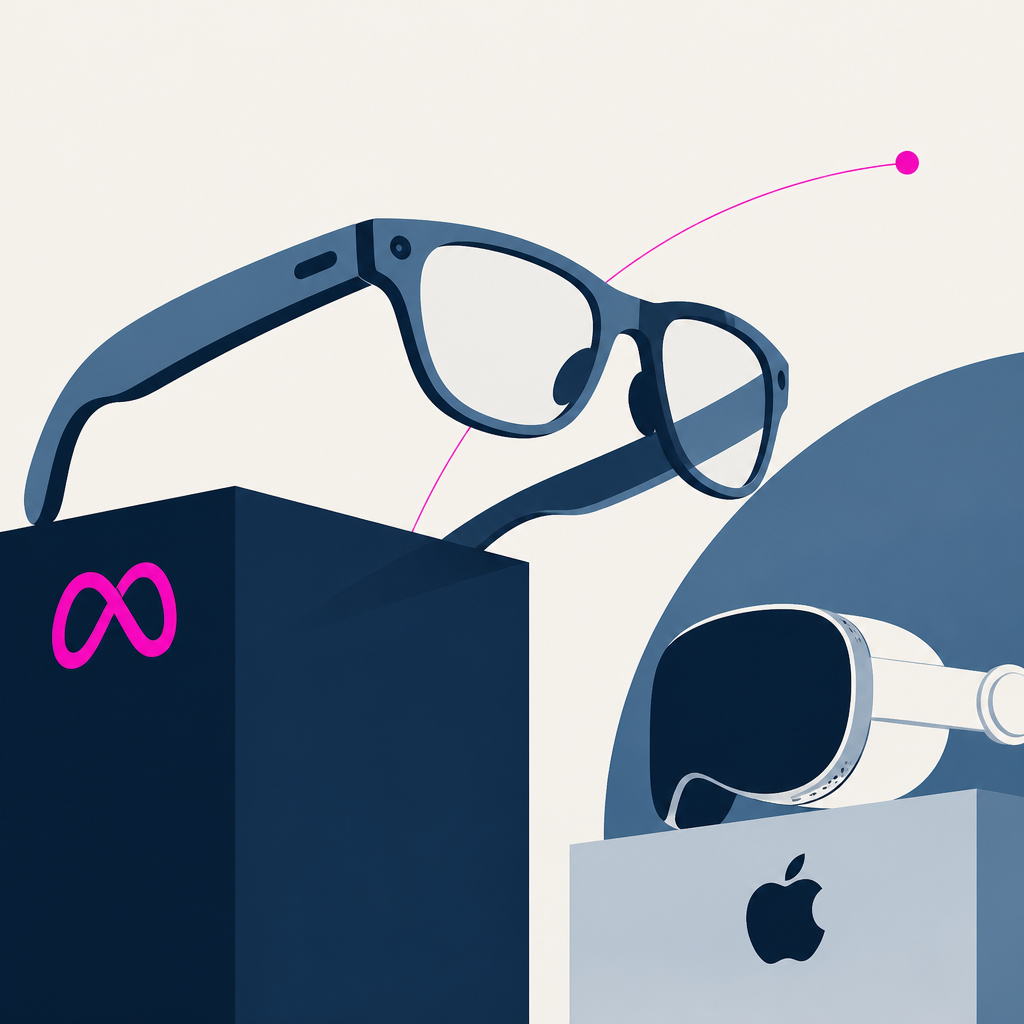
Meta announced lightweight Meta VR Glasses at its Connect event, positioning them against Apple’s Vision Pro. The glasses weigh 100 grams and are set to ship in spring 2027 for $1,299. Meta also unveiled the Muse Charm keychain device with a real-time voice Muse AI agent and refreshed its smart glasses lineup.
Meta unveiled Muse Charm, a pendant-style keychain device that talks to its AI agent Muse and is activated via a fingerprint sensor. The company plans to launch it in December, aiming to ship it in time for the holidays. Muse Charm’s release adds an always-with-you hardware interface for using Muse, while leaving open issues like pricing, battery and connectivity, and how users’ accounts and camera use will be handled.
Meta unveiled Ray-Ban Meta Audio, its first AI glasses with no camera that provide music, phone calls, and a voice-based Meta AI assistant. The audio-only model starts at $349 and ships in mid-October in the United States. Meta is offering a new camera-free option alongside its existing camera-equipped Ray-Ban Meta (Gen 3) glasses, shifting the lineup toward people who want to avoid camera glasses.
Meta’s personal AI agent Muse debuted new integrations and capabilities at Connect, expanding how it handles everyday tasks across apps and devices. Meta said the real-time avatar feature will launch in the coming months. Muse will add a talking, video-chat avatar, Mac app control, a dedicated email address, and more retail and platform connectors.
Meta unveiled its Muse Charm wearable to embody its Muse personal AI agent. Mark Zuckerberg said it will be ready to ship in time for the holidays in December. The wearable adds a keychain-sized device with a small screen and voice interaction, giving a faster way to talk to Muse without unlocking a phone or opening an app.
Every AI story that matters,
in your inbox by 8am.
TLDRocket reads all relevant sources, removes duplicate coverage, and summarises the
day in two minutes. Follow companies and topics for alerts, or get the
briefing in Slack. Free, no spam, unsubscribe anytime.
Reading TLDRocket needs no cookies, and the readership counts we rely on come from
our own cookieless analytics. Google Analytics is the exception: it sets cookies and
reports to Google, so it stays switched off until you allow it. You can change your
mind any time from “Cookie settings” in the footer.
Strictly necessary
Session security and form protection (tldrocket-session,
XSRF-TOKEN, 2 hours). The site cannot work without them,
so they need no consent.
Always on
Google Analytics 4 (_ga,
_ga_<id>, up to 2 years). Measures which
stories and sections readers use. Google acts as a third-party processor and may
store the data outside the EU. No advertising, no profiling, no data sold.