[AINews] Meta Connect 2026: Muse glasses, voice, video, and Charm
Latent Space ● Covered by 10 sources
Meta turned Muse into the center of its AI push, with new glasses, voice, video and a $1,299 VR headset. The big model is still missing, so the hardware show had to do the heavy lifting.
Based on reporting by Latent Space — read the original for the full story.
Summary, retelling and take written by AI under human oversight; images are AI-generated illustrations. How we work · Report an error
Meta used Connect 2026 to make a very clear bet: if personal AI is coming, the winning interface is probably on your face, not buried in a chat window. Muse was presented as the hub of that strategy, with new features for voice, real-time video, email, Mac computer use and shopping connectors. The model itself was teased again, but not released.
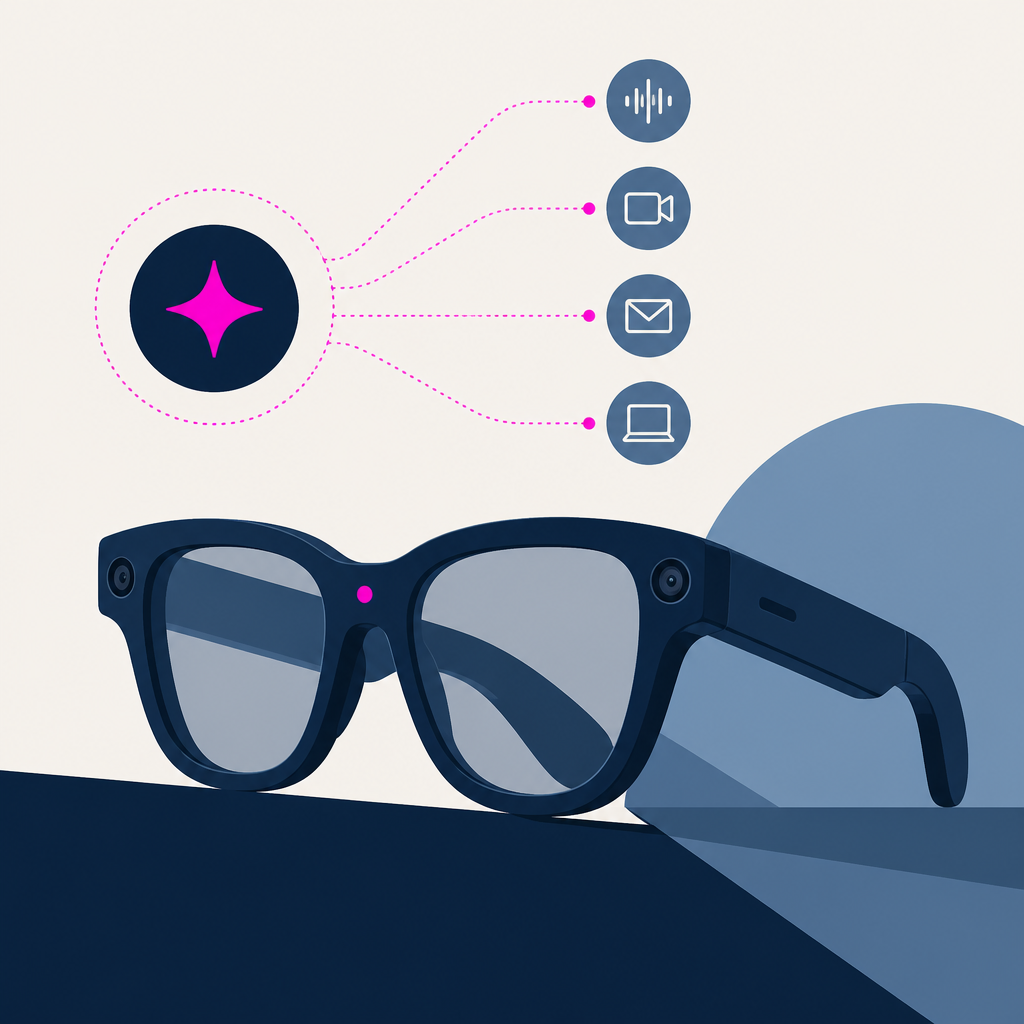
The most obvious pitch was the move from assistant to agent. Muse can now hold long conversations while doing work in the background, and video chat with a customizable voice is still marked as coming soon. On glasses, the wake word is the whole point: say Muse’s name, and it’s supposed to show up across Meta’s eyewear line. There’s also Muse Mail, which gives each user an email address so the agent can be looped into threads or handed tasks directly.
Meta also leaned hard into hardware as the moat. Ray-Ban Meta Gen 3 adds longer battery life, better microphones and new Aviator styles. Then there are Meta VR Glasses, the company’s first VR device delivered in glasses form instead of a headset, pitched for private cinema, a multi-monitor workstation and gaming. The price: $1,299. Meta also said those glasses have been turned into an FDA-cleared hearing aid.
The connective tissue matters just as much as the products. Meta says the connector platform now has 1,500+ applications, and the keynote examples ranged from Spotify and Box to Walmart, Best Buy, Gap, Sephora and Instacart. Muse is free for users for now, though Meta may eventually take a cut of transactions. That is a very Meta sentence: make the agent free, build the rails, and see where the money leaks out later.
And then there’s Charm, the keychain device for talking to Muse, which ships in December. It sounds almost absurd until you notice the pattern: glasses, a wearable agent, and a growing set of tools that can act on email, desktop and commerce. The company did not ship the “most capable model we have ever trained,” but it did ship enough product pieces to make the model feel almost secondary.
My take — AI-written commentary, not fact-checked reporting
This is classic Meta: ship the interface, tease the brain, and let everyone else obsess over benchmarks. Closed-model people call that strategy; open-model people call it a distribution advantage with better sunglasses. Both are right, which is annoying but very Meta.
Read more about this at: Latent Space