Meta Drops the Camera With Its First Audio-Only AI Glasses
Trending Topics Jakob Steinschaden ● Covered by 4 sources
Meta just launched Ray-Ban Meta Audio, its first AI glasses with no camera. It’s a privacy play, but Meta still keeps camera glasses in the lineup.
Based on reporting by Trending Topics, Jakob Steinschaden — read the original for the full story.
Summary, retelling and take written by AI under human oversight; images are AI-generated illustrations. How we work · Report an error
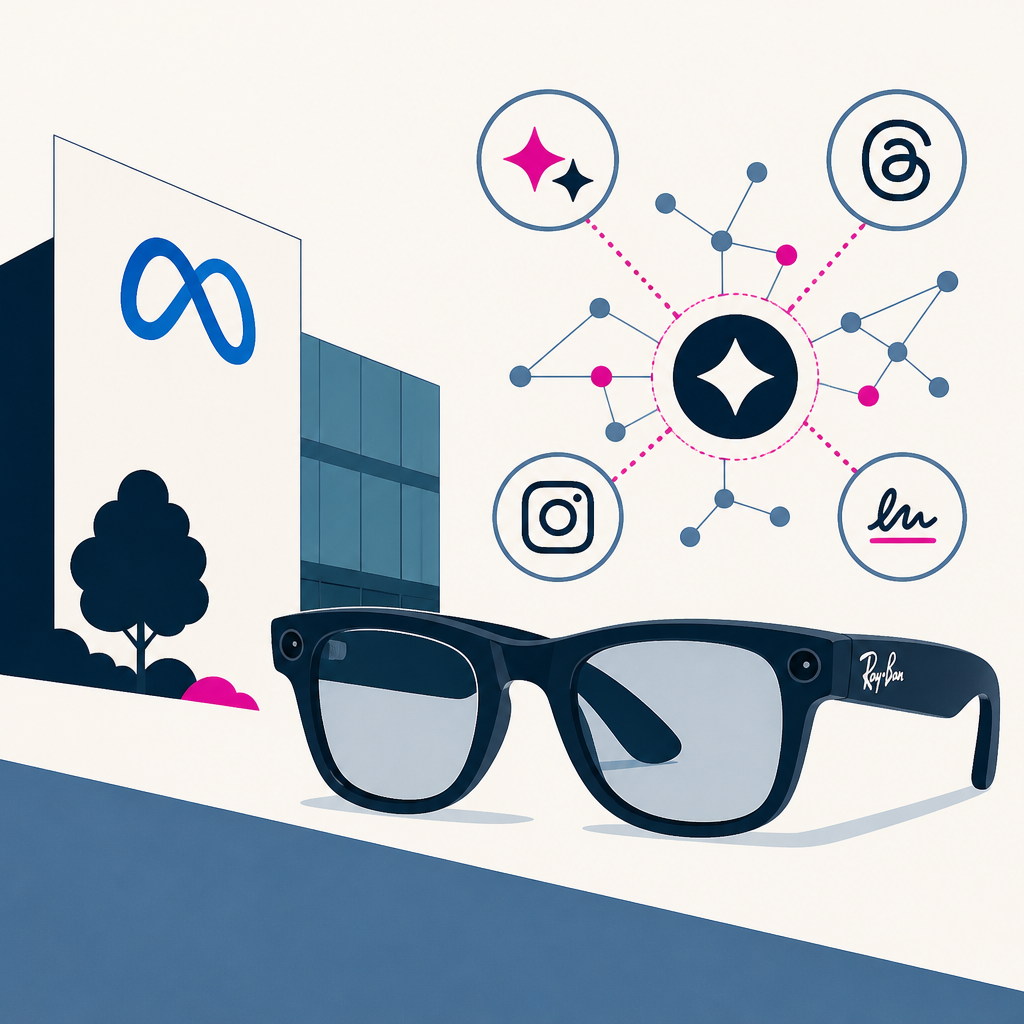
Meta has finally made a pair of smart glasses that can’t film anyone. The new Ray-Ban Meta Audio drops the camera entirely and leans into the parts Meta says people already used most: music, calls and the company’s AI assistant, all through the frame.
The company showed the glasses at Connect, alongside a broader push with EssilorLuxottica. By the end of the year, Meta says it will have more than 100 glasses options across Ray-Ban, Oakley and Meta Glasses. That is a lot of frames for one company to be selling at once, and a clear sign Meta still thinks glasses are a platform, not a side project.
Ray-Ban Meta Audio is the lightest and slimmest model in the lineup so far, at 43 grams. Meta says battery life can reach 12 hours, with up to 48 more from the charging case. The glasses come in two new styles, Clubmaster and Burbank, with 23 color and lens combinations in total. Prescription lenses are supported, pre-orders are open in the US, shipping starts in mid-October, and prices begin at $349. European pricing and timing are still unannounced.
Meta is also pushing a new personal AI agent called Muse into its glasses. The pitch is simple: keep track of appointments, turn long-term goals into action plans, and do it without pulling out a phone. On the camera-free pair, voice becomes the whole interface, which is either elegantly minimal or a reminder that glasses still need a lot of talking to be useful.
But Meta is not giving up on cameras. Ray-Ban Meta (Gen 3) keeps a 12-megapixel, 3K camera, adds battery life of up to nine hours, six microphones and a new action button for Meta AI. There’s also the same LED signal meant to show people nearby when recording is happening. Prices start at $449.
The timing matters because the privacy backlash around camera glasses is getting louder. Tools like ZuckOff now warn people when Ray-Ban Meta or Oakley Meta glasses are nearby, and some cinemas, schools and pubs in the UK have banned them. So Meta’s audio-only pair reads less like a sudden conversion and more like a pressure valve.
My take — AI-written commentary, not fact-checked reporting
Meta didn’t discover privacy; it discovered a market that would rather not be glared at in the pub. The company gets to call this a new category while keeping the camera glasses right there on the shelf, which is classic big-tech diplomacy: apologize with one hand, sell with the other. The real story is that audio-only glasses are the least creepy way to make smart glasses normal, and that’s probably why they needed to exist first.
Read more about this at: Trending Topics