Salesforce introduced AI agents to automate sales and technical support workflows across its cloud services. Hunter, the first sales agent, includes a long-horizon runtime that only it has at launch. Salesforce will roll out the rest of the features by year’s end and expand long-horizon runtime and multi-agent orchestration capabilities across more agents via Agentforce Coworker updates.
Dynatrace acquired Arize AI to bring AI observability, evaluation, and agent monitoring into Dynatrace’s application observability platform. Arize said its open-source Phoenix platform is used by more than 4,000 enterprises. The combined offering shifts observability from spotting issues to providing shared context so teams and AI agents can diagnose and take action on problems.
BiBimba launched on Product Hunt as a macOS app that reads text from screenshots for later searching and pasting. It’s priced at $9. It adds on-device AI that translates, summarizes, and rewrites without leaving the Mac.
Five9 is positioning its Humantic contact-center model around humans and AI agents working together instead of aiming for full automation. By year’s end, PODS is expected to route more than 100,000 calls through Five9’s Voice AI Agents, and Five9 reports a 44% containment rate that exceeded its target. The approach shifts deployments toward keeping complex, high-value, and vulnerable interactions with people while using AI for high-volume, low-stakes requests and emphasizing an open, orchestrated platform.
Contact center AI is moving beyond pilot deployments, but knowledge management is emerging as the main limiter to proving ROI as older success metrics stop matching outcomes. Gartner projects conversational AI will cut contact center labor costs by $80 billion this year, highlighting the need for better measurement than average handle time and first call resolution. Success is shifting toward outcome-based scoring and stronger data quality, workflow redesign, and smoother handoffs between virtual and human agents.
Engineering simulation is shifting from prototyping to digital validation, with companies and venture investors funding AI-enabled environments that predict physical behavior before any physical testing. PhysicsX secured a $135 million Series B round in 2026. This accelerates calculation cycles from weeks to minutes while keeping enterprise buyers focused on certified, multiphysics platforms like SIMULIA as a validation gate for production.
Contact centers are shifting their success metrics from containment—calls that avoid a human—to whether AI-assisted interactions actually resolve the customer’s request end to end. Zoom’s AI for Zoom CX team, led by product head Ram Rajagopalan, has spent the past year building this “conversation to completion” approach into its virtual agent platform. Enterprises are expected to pick smaller first use cases and ensure full call context carries over during virtual-to-human handoffs to achieve measurable resolution instead of just deflection.
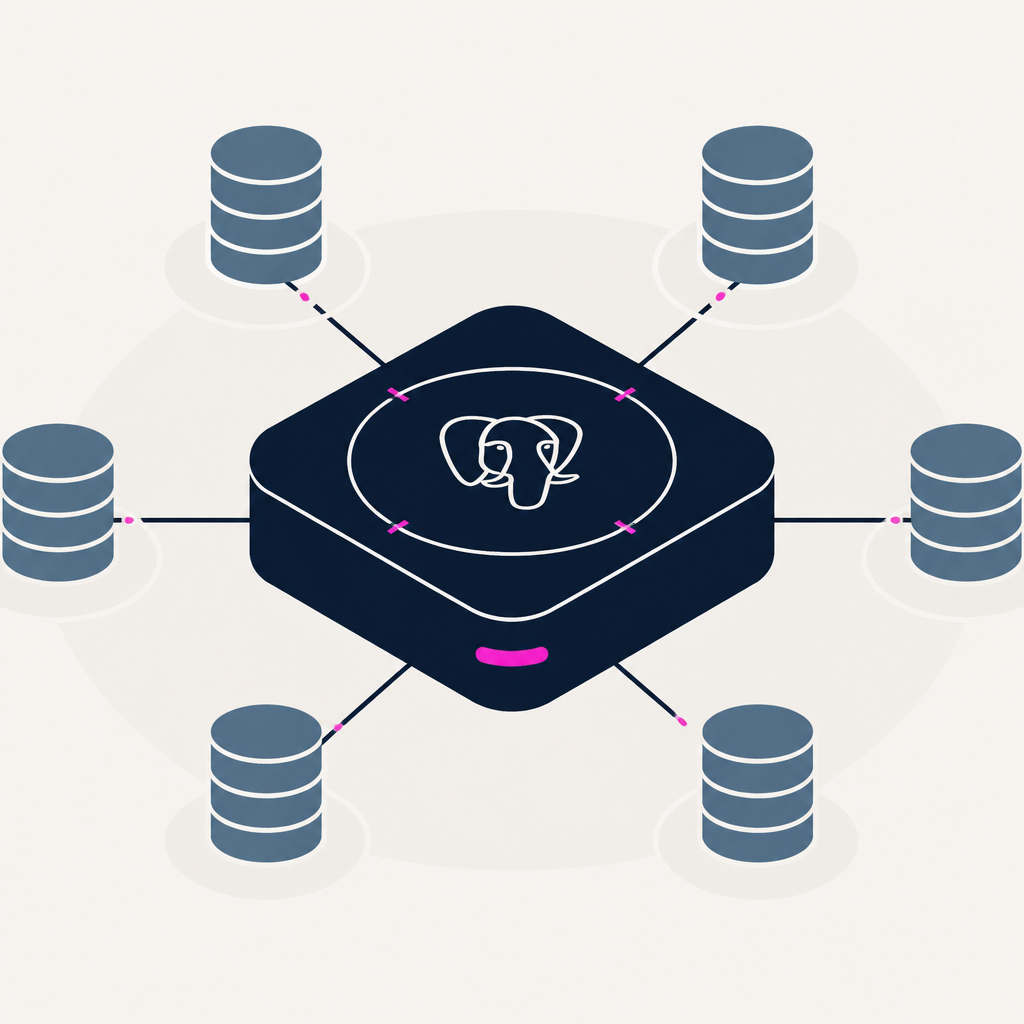
PlanetScale introduced Neki, which shards PostgreSQL across multiple machines while preserving the standard wire protocol, drivers, ORMs, extensions, and SQL behavior.
Motive secured more than $1.3B in growth financing from General Catalyst and withdrew its IPO filing after having planned a New York Stock Exchange listing under ticker “MTVE.”
The deal brought Motive to over $700M total funding and followed a $150M round led by Kleiner Perkins in July 2025.
The company will use the capital to expand AI product development and sales, support, and service teams, while shelving the public listing plan.
Klook cofounder Ethan Lin argued that overtourism stems from tourists clustering in a few locations rather than from overall visitor counts, and said AI can help travelers branch out. A Klook Travel Pulse survey found 57% of Gen Z and millennial travelers in Asia used AI to find new destinations or experiences. This shifts travel demand toward lesser-known spots and encourages operators to diversify offerings beyond the usual hotspots.
Furo, a Munich startup providing software for commercial and industrial battery storage, closed a $4 million seed round led by TQ Ventures to develop its product, expand in Europe, and hire staff.
Anthropicologic launched a product that uses an internet-wide “Human Context Protocol” to analyze consumer and cultural signals. It supports nine workflows across 239 markets in 100+ languages. This replaces or speeds up traditional user research and social listening by delivering research, innovation, and foresight answers in minutes.
Oracle argued during its Q1 FY 2027 earnings call that AI will enhance its packaged applications by automating and orchestrating implementation rather than replacing them with custom software. It said its next “agentic AI accelerator” would be released in October to compress SaaS deployments from years to months and months to weeks. Oracle also reported SaaS revenue up 10% and grew cloud revenue 60% year over year, while turning on 850 MW of new datacenter capacity as its AI infrastructure investment continues.
Extreme Networks launched Agent ONE Coworker to replace network troubleshooting dashboards with an AI agent that provides answers in Platform ONE. In the first eight days, it recorded about a 900% increase in interactions. The release uses a context layer, “nudge” notifications, and honesty guardrails to cut resolution time from hours to minutes while preparing the later, more autonomous Operator mode.
OpenAI unveiled ChatGPT for Financial Services, a version of ChatGPT aimed at financial analysis and model creation for banks and other financial teams. It requires an enterprise subscription and direct approval to access, and it can integrate data from providers like Bloomberg and FactSet with detailed citations. OpenAI says this will shift analyst workflows toward generating deliverables such as slides, spreadsheets, and dashboards faster, though some bankers worry it could reduce junior training tasks.
Salesforce introduced Enterprise AI Harness and an AI Control Plane to help customers build and manage AI agents. Enterprise AI Harness includes six feature collections, and its rollout is set for early in Salesforce’s 2028 fiscal year starting next February. The tools add reliability, data-quality, cybersecurity controls, intelligent model routing, and centralized monitoring of agent performance and inference costs.
Every AI story that matters,
in your inbox by 8am.
TLDRocket reads all relevant sources, removes duplicate coverage, and summarises the
day in two minutes. Follow companies and topics for alerts, or get the
briefing in Slack. Free, no spam, unsubscribe anytime.
Reading TLDRocket needs no cookies, and the readership counts we rely on come from
our own cookieless analytics. Google Analytics is the exception: it sets cookies and
reports to Google, so it stays switched off until you allow it. You can change your
mind any time from “Cookie settings” in the footer.
Strictly necessary
Session security and form protection (tldrocket-session,
XSRF-TOKEN, 2 hours). The site cannot work without them,
so they need no consent.
Always on
Google Analytics 4 (_ga,
_ga_<id>, up to 2 years). Measures which
stories and sections readers use. Google acts as a third-party processor and may
store the data outside the EU. No advertising, no profiling, no data sold.