Salesforce launched its Salesforce Enterprise AI Harness to combine multiple AI and integration components into one enterprise-wide system for completing business tasks. Salesforce said the unified experience will start rolling out in early fiscal year 2028. The rollout shifts developers from managing separate “harnesses” toward using a shared AI control plane and composable architecture that applies context, governance, and security across agents and models.
Amazon announced that its agentic AI platform Quick is now generally available on macOS and Windows, with an updated mobile activity feed for iOS and Android. The update adds mobile activity consolidation into a single priority view, combining email, calendar, messaging, and customer relationship management. Quick will triage routine work in the background, leaving humans to handle higher-value items in the foreground while keeping autonomous agents running across desktop and mobile via AWS.
Amazon Quick desktop application is now generally available on macOS and Windows for enterprise use. It launched generally available on desktop “today.” The update adds a consolidated mobile activity feed on iOS and Android that merges email, calendar, CRM, and messaging so agents handle routine items in the background.
Amazon Quick Automate was used to build an end-to-end workflow that ingests a multi-tab RFI workbook from an Amazon S3 bucket, extracts and structures the questionnaire data, validates the results, and writes the output back to S3 as a CSV file. The walkthrough’s example automation is designed to read the “Strategy” sheet from “SampleDepartment_Version2.xlsx” and output a CSV to the “output-folder” prefix. The process shifts from manual extraction and coordination to a prompt-driven, multi-step automated workflow that can be iterated via conversation and promoted across AWS accounts/regions with validated versions.
Atlassian announced new Jira features intended to run AI coding agents for always-on, long-duration software development with governance and validation. The update includes a “Code Context” grounding layer built on its Teamwork Graph, letting agents operate across multi-repository projects so they can be restricted and reviewed. This shifts teams from ad hoc, chatbot-like prompting to automatically generating code merge requests and keeping documentation in sync over hours or days.
Typewise AG launched Nova, a system for building, running, and continuously improving customer-service AI agents that operates behind the scenes instead of being a customer-facing chatbot. Nova is claimed to handle 70% of incoming inquiries across email, chat, and WhatsApp and fully resolve 75% to 85% of them at HealGreen. As a result, customer-service teams can expand agent deployments faster with less ongoing operational work, while actions stay logged and sensitive cases can be routed to humans with conversation context attached.
Sage reported that Midlands SMEs are growing faster than the rest of the UK on profitability based on anonymised SME accounting data. East Midlands businesses saw profit growth of 18.8% in the year to Q2 2026, versus a 5.3% national average. The focus shifts to which regions and firms are sustaining stronger performance, alongside continued uptake of digital tools including AI.
ChatGPT Work introduced a Data agent that connects company data to help users find insights and build interactive dashboards using natural language. The article does not provide any date, price, or measurable benchmark. As a result, dashboard creation and data analysis can be done through an AI assistant workflow instead of manual dashboard building.
Bynario raised €2.1 million in pre-seed funding led by 360 Capital Partners to expand its autonomous security platform after its AI-assisted macOS bug report was reviewed and patched by Apple. The round totals €2.1 million. The startup will hire more engineers and build Atlas to scan code, cloud infrastructure, and software supply chains while focusing on confirming exploitable, reachable vulnerabilities instead of only flagging theoretical issues, marking a shift from AI bug hunting to full-stack vulnerability remediation.
cfo.ai, formerly Runway Financial Inc., pivoted from accounting software to launch Ari, an agent designed to serve as a virtual chief financial officer for startup founders and independent business owners. Ari is launched as the new flagship product after the rebrand, integrating with tools like NetSuite, QuickBooks, Stripe, Salesforce, and Snowflake. Ari continuously monitors financial metrics and can alert founders to changes and run forecasting and other finance tasks through Slack.
AI tooling and security scanners are producing far more vulnerability findings than security teams can realistically triage, making it hard to tell what a real compromise would cost. One described outcome is reducing thousands of alerts down to 10 to 20 prioritized tickets by using business-aware prioritization instead of raw severity scores. Teams increasingly depend on external triage partners and framework-based reachability, consequence, and exploit signals to decide what to fix first and manage backlog risk explicitly.
Meta launched its Muse AI assistant as an AI-powered productivity tool for tasks like online shopping, emails, and trip planning. The article cites the tool’s first real foray into productivity tools in Meta’s lineup. The tester says Muse generally worked as expected but became unsettling due to the amount of personal information it gathered autonomously.
sizeless creates 3D documentation from a smartphone video of an open trench instead of relying on a traditional months-long survey process. The workflow that normally takes months is completed in hours. This changes legal documentation production by replacing surveys with video-to-3D outputs like a 3D model and CAD/BIM plans.
Tailwind Labs said it is joining Shopify and will keep Tailwind CSS under its existing MIT open-source model. Tailwind CSS has been installed over 110 million times per week. It will move to active long-term maintenance at Shopify and stop taking new sign-ups for Tailwind Plus and ui.sh providers, while leaving the open-source projects unchanged.
Cloudera and Mistral announced a partnership to let enterprises run Mistral AI models on Cloudera’s hybrid data platform while keeping data and model control inside their own environments. The deal targets Cloudera’s 30 exabytes of customer-managed data for sovereign AI deployment. This expands on-prem, private/public cloud, and fully air-gapped inference options and enables enterprises to train and own custom models on proprietary data.
Improbable launched Bolter, an AI-native business messaging app aimed at letting non-technical operators automate processes by describing them in plain text. It is seeding the effort with $10m of its own funding. The pivot to venture building in 2023 continues as Improbable’s third stealth exit and Bolter plans to seek external funding in later rounds.
Introducing ChatGPT for Financial Services, combining built-in financial data with GPT-6 Astra for research, modeling, and generating client-ready materials.
Bynario raised €2.1 million in a pre-seed round to build an AI-powered platform that identifies, prioritises, and helps remediate software vulnerabilities.
The funding amount was €2.1 million.
The company plans to use it to further develop the platform, grow its engineering team, and expand support for enterprise customers, as AI-assisted development increases the volume and speed of potential security issues.
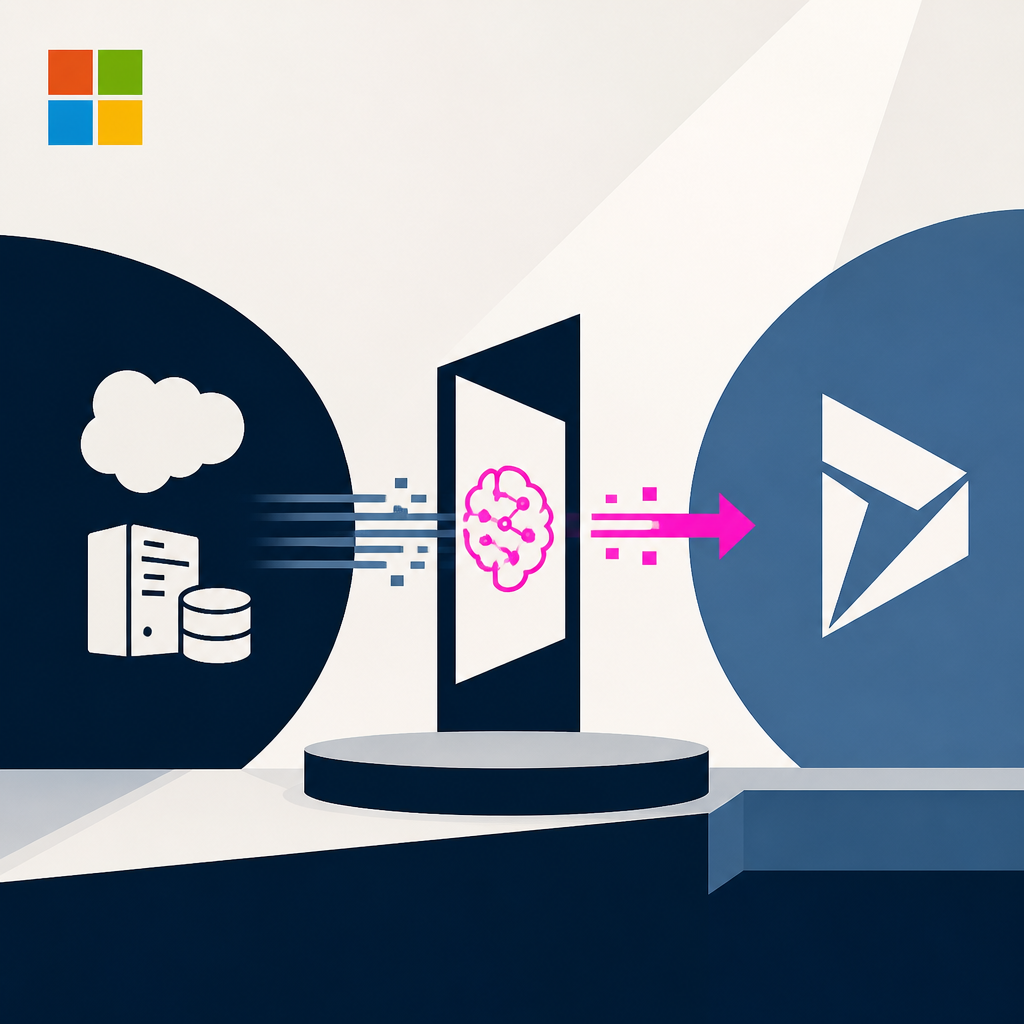
Microsoft released Dynamics 365 Activate to convert Salesforce CRM implementations into its Dynamics 365 offering using AI for migration planning. The tool is available as a public preview and Microsoft says it will add additional CRM and ERP migration scenarios starting later this year. This shifts migration work toward AI-assisted profiling of data, processes, customizations, and dependencies to reduce manual effort and migration risk.
Clay raised a $115M Series D to push its go-to-market platform toward AI agents for sales execution. The round values Clay at $7.1B, after a $3.1B Series C closed just over a year ago. It also launched a $1M fund to train “GTM engineers,” expanding its focus from GTM data and campaigns to agents that decide and run next-step sales actions.
Certinia launched a new System of Action and expanded its Veda AI suite to support autonomous service operations using AI agents. The rollout added 14 new Veda AI agents, bringing the total to 24. It introduces three-tier agent architecture tied to workflow integrations and expands VIAs from 64 to 135, with a stated roadmap to cover 100% agentic capability by year-end.
Apple launched its first foldable iPhone, the iPhone Duo, and showed it as a book-like device with an exterior and internal display. It goes on sale October 23 at a starting price of $1,999. The phone will shift iPhone sales into the foldable market for iOS users, with pre-orders beginning October 16.
Listen Labs failed to close a planned $125 million Series C after walking away from a signed $1.5 billion-valuation term sheet amid acquisition talks with Salesforce. Salesforce discussions were reported to be for around $2 billion. Without the deal, the startup is expected to return to market with a target valuation of $2 billion or higher.
Every AI story that matters,
in your inbox by 8am.
TLDRocket reads all relevant sources, removes duplicate coverage, and summarises the
day in two minutes. Follow companies and topics for alerts, or get the
briefing in Slack. Free, no spam, unsubscribe anytime.
Reading TLDRocket needs no cookies, and the readership counts we rely on come from
our own cookieless analytics. Google Analytics is the exception: it sets cookies and
reports to Google, so it stays switched off until you allow it. You can change your
mind any time from “Cookie settings” in the footer.
Strictly necessary
Session security and form protection (tldrocket-session,
XSRF-TOKEN, 2 hours). The site cannot work without them,
so they need no consent.
Always on
Google Analytics 4 (_ga,
_ga_<id>, up to 2 years). Measures which
stories and sections readers use. Google acts as a third-party processor and may
store the data outside the EU. No advertising, no profiling, no data sold.