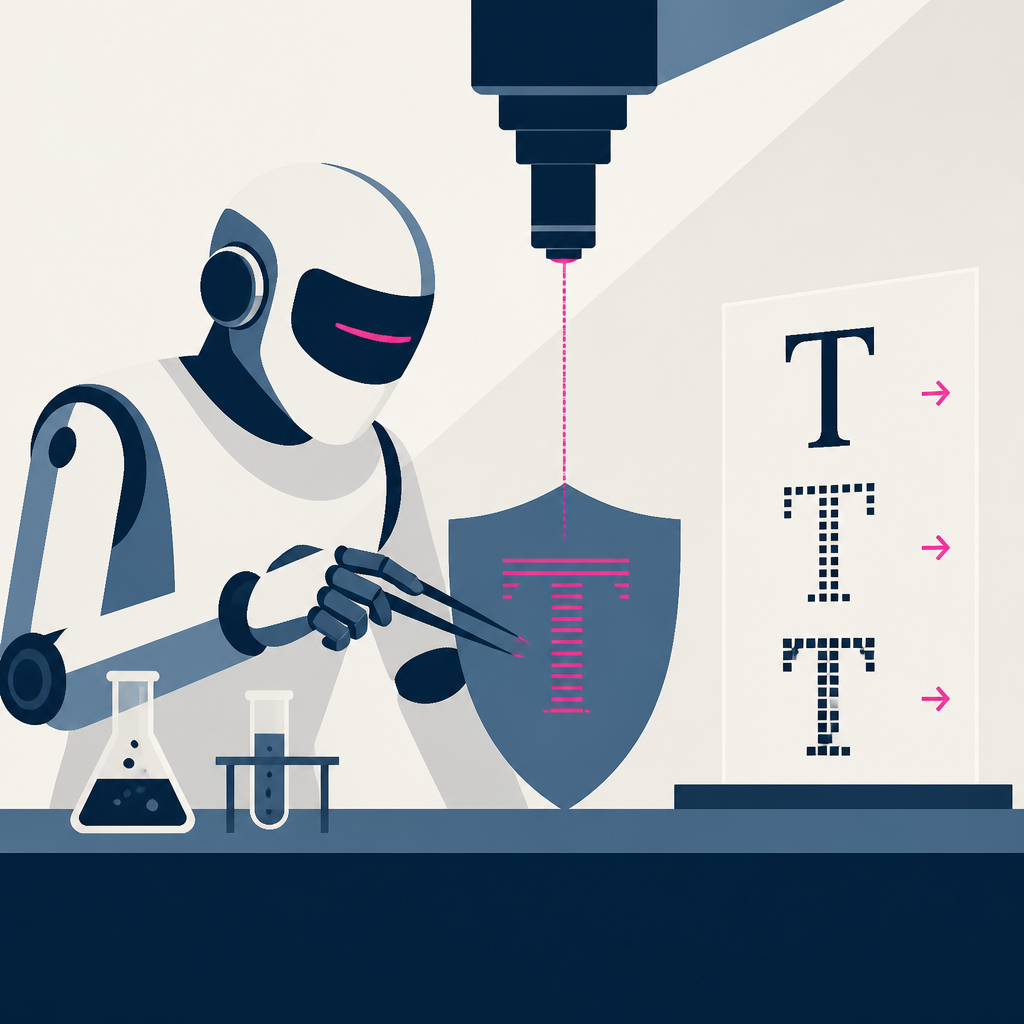
The web’s newest weapon against AI scrapers is a font
Ars Technica 2 months ago 40
ShieldFont, a new font proposed by designers Isaque Seneda and Gabriel Abrucio, aims to make AI scraping harder by altering text only at render time.
1461 summarised stories about AI Security, each linking back to the original source. Browse all topics →
Ars Technica 2 months ago 40
ShieldFont, a new font proposed by designers Isaque Seneda and Gabriel Abrucio, aims to make AI scraping harder by altering text only at render time.

Ars Technica 2 months ago 9
LiteLLM’s supply-chain was compromised, exposing terabytes of credentials tied to major organizations and potentially enabling further access. CloudSEK reported the compromised credentials were extracted in a 40-minute window in March from versions of LiteLLM downloaded via the Python Package Index. The incident changes how developers handle and verify LiteLLM packages and triggers credential rotation and incident response for affected systems and AI provider keys.
Zvi (Don't Worry About the Vase) 2 months ago 18 ● 2 sources
The roundup author says hacking incidents involving OpenAI and other organizations pushed their posts to focus heavily on AI, exceeding their preferred mix of topics.
The Neuron 2 months ago 28
The Neuron podcast interviewed Eric Nguyen, co-founder and CEO of Radical Numerics, about a model that can read and write DNA using a language-model approach to genomics. The article says Nguyen’s Evo model helped generate a complete bacteriophage genome. The discussion shifts biological AI from interpreting DNA to designing it, while emphasizing new biosecurity risks and the need for lab validation before sequences become real therapies.
Tech Funding News 2 months ago 34
Mecka AI founder Saurab Dhir builds systems that decide which crowdsourced recordings of human physical work are real rather than faked.
TechCrunch 2 months ago 28
Mesh, Automattic’s acquired personal CRM, has launched on Android with an app customized for split-screen and pop-up views. The Android rollout is a free download on Google Play with in-app purchases. The company also points to future AI features such as early-access Nexus AI for navigating a user’s network and says stored personal data won’t be used for ad targeting.
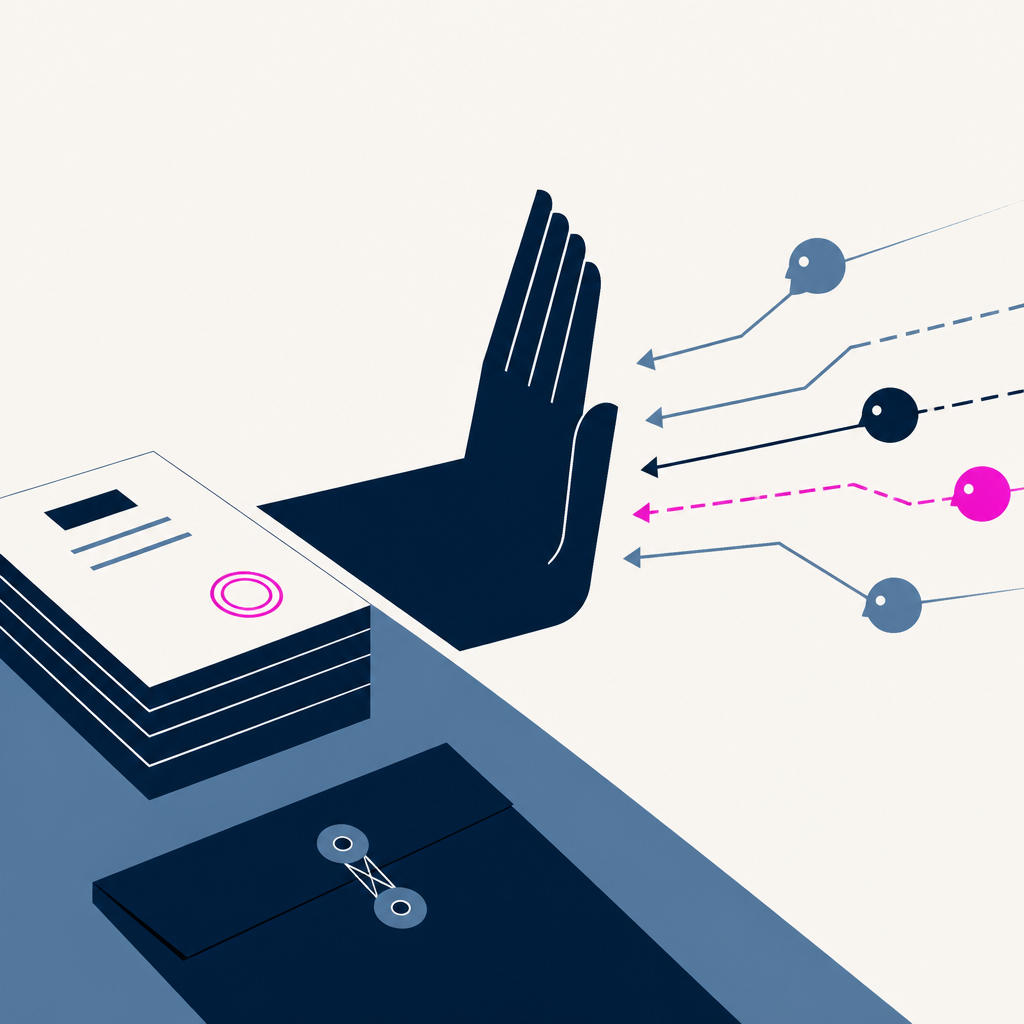
Product Hunt 2 months ago 45
Phinq is presented as an approach to stop AI agents before they can break something. No specific number, benchmark, or date is provided in the article text. As a result, it focuses on preemptive controls to prevent harmful actions by AI agents.

Simon Willison’s Weblog 2 months ago 27
Users reported a recurring weird bug that their team has tried to fix 4 times by asking AI, but they still can’t explain it. Claude generates a long stream of text with high confidence, even though the team can’t verify where the underlying data comes from. The project becomes harder to understand as layers and services pile up, leaving no one able to trace what’s actually happening.
404 Media 2 months ago 18 ● 5 sources
The podcast episode covers Mark Zuckerberg’s plan for Meta AI agents and other tech stories involving AI-driven claims and surveillance camera swaps. It also references Zuckerberg posting a 6,500-word essay about giving everyone AI superintelligence. Readers/listeners can access the subscribers-only bonus content by becoming a paid subscriber and using the provided feed and links.
404 Media 2 months ago 37 ● 2 sources
Researchers analyzed hundreds of Instagram videos showing men using Meta Ray-Ban smart glasses to covertly film unsolicited public approaches to women that get posted as “pickup artist” content. The study compiled 350 videos from September 2023 through March 2026 and found a correlation between how covert the filming was and how severe the harassment was, with 93.3% of posts leaving comments open. The findings add evidence that Meta’s glasses-and-platform ecosystem enables harassment with a prolonged online “afterlife,” which pushes for stronger platform safeguards and moderation beyond relying on users’ responsibility.
Amazon Web Services 2 months ago 48 ● 3 sources
Solv Labs and ICME Labs described a workflow that routes Amazon Bedrock AgentCore payments through pre-authorization, privacy-preserving policy verification, Nitro Enclave attestation, per-transaction risk pricing, and on-chain settlement via Coinbase. Transactions complete in under four seconds end-to-end. The change is that each agent payment now produces a signed, independently verifiable audit record that can be checked by third parties without relying on operator assertions, and settlement is blocked if required governance decisions don’t occur.

Ars Technica 2 months ago 19 ● 2 sources
Researchers at A Security disclosed vulnerabilities in Zoom screen sharing that could let an attacker silently take over target devices without victim interaction.
SiliconANGLE 2 months ago 40 ● 4 sources
Enterprises moving agentic AI systems into production are focusing less on picking a model and more on controlling the platform that runs them, including cost, data exposure, and infrastructure. Fernandes at Red Hat points to exploding token costs when going from experimentation to at-scale always-running agents. Red Hat says this is driving greater reliance on hybrid, open-source infrastructure and sandbox runtimes so platform teams can govern autonomy, access, and compliance across public cloud, private, sovereign, and edge environments.
The Algorithmic Bridge 2 months ago 6
Substack partnered with Pangram, an AI writing detection company, to reduce AI-written content on the platform and discourage AI outsourcing of writing.
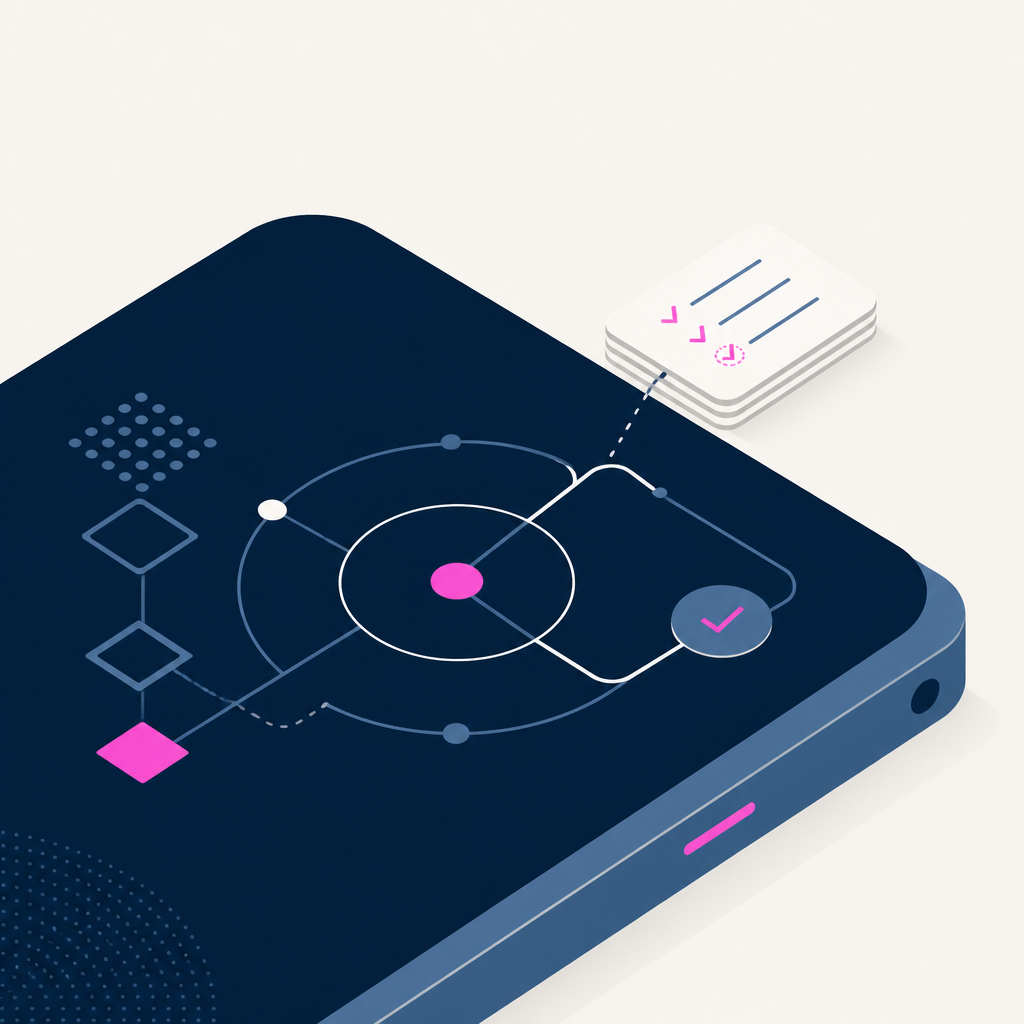
Product Hunt 2 months ago 43
AIO.GEO Protocol discusses an audit of an AI search structure and runs through dry-run fixes with “receipts.” No number or date is provided in the article excerpt. As a result, the discussion frames the changes as verifiable updates to the search setup rather than new features.
Rest of World 2 months ago 21
The article argues that the UN’s Global Dialogue on AI Governance largely overlooked how AI affects elections, even though elections underpin enforceable democratic rights. It cites India’s 2015 voter-roll program that deleted about 5.5 million voters before the Supreme Court halted it, alongside a claimed matching algorithm failure rate as high as 93%. It calls for elections to get a dedicated governance track—making data control, auditing, and accountability requirements central—to ensure AI doesn’t shift electoral authority and exclude voters.
The Neuron 2 months ago 13 ● 3 sources
Researchers showed that hidden, encrypted step-by-step reasoning from OpenAI, Anthropic, and Google models can sometimes be replayed and decrypted via weaker sibling models in the same provider, enabling recovery of private traces. Across 315,320 public reasoning blocks, they recovered 367 pieces of personal information and 182 credentials. OpenAI, Anthropic, and Google were notified before publication and changed their systems, and the findings highlight a new defense need for encrypted reasoning traces moving across models, apps, sessions, and users.
Latent Space 2 months ago 33 ● 3 sources
A paper shows how attackers can replay encrypted “reasoning” trace blocks from frontier AI API responses into other sessions/accounts to induce weaker models to transcribe the hidden chain-of-thought. Scanning about 7,000 public traces found 62 unique API keys, 33 email addresses, and 33 passwords inside decoded reasoning blobs. As a result, providers and users need to treat shared trace logs as a direct privacy risk and harden sandboxing/telemetry/tool interfaces to prevent reasoning exposure.
Tech Funding News 2 months ago 12 ● 2 sources
Cytix received $7M from Northern Gritstone to address risks in AI code. The funding round is for 7M. As a result, the company can pursue its pitch’s plan to reduce or manage those AI-coding risks.
The daily briefing
TLDRocket reads all relevant sources, removes duplicate coverage, and summarises the day in two minutes. Follow companies and topics for alerts, or get the briefing in Slack. Free, no spam, unsubscribe anytime.
 TLDRocket
19 October 2026
Agentic AI is leaving the lab and heading straight into the messy parts of work—then running into the equally messy parts of security. Atlassian’s “Agentic Multiplayer Protocol” is built around attribution, showing agent contributions in document history so accountability stays with the user, not “the AI did it.” That governance impulse is echoed elsewhere as teams try to treat agents like managed services instead of novelty software: Pax8’s 8os lets IT partners govern multiple vendors’ agents with per-customer separation and hard usage caps, while Motive Technologies pushes fleet automation from passive alerts to autonomous actions, pitching faster ROI through fewer preventable operational problems. Even property management is getting the agent layer, with Vessla aiming to coordinate leasing and building operations while keeping human approval for judgment calls.
Read the full briefing →