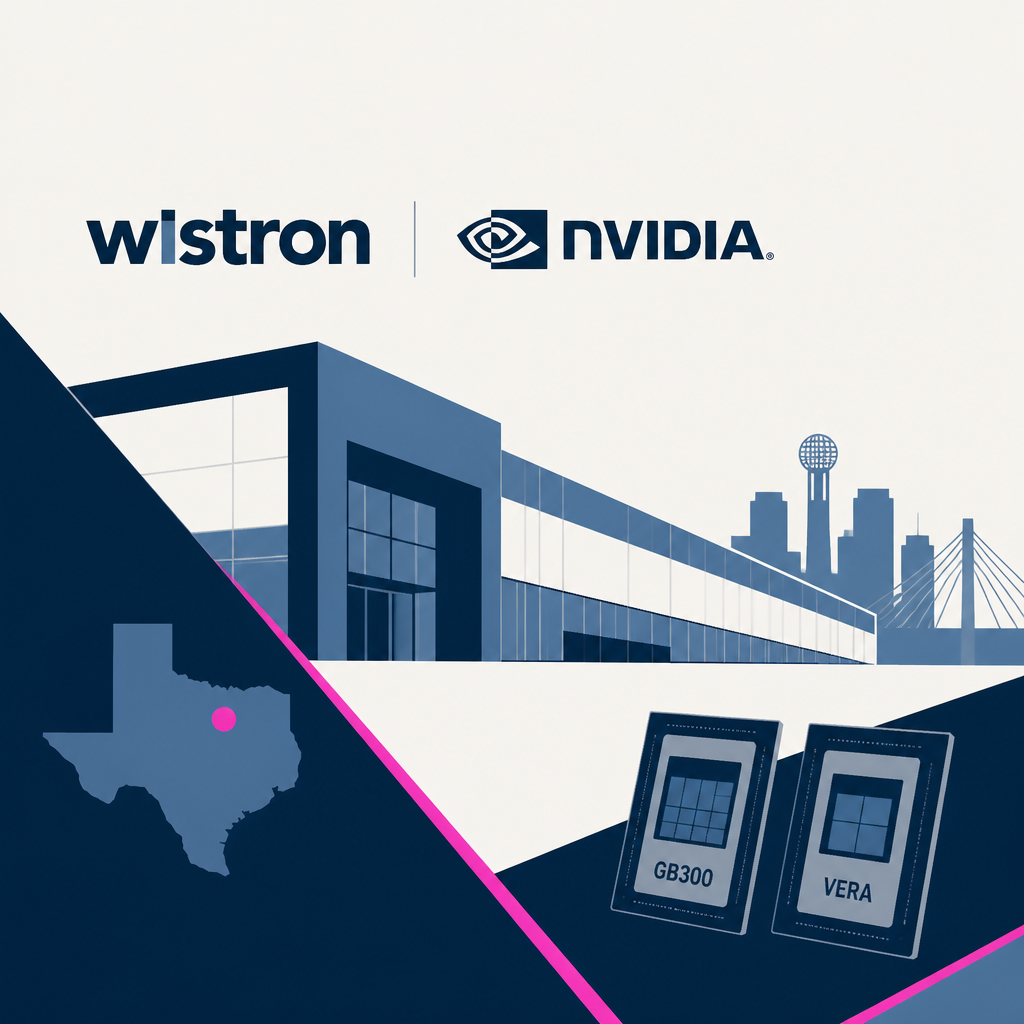
Wistron opened a 324,000-square-foot manufacturing plant in Fort Worth to produce NVIDIA's advanced AI superchips, representing a $700 million investment. The facility currently runs two production lines for the GB300 Grace Blackwell and Vera Rubin superchips, with plans to produce tens of thousands of boards per month and scale to 1,000 employees by year-end. The plant strengthens domestic AI infrastructure and supply chains while creating jobs across manufacturing, construction, and skilled trades.
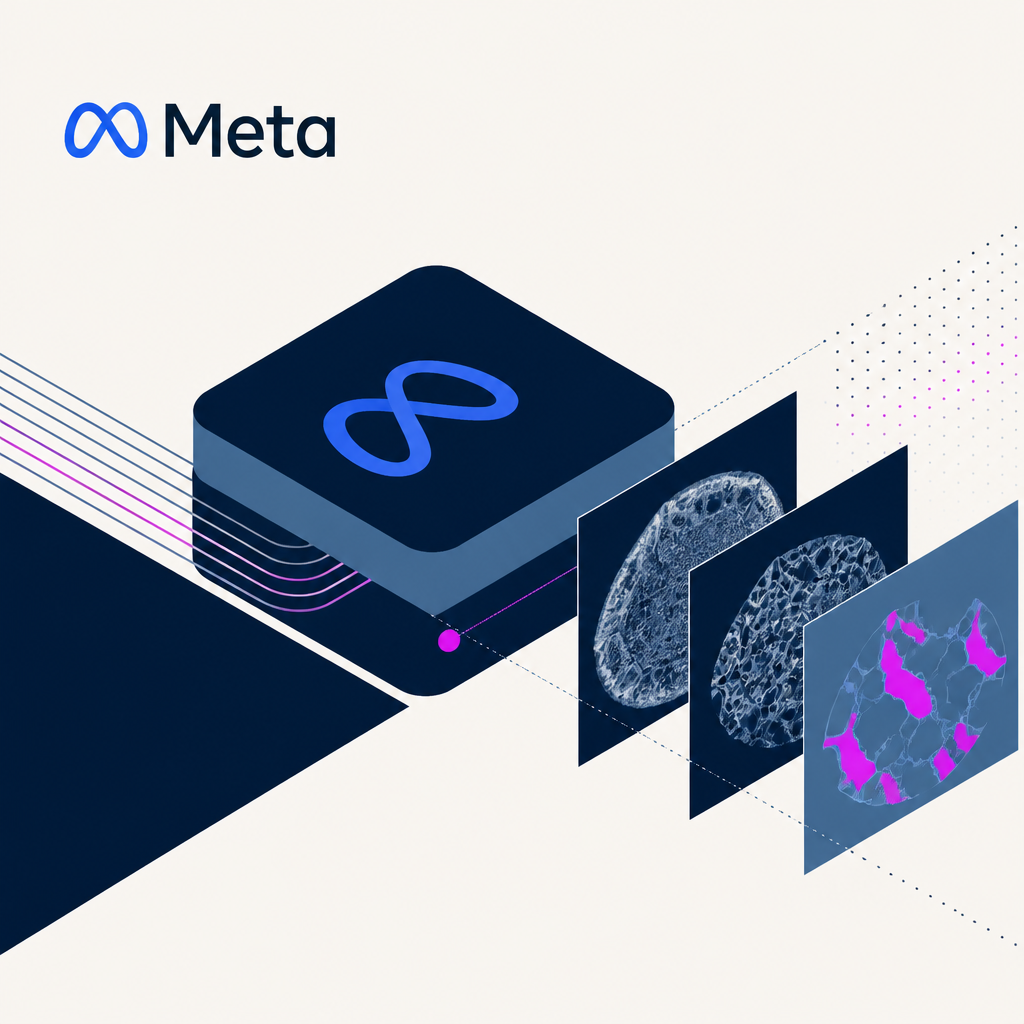
Lawrence Berkeley Lab and four other Department of Energy facilities deployed Meta's SAM 3 and DINOv3 models as part of the Genesis Mission's SYNAPS-I project to automate image segmentation in scientific research. The system processes X-ray and neutron imaging data that previously required weeks of manual annotation, now delivering fully segmented 3D volumes in approximately 15 minutes on 300 A100 GPUs. This real-time analysis enables scientists to observe dynamic biological processes and material changes as experiments occur, rather than analyzing data months later.
Simulation has become essential for training physical AI systems and robots, enabling developers to generate large amounts of training data cost-effectively rather than relying solely on real-world interaction. Multiple GPU-accelerated simulation engines now exist for different use cases, including MuJoCo, Isaac Sim, Isaac Lab, and Newton, each optimized for specific robotics tasks like reinforcement learning, synthetic data generation, or photorealistic rendering. This shift has created a layered infrastructure ecosystem where different tools specialize and interoperate, making high-quality simulated robot experience foundational to modern embodied AI development.
Data centers are projected to consume one-fifth of U.S. electricity by 2035, driven by AI compute demands. BloombergNEF estimates data center capacity will reach nearly 200 gigawatts with 64% of global AI chip power concentrated in the U.S. by 2033. Regional power grids face severe strain, with some utilities threatening to withdraw as electricity prices surge and capacity auctions become dominated by data center requests.
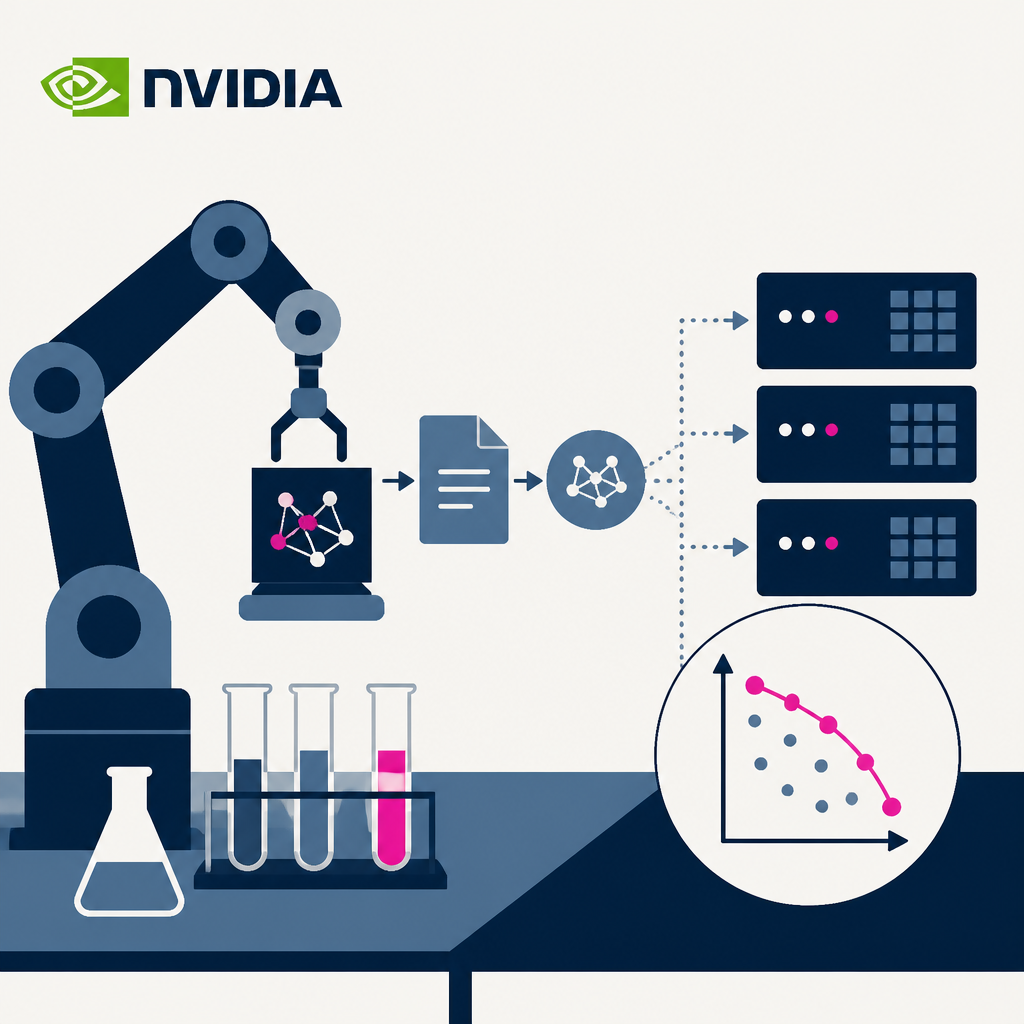
NVIDIA's srt-slurm framework automates the creation and validation of distributed LLM serving benchmarks by converting YAML configurations into reproducible SLURM workflows. The tutorial demonstrates using srtctl to define cluster configurations, execute parameter sweeps across DeepSeek-R1 models with disaggregated prefill-decode deployments, and analyze throughput-versus-latency trade-offs through Pareto frontier visualization. Validated recipes can then be submitted to real GPU clusters with preflight checks, monitoring, and reproducible experiment comparison.
Sakana AI received a supercomputing grant from Japan's government as one of seven institutions selected through the Generative AI Accelerator Challenge program. The grant provides access to a GPU cluster equipped with latest hardware for several months in 2024 to support foundation model development. The company plans to use the additional compute capacity to scale nature-inspired AI models and advance Japan's generative AI capabilities.
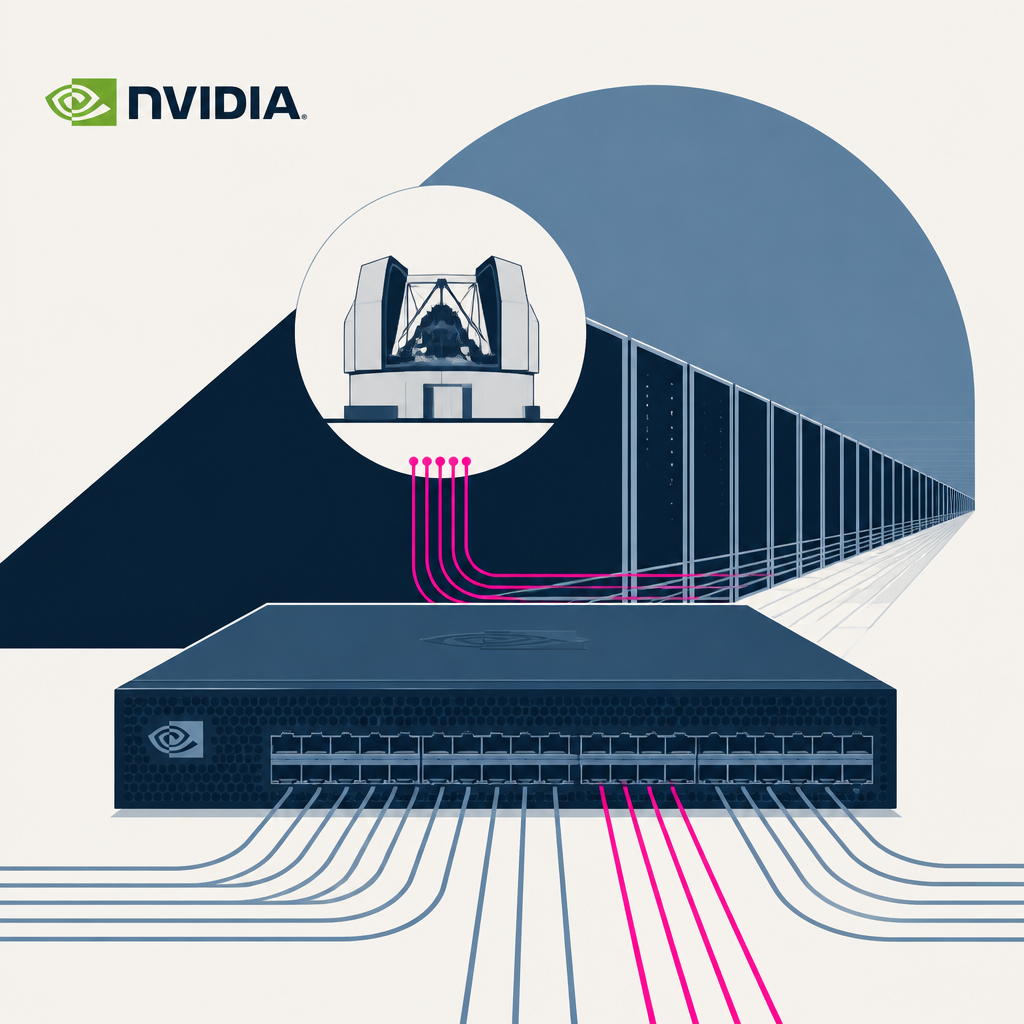
NVIDIA released Spectrum-6, a 102.4-terabit-per-second Ethernet switch system that doubles the capacity of previous-generation switches, designed to connect hundreds of thousands of GPUs in large AI training facilities. CoreWeave, Microsoft, Nebius, SpaceX AI and Tesla are among the first to deploy Spectrum-6 as part of NVIDIA's Vera Rubin platform. The switch enables better coordination between GPUs during large-scale training and inference, reducing bottlenecks that occur when GPUs need to exchange data continuously at gigascale.
Retrieval engineering—the process of assembling context for AI models to reason about—is emerging as a critical competitive advantage for AI applications, particularly those built around proprietary information. Production systems now combine vector search, keyword matching, ranking, filtering, and real-time inference into complex workflows that may trigger hundreds of retrieval operations per user request. Organizations are shifting from optimizing individual retrieval components to engineering complete retrieval workflows as unified systems, with AI Search Platforms consolidating what was previously stitched together from multiple services.
Microsoft has introduced Azure Container Apps Sandboxes as a runtime platform designed specifically for production AI agents, addressing infrastructure challenges like fast startup, stateful persistence, security, and tool integration. The platform features sub-second startup times from pre-warmed pools, supports execution of untrusted code in isolated environments, includes 1,400+ enterprise connectors, and manages identity and access control at the runtime layer rather than in prompts. This infrastructure shift aims to prevent the estimated 40% of agentic projects Gartner predicts will be canceled by 2027 due to unclear business value and inadequate risk controls, by providing enterprises with governance, scaling, and tool orchestration capabilities built into the platform.
European fintech funding in H1 shifted further toward AI-native companies as investor interest in sectors like AI and deeptech rose while other fintechs saw less backing. The article cites 58% as the share of fintechs/rounds tied to AI-native positioning. As a result, non–AI-native firms are implied to face tighter funding conditions compared with AI-native peers.
Advanced materials science is becoming critical to AI infrastructure, enabling semiconductors and data centers to handle greater processing power and energy demands. Materials companies like Syensqo are developing new polymers, elastomers, and cooling fluids while using AI tools to accelerate discovery cycles from years to months. As performance requirements intensify, materials innovation now determines the physical limits of what next-generation AI systems can achieve.
AMD launched Helios, its first rack-scale AI system, with Microsoft as a major new customer joining Meta, OpenAI, and Oracle. The Helios system is estimated to cost between $5 million and $5.5 million, compared to Nvidia's Vera Rubin at $3.5 million to $4 million, and AMD will begin shipping later this year. AMD's entry into rack systems could increase its data center GPU market share from 4.5% to potentially 20-25%, challenging Nvidia's 95% dominance in this segment.
Moonshine Micro released an open-source AI toolkit that brings voice recognition and synthesis to microcontrollers, enabling real-time voice agents on resource-constrained devices. The toolkit runs on the Raspberry Pi RP2350 (which costs 80 cents) using only 470 KB of RAM and includes voice-activity detection, speech-to-text, and neural speech synthesis. Developers can now build voice-controlled applications on embedded systems that previously lacked the memory and processing power for such capabilities.
Natural, a startup focused on enabling AI agents to conduct financial transactions, raised $30 million in Series A funding. The platform provides APIs for payments, wallets, cards, and billing specifically designed for autonomous agents, with features including agent identity verification, dispute mediation, and full transaction auditability. The funding positions Natural to become infrastructure for a growing economy where AI agents handle payments autonomously rather than humans initiating transactions manually.
Data centers powering AI models consume enormous amounts of energy and water while producing air pollution and greenhouse gas emissions, with GPUs in these facilities now drawing scrutiny for environmental and health impacts. Training Meta's Llama 3.1 could generate air pollution equivalent to 10,000 round-trip car journeys between Los Angeles and New York, and AI data centers' power consumption is projected to reach 165-326 terawatt-hours annually by 2028 in the US. Communities are increasingly concerned as data centers expand in their regions, raising utility costs and local pollution while many consumers question whether promised AI benefits justify the environmental costs.
Every AI story that matters,
in your inbox by 8am.
TLDRocket reads all relevant sources, removes duplicate coverage, and summarises the
day in two minutes. Follow companies and topics for alerts, or get the
briefing in Slack. Free, no spam, unsubscribe anytime.
Reading TLDRocket needs no cookies, and the readership counts we rely on come from
our own cookieless analytics. Google Analytics is the exception: it sets cookies and
reports to Google, so it stays switched off until you allow it. You can change your
mind any time from “Cookie settings” in the footer.
Strictly necessary
Session security and form protection (tldrocket-session,
XSRF-TOKEN, 2 hours). The site cannot work without them,
so they need no consent.
Always on
Google Analytics 4 (_ga,
_ga_<id>, up to 2 years). Measures which
stories and sections readers use. Google acts as a third-party processor and may
store the data outside the EU. No advertising, no profiling, no data sold.