We received a supercomputing grant from the Japanese government
Sakana AI ● Covered by 6 sources
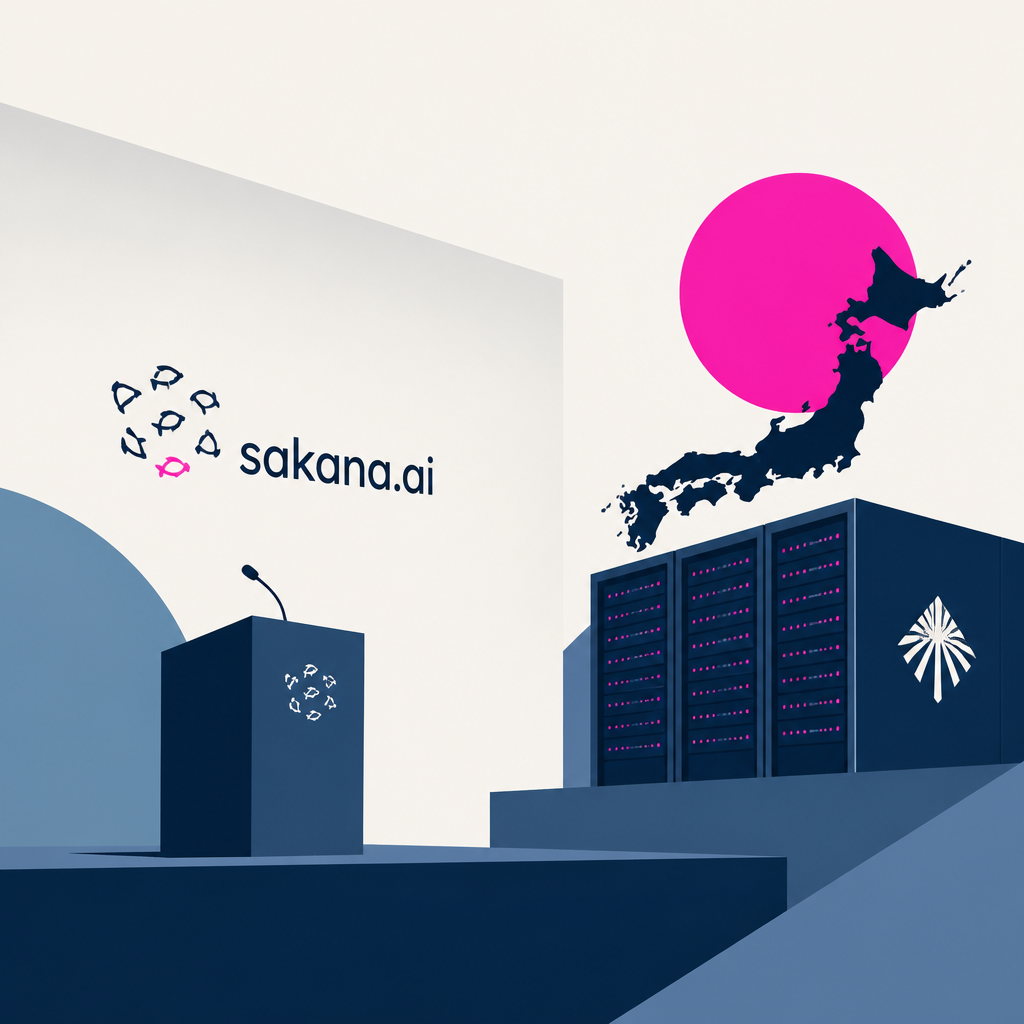
Sakana AI just landed a government-backed supercomputing grant in Japan. It's a big compute boost for a startup that's been proudly "GPU poor" until now.
Based on reporting by Sakana AI — read the original for the full story.
Summary, retelling and take written by AI under human oversight; images are AI-generated illustrations. How we work · Report an error
Tokyo-based Sakana AI is one of seven organizations tapped by Japan's government to receive serious GPU horsepower under a program called GENIAC, short for Generative AI Accelerator Challenge. The grant comes from NEDO, the New Energy and Industrial Technology Development Organization, which sits under the Ministry of Economy, Trade and Industry. METI has been running this application process since last year, looking for R&D efforts that beef up Japan's domestic AI infrastructure as the country pushes into the post-5G era.
What the seven winners actually get is months of access, running through 2024, to a supercomputing cluster stacked with current-generation GPUs, the kind needed to train frontier-scale foundation models. That's the real prize here. Training large models from scratch is brutally expensive, and access to compute has become the dividing line between labs that can experiment freely and labs that can't.
Sakana AI has been open about sitting on the wrong side of that line. The company describes itself as running lean, firmly in "GPU Poor" territory compared to the OpenAIs and Googles of the world. This grant doesn't erase that gap, but it does give the team a temporary runway to scale up work they've already been doing on nature-inspired AI architectures, ideas that borrow structural principles from biology rather than just stacking more parameters onto standard transformer designs.
The bigger context is Japan's own ambitions. Tokyo has been visibly trying to cultivate a homegrown generative AI ecosystem rather than simply importing models built in the US or China, and GENIAC looks like one concrete lever for doing that: pick promising domestic teams, hand them compute they couldn't otherwise afford, and see what comes out the other side. Sakana AI, founded by former Google DeepMind researchers, is clearly betting that a distinctive research angle plus a compute infusion, even a temporary one, can punch above its weight.
My take — AI-written commentary, not fact-checked reporting
I like seeing a government subsidize compute access rather than just throwing money at chip fabs or vague AI strategy documents, that's the actual bottleneck for smaller labs. But let's be honest: a few months of borrowed GPUs is a nice boost, not a structural fix, and Japan's generative AI ecosystem still needs sustained, not episodic, investment if it wants to matter globally beyond hosting a handful of clever nature-inspired research projects.
Read more about this at: Sakana AI