AMD reported second-quarter data center revenue of $6.7 billion, up 107% year-over-year, as the company transitions to full-stack AI infrastructure with its new Helios platform. The company posted total revenue of $11.54 billion and guided for third-quarter revenue of $13 billion, signaling continued acceleration in AI-related demand. AMD is shifting from selling individual chips to competing as a complete systems provider, positioning itself to capture larger hyperscale AI infrastructure contracts against Nvidia.
SpaceX reported its first earnings beat since going public in June, with revenue up 92% to $7.81 billion and per-share losses narrowly missing expectations. However, the company disclosed $18.37 billion in capital spending for the quarter—nearly $5.4 billion above analyst estimates, with $15.83 billion directed to its AI segment including xAI operations. The stock fell 8% despite the revenue beat as investors balked at the elevated capex guidance and upcoming insider share lockup expiration.
SpaceX has purchased $329 million worth of Tesla Megapack battery storage devices so far in 2026, with $295 million spent in the second quarter alone, according to the company's earnings report. The batteries are being deployed at xAI data centers that SpaceX acquired earlier this year, and before the merger xAI had already bought $430 million worth of Megapacks. Battery systems help AI data centers manage fluctuating power demands from GPU training and inference, smoothing peak loads to reduce costs and prevent generator overload.
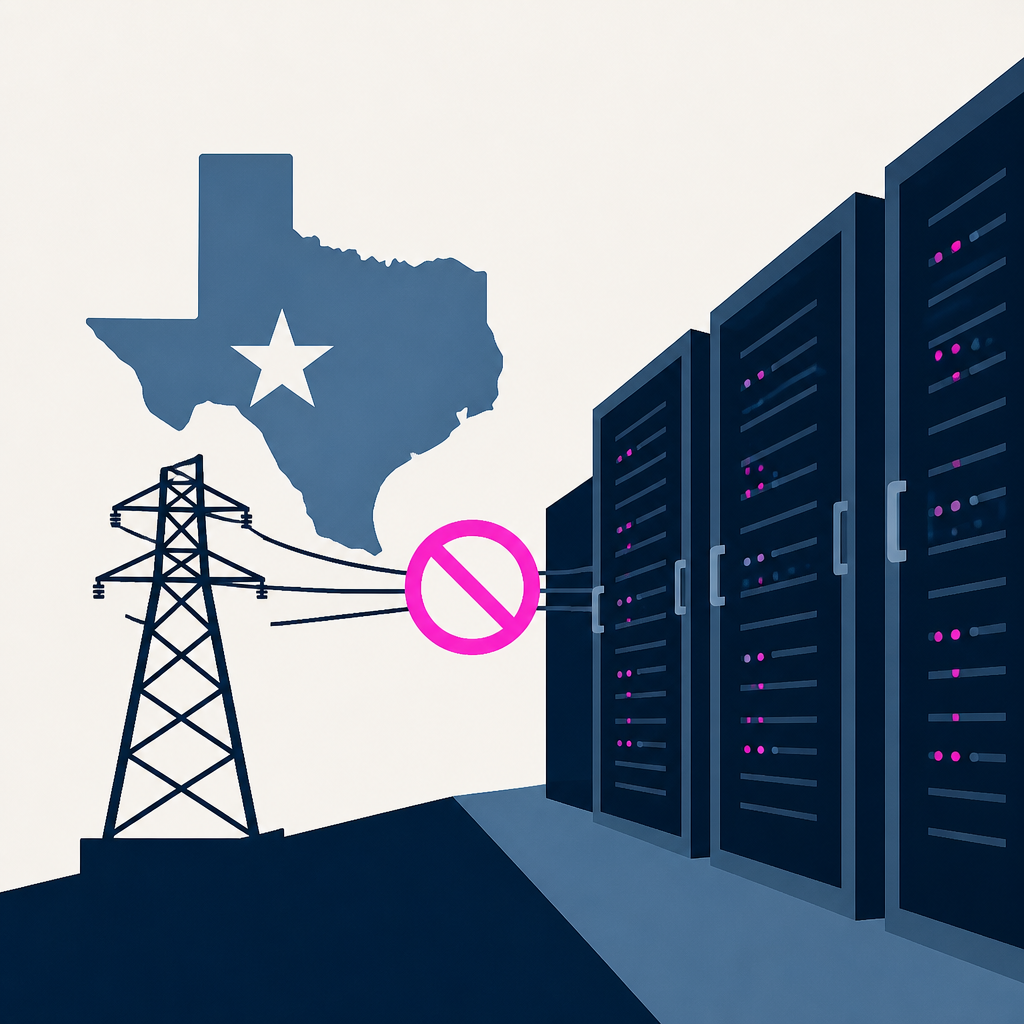
Texas Governor Greg Abbott declared a moratorium on new data center power grid connections, citing the need for comprehensive audits of projects' impact on the grid and communities. ERCOT, Texas's independent grid operator, must now verify all data centers in its interconnection process before approvals can proceed. The halt slows Texas's rapid expansion as a data center hub despite the state's previous aggressive recruitment of the industry through tax breaks and deregulation.
Anthropic signed a $10 billion compute deal with Volta, a newly founded cloud startup, to receive cloud capacity over six years from a Norway data center built with Bitdeer and powered by Nvidia's Vera Rubin chips at 133 megawatts. Anthropic secured this agreement as part of an aggressive expansion of compute resources to compete with rivals, following similar recent deals with SpaceX and Amazon. The arrangement gives Volta a major client and establishes Bitdeer's involvement in developing AI infrastructure outside crypto mining.
AMD's data center revenue reached $6.7 billion in its latest quarter, more than doubling year-over-year as demand for AI infrastructure surges, while gaming revenue fell 31 percent to $779 million due to price increases and component shortages affecting console and handheld sales. Data center now represents 58% of AMD's total revenue of $11.5 billion, up from $3.2 billion in the same quarter last year. AMD is pivoting its business toward enterprise AI customers while de-emphasizing consumer gaming hardware.
SpaceX's AI revenue tripled to $2.6 billion, driven by compute deals with Anthropic and Google that position the company against competitors like CoreWeave. The AI division lost $1.5 billion this quarter, down from larger losses in the prior year. SpaceX is shifting toward providing infrastructure services to other AI companies rather than developing AI products itself.
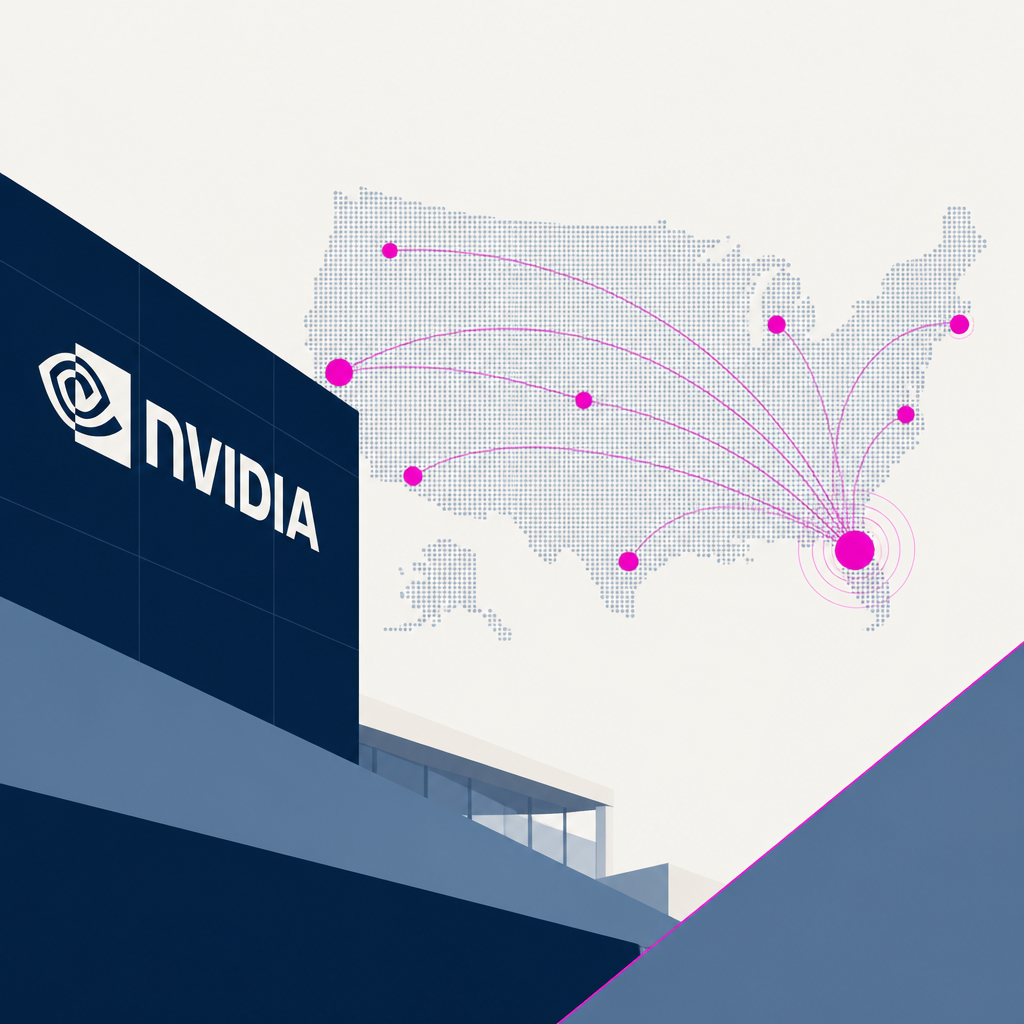
NVIDIA is participating in the NSF's State and Regional AI Infrastructure Hubs program, which launched today to expand AI computing access and education across US universities and regional consortia. The University of Florida model from 2020, which grew to over 300 AI-focused faculty and $511 million in research awards, will serve as a national template for the program. Regional hubs will enable institutions to share computing resources, develop workforce training pathways, and connect AI research infrastructure to local economic priorities and employer needs.
Texas Governor Greg Abbott announced that all new data center projects must undergo audits by state regulators, citing concerns about grid capacity and rising electricity prices. ERCOT's interconnection queue has grown to 474 gigawatts of pending projects—more than 90% data centers—more than doubling from 233 gigawatts in January, representing over five times the grid's peak demand. The audits could slow or halt Texas's role as a major data center hub if regulators determine projects pose risks to grid reliability or electricity costs.
NVIDIA is unveiling storage infrastructure advancements designed to handle surging AI data demands, including the Vera CPU which delivers 3.21x higher throughput than x86 processors in compression and encryption pipelines. The company is open-sourcing cuFile APIs to enable GPUs to read and write directly to storage, and launching the Storage-Next initiative with over 40 vendors to align on GPU-driven storage standards. These changes shift storage from a passive repository to an active part of the data path, allowing AI systems to access data in microseconds rather than minutes and reducing the gap between AI computing capacity and available memory.
Nvidia open-sourced its cuFile API, which enables GPUs to read data directly from storage in milliseconds by bypassing the CPU and system memory. The API uses direct memory access (DMA) to move data from NVMe drives straight into GPU memory, with the company also launching Storage-Next, an industry initiative involving 40 storage and flash vendors to optimize GPU-driven storage. This direct access path prevents GPU starvation—where GPUs sit idle waiting for data—and allows AI inference and retrieval-augmented generation workloads to run faster by eliminating memory bottlenecks.
Runware, an AI infrastructure company, announced the Sonic Inference Pod, a modular transportable data center unit designed for AI inference workloads. The company currently operates 10 pods deployed across the U.S., Europe, and Asia-Pacific, with 160 available sites, following a $50 million Series A funding round in December. The pod design enables faster deployment, distributed computing closer to users, and avoids water cooling, positioning Runware as an alternative to traditional hyperscale data center expansion.
Nscale, a London-based data centre builder, will provide $1 million worth of compute resources to AI researchers at Oxford, UCL, and Imperial College London. The agreement reflects growing demand for domestically controlled computing capacity among UK research institutions developing advanced AI systems. This arrangement allows British researchers to access sovereign compute infrastructure without relying on international cloud providers.
Endeavor Optical Networks, a new startup, secured $10.75 million to build a satellite network using lasers to transmit data between data centers at speeds exceeding 200 terabits per second, replacing undersea fiber optic cables. The company plans to launch roughly 20 satellites with an initial demo spacecraft targeted for end of 2027, aiming for at least 800 gigabits per second optical downlink throughput. If successful, EON would offer hyperscalers and AI labs faster, more reliable intercontinental data routes, particularly on expensive or underserved corridors like France-to-Australia.
Texas governor Greg Abbott directed state regulators to audit data centers before they connect to the grid, requiring disclosure of incentives received, grid dependency, water usage, and community impact plans. New data center proposals will face additional verification steps through the Public Utility Commission of Texas and ERCOT. The audit requirement could delay new facility approvals and may reduce the pace of data center expansion in the state.
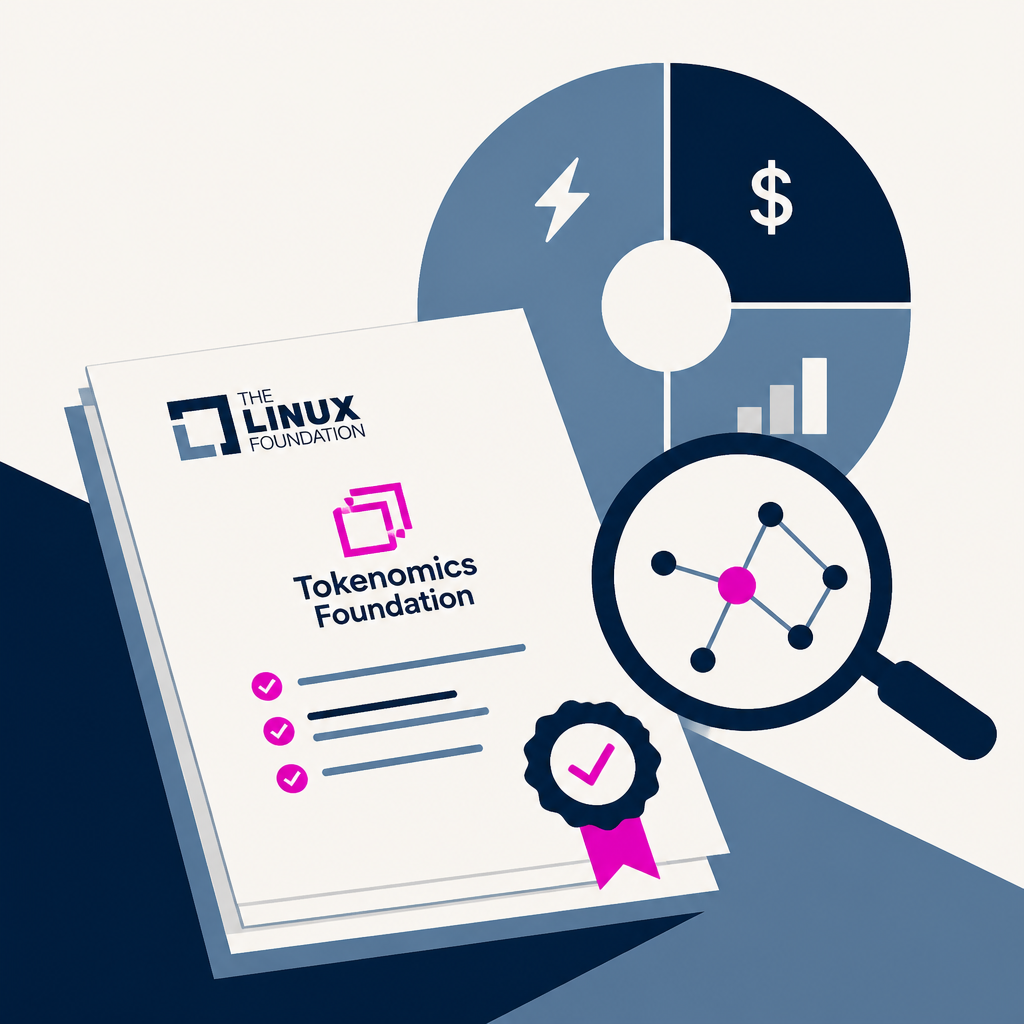
The Linux Foundation created the Tokenomics Foundation to establish shared standards for AI companies to report costs and benefits of their models, addressing the lack of consensus on energy requirements and model selection across thousands of different AI systems. The initiative aims to create common disclosure parameters so that costs and performance can be directly compared. This enables companies and customers to make more informed decisions about AI spending and model selection based on standardized metrics rather than proprietary claims.
Valar Atomics, a nuclear startup founded by a high school dropout, raised $1 billion in Series B funding led by Sequoia Capital at a $6 billion valuation. The company achieved self-sustaining criticality with its Ward 250 reactor in June and demonstrated it powering an Nvidia Blackwell chip, marking the first time an advanced reactor directly powered AI infrastructure. The funding and milestone signal investor confidence in nuclear energy as a solution to AI's electricity demands, with Valar now focused on scaling manufacturing to produce reactor fleets rather than one-off plants.
Nuclear startup Valar Atomics raised $1 billion in equity funding led by Sequoia, valuing the company at $6 billion, plus an additional $200 million credit line. The company has demonstrated its Ward-250 small modular reactor achieving criticality in seven months and partnered with Nvidia to develop a waterless 30-MW AI power facility. The funding accelerates Valar's goal of manufacturing entire fleets of small modular reactors to meet rising energy demands from AI data centers.
Dutch startup Ore Energy raised $43 million in Series A funding to scale its iron-air battery technology, with investors viewing long-duration energy storage as critical for Europe's AI infrastructure needs. The round valued the company at $16 million post-money. The battery technology enables grid-scale energy storage to support renewable power systems serving data centers and other energy-intensive applications.
Aramb launched an operating system for AI agents that lets users hire agents or build their own via its SDK. The setup is claimed to take 20 minutes after installing @aramb-ai/sdk. It introduces a single API covering runtime, memory, browser, tools, models, and billing so agents can be launched and monetized through one interface.
Rafay Systems is positioning itself to provide the operating software layer for AI cloud providers, helping them turn expensive GPU infrastructure into secure, multitenant services. The company's key differentiator is rapid deployment capability—compressing delivery cycles from months to weeks or days—rather than just software alone. Providers that can operationalize infrastructure quickly and offer frictionless customer experiences will win against those relying solely on GPU ownership.
Every AI story that matters,
in your inbox by 8am.
TLDRocket reads all relevant sources, removes duplicate coverage, and summarises the
day in two minutes. Follow companies and topics for alerts, or get the
briefing in Slack. Free, no spam, unsubscribe anytime.
Reading TLDRocket needs no cookies, and the readership counts we rely on come from
our own cookieless analytics. Google Analytics is the exception: it sets cookies and
reports to Google, so it stays switched off until you allow it. You can change your
mind any time from “Cookie settings” in the footer.
Strictly necessary
Session security and form protection (tldrocket-session,
XSRF-TOKEN, 2 hours). The site cannot work without them,
so they need no consent.
Always on
Google Analytics 4 (_ga,
_ga_<id>, up to 2 years). Measures which
stories and sections readers use. Google acts as a third-party processor and may
store the data outside the EU. No advertising, no profiling, no data sold.