Voice-agent latency benchmarks based on time-to-first-token (TTFT) and related measures are published across the full voice stack, including LLMs, speech-to-text, text-to-speech, and speech-to-speech. The practical voice-to-voice target is about 700ms of TTFT budget within a 700ms to 1.2s end-to-end turn. Providers and teams are encouraged to separate generation-start latency (TTFT) from first-sentence completion (TTFS) and treat vendor timing definitions, workload settings, and warm-start behavior as the deciding factors instead of a single TTFT figure.
Google AI researchers released EnvHarness, a programmable wrapper that converts static agent benchmarks into adaptive training environments without changing the underlying simulator or human-built verifiers. It reports up to a 9.0-point gain on held-out tasks and 9.8% fewer execution steps across five benchmarks. Skills mined this way improve when the same reset/step-based interfaces are used, and the release provides Apache-2.0 Python plus drivers for six environments while requiring resettable environments.
SpaceX confirmed that a secret foundry it is building in Bastrop, Texas will cast gas-turbine blades and vanes to speed up AI data-center power delivery. It aims to accelerate turbine production by up to 18 months. As a result, faster rollout of gas turbines comes alongside renewed pollution and health lawsuits and studies tied to turbine emissions.
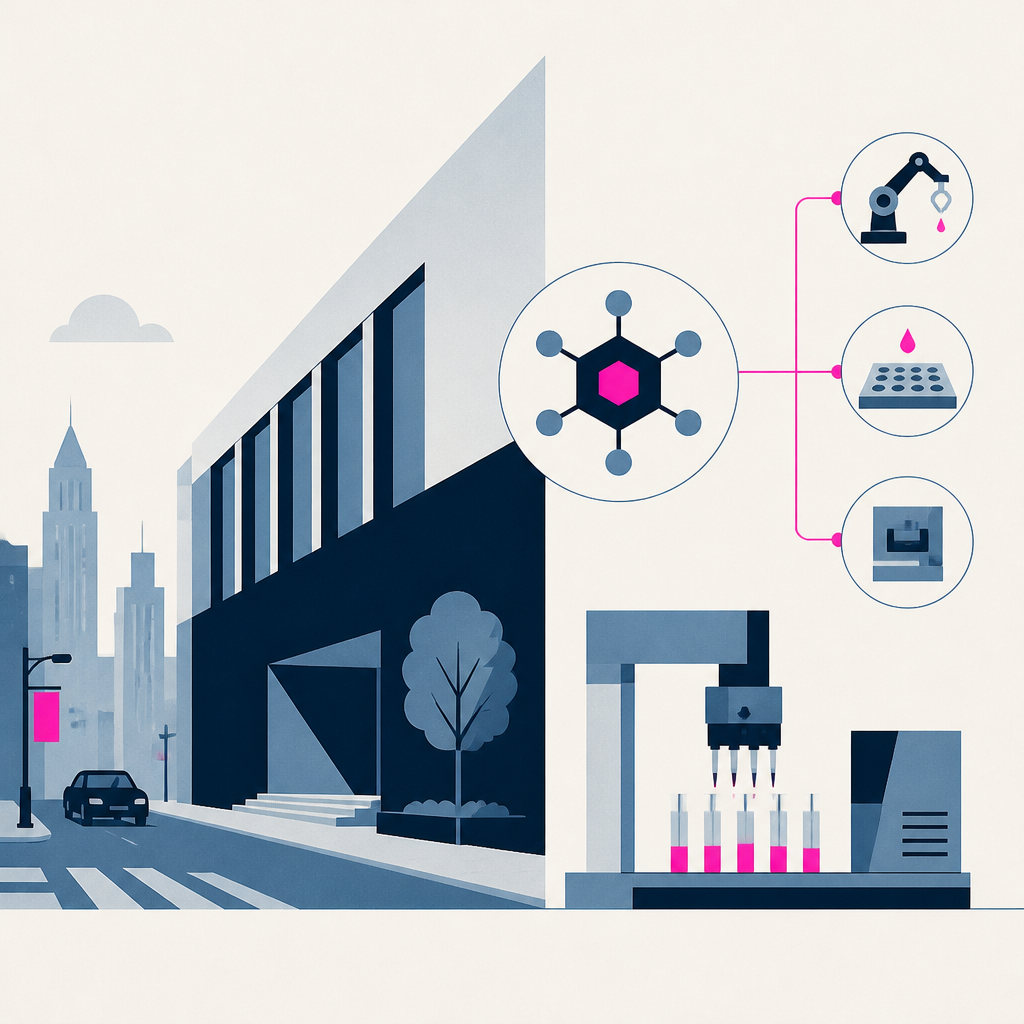
Anthropic and HHMI Janelia opened a research preview of a Model Hardware Standard (MHS) to let AI agents use programmable lab and factory equipment via a shared read/write interface with safety tags. One early partner demo using MHS recovered a quantum laser’s lock in 695 of 700 trials. If adopted, it should cut the time to integrate agent software with physical hardware from weeks or months down to hours or minutes, enabling more automated experiments.
AI agents are shifting retrieval needs so that evidence delivery must be correct and timely for systems that investigate, reason, and act on users’ behalf. The article highlights that when retrieval is commoditized, competitive advantage shifts to decisioning, i.e., deciding what an agent should see and in what order before it acts. Engineers will therefore focus on end-to-end retrieval engineering workflows (hybrid retrieval, real-time signals, ranking, inference, and experimentation) rather than only embeddings or vector search.
The article argues that most AI startups prioritize speed to ship and learn, building on existing tools rather than optimizing infrastructure until later growth pressures appear. It says infrastructure constraints often become unavoidable by Series A. It recommends preserving architectural optionality—avoiding deep proprietary vendor lock-in and planning for portability—so later cost, latency, and edge/edge-like deployment demands can be met without starting over.
The five-day World Humanoid Robot Games in Beijing showcased humanoid robots in events that included visible failures. Honor’s robot lost a leg mid-sprint during the August 26, 2026 competitions. The coverage shifts attention to how far robots have come while also underscoring how often they still stumble under real running and contact routines.
Anthropic opened a research preview of the Model Hardware Standard (MHS), a shared specification that lets AI agents discover and operate physical devices via a standardized driver instead of bespoke translators. MHS reduced a Carnegie Mellon liquid-handling dose-response workflow from several weeks to about eight hours to produce a completed curve. As a result, device integration time drops to hours or minutes and safety limits can be enforced through the driver across model-agnostic, MCP-compatible setups.
AI hyperscalers are issuing large amounts of corporate debt while buying chips and building data centers, and that demand has diverted capital away from Treasuries. Investment-grade corporate bond issuance reached about $1.7 trillion year-to-date through July, keeping corporate yield spreads compressed. Instead of higher corporate borrowing costs relative to Treasuries, Treasury yields have risen to clear the market, with feedback-loop concerns and signs of market fatigue emerging.
The article argues that unbounded recursive self-improvement is mathematically possible but practically constrained by factors like generation time and physical limits affecting iteration speed and compute. It cites an OpenAI chip called Jalapeño that was built in about 16 months and reported to deliver 1.5–1.9x higher tokens-per-megawatt peak throughput than comparable Nvidia silicon. As a result, the piece shifts focus from endless RSI to faster, segmented progress across open models and more specialized AI hardware rather than expecting infinite acceleration in AI capabilities.
Every AI story that matters,
in your inbox by 8am.
TLDRocket reads all relevant sources, removes duplicate coverage, and summarises the
day in two minutes. Follow companies and topics for alerts, or get the
briefing in Slack. Free, no spam, unsubscribe anytime.
Reading TLDRocket needs no cookies, and the readership counts we rely on come from
our own cookieless analytics. Google Analytics is the exception: it sets cookies and
reports to Google, so it stays switched off until you allow it. You can change your
mind any time from “Cookie settings” in the footer.
Strictly necessary
Session security and form protection (tldrocket-session,
XSRF-TOKEN, 2 hours). The site cannot work without them,
so they need no consent.
Always on
Google Analytics 4 (_ga,
_ga_<id>, up to 2 years). Measures which
stories and sections readers use. Google acts as a third-party processor and may
store the data outside the EU. No advertising, no profiling, no data sold.