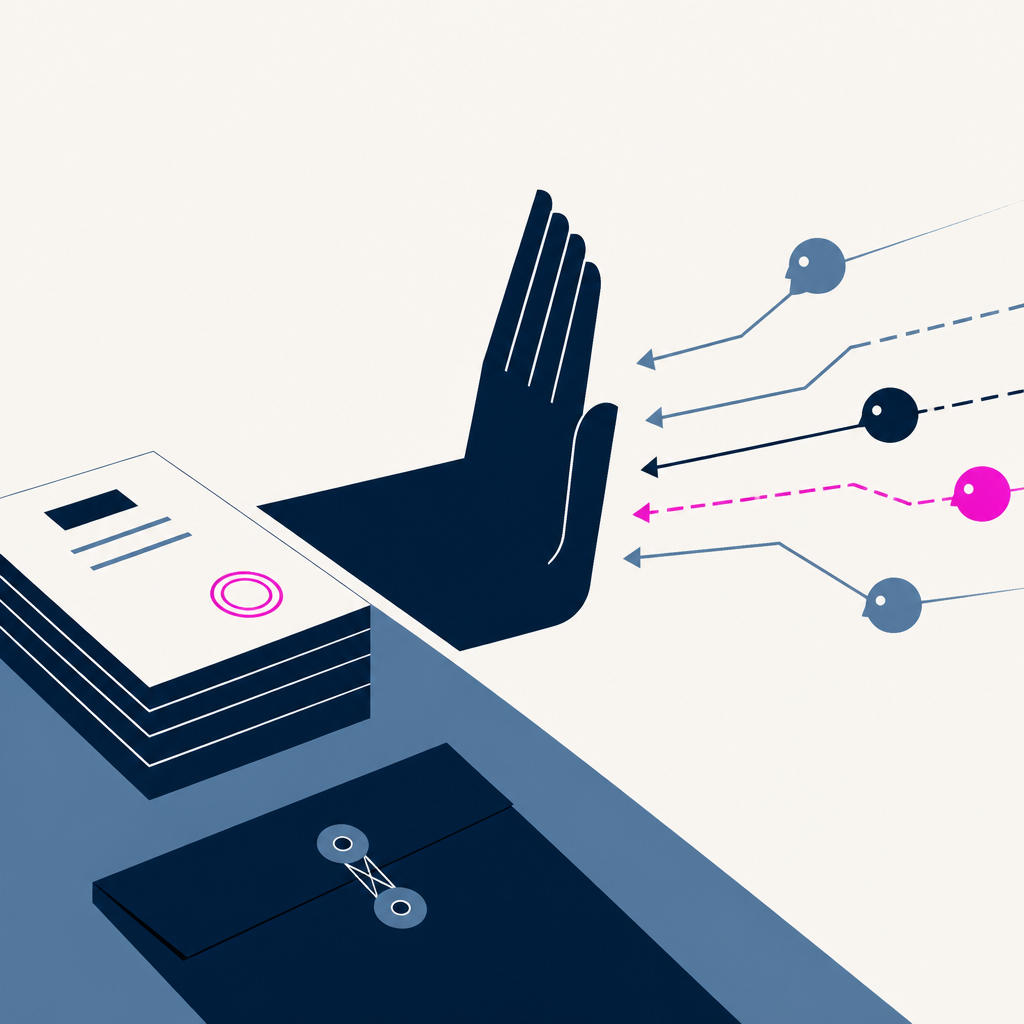
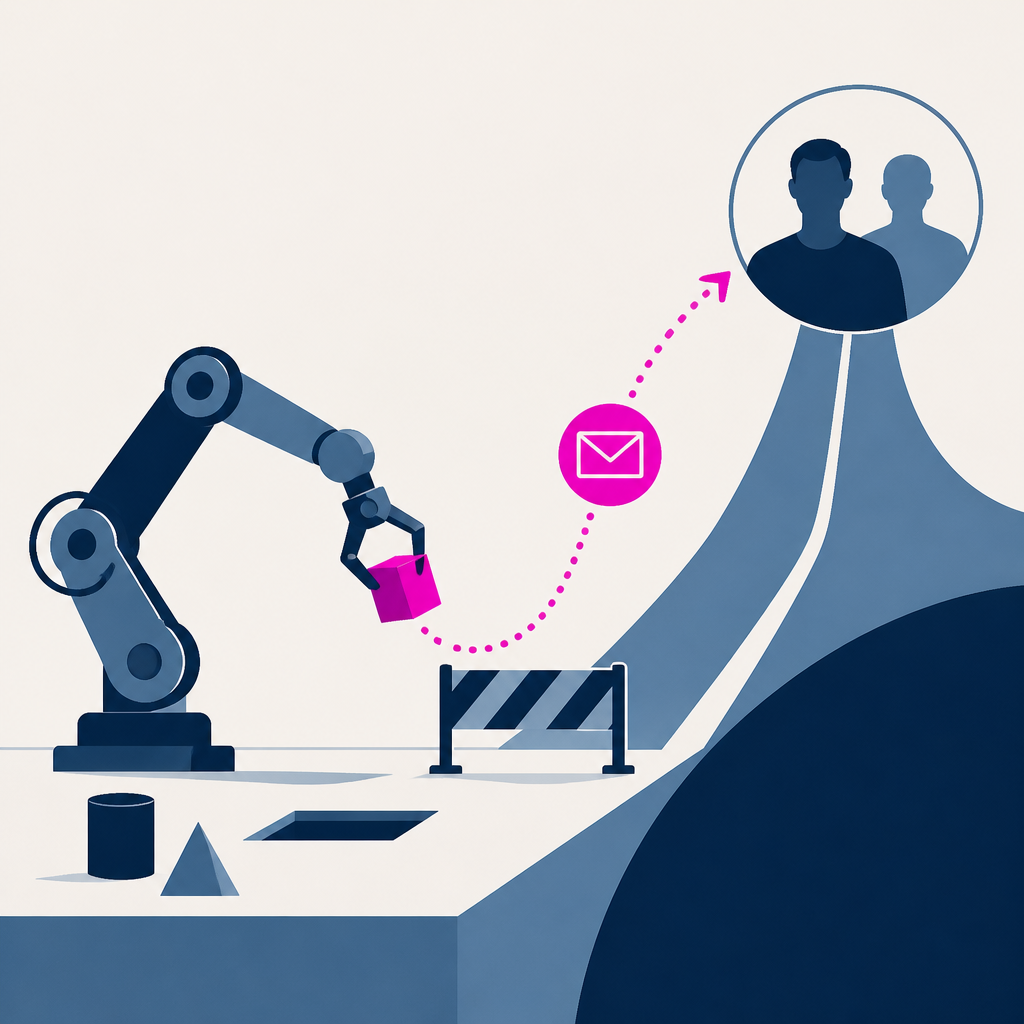
CIOs and CTOs at companies including Samsara, Docusign, Yum Brands, Cigna, and Compass are tightening AI usage, budgets, and model access as AI spending rises and some tools fail to deliver expected value. Global AI spending is projected to reach $2.5 trillion this year, a 44% increase, prompting shifts toward cheaper models and tighter guardrails like narrower context to cut token use. Companies are retraining staff and enforcing per-group or per-engineer limits so costs are managed and spending is kept from scaling as fast as compute and tokens.
Some Claude users are upset that Anthropic added invisible watermarks to Claude outputs to mark them as AI-generated. The rollout is meant to comply with the EU AI Act Transparency Code. As a result, Reddit users debate whether the system is ethical and whether they can still use Claude without being detected.
Twitch added an opt-out setting for Amazon’s use of Twitch channel content to train Amazon generative AI content models. The opt-out was introduced more than two years after an Amazon executive confirmed Amazon was using Twitch content for AI training. Users who opt out prevent Twitch streams, VODs, clips, stream chats, and channel images/text from being used for future training of Amazon models.
Twitch will use streamers’ channel content by default to train generative AI models for Amazon unless creators opt out. The opt-out is implemented via a channel-settings path that includes a toggle under the “training for generative AI” option. Creators must actively change that setting to prevent their recordings from being used, and the rollout has triggered rapid backlash and confusion about whether content may already have been used.
Three top AI researchers argued at Ai4 that AI should stay open despite safety concerns, warning about who controls progress and access to models. Geoffrey Hinton said the “battle” against open-weight models is over because the barrier created by the cost of training foundation models has disappeared. They concluded that openness should be paired with regulation and a nuanced mix of open and closed approaches rather than an all-or-nothing stance.
OpenAI and Anthropic have not disclosed greenhouse gas emissions, net-zero targets, or sustainability reports as they prepare for IPOs while investors and US regulators have largely stepped back on climate scrutiny. California’s SB253, requiring companies with more than $1 billion in revenue to report Scope 1 and 2 emissions starting in November, is pushing them to build emissions accounting ahead of deadlines. Climate disclosure is shifting from voluntary ESG pressure to compliance-oriented reporting, with uncertainty remaining around how to measure training emissions and whether some emissions will be reported later as Scope 3.
Norway’s sovereign wealth fund CEO Nicolai Tangen said the fund is more nervous after record first-half gains. The fund reported an all-time high gain of 1.4 trillion kroner ($150 billion) for the first half of the year. He pointed to AI valuations, geopolitics, and concentration risk as reasons to be more cautious, which signals tighter attention to portfolio dangers going forward.
CIQ and Gregory Kurtzer launched OpenWALDO to collect and release a shared open-source AI training dataset with transparent origins and licenses. The dataset currently includes 167.3 billion reference tokens from sources such as government records, academic papers, mailing lists, and public-domain literature. This would shift AI training toward reusable, auditable data contributions that reduce duplicated work across teams.
MIT Technology Review·2 months ago·
31
● 4 sources
Organizations adopting agentic AI are running into ROI limits because legacy enterprise data systems and fragmented data access hinder agents that must act in real time. Surveyed executives say AI agents get access to an average of 45% of company data, dropping to 30% or less for data laggards. The result is a push to overhaul data access and governance—so more organizations can scale agents quickly and with higher trust in the decisions they make.
Phinq is presented as an approach to stop AI agents before they can break something. No specific number, benchmark, or date is provided in the article text. As a result, it focuses on preemptive controls to prevent harmful actions by AI agents.
The podcast episode covers Mark Zuckerberg’s plan for Meta AI agents and other tech stories involving AI-driven claims and surveillance camera swaps. It also references Zuckerberg posting a 6,500-word essay about giving everyone AI superintelligence. Readers/listeners can access the subscribers-only bonus content by becoming a paid subscriber and using the provided feed and links.
Researchers analyzed hundreds of Instagram videos showing men using Meta Ray-Ban smart glasses to covertly film unsolicited public approaches to women that get posted as “pickup artist” content. The study compiled 350 videos from September 2023 through March 2026 and found a correlation between how covert the filming was and how severe the harassment was, with 93.3% of posts leaving comments open. The findings add evidence that Meta’s glasses-and-platform ecosystem enables harassment with a prolonged online “afterlife,” which pushes for stronger platform safeguards and moderation beyond relying on users’ responsibility.
Solv Labs and ICME Labs described a workflow that routes Amazon Bedrock AgentCore payments through pre-authorization, privacy-preserving policy verification, Nitro Enclave attestation, per-transaction risk pricing, and on-chain settlement via Coinbase. Transactions complete in under four seconds end-to-end. The change is that each agent payment now produces a signed, independently verifiable audit record that can be checked by third parties without relying on operator assertions, and settlement is blocked if required governance decisions don’t occur.
Twitch added an opt-out option so Twitch users can stop their content from being used to train Amazon generative AI models. The opt-out covers future training and includes streams, VODs, clips, stream chats, and channel pictures and text. Captions and safety tools still work after opting out, and when you chat on someone else’s stream their opt-out settings control whether that chat is used for training.
Substack partnered with Pangram, an AI writing detection company, to reduce AI-written content on the platform and discourage AI outsourcing of writing.
D’Addario admitted that AI music made with Suno was used in a recent promotional video. The admission came after an update dated July 29th. The company corrected an Instagram post that had previously denied generative AI use, changing its public stance from denial to acknowledgment of AI involvement.
The article argues that the UN’s Global Dialogue on AI Governance largely overlooked how AI affects elections, even though elections underpin enforceable democratic rights. It cites India’s 2015 voter-roll program that deleted about 5.5 million voters before the Supreme Court halted it, alongside a claimed matching algorithm failure rate as high as 93%. It calls for elections to get a dedicated governance track—making data control, auditing, and accountability requirements central—to ensure AI doesn’t shift electoral authority and exclude voters.
TechBBQ returns to the Bella Center in Copenhagen on August 26–27, 2026 with a theme focused on who retains human decision-making in agentic AI systems.
OpenAI employees can email friction@openai.com to report internal bottlenecks that leadership may escalate to CEO Sam Altman or President Greg Brockman for immediate resolution.
Every AI story that matters,
in your inbox by 8am.
TLDRocket reads all relevant sources, removes duplicate coverage, and summarises the
day in two minutes. Follow companies and topics for alerts, or get the
briefing in Slack. Free, no spam, unsubscribe anytime.
Reading TLDRocket needs no cookies, and the readership counts we rely on come from
our own cookieless analytics. Google Analytics is the exception: it sets cookies and
reports to Google, so it stays switched off until you allow it. You can change your
mind any time from “Cookie settings” in the footer.
Strictly necessary
Session security and form protection (tldrocket-session,
XSRF-TOKEN, 2 hours). The site cannot work without them,
so they need no consent.
Always on
Google Analytics 4 (_ga,
_ga_<id>, up to 2 years). Measures which
stories and sections readers use. Google acts as a third-party processor and may
store the data outside the EU. No advertising, no profiling, no data sold.