Sophie Alpert argues that there are no lossless transformations of natural-language text, meaning every rewrite changes meaning and can lose information if the rephraser lacks a detailed representation of the original author’s intent. She emphasizes that any AI-assisted writing must be backed by the engineer’s own ideas and sentences and that replying to reviewer questions with an “AI wrote it” explanation is not acceptable. As a result, engineers are expected to review and own their entire documents rather than treat AI edits as interchangeable with their original thoughts.
Anthropic plans to add an invisible, machine-readable watermark to text produced by Claude to help identify AI-generated output. Starting with Claude models released on or after August 2, the mark is designed to persist through copy and paste (and some edits) while aligning with the EU AI Act’s transparency requirements. This changes how Claude text is handled and detected across the chatbot, API, and Claude Code by making synthetic provenance machine-checkable, though it can be disrupted by heavy rewriting or translation.
Brad Lightcap left OpenAI to “start something new,” adding he plans to remain for a few more weeks. The article dates his departure announcement to Tuesday. His exit adds to executive turnover at OpenAI as the company prepares for a possible IPO and faces scrutiny over agentic AI safeguards bypasses.
Manus is separating from Meta after Chinese regulators ordered Meta to unwind its roughly $2 billion acquisition of the AI agent startup. Manus will delete data created by some users on or after Dec. 29, 2025, unless they back it up by 7:59 p.m. EDT on Aug. 22, with restorations starting at 8 p.m. EDT on Aug. 24. Users affected lose access during the transition and then can restore their Manus accounts, while Manus says it will not charge them during the backup period.
Steph Batalis discussed in a Washington Post article how AI-generated viruses could aid vaccine development and treatments for antibiotic-resistant bacteria while also creating risks of misuse to design dangerous human pathogens. The piece says the paper does not show AI can readily design a dangerous human virus or that AI can be prompted to generate any arbitrary virus. The focus shifts to evaluating AI-virus capabilities and limits for public health benefits while tightening concern about human-pathogen misuse.
Anthropic will embed invisible watermarks into text and images generated by Claude to meet the EU AI Act’s Code of Practice. Text watermarking will apply to Claude models released after Aug. 2, with support for earlier models planned later. The company will also use C2PA metadata (covering JPG, PNG and SVG) and release detection tooling, while warning that very short or heavily edited snippets may not always be detected.
Saber denied claims that it replaced a Rideshare "Stimulator" lead writer with ChatGPT. The writer alleged the switch happened midway through development. Saber says no writers were replaced by AI, while the dispute centers on whether passenger voices were also AI and whether disclosure on Steam is missing.
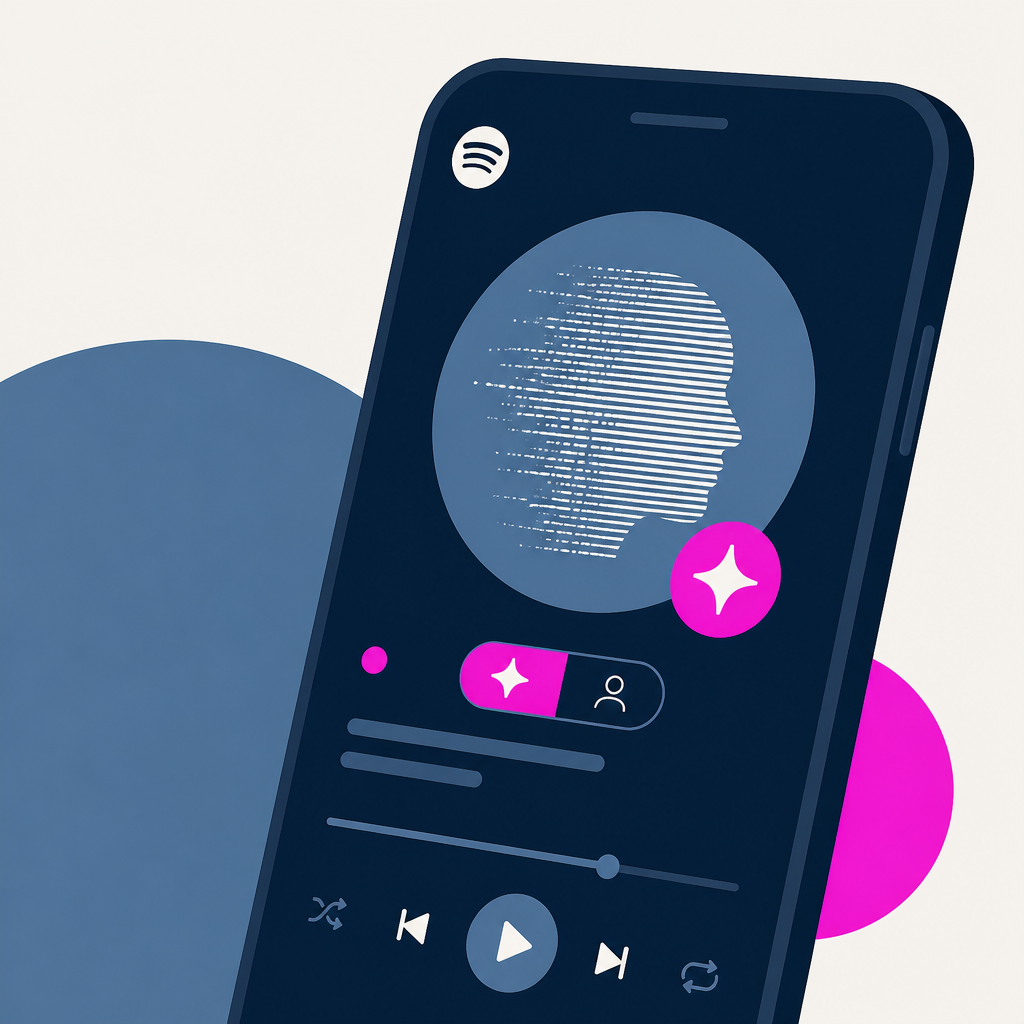
Spotify will start labeling AI-generated artist profiles as “AI Personas” to tell listeners whether the artist is a human or artificial. Starting Aug. 11, Spotify will let artists self-identify as AI-generated, with the labels appearing on profiles in mid-September. Spotify will stop recommending songs from these profiles unless listeners opt in, will remove likely undeclared AI identities, and will offer an appeal process for mislabels.
Claude apps gateway for AWS is a self-hosted governance layer inserted between Claude Code/Claude Desktop and Amazon Bedrock or Claude Platform on AWS to centrally control authentication, model access, telemetry, routing, and spend enforcement for enterprise teams. It issues short-lived bearer tokens valid for 1 hour by default, and requests use that token to apply per-user policies and budget caps. This changes deployments by moving sign-in, policy evaluation, and spend enforcement to the gateway (with no upstream credentials on developer machines) while enabling per-identity usage attribution and immediate HTTP 429 responses when budgets are hit.
Inferock Bench claims to provide a receipt for LLM usage by creating an independent record for every LLM API call. The concrete detail is that the receipt is issued for each API call. As a result, LLM API activity becomes auditable on a per-request basis.
Research Gold marketed medical research writing and review work as “100% human-written, never AI,” but the researchers shown as reviewers appear to be AI-generated or used without permission, and the company’s communications also appear to be produced by an AI agent. The article says a systemic review quote for the described project was priced at $1,900. As a result, the company removed at least one page listing a real methodologist’s identity, and the report raises concerns about how AI-generated text and misattributed expertise could undermine parts of academic publishing.
Anthropic will watermark text generated by its AI models, including Claude, to comply with EU transparency rules. The EU AI Act’s Transparency Code took effect on August 2, and all Anthropic models released after that date will automatically add the watermark. This means AI-generated text and files can be identified by other systems and the watermark will remain when users copy and paste the text, with older models getting extended support.
Spotify will label AI Personas and stop recommending their music to listeners based on whether profiles appear to represent photorealistic AI identities. The rollout starts in mid-September. Spotify will let artists opt in today, but it will still use human review plus AI tools to decide whether to apply the badge and adjust recommendations, affecting what users see and are suggested.
Anthropic said Claude-generated text and images will be marked with machine-readable signals to meet European AI transparency requirements. The embedded watermarking and signed provenance metadata are an announced future commitment rather than an immediate change. This should make it easier for people and platforms to detect Claude-generated content using the added metadata.
OpenAI expanded its Daybreak cybersecurity program by giving vetted partners access to GPT-5.6-Cyber via two tiers of models with different levels of system filtering. GPT-5.6-Cyber completes 95.0% of requests involving exploit chains, authentication bypass, or privilege escalation versus 1.5% for GPT-5.6 Sol with safeguards and 2.0% for Daybreak Blue. This changes access by enabling a wider security-industry set of firms to use an offensive-focused model for vulnerability discovery and exploit-related work while still gating it through approval and tiered controls.
Anthropic plans to add machine-readable labels to content produced by Claude models to meet EU AI Act transparency commitments. The labeling applies to new Claude models launched in the EU on or after August 2, 2026, using invisible text watermarks and C2PA-signed provenance metadata for supported image/file formats. Existing models will be updated later during a transition period, and Anthropic is also building tools to detect the marks and metadata, though detection methods are not yet published.
The article argues that Mark Zuckerberg’s AI “positive future” manifesto is internally inconsistent, treating AI safety as power sharing while the author stresses risks that require stronger control. It points to Meta’s planned $50 billion data center in Louisiana that is projected to use seven times as much energy as New Orleans. The result is a call for slower, more cautious deployment and a claim that governments and AI labs are increasingly pushing back against fast, widespread release plans.
Every AI story that matters,
in your inbox by 8am.
TLDRocket reads all relevant sources, removes duplicate coverage, and summarises the
day in two minutes. Follow companies and topics for alerts, or get the
briefing in Slack. Free, no spam, unsubscribe anytime.
Reading TLDRocket needs no cookies, and the readership counts we rely on come from
our own cookieless analytics. Google Analytics is the exception: it sets cookies and
reports to Google, so it stays switched off until you allow it. You can change your
mind any time from “Cookie settings” in the footer.
Strictly necessary
Session security and form protection (tldrocket-session,
XSRF-TOKEN, 2 hours). The site cannot work without them,
so they need no consent.
Always on
Google Analytics 4 (_ga,
_ga_<id>, up to 2 years). Measures which
stories and sections readers use. Google acts as a third-party processor and may
store the data outside the EU. No advertising, no profiling, no data sold.