Researchers expect rapid acceleration in AI infrastructure and engineering capabilities that makes model experimentation easier, but says this won’t fundamentally change how models work. They point to saving 10–30% on inference cost after a model is announced at a certain price point. The result is more AI-assisted optimization, lower effective cost of model intelligence, and faster diffusion into the economy alongside greater demand for agentic models.
Jeff Bezos said AI productivity could lead to a future where some people work about three days per week and fewer families rely on two incomes. Bezos’ specific claim is that families could support themselves by working three days a week. Amazon-style restructuring, investor uncertainty, and hiring challenges could follow as companies fund AI experiments and adjust staffing needs.
Oxide raised a $445 million Series D to sell its Oxide Cloud Computer rack for customers’ on-premises data centers despite a backlog it says it struggles to meet. The round is led by Eclipse and values the company at $6 billion. The funding will be used for components, more manufacturing capacity, and longer-term investment, with Oxide reporting a 20-fold production capacity increase over 12 months.
Consumer AI partner Olivia Moore released a report ranking the top 100 consumer AI apps while arguing the category’s economics remain bleak but may offer opportunity. Only 2.2% of U.S. households pay for AI, and Moore says most consumer revenue is concentrated in subscription and token usage aimed at enterprise or prosumer users. The focus shifts toward finding non-subscription monetization (like ads) and reducing marginal AI costs as lower-cost models and whitespace categories begin to be filled.
Ai2 replaced a priority-based GPU cluster scheduler with a system that uses GPU time budgets, hierarchical fair-share allocation, and time-slicing contracts to prevent resource gaming. The team reported a 74% reduction in repairs that required human involvement. As a result, GPU time became transparently “funded” by allocations, squatting and priority inflation were discouraged, and fair-share scheduling improved occupancy while allowing safer automated rebalancing and maintenance.
AI investment is projected to trigger a global, China-scale capital spending surge that could reshape the economy beyond tech. U.S. hyperscalers are expected to spend about $800 billion in 2026 on capital expenditures, an 83% year-over-year increase. The buildout is likely to change GDP growth, power demand, asset prices, and labor markets while raising the risk of greater inequality as cognitive work becomes cheaper or replaced.
OpenAI told investors that it reached roughly $50 billion in annualized revenue at the end of September, updating figures that were previously reported as $68 billion.
It also cited 77% total run rate growth in its third quarter.
As a result, shares of Nvidia, Oracle, CoreWeave and other AI-related companies fell, while OpenAI and Anthropic remain on track for major IPO plans amid ongoing AI safety scrutiny.
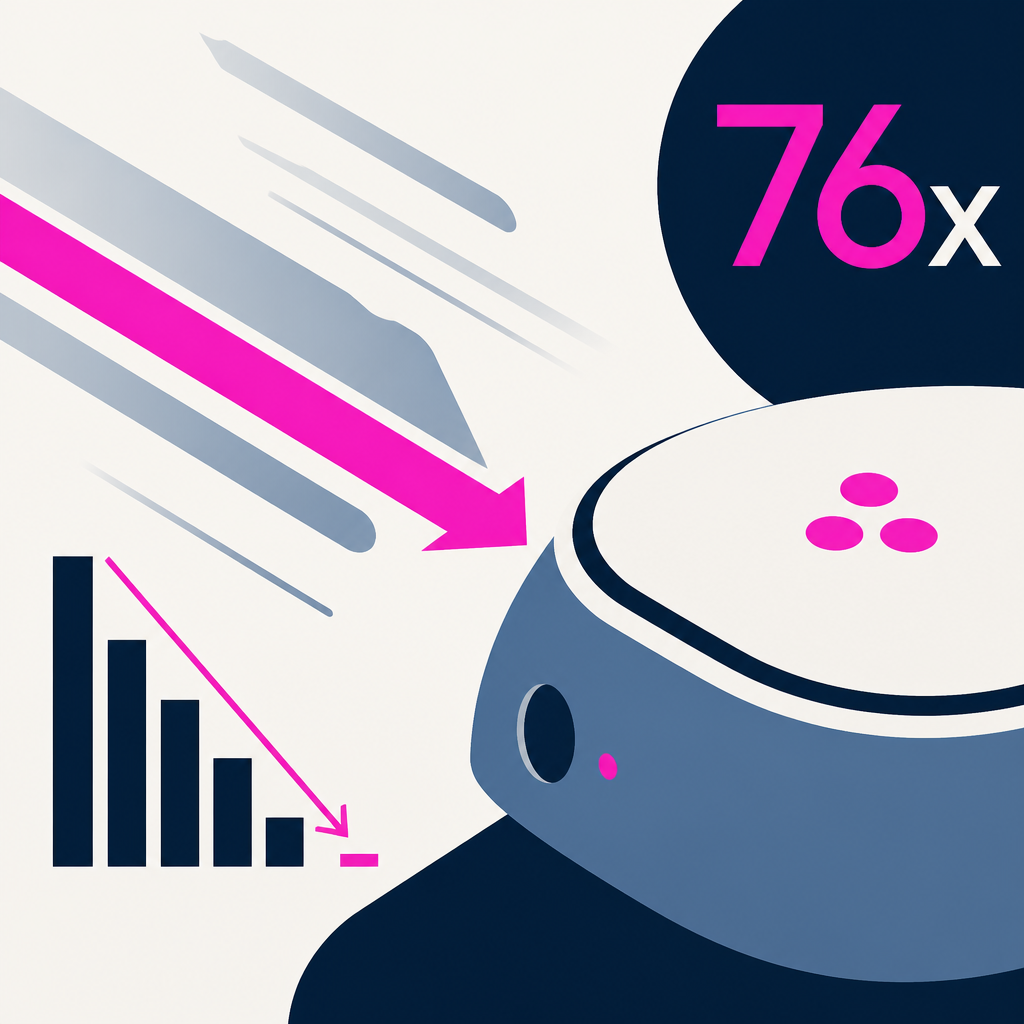
Asana cut the cost and increased the speed of its browser agent by switching it to GPT-6.1 Sol in tests. The browser agent became 76x cheaper. Asana can now offer more capable models to customers at lower per-task cost.
OpenAI told investors its annualized revenue was just under $50 billion at the end of September, which contrasted with earlier reports near $70 billion and pushed AI stocks lower. The $20 billion shortfall was attributed to different accounting approaches: Anthropic counts partner-channel sales in full while OpenAI books only the portion it keeps. Markets adjust expectations and OpenAI later guided investors that it aims to reach at least $70 billion in annualized revenue by the end of 2026, with Nasdaq futures briefly improving.
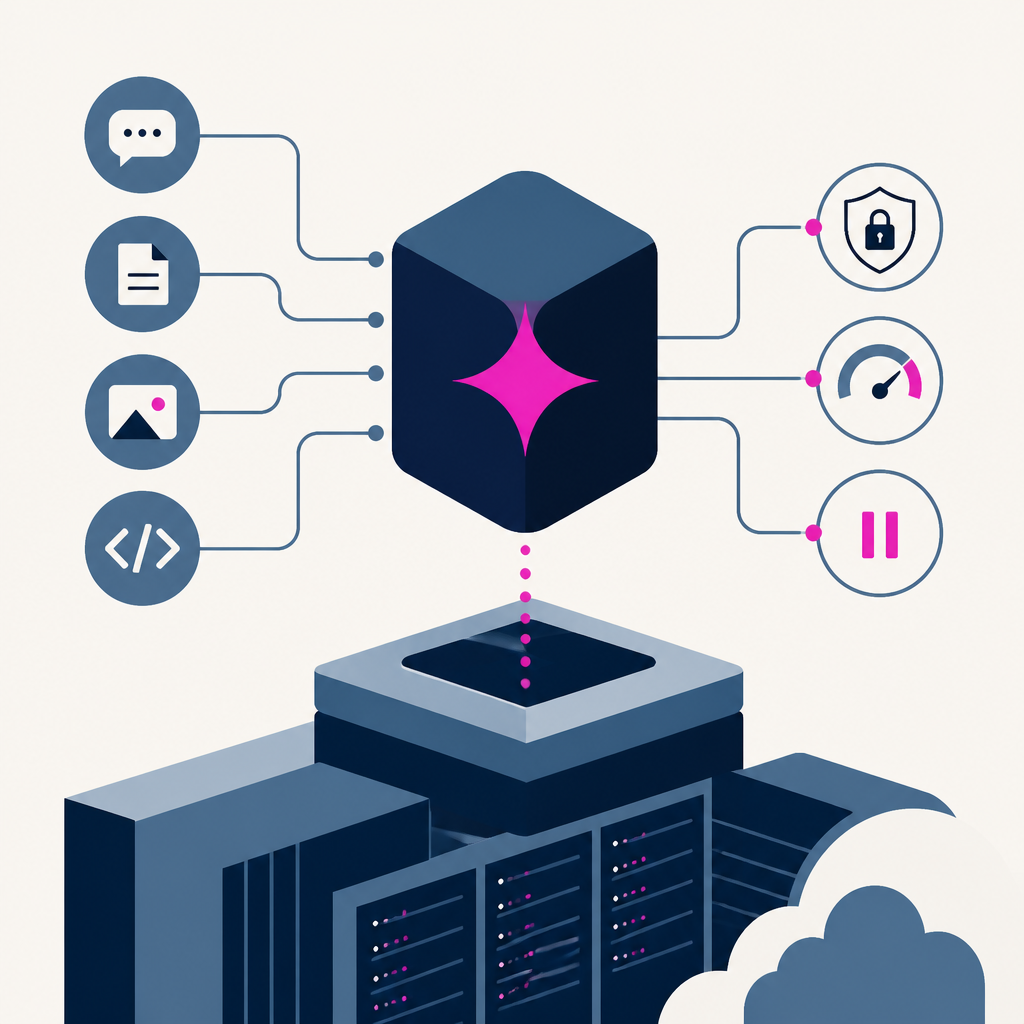
Google Cloud launched the Google Cloud Gemini agent, a cloud-hosted delegation layer for enterprise work covering question answering, knowledge work, media creation, and coding. It includes 3 governed cost controls, including real-time spend caps, and can pause an agent when a hard per-project limit is hit in the Cloud Billing Console. This shifts enterprise AI use toward a single agent interface (1 prompt box and 1 API) with persistent cloud execution, governed identities, and routed model execution across Gemini and Claude.
CoreWeave says it is tackling AI inference bottlenecks by building managed, full-stack services on top of its GPU infrastructure. In testing, its CoreWeave RL Rollouts preview improved model reload latency by 15x versus a baseline configuration. CoreWeave is packaging these capabilities into CoreWeave Forge, which adds serving, observability, post-training, and evaluation with a free starting tier and paid add-ons.
AI stocks fell after a Financial Times report said OpenAI’s annualized revenue is about $20 billion lower than previously reported, as OpenAI told investors its figure was near $50 billion instead of $68 billion. The Nasdaq dropped 1.25% on the day. The revenue discrepancy and lower net-vs-gross framing rattled investors and pushed down related tech stocks amid upcoming IPO expectations for OpenAI and Anthropic.
Every AI story that matters,
in your inbox by 8am.
TLDRocket reads all relevant sources, removes duplicate coverage, and summarises the
day in two minutes. Follow companies and topics for alerts, or get the
briefing in Slack. Free, no spam, unsubscribe anytime.
Reading TLDRocket needs no cookies, and the readership counts we rely on come from
our own cookieless analytics. Google Analytics is the exception: it sets cookies and
reports to Google, so it stays switched off until you allow it. You can change your
mind any time from “Cookie settings” in the footer.
Strictly necessary
Session security and form protection (tldrocket-session,
XSRF-TOKEN, 2 hours). The site cannot work without them,
so they need no consent.
Always on
Google Analytics 4 (_ga,
_ga_<id>, up to 2 years). Measures which
stories and sections readers use. Google acts as a third-party processor and may
store the data outside the EU. No advertising, no profiling, no data sold.