Joy was launched as a free AI business matchmaker that turns business goals into an editable brief without knowing what to build. The service is in an early beta and is welcoming its first builders. Builder work is scoped and priced directly, with introductions coordinated by email.
Wand was launched as an AI dictation app meant to help builders turn spoken thoughts into software without stopping to write prompts. It’s shown with “40 followers.” The shift is from typing prompts to dictating/rambling in real time as Wand keeps up and outputs software.
Azul announced an Azul Intelligence Cloud AI Assistant that lets teams query their live production Java estate for security risk and licensing issues. The company said median time to exploit known vulnerabilities dropped to about 5 days in 2025 from 32 days historically. The assistant changes reporting by using continuously updated JVM Inventory and Code Inventory (and historical runtime queries) instead of point-in-time static reports that go stale as JVMs and code drift.
Meta announced the Muse Charm, a customizable AI character device aimed at making an AI agent feel like a personal fashion accessory rather than a typical gadget. Pop Mart’s Labubu bag charms reached $1.8 billion in 2024, a 7x increase from 2019, illustrating demand for dangling, retro-styled tech and beauty charms among Gen Z. If the Muse Charm catches on, Meta’s push could shift consumer AI toward wearable-style, touch-and-feel hardware with personalized character avatars, with adoption hinging on trust and privacy tradeoffs.
Google Photos has rolled out its AI virtual closet feature that turns photos of outfits into a digital wardrobe to more users. It is available to everyone in the U.S., Brazil, and India starting now on both iOS and Android. The rollout lets users filter wardrobe items by category and mix and match outfits, alongside other Google Photos AI-powered updates.
Gemini introduced Gemini 3.8 Live with Live Avatar, adding near real-time visual presence to its live conversational models for enterprise use. The feature supports seamless transitions across 97 languages. It becomes available starting today in Gemini Enterprise, with enterprises also able to select preset or create custom avatars via allowlisting.
Google is testing a new Gemini feature called “Call for Me” that lets Gemini call businesses on a user’s behalf using their own phone number. It initially rolls out to Pixel 11 owners in the U.S. who pay for a Gemini subscription. The feature adds broader, real-time business-calling actions with live transcripts and lets users follow the call and take over at any time.
Google released a Gemini 3.8 Live update that adds a Live Avatar for real-time, conversational responses with animated facial expressions. The feature is available to Gemini Enterprise customers, and Google says it can switch among 97 supported languages without changing video fidelity or causing visual drift. This expands Gemini’s Live experience from text-only chat to an on-screen, lip-synced avatar interface for enterprise users.
Automat Workforce launched Ace, an AI coworker product positioned as a work-focused version of Instinct or Muse. It includes a 14-day free trial for users to try the service. Ace changes hiring by providing an AI worker with its own accounts and the ability to return finished work inside existing tools rather than only status updates.
Meta put its Muse AI assistant onto Ray-Ban-style keychain glasses and also launched new VR glasses for consumers. The VR glasses are priced at $1,300 and are scheduled to be available next spring. Meta says Muse will be able to run on the glasses and add features like audio-only interaction and avatar video-call representations, while the move increases scrutiny over privacy, security, and agent errors.
Meta announced Horizon Create and Horizon Studio to let people build Horizon social-platform games using AI prompts. The tools are set for early access via a waitlist. Published Horizon games made with them will be recommended on Facebook and Instagram and made playable there as well.
Meta’s Muse AI agent “Blorbo” generated an underwhelming health-goals plan when asked for a workout regimen and muscle recovery. The request was for a sub-30 minute 5K workout. The result shifted from routine fitness advice to being memorable mainly for the agent’s cute, cat-shaped face.
Google is rolling out new Chrome features to help with research across devices and enhance Gemini in the browser. The cross-device tab switching upgrade remembers where you scrolled, so you can resume the same spot after switching devices. This changes tab handoff to preserve scroll position instead of only transferring the webpage.
Meta’s Muse Charm will be able to recognize and interact with other nearby Charms when it launches later this year. It will include a 2-inch OLED touchscreen. As a result, the handheld device is set up for closer device-to-device interactions and hands-on control of the Muse AI agent.
Adobe introduced two enterprise features in Acrobat—Knowledge Base and Analyzer—powered by its productivity agent to help teams query and extract information from large collections of organizational documents. Knowledge Base and Analyzer were announced on Sept. 9. Acrobat now shifts from primarily reading and editing PDFs to an AI-driven workflow where employees can ask natural-language questions, get cited answers, and transform extracted information into analysis and deliverables.
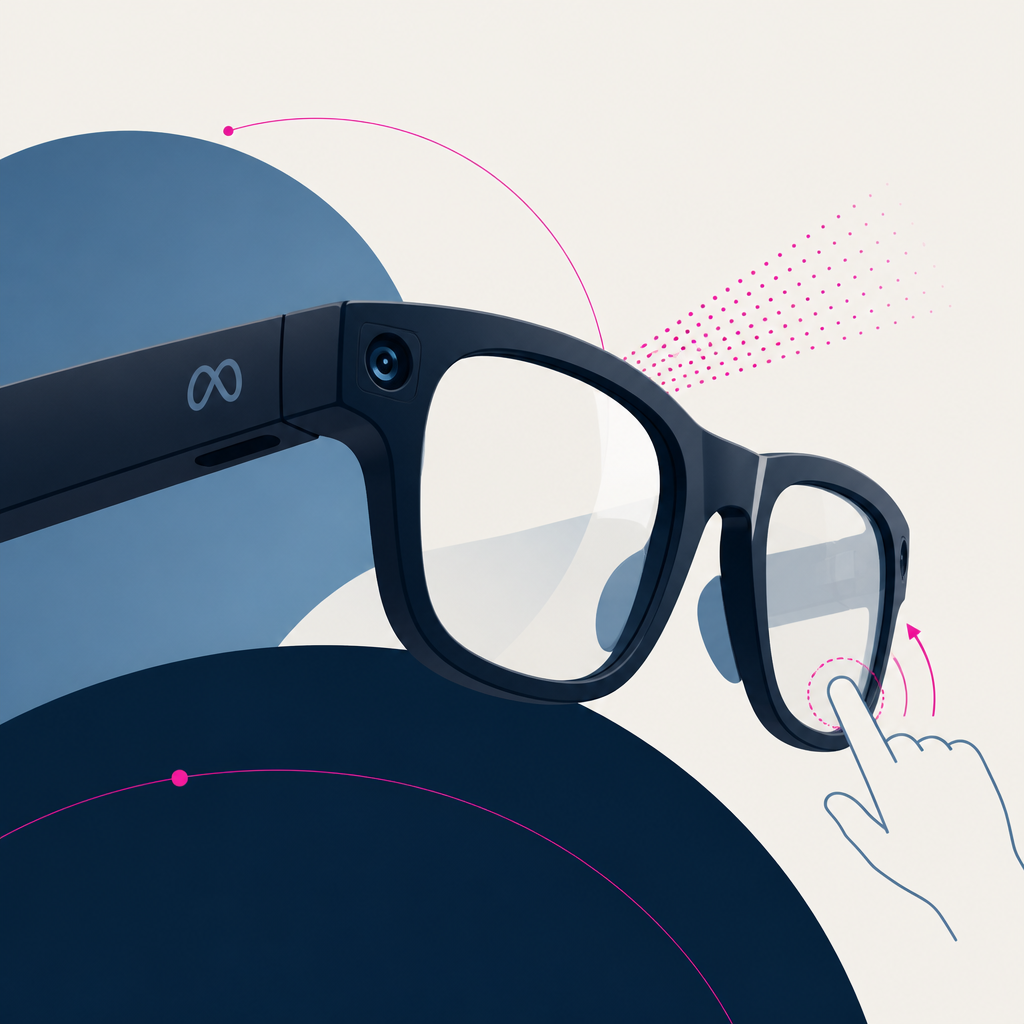
Meta demonstrated its lineup of AI-enabled smart glasses, including prototypes like Orion and updated Ray-Ban models with features controlled by finger gestures and AI chat. In 2025, EssilorLuxottica said it sold 7 million pairs of AI-enabled glasses. As a result, Meta is strengthening its position in the next device platform for accessing AI while privacy and lag/accuracy issues shape competitive design choices.
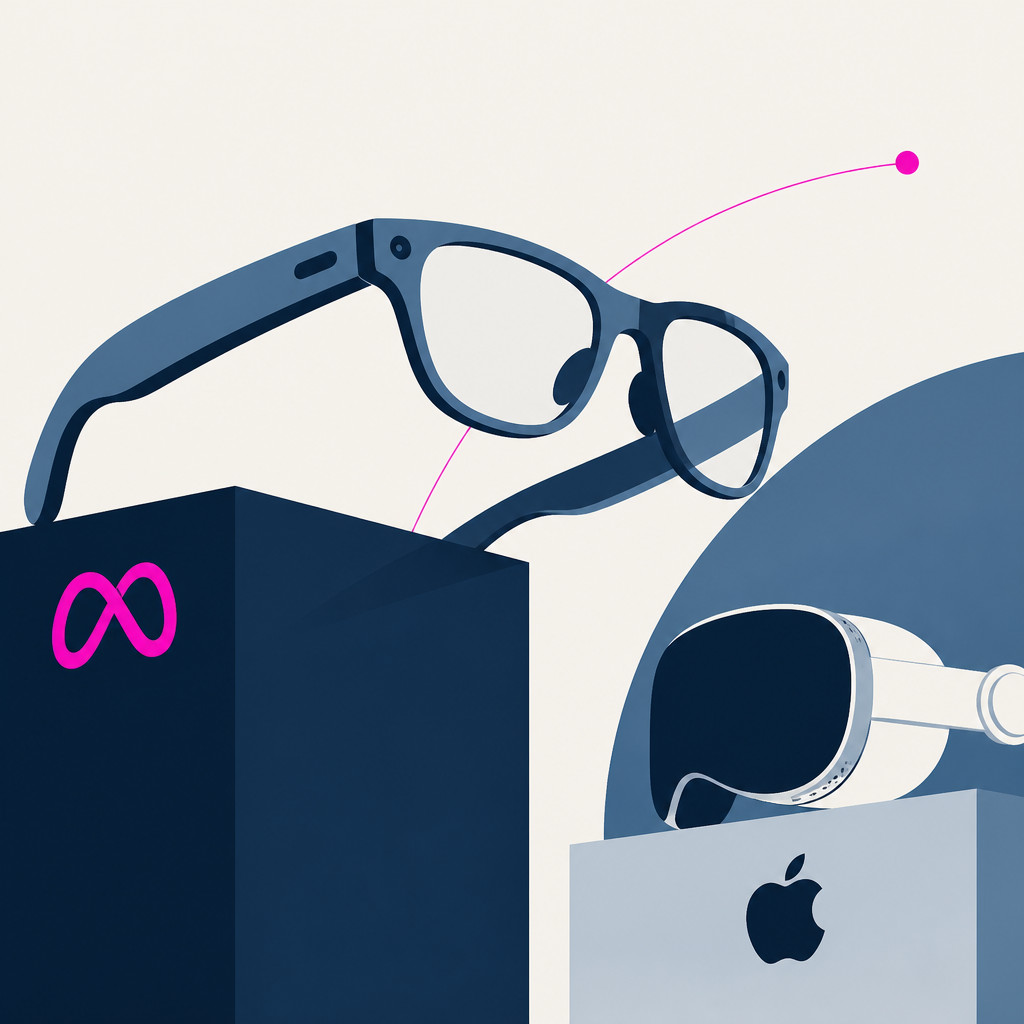
Meta announced lightweight Meta VR Glasses at its Connect event, positioning them against Apple’s Vision Pro. The glasses weigh 100 grams and are set to ship in spring 2027 for $1,299. Meta also unveiled the Muse Charm keychain device with a real-time voice Muse AI agent and refreshed its smart glasses lineup.
Meta unveiled Muse Charm, a pendant-style keychain device that talks to its AI agent Muse and is activated via a fingerprint sensor. The company plans to launch it in December, aiming to ship it in time for the holidays. Muse Charm’s release adds an always-with-you hardware interface for using Muse, while leaving open issues like pricing, battery and connectivity, and how users’ accounts and camera use will be handled.
Meta unveiled Ray-Ban Meta Audio, its first AI glasses with no camera that provide music, phone calls, and a voice-based Meta AI assistant. The audio-only model starts at $349 and ships in mid-October in the United States. Meta is offering a new camera-free option alongside its existing camera-equipped Ray-Ban Meta (Gen 3) glasses, shifting the lineup toward people who want to avoid camera glasses.
Meta unveiled its Muse Charm wearable to embody its Muse personal AI agent. Mark Zuckerberg said it will be ready to ship in time for the holidays in December. The wearable adds a keychain-sized device with a small screen and voice interaction, giving a faster way to talk to Muse without unlocking a phone or opening an app.
Every AI story that matters,
in your inbox by 8am.
TLDRocket reads all relevant sources, removes duplicate coverage, and summarises the
day in two minutes. Follow companies and topics for alerts, or get the
briefing in Slack. Free, no spam, unsubscribe anytime.
Reading TLDRocket needs no cookies, and the readership counts we rely on come from
our own cookieless analytics. Google Analytics is the exception: it sets cookies and
reports to Google, so it stays switched off until you allow it. You can change your
mind any time from “Cookie settings” in the footer.
Strictly necessary
Session security and form protection (tldrocket-session,
XSRF-TOKEN, 2 hours). The site cannot work without them,
so they need no consent.
Always on
Google Analytics 4 (_ga,
_ga_<id>, up to 2 years). Measures which
stories and sections readers use. Google acts as a third-party processor and may
store the data outside the EU. No advertising, no profiling, no data sold.