Aster by AsterWise launched on Product Hunt with an API that routes tasks across models for coding agents (aster-code) and general/custom agents (aster-work). It notes an initial launch date of September 23, 2026 and offers paid or prepaid usage. The result is a unified AI infrastructure option for developers to send work to different model types without picking a single model up front.
Cloudflare launched a closed beta of its Monetization Gateway to let domain owners charge AI agents for MCP tools, APIs, websites, and datasets via x402 payments settled in USDC on Base.
Amazon introduced Live Data in Apps for Amazon Quick Apps, so AI-built apps can query governed Quick Sight datasets at view time instead of using build-time snapshots. The feature runs the same SQL every time a user opens a published app, and it supports SPICE and Direct Query datasets (with SPICE refresh and no refresh for Direct Query). As a result, numbers stay current and row- and column-level security plus per-dataset viewer consent are enforced for each person using the app.
NVIDIA NeMo Agent Toolkit (NAT) is shown being implemented with Amazon S3 Vectors as a custom persistent memory provider and deployed on Amazon EKS for an agent workflow. The example provisions an S3 Vectors index configured for 1024 dimensions to match Amazon Titan Text Embeddings V2. The result is a NAT memory subsystem that can automatically store and retrieve long-term agent memories via semantic vector search with metadata filtering, using the S3 Vectors backend.
pwasm 0.2a0 was released as an alpha version of a pure Python WebAssembly engine after being updated with help from Claude Opus 5.5. It now handles almost all of the WASM specification and the PyPI wheel includes working WASM builds of MicroPython, QuickJS, and Micro QuickJS. The release changes availability from an idle, early project to an alpha package with broader WebAssembly support and bundled experimental runtimes.
The article provides a step-by-step setup for implementing multi-environment access to Claude Platform on AWS with a dedicated AI Services account and separate production and development workspaces. It uses Python 3.12+ (with anthropic[aws] and boto3) to test cross-account SigV4 inference from workload accounts. As a result, production inference is restricted to workload role assumptions, developers get development-only API keys, and external environments authenticate via OIDC to obtain short-lived credentials for inference.
Airbnb CEO Brian Chesky said the company is moving beyond chatbot-only travel search as it evolves interfaces for more agent-friendly, collaborative AI experiences. The fall update includes a new AI-powered search, and Airbnb plans to roll out voice agents this fall for search and customer service. The company’s roadmap shifts toward “multiplayer” and agent-to-agent interactions supported by a more robust software developer kit and richer UI controls rather than relying on a single primary agent.
Arceus Legal disclosed it raised $17 million to expand beyond the commercial contract work it began with. The firm said a standard contract review is typically completed in 3 to 5 days and clients are not charged if it takes longer than 8 hours. It will use the funding to hire more staff across San Francisco, aiming to broaden into additional legal areas like employment and privacy.
Photon held an in-person “app funeral” in San Francisco as it argues agents will replace mobile apps, and the company also announced a seed funding round. Photon said it raised $4.5 million, after reporting that developer sign-ups exceeded 40,000 and revenue grew 10x in four months. The funding supports a hosted agent platform with tools like a unified API, channel framework, CLI, and observability, aiming to help developers deploy agents over messaging channels such as iMessage and WhatsApp.
OpenAI MCP Extensions provides ChatGPT-specific capabilities for MCP so developers can build plugins that appear like native features. It adds support for sidebar entrypoints and file extension handlers that render custom viewers, plus 3 more extension types, including composer mentions and extended forms. Developers can install the Bits & Bolts Remote plugin and use the specified SDKs (@openai/mcp-extensions for TypeScript and openai-mcp-extensions for Python) to integrate these features.
AI agents speed up app development, but teams still hit delays because access to live operational data has to be requested and wired to each system manually. The article points to a three-year gap until a Postgres database migration, where missing a connected tool or access change could cause an outage. A unified, governed API layer is proposed to centralize least-privilege, role-based access for apps and agent identities so agents can connect via MCP with consistent permissions instead of hand-built, stale copies.
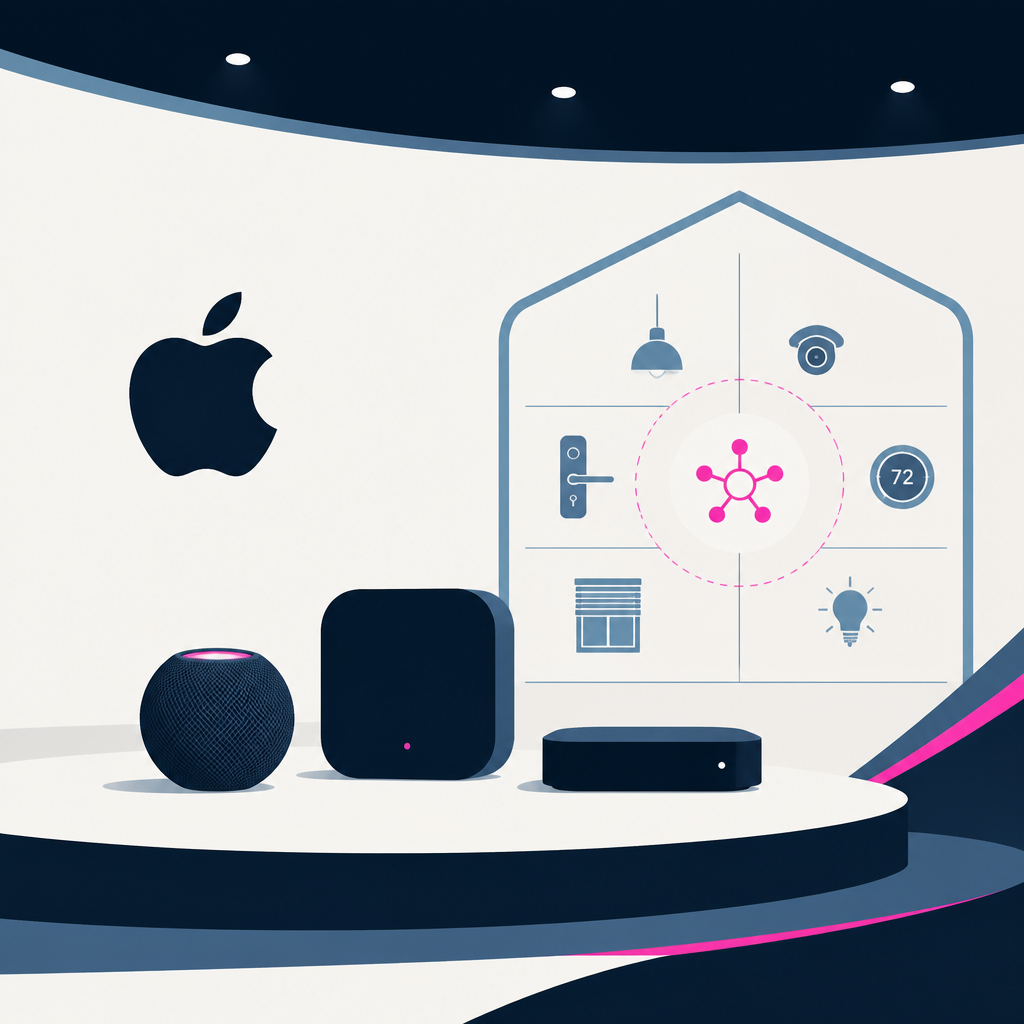
Apple is preparing to launch multiple smart home devices, including a hub, an updated HomePod mini, and a TV set-top box.
The launch date is October 13.
It expands HomeKit into a larger ecosystem and adds support for third-party devices built for a “Siri AI home” platform.
Finbar launched public availability of its investment research platform for investors and their agents, targeting AI-assisted research workflows. The announcement says it is the platform’s 2nd launch. As a result, its worldwide fundamental data and AI research toolkit are now offered publicly, including access via API/MCP and use in web or Excel.
Barclays is expanding its collaboration with Anthropic to roll out Claude across its global operations for software development, legacy modernization, and customer support. Barclays expects Claude Code adoption to reach 50% of its developer population by the end of 2026, rising to a majority of software engineers in 2027. The rollout increases AI-assisted knowledge searching and email processing, including more than 16,000 colleagues using a Claude-powered assistant handling over one million searches and a platform processing about 120,000 emails per day.
Unprompt launches today as a Mac and iPhone companion that tracks AI usage from tools like Claude Code, Codex, and Cursor. It shows tokens and API-cost estimates, and the Mac free test includes 20,000 credits. Premium adds a 30-day water-use card, while iPhone work and AI app usage are logged via Screen Time for monthly comparison with friends.
Oogwai Beacon launched today to perform an Answer Engine Optimization audit by testing what search engines and AI assistants say about a site’s category using unbranded buyer questions. It reports results with inputs including ChatGPT and Gemini (and Claude for the full audit), with 20,000+ developers cited as using the company’s Context.dev API. The tool adds two checks—whether AI crawlers can read a site and whether engines recommend it—then lists specific gaps and fixes.
Cursor launched Remote Lite, letting you control the Cursor agent on your computer from your phone. It is free and MIT-licensed. Code still runs on your computer via a Cloudflare tunnel, with remote support for local, SSH, and agent windows plus push notifications when the agent needs input.
Communicate launched AI chatbot customer support tools that build support agents from help docs, files, and past replies. Plans start at $19/month. It adds a shared inbox with human handoff, website chat, and API or MCP connectivity, with a Product Hunt offer for 50% off the first monthly payment through October 9.
Every AI story that matters,
in your inbox by 8am.
TLDRocket reads all relevant sources, removes duplicate coverage, and summarises the
day in two minutes. Follow companies and topics for alerts, or get the
briefing in Slack. Free, no spam, unsubscribe anytime.
Reading TLDRocket needs no cookies, and the readership counts we rely on come from
our own cookieless analytics. Google Analytics is the exception: it sets cookies and
reports to Google, so it stays switched off until you allow it. You can change your
mind any time from “Cookie settings” in the footer.
Strictly necessary
Session security and form protection (tldrocket-session,
XSRF-TOKEN, 2 hours). The site cannot work without them,
so they need no consent.
Always on
Google Analytics 4 (_ga,
_ga_<id>, up to 2 years). Measures which
stories and sections readers use. Google acts as a third-party processor and may
store the data outside the EU. No advertising, no profiling, no data sold.