Instinct added its AI agent to group chats, letting users include it in chats with friends even if those friends do not have Instinct. The feature is rolling out first to early access users, starting on October 5, 2026. Personal permissions and group access controls are used so the agent only connects with the group after approval and does not let group instances access users’ personal accounts.
Sona8, a startup founded by former BCG and McKinsey consultants, was accepted into Y Combinator’s current batch using AI voice agents to interview employees about how work is done. It has supported more than 10,000 employee interviews so far. The company plans to expand from interviews into a “context layer” that other AI automation tools can query and keep updated as systems and work change.
HackerRank is moving its developer hiring interviews to Chakra, an AI interviewer that observes candidates doing tasks with an AI assistant and evaluates both their answers and their approach. After about six months in beta, HackerRank is making Chakra generally available on Monday, following more than 500,000 interviews in testing. The hiring process consolidates multiple rounds into a single AI-led interview and changes what employers measure from just correct outputs to reasoning and judgments, while suspicious-activity flags drop by 70% to 80%.
OpenSwarm launched as an AI-first operating system that lets software agents control apps and browsers to carry out tasks. It has 138 followers listed on the page at launch. Users shift from doing tasks one at a time to orchestrating many agents running in parallel.
Vresk launched as an AI workspace that lets users work across multiple open models and automatically select the best model per task. The service is $20 per month flat and includes a free trial. Users can switch models without restarting because their notes, history, and memory carry over in the same workspace.
Palo Alto Networks launched Cortex XCOR, an AI-driven observability platform that triggers agents when alerts fire to investigate outages and recommend mitigations instead of relying on dashboard-only workflows. It reports average automated root-cause analysis in under three minutes with a 75% success rate in complex production environments. For now it still pages engineers, but the company aims to keep reducing response time as customers trust the analysis and move more remediation to automation.
Meta engineers found multiple vulnerabilities in Muse, a viral AI agent, shortly before launch that could have let a user escape Muse’s per-user virtual machine and reach Meta-sensitive services. The internal hardening effort began on August 27 and ran for a handful of weeks, ending about 11 days before Muse’s release on September 8. Meta responded by rushing fixes to reduce reachable surface area and constrain network/port destinations for Muse agents, while continuing security work post-launch.
A Git code review desktop app launched today for reviewing Git branches and GitHub pull requests with line comments held private until publishing. It adds AI reviewers you can connect to using OpenAI, Anthropic, Gemini, OpenRouter, or local via Ollama. Reviews can be split across multiple models so you can see which rules each one checked and retry only the missed items.
Menlo Ventures announced an investment in Factory, a platform meant to autonomously automate the end-to-end software lifecycle for enterprise teams using coding agents. The coding market it targets has grown from $550 million to more than $30 billion in two years. As a result, Factory expands its enterprise “software factory” approach—governance, a shared knowledge base, and model-agnostic deployment—to speed up shipping from days instead of quarters.
Albie is an AI agent that teaches on a shared whiteboard by reading handwriting and explaining while you talk or chat.
It offers a “30% bonus” for claiming a bonus via the listing.
As a result, users can get interactive lessons with quizzes, homework, coding help, and small app building directly in the lesson flow.
Vincentt launched on Product Hunt as a tool to build and launch web camera experiences using a coding agent with an open SDK. The listing says it supports Claude Code or Codex. As a result, users can preview live on their phone and publish a shareable link without app stores or headsets.
Buntar Aerospace closed a $16 million funding round to scale its drone autonomy business for Ukrainian defense. The funding takes its total capital raised to $30 million. The company will speed up product development, expand manufacturing, hire more staff, and continue building Buntar Copilot while pushing dual-use and new international markets.
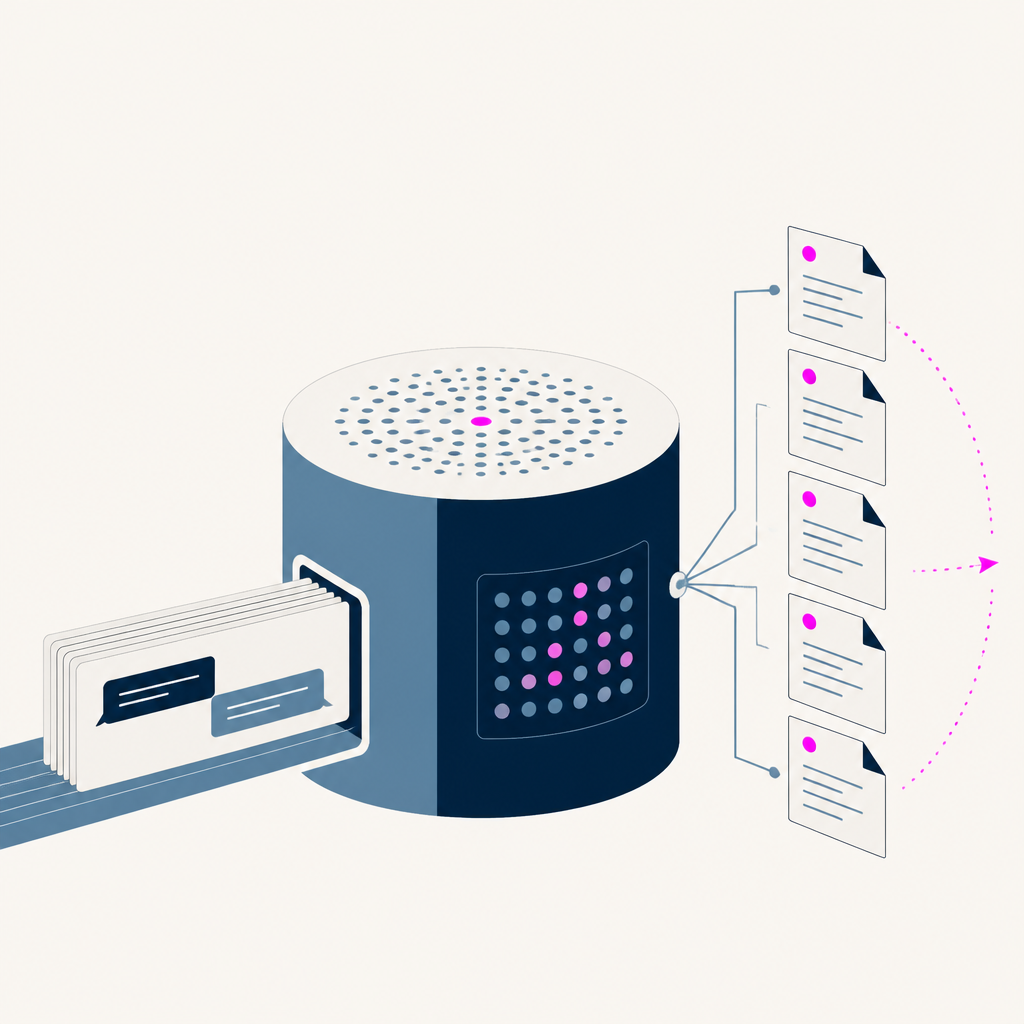
A memory plugin ecosystem for AI agents turns past chat transcripts into RAG snippets, retrieves the top 5 similar items on each prompt, and optionally searches more when the agent is unsure. The article says these systems store data like “10,000 embeddings in SQLite,” but it argues the result is unauditable and can surface stale or incorrect memories. Instead of adding more retrieval features, it proposes document-based “Markdown brain” memory that agents consult and update through a prompt→consult→build→update loop, with no vector database or embeddings.
ruOS launched a private cloud desktop that includes an AI team to handle tasks like research, writing, and code from your browser. It offers ruOS Lite free to try in seconds with no sign-up. As a result, users can start work immediately across devices with persistent files and AI memory, and power users get a Linux environment plus an MCP server for LLMs to control it.
DevAlly launched its DevAlly AI Agent, which captures user journeys in natural language and navigates an app to record them. This is the 3rd launch from DevAlly. The platform then audits each journey stage against WCAG criteria and suggests fixes, shifting accessibility monitoring from manual engineering work to automated checks.
iphone-use launched a system where an AI agent controls a real iPhone by reading the screen as text and performing taps, typing, scrolling, and other actions via WebDriverAgent. It includes a 21-tool MCP server for Claude Code. As a result, automation can replay completed tasks as flows without repeatedly involving a model, while unsupported actions return an “unknown” status and some blocked apps show wireframes instead of screenshots.
Fleuret AI raised €4 million in a pre-seed round to build its AI platform for automating penetration testing with agentic AI. The funding round was led by RAISE Ventures. The company plans to expand its team and accelerate development so penetration testing becomes a continuous process that reruns assessments as systems change.
Brnch launched a code hosting service aimed at coding agents working in the same repo as their sponsor. It launched today, with a page showing 6 followers. Developers can give an agent a dedicated identity, get line-level visibility into what it did, and verify signed receipts for each tested merge.
Afterparty launches as an AI-agent note taker companion that turns a meeting transcript or notes into drafted emails, messages, invites, and CRM notes.
Every AI story that matters,
in your inbox by 8am.
TLDRocket reads all relevant sources, removes duplicate coverage, and summarises the
day in two minutes. Follow companies and topics for alerts, or get the
briefing in Slack. Free, no spam, unsubscribe anytime.
Reading TLDRocket needs no cookies, and the readership counts we rely on come from
our own cookieless analytics. Google Analytics is the exception: it sets cookies and
reports to Google, so it stays switched off until you allow it. You can change your
mind any time from “Cookie settings” in the footer.
Strictly necessary
Session security and form protection (tldrocket-session,
XSRF-TOKEN, 2 hours). The site cannot work without them,
so they need no consent.
Always on
Google Analytics 4 (_ga,
_ga_<id>, up to 2 years). Measures which
stories and sections readers use. Google acts as a third-party processor and may
store the data outside the EU. No advertising, no profiling, no data sold.