
Agents Don't Need Memory. They Need Documentation.
liao.gg
Opinion — commentary, not a factual news event.
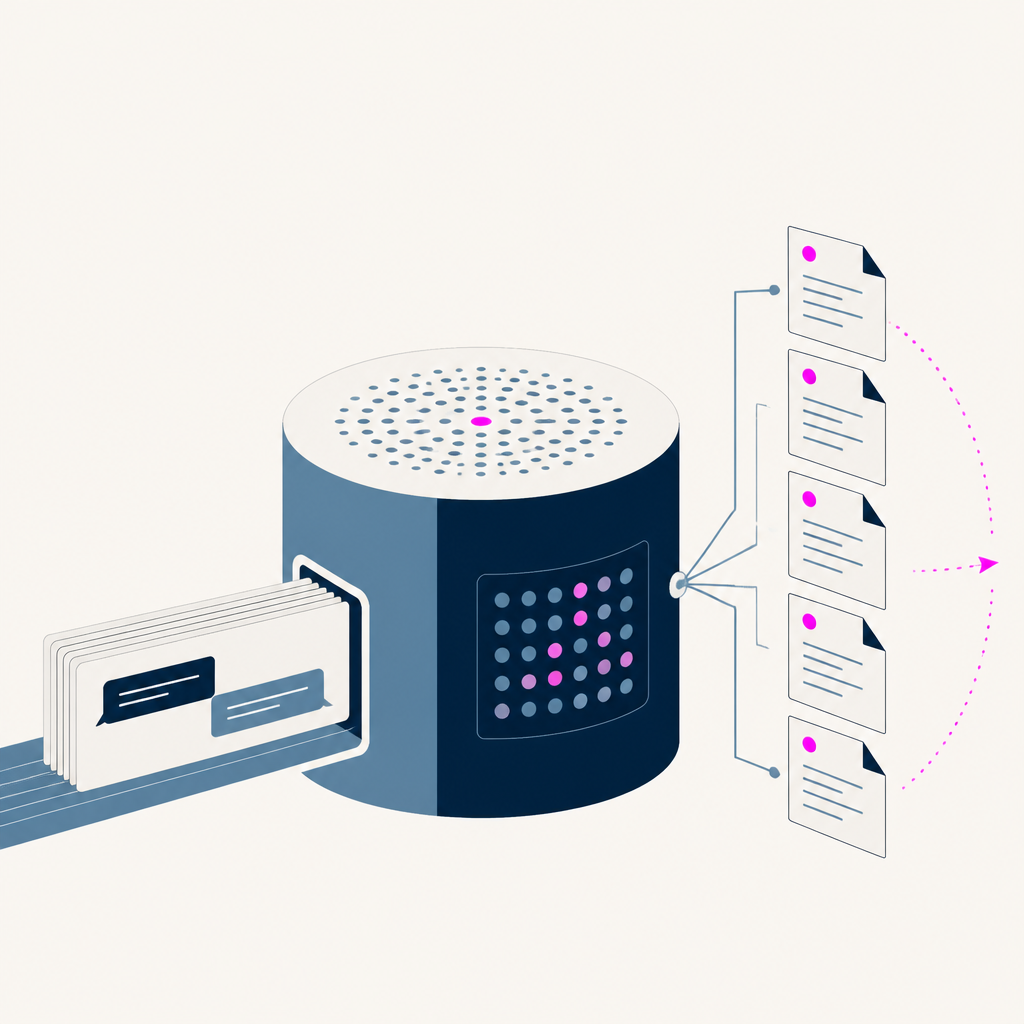
AI "memory" tools mostly just store chat snippets and guess which ones matter. The piece says agents need docs, not a lottery of old prompts.
Based on reporting by liao.gg — read the original for the full story.
Summary, retelling and take written by AI under human oversight; images are AI-generated illustrations. How we work · Report an error
A new argument is cutting through the usual AI-memory pitch: agents do not need a better way to replay conversations. They need a better way to keep records. The source takes aim at the common setup — chop transcripts into snippets, dump them into a vector store, and feed the top matches back into the model on every prompt — and says that is not memory so much as guesswork with extra steps.
That criticism lands because the promise of these tools is bigger than what they actually do. A project has decisions, constraints, research notes, code review rules, and all the little bits that explain why something exists. Similarity search can surface a fragment that looks relevant, but it cannot tell you whether it is current, complete, or even still correct. And if the agent does not know what it is missing, exposing a search tool does not magically fix that.
The piece also argues that the whole ecosystem keeps adding machinery to patch the same weak foundation. Some tools search past transcripts directly. Others split memory into short- and long-term tiers, or run background jobs to merge, deduplicate, compress, or rewrite memories overnight. But all of that still centers on recall. The source’s point is blunt: humans do not rebuild knowledge by rerunning old meetings; they write things down.
That leads to the alternative: document-based memory. The source points to AGENTS.md as a useful start, but says one file is nowhere near enough. What an agent really needs is a structured workspace — specs, instructions, research, indexes, decisions — that it can read before it works and update afterward. In other words, prompt, consult, build, update. Not prompt, rummage through the past, and hope the right snippet floats to the top.
The author says they first tried this by making an internal/ folder and then turned it into Operator Memory, a plugin built around plain Markdown instead of embeddings, summarizers, or a vector database. The pitch is simple enough to be refreshing: if the agent needs a brain, give it files it can actually read and revise. Anything else is just expensive amnesia with better branding.
My take — AI-written commentary, not fact-checked reporting
The industry has spent a lot of energy selling amnesia as intelligence. A Markdown file is not glamorous, which is probably why it sounds more credible than a thousand-snippet memory cloud. The annoying truth is that most “memory” products are just search wrapped in confidence, and confidence is cheap.
Read more about this at: liao.gg