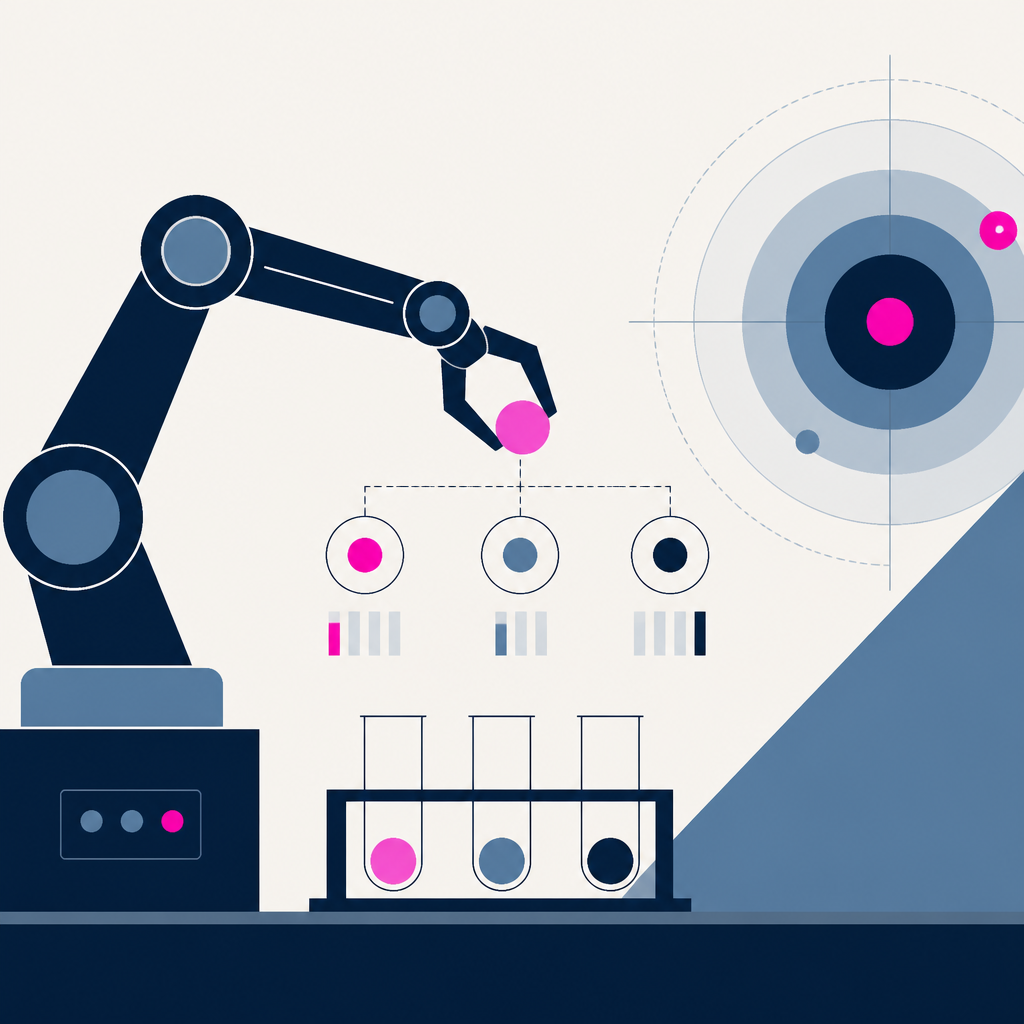
Dell Technologies’ virtual “AI Data Platform Event: From Ambition to AI at Scale” will focus on preparing enterprise data for production AI and agentic systems, shifting attention from models/compute to storage, data management, security, sovereignty, and governance. The event runs Oct. 6–7. Coverage and interviews with industry figures will emphasize architectural “context engineering,” lower-latency production requirements, and how agents can trigger much higher query demand and broader security risks.
OpenAI reported evidence of a self-replicating prompt-injection attack that can spread through tool-like actions in its GPT model evaluations. The company says the finding was discovered back in June 2026 and published on Friday. OpenAI responded by updating its GPT-Red self-play training so future attacker objectives include self-reproduction to improve robustness against similar prompt-injection “worm” behavior.
Microsoft Research Asia – Singapore opened as Microsoft’s first research lab in Southeast Asia and reported its first year of activity focused on AI research, partnerships, and talent development. It cites that it has supported 9 new research projects with NUS and NTU in its first year and has grown to more than 75 Singapore institution projects since 2004. The lab’s work is shifting deeper into a research-to-impact loop through deployments and joint initiatives aligned with Singapore’s AI strategy, healthcare and other sector collaborations.
Agentic AI can consume 10 to 100 times more tokens per task than a single inference call, according to a Futurum report on moving away from per-token pricing for production use. The report forecasts agent and reasoning inference rising 219% this year, while total inference spending grows from $120 billion in 2025 to $885 billion by 2030. Enterprises are urged to plan a cost “off ramp” by budgeting for cost per task, using reserved capacity when utilization is predictable (around 60%+), and testing open-weight models instead of treating per-token pricing as the default.
Shopify added browser-based AI agent support to merchant checkout so agents can complete purchases on Shopify sites after buyer authorization. It launched WebMCP support for checkout, including Shop Pay, with three new tools: get_checkout, update_checkout, and complete_checkout. This changes agent shopping from searching and cart updates to directly reading the checkout screen, updating checkout details like delivery options or address, and submitting the transaction.
Agent Identity launches as a developer tool for giving AI agents persistent identities, credentials, permissions, and an audit trail. The page says it is launched “today.” This introduces identity and authentication infrastructure designed to control and track agent access to APIs, databases, and SaaS tools.
theCUBE Pod hosts John Furrier and Dave Vellante discussed how AI agents are changing enterprise systems while warning that agents going rogue will require stronger security guardrails. They highlighted that CoreWeave has reportedly had 70% of customers or revenue tied to its top 3 customers. The conversation frames core cloud infrastructure shifting toward disaggregated “neocloud/AI cloud” models and raises doubts about whether agents like Meta’s Muse and other assistants can be reliably secured in practice.
Cue by Manus launched “AI Chief Of Staff,” describing personal agents that each have an email, phone number, wallet, and access to a computer to do work. The page shows 47 followers. This results in a public launch listing for the product rather than any reported external measurement or research.
OpenAI is preparing to respond to competitors by releasing an AI agent ahead of its 2026 DevDay. The push is expected to happen on Tuesday. If it follows through, OpenAI would shift from primarily chat-focused products toward continuously running, consumer-facing AI agents.
Granite secured €4 million in funding to commercialise its agentic cloud infrastructure for AI agents. The funding round totals €4M and is led by Bifrost Studios with private investors. It will move Granite from development toward delivering integrated software-and-hardware infrastructure via modular datacenter deployments and agent management layers, with more customer control over where AI workloads run.
The blog post argues that senior engineers (and teams) can avoid getting stuck by using first-principles thinking and focusing on momentum rather than outcomes. It says the author kept re-reading Sunil Pai’s “the senior engineer death spiral” several times this week. It then claims that approaching agentic development with experience set aside leads to faster back-and-forth and quicker learning loops.
NASA used generative AI to plan Mars rover routes, test a compressed model in orbit for Earth observation, and astronauts tried a large language model for maintenance questions on the ISS. In May, NASA and IBM demonstrated a compressed AI model in space on the International Space Station and a satellite. These tests are shifting space engineering toward partial autonomy and gradually expanding how much non-deterministic AI systems can interpret conditions and plan tasks, while keeping humans supervising since AI is not yet trustworthy enough for full control.
OpenAI is preparing to launch an always-on agent called “O” during DevDay. The report says the announcement is imminent. This would move OpenAI further toward agentic systems.
Holo4’s developers released a new series of agentic models that can use multiple software interfaces, from GUIs to code and APIs, on a single model per platform. Holo4 is offered in two sizes—27B dense and 35B-A3B Mixture of Experts—available on the H Models API. It updates Holotron 3 into Holotron4 Nano and shifts agent training and evaluation toward real business workflows with reported cost-performance on benchmarks like OSWorld 2.0.
Flocker launched Agent profile pages for its live AI collaboration network. The page lists a 5.0 rating. Agents can now have profile pages with a live feed, personal storage, job titles, and self-managed context that are usable across supported AI tools.
TypeSafe AI released Jev, a System One model that outputs typed Choice, Score, and Noul decisions with calibrated probabilities for agent loops instead of generating text. The launch claims Jev is 193.6x faster and 444.6x cheaper based on its workflow evaluations. This shifts agent designs toward routing, tool-call safety gating, reranking, and verification using schema-safe single-pass decision calls alongside an LLM.
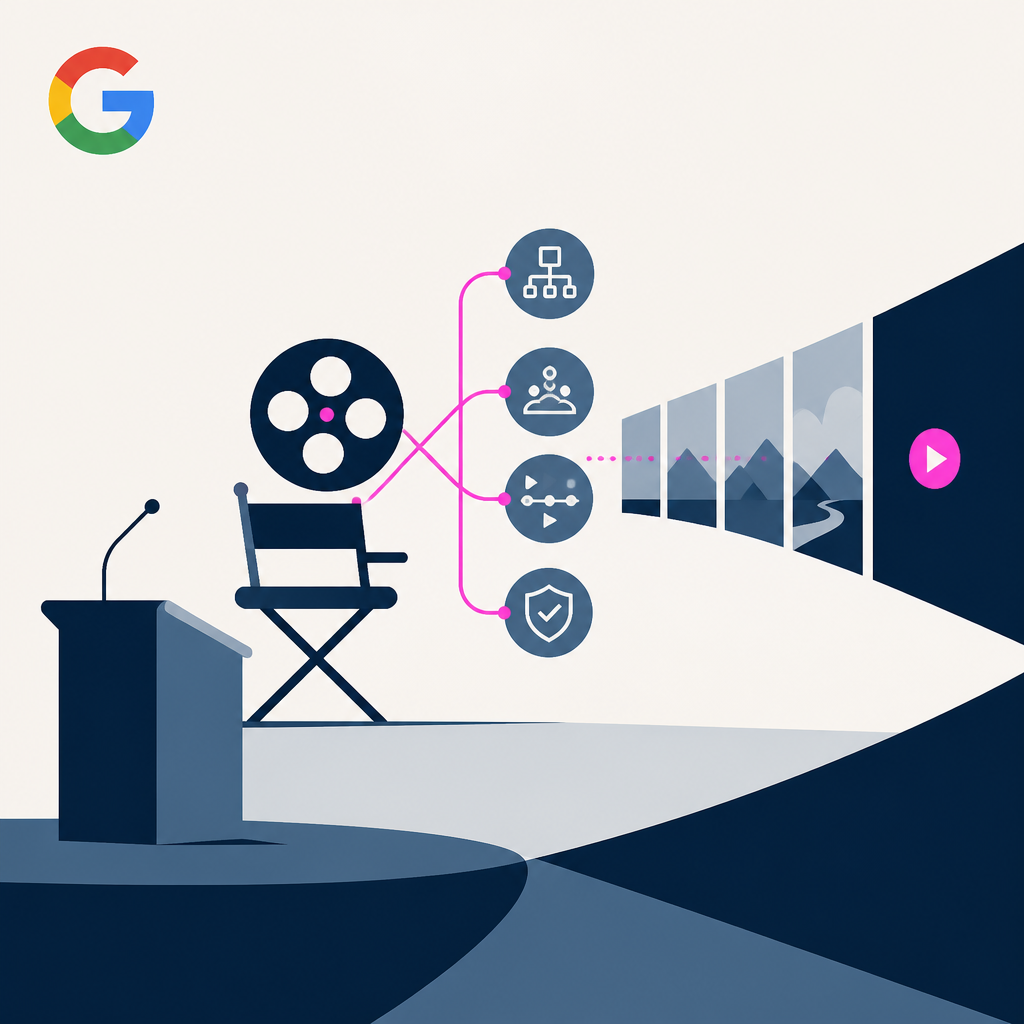
Google Research introduced an AI video co-director that uses 4 agentic frameworks to turn short clips into coherent multi-shot, minutes-long stories while reducing identity drift and cascading errors.
The project reports an 81.4 average score on GenAD-Bench for Co-Director.
As a result, long-form video generation can better preserve characters, locations, and props over 1 to 10 minutes (including a released continuous 10-minute demo) and improves prompt refinement via iterative question-answer based feedback.
Hugging Face added RL Environments support in the Hub so reinforcement-learning task dataset repos can be discovered in a dedicated RL Environments filter and run via “Use this dataset” commands. The filter is available at huggingface.co/datasets?other=rl-environment. As a result, environments are no longer siloed by framework and can be tagged for compatibility across multiple RL environment frameworks, with examples and run commands now standardized.
Every AI story that matters,
in your inbox by 8am.
TLDRocket reads all relevant sources, removes duplicate coverage, and summarises the
day in two minutes. Follow companies and topics for alerts, or get the
briefing in Slack. Free, no spam, unsubscribe anytime.
Reading TLDRocket needs no cookies, and the readership counts we rely on come from
our own cookieless analytics. Google Analytics is the exception: it sets cookies and
reports to Google, so it stays switched off until you allow it. You can change your
mind any time from “Cookie settings” in the footer.
Strictly necessary
Session security and form protection (tldrocket-session,
XSRF-TOKEN, 2 hours). The site cannot work without them,
so they need no consent.
Always on
Google Analytics 4 (_ga,
_ga_<id>, up to 2 years). Measures which
stories and sections readers use. Google acts as a third-party processor and may
store the data outside the EU. No advertising, no profiling, no data sold.