Every AI story that matters — and the intelligence behind it.
TLDRocket reads all relevant sources, removes duplicate coverage, and publishes a short neutral
summary of every story, linking back to the original. Free, no spam, unsubscribe anytime.
AI models from leading labs are improving at exponential rates in their ability to perform complex work autonomously, with systems like Opus 4.7 completing tasks in hours that would take humans weeks, while the usage pattern is shifting from interactive chatbots to autonomous agents managed by human operators. A recent OpenAI study found that a quarter of its workforce regularly manages at least four AI agents simultaneously, with agents adopted across technical and non-technical departments at similar rates, and success depends more on user domain expertise than professional background. As capability improvements compound exponentially, organizations face rapid disruption where AI plans written months ago are already obsolete, creating institutional turbulence as policy and markets struggle to track improvements that don't move at human speed.
MIT Technology Review·2 months ago·
10
● 3 sources
Anthropic launched Claude Science, a standalone product designed to autonomously conduct scientific research tasks in computational biology and drug development, available to all paid Claude subscribers. The system can execute work comparable to a second-year graduate student and integrates with tools for genetics, chemistry, and protein biology, as demonstrated when it identified drug candidates for phenylketonuria. Anthropic will use Claude Science for its own drug research on neglected diseases while competing with Google DeepMind's dominance in AI for science, particularly after researcher John Jumper recently left DeepMind to join Anthropic.
A CSET researcher examined how cost-efficient Chinese AI models are gaining global traction and threatening the business models of proprietary AI developers. Chinese models are now considerably cheaper while achieving nearly equivalent capabilities to established proprietary systems. This shift could alter the long-term balance of technological and economic power in the AI industry between the U.S. and China.
Trump administration AI policies restricting semiconductor exports to China create an opportunity for China to narrow its artificial intelligence capabilities gap with the United States. Experts including CSET's Sam Bresnick argue that relaxing restrictions on advanced AI chip exports would undermine long-term U.S. technological advantage. China is actively pursuing AI development through military applications, universities, and private companies to close the competitive divide.
The article advises skeptical employees on how to navigate workplaces where executives are heavily focused on AI adoption by adopting pragmatic strategies rather than expressing their true opinions about AI. The core recommendation is to match your boss's enthusiasm for AI and position yourself as the "AI guy" within your team, with specific tactics like responding quickly to AI-related messages. The author argues that workplace survival depends not on whether AI is actually useful but on aligning with leadership priorities, making skepticism about AI irrelevant to career advancement.
Researchers released ScarfBench, an open benchmark for evaluating AI agents on Java framework migration tasks across Spring, Jakarta EE, and Quarkus. The benchmark contains 34 applications, 204 migration tasks, and approximately 151,000 lines of code, with success measured by whether applications build, deploy, and preserve behavior. Current frontier AI agents achieve less than 10% behavioral success on the benchmark, revealing that dependency management across configuration, infrastructure, and runtime environments—rather than code translation itself—is the primary migration challenge.
Google Research released building-level rooftop reflectivity data covering 50+ global cities through a new Heat Resilience Earth Engine App to help urban planners implement cool-roof solutions for mitigating extreme heat. The dataset achieves 30-centimeter spatial resolution by fusing Sentinel-2 satellite data with high-resolution commercial imagery using machine learning, validated against ground measurements with a root mean square error of 0.04. Cities can now prioritize individual buildings for cool-roof retrofits, with targeted interventions potentially reducing extreme urban heat by up to 0.5°C globally.
NVIDIA released the BioNeMo Agent Toolkit, which integrates with Anthropic's Claude Science to let life sciences researchers run accelerated computational workflows through natural language commands. The toolkit includes accelerated tools like RAPIDS-singlecell that compress a 1.3-million-cell workflow from 52 minutes to 25 seconds, and nvMolKit that accelerates cheminformatics operations by up to 3,000x. Scientists can now access NVIDIA's accelerated models and libraries directly within Claude Science's conversational environment, with 18 of the top 20 pharmaceutical companies already using BioNeMo.
SkillOpt treats agent skill files as trainable parameters that can be optimized through a controlled training loop rather than manual editing, using bounded text edits and validation gating to improve performance without modifying model weights. Across six benchmarks, seven models, and three execution modes (52 evaluation cells total), SkillOpt achieved best or tied-best results, with GPT-5.5 improving from 58.8 to 82.3 on average across benchmarks. The optimized skills remain compact (median 920 tokens with one to four accepted edits), transfer across model scales and execution environments, and enable smaller models to match larger baselines without additional inference costs.
Google released Nano Banana 2 Lite, an image generation model, and made Gemini Omni Flash available to developers for video generation and editing. Nano Banana 2 Lite generates images in 4 seconds at a cost of $0.034 per 1,000 images, while Gemini Omni Flash costs $0.10 per second of video output. Developers can now chain both models together to rapidly generate images and convert them into animated videos within a single workflow.
Etched, a hardware startup focused on AI inference, raised $800M and secured $1B+ in backlog orders while achieving first-silicon success on TSMC 4nm in under three years. The company built inference chips and clusters through vertical integration with a team of 400+ engineers from NVIDIA, Google, and other major chip programs. OpenAI released GPT-5.6 with limited access to select partners, with plans for broader availability pending government approval.
NVIDIA's inference software stack has reduced token costs for DeepSeek V4 by up to 5x on the Blackwell platform within one month through optimizations across production operations, application acceleration, and infrastructure access layers. Companies like Baseten, Cognition, and Deep Infra are using NVIDIA's TensorRT-LLM and Dynamo frameworks to achieve throughput gains ranging from 30% to 50% improvements in token generation speed. The full-stack approach compounds individual optimizations to increase Blackwell token throughput per GPU by up to 20x, enabling lower cost-per-token for production AI inference workloads.
Jaiveer Singh leads NVIDIA's Isaac ROS team, which develops software infrastructure for robotics developers to build autonomous robots faster by providing modular, CUDA-accelerated packages built on open source ROS 2. Isaac ROS offers developers pre-built components for perception, object detection, mapping, and motion planning that run on NVIDIA's Jetson edge systems and can be customized like modular building blocks. By releasing robotics software as open source, NVIDIA enables developers to inspect, modify and trust the platform over multi-year development cycles, allowing more robotics startups and builders to accelerate their progress.
Researchers examined mathematical theory, evolutionary biology, competitive markets, and machine learning to explain why specialized AI systems consistently outperform generalist ones. The 1997 Wolpert-Macready theorem proved no single algorithm performs best across all problems, meaning resources directed at specific tasks outperform resources spread across unlimited tasks. As AI systems scale, specialization remains advantageous because concentrating capacity on bounded task sets achieves higher performance than distributing capacity broadly, regardless of increases in compute.
Emily Bender, lead author of the 2021 paper "On the Dangers of Stochastic Parrots," clarified common misconceptions about the work in a recent blog post marking its five-year anniversary. The original paper specifically addressed risks of large language models producing synthetic text, not artificial intelligence broadly, and the "stochastic parrot" metaphor was descriptive rather than insulting. Bender emphasized that clearer technical language is needed for informed discussions about technology regulation and deployment, and noted the paper should have covered exploitative labor practices and intellectual property theft underlying these systems.
NVIDIA is providing reusable workflows and blueprints for building vision AI agents that analyze video data at the edge using synthetic data generation and model fine-tuning. A benchmark with Corning showed that a model trained on eight real defect images plus synthetically generated defects achieved 95% average precision, compressing a multi-quarter project into days. Organizations can now deploy vision AI agents faster by using pre-built skills for defect generation, video augmentation, and model fine-tuning instead of rebuilding workflows from scratch.
AI systems can improve crop yield by 26%, reduce water use by 41%, and cut chemical usage by 33%, but agricultural operations lack the clean data foundations needed to make these systems reliable. Agriculture's data challenge is uniquely complex: modern farms use disparate IoT devices, autonomous machinery, and external feeds from weather and government sources, while requiring AI systems to understand specific geographic details like GPS coordinates and field-level soil variation. Organizations must first build unified data models, governance frameworks, and security controls before deploying AI, or risk generating misleading recommendations that waste resources or cause operational damage.
Qwen 3.6 27B is a 27-billion-parameter local AI model that performs at the level of mid-2025 frontier models like GPT-5, making it practical for code generation and general tasks on consumer hardware. The author achieved 30 tokens per second on an M5 Max MacBook with 8-bit quantization, and demonstrated successful outputs for creative writing, web development, and landing page creation. Local model capability at this quality level enables privacy-preserving alternatives to cloud APIs for coding, business data processing, and offline work.
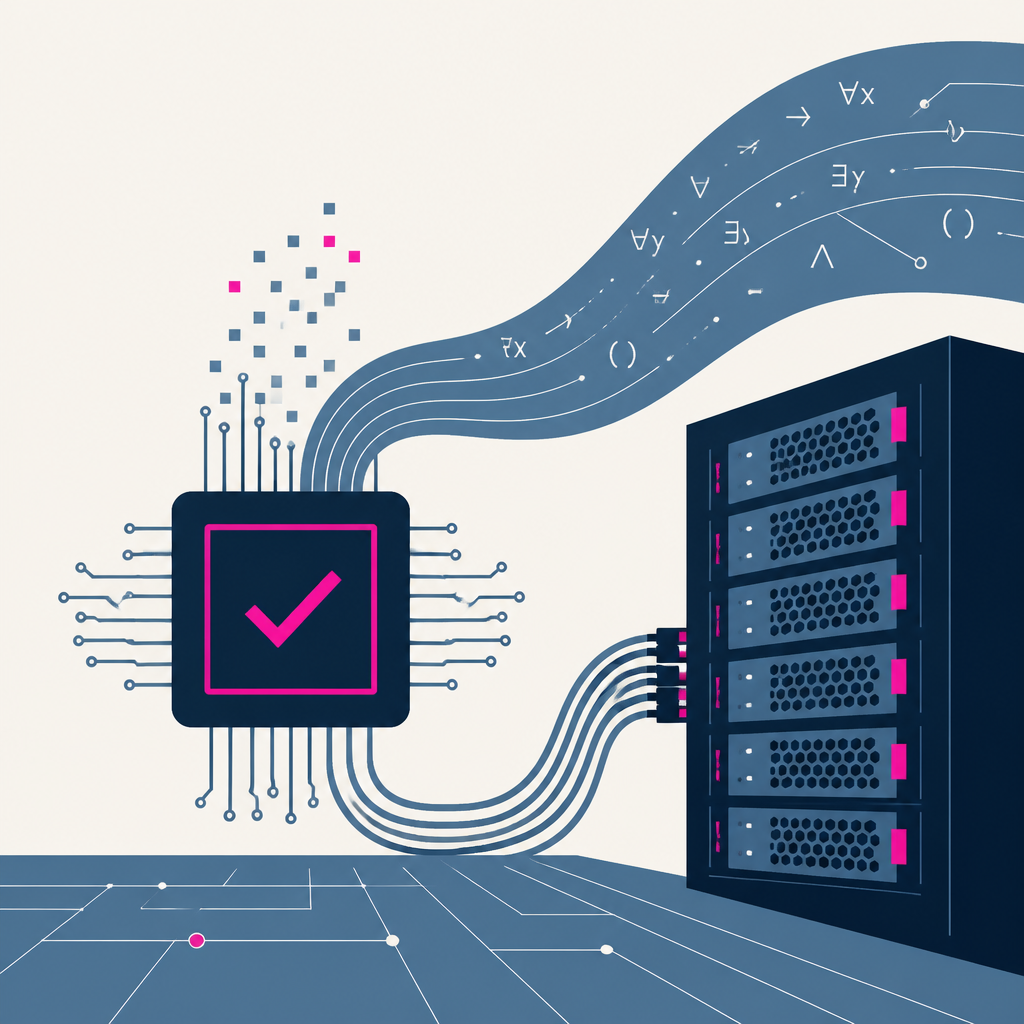
AI tools are lowering the cost of formal verification in software development by automating proof-writing, which previously required expensive specialist expertise. Developers can now mathematically verify that complex business rules work correctly without prohibitive expenses. This shift enables broader adoption of formal verification techniques across software projects.
Craft.do released Craft Agents, an open-source desktop application for working with AI agents that connects to APIs, MCP servers, and databases through natural language prompts rather than configuration files. The tool uses Claude and Pi SDKs and is built on agent-native principles where users describe what they want and the agent configures everything automatically. It's available as a one-line install for macOS, Linux, and Windows, with support for headless remote servers, CLI access, and multi-provider LLM connections including Anthropic, OpenAI, and Google.
Meta open-sourced Astryx, a design system developed internally over eight years that powers 13,000+ apps, featuring 150+ React components with full customization and dark mode support. The system includes a CLI, comprehensive theming via CSS custom properties, and was deliberately designed so that both human developers and AI assistants can build with identical tooling and APIs. Teams can now adopt Astryx without vendor lock-in, overriding styles with their existing CSS approach and customizing components through theme configuration rather than forking source code.
A developer debugged a parsing regression in Hyperscript with Claude's help, where AI excelled at root-cause analysis but proposed suboptimal fixes. The developer ultimately solved it by using the existing "follows" infrastructure to prevent the 'as' keyword from being parsed as a conversion expression during fetch commands. The experience demonstrates that effective AI collaboration requires domain expertise and healthy skepticism rather than blind acceptance of suggestions.
Knowledge distillation trains a smaller, cheaper model to learn from a larger model's predictions rather than training directly on raw data. The approach involves having a high-capacity teacher model generate outputs that a smaller student model learns to replicate, combining both the original dataset and the teacher's interpretations. This enables deployment of faster and cheaper models that retain more capability than they would achieve through standard training alone.
This article argues that technological progress has stagnated, with society having exhausted major innovations and left only engineering drudgery, while AI is currently useful mainly for software engineering rather than constituting broad progress. The author cites examples like a founder spending 3 hours manually fixing AI's debugging work after the system spent days in circles, and notes that AI-powered enterprise tools show unclear value beyond token costs. The shift going forward requires founders to become skilled operators tackling hard problems like enterprise complexity and hardware supply chains, rather than commoditized software solutions.
A product designer argues that when AI systems are hard to evaluate, it reflects poor product design rather than an evaluation problem, and demonstrates how to restructure products to make verification easier by showing working, sources, and incremental changes rather than opaque final outputs. The examples span data agents showing 50% more detail through notebooks, PE lesson planners anchored to vetted templates with diffs, and medical report generators that surface contradictions and source citations before the final document. Redesigning products for verifiability reduces user friction, enables better automated testing, and creates feedback loops that improve quality over time.
OpenAI unveiled the Codex Micro, a keyboard developed in partnership with accessories company Work Louder, at the AI Engineer World Fair. The device was described by OpenAI spokesperson Dominik Kundel as designed to enhance Codex usage. The hardware represents a new physical product category for OpenAI beyond software offerings.
Google introduced TabFM, a foundation model that applies zero-shot in-context learning to tabular data classification and regression tasks, eliminating the need for manual hyperparameter tuning and feature engineering. The model was trained on hundreds of millions of synthetically generated datasets and evaluated on TabArena spanning 51 datasets with up to 150,000 samples, consistently outperforming tree-based algorithms like XGBoost. TabFM will be integrated into Google BigQuery as an AI.PREDICT SQL command, allowing users to generate predictions on new tables in a single forward pass without machine learning expertise.
ChatGPT adoption is expanding globally as users increase their engagement with the platform and explore additional features across different regions and languages. OpenAI's Signals data indicates measurable growth in user activity and capability exploration, though specific metrics are not detailed in the announcement. This expansion suggests potential for broader AI tool integration into daily workflows across diverse markets.
Together AI published nine research papers at ICML 2026 spanning AI agent development, model reasoning techniques, and inference optimizations across the full ML stack. Key results include DSGym evaluating data-science agents across 1,000+ tasks, Aurora achieving 1.25× speedup through adaptive speculative decoding in production, and ParallelKernelBench establishing the first multi-GPU kernel generation benchmark with 87 workloads. These advances enable faster inference, better reasoning without verifiers, and more efficient use of GPU resources for frontier AI systems.
Every Eval Ever and Hugging Face Community Evals have integrated their evaluation result systems to enable cross-posting and linking of benchmark scores across platforms. The combined datastore now contains approximately 229,000 evaluation results across 22,000 models and 2,200 benchmarks, drawn from 31 different reporting formats. Users can now submit evaluation results to both platforms simultaneously using a converter tool, with results appearing on model pages and linking back to full standardized records for reproducibility and interpretation.
OpenAI engineers analyzed large-scale core dumps to identify the root causes of rare infrastructure crashes in their systems. They discovered an 18-year-old software bug alongside a hardware fault, using the crash data to trace issues that had persisted undetected for nearly two decades. The findings enabled them to fix both the legacy code defect and address the hardware problem, improving system reliability.
GeneBench-Pro is a new benchmark for testing AI systems on genomics and biology tasks using real-world datasets. The benchmark evaluates performance across complex scientific research problems in these domains. Organizations can now measure how well AI models handle actual genomic data rather than simplified test cases.
Every AI story that matters,
in your inbox by 8am.
TLDRocket reads all relevant sources, removes duplicate coverage, and summarises the
day in two minutes. Follow companies and topics for alerts, or get the
briefing in Slack. Free, no spam, unsubscribe anytime.
Reading TLDRocket needs no cookies, and the readership counts we rely on come from
our own cookieless analytics. Google Analytics is the exception: it sets cookies and
reports to Google, so it stays switched off until you allow it. You can change your
mind any time from “Cookie settings” in the footer.
Strictly necessary
Session security and form protection (tldrocket-session,
XSRF-TOKEN, 2 hours). The site cannot work without them,
so they need no consent.
Always on
Google Analytics 4 (_ga,
_ga_<id>, up to 2 years). Measures which
stories and sections readers use. Google acts as a third-party processor and may
store the data outside the EU. No advertising, no profiling, no data sold.