Trump administration’s AI crackdown opens door for China to close gap
CSET Georgetown Jason Ly ● Covered by 2 sources
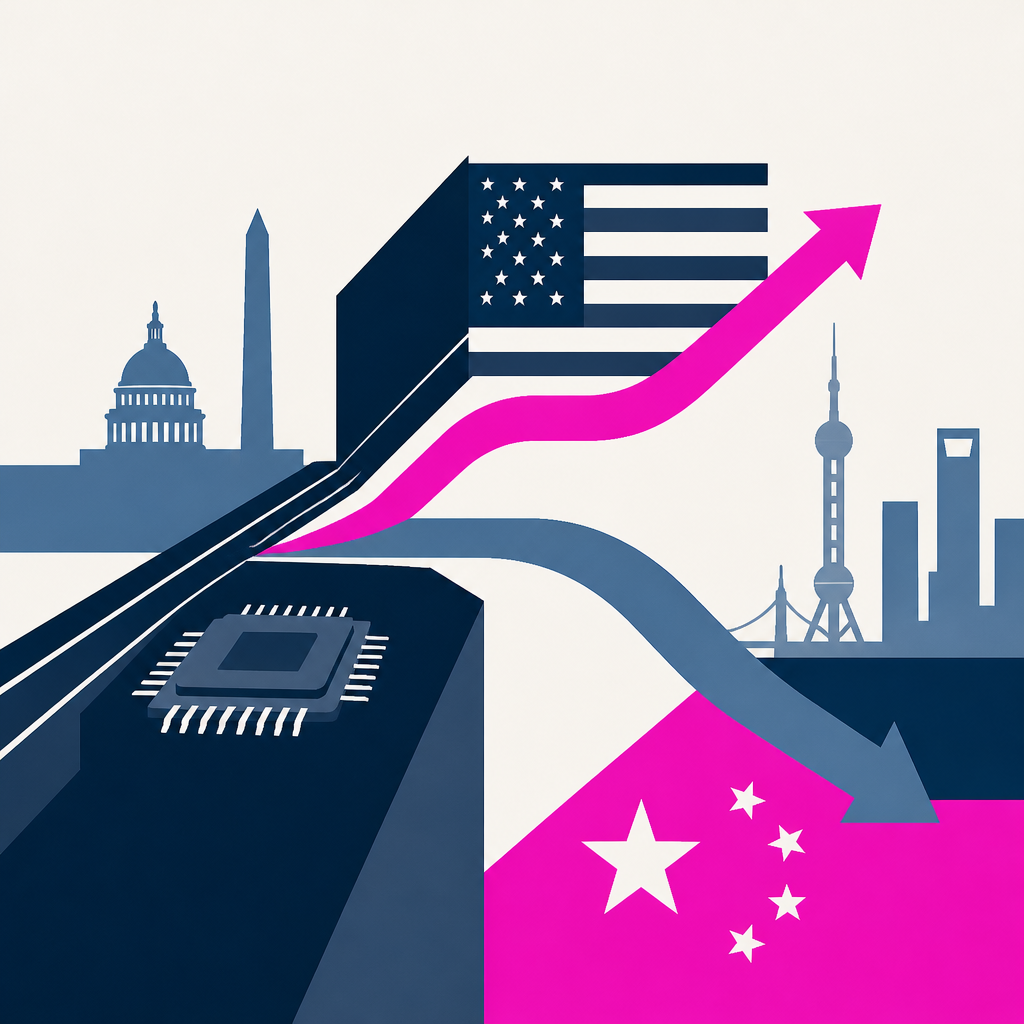
Export controls meant to slow China's AI progress might be doing the opposite. Experts warn tighter chip rules could push allies toward China and speed up Beijing's own chip and military AI push.
Based on reporting by CSET Georgetown, Jason Ly — read the original for the full story.
Summary, retelling and take written by AI under human oversight; images are AI-generated illustrations. How we work · Report an error
There's a real debate brewing inside Washington's China-hawk circles, and it's not the one you'd expect. Instead of arguing over whether to restrict advanced AI chip exports to China, some experts are now questioning whether the restrictions themselves are backfiring. CSET's Sam Bresnick has been making that case in a string of recent pieces, and the argument is uncomfortable for anyone who assumed tighter controls automatically mean a safer lead for the US.
Bresnick's core point, made in an op-ed for Perry World House, is that loosening semiconductor export limits to China would hurt America's long-term position — which implies the opposite is also getting scrutiny: that overly aggressive restrictions can push other governments toward building their own AI stacks entirely outside US influence. That's the sovereign AI trend he and CSET have been tracking. Countries increasingly see AI capability the way they see energy or defense — something too strategically important to outsource, especially to a supplier that might cut them off tomorrow.
Meanwhile TSMC's expanding footprint, including its growing investments inside the US, is quietly reshuffling the geopolitics around chip supply. A Wall Street Journal piece featuring Bresnick's analysis frames TSMC's US expansion as a hedge, not a retreat from Taiwan, but the underlying message is the same: chip manufacturing is becoming a tool of statecraft, and every major player is repositioning.
On the other side of the ledger, China isn't sitting still while Washington tightens the valve. A CSET report picked up by Newsweek details how Beijing is leaning hard on universities and private companies to fold AI into its military modernization, building capability domestically rather than waiting on foreign chips. That's the uncomfortable irony at the heart of this crackdown: restrictions designed to keep China behind may be accelerating exactly the kind of self-sufficient, state-directed AI buildup that's harder to slow down later.
None of this means export controls are pointless. But the assumption that tighter is always better deserves more scrutiny than it's gotten, especially when the controls hand governments elsewhere a good excuse to build their own sovereign systems instead of relying on American technology at all.
My take — AI-written commentary, not fact-checked reporting
I've said before that treating chip export bans like a magic off-switch for Chinese AI progress was always naive, and this is exactly the blowback anyone paying attention predicted. Restriction-first policy without a real industrial strategy just teaches everyone else to build around you — that's not deterrence, that's an incentive program for self-reliance, and China's universities are already cashing in on it.
Read more about this at: CSET Georgetown