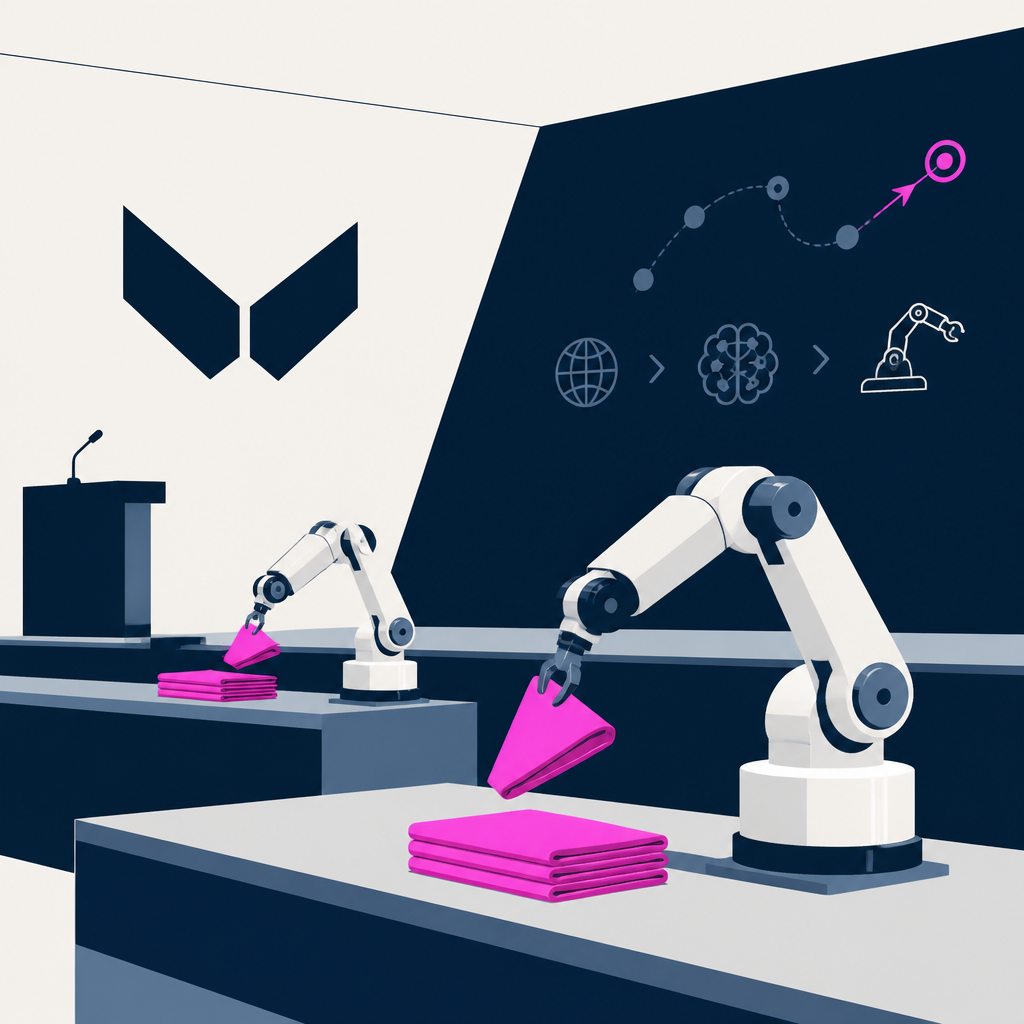
Industrial Next is building AI-driven robotic stations to let factories retool automation without weeks of reprogramming and physical changes. The company says it can retool in minutes instead of weeks and is partnering with BMW Group Technology Office to evaluate its dexterous manipulation. As a result, manufacturers can redeploy stations across product lines and teach new tasks via simulation and demonstration rather than hard-coded robot programming.
Dyna Robotics followed its Dyna-2 release with a physical robot agent, Dyna-2.1, and used a talk with Jason Ma to explain how its world-action model is used for long-horizon autonomy in real robotics. The robots reportedly achieved a 99.4% success rate folding restaurant napkins for 24 hours straight, including recovery after pulling over a stack. The focus shifts from training a large world-action model on video to deploying hour-long, task-executing physical agents built around custom hardware and agentic execution.
Laplace Intelligence is building automated red-teaming that stress-tests robotics and self-driving systems in realistic simulation before deployment in the real world. It uses Nvidia’s Cosmos as a post-trained foundation and lets developers modify scenarios in real time using language prompts. As a result, physical AI developers can generate and test more corner cases automatically and shift safety evaluation toward ongoing evidence customers, insurers, and regulators can trust.
Gemini 4 Argon was released as a physical-reasoning model for robotics, covering code generation and visual-semantic reasoning across control, real-to-sim, and research/self-improvement workflows. On the Embodied Reasoning (ERQA) benchmark, Argon scored 87% using pure reasoning, higher than other frontier models. This shifts robotics development toward applying a single general-purpose physical reasoning model across the full robotics lifecycle, including real-to-sim calibrated simulation and closed-loop robot control.
Spranic is developing a spatial memory layer to record physical environments and how they change for physical AI. It aims to support reusable spatial context so robots can replan across many tasks instead of relying on statically planned deployments. The approach links that spatial data with knowledge graphs to preserve data provenance and make robot decisions more auditable.
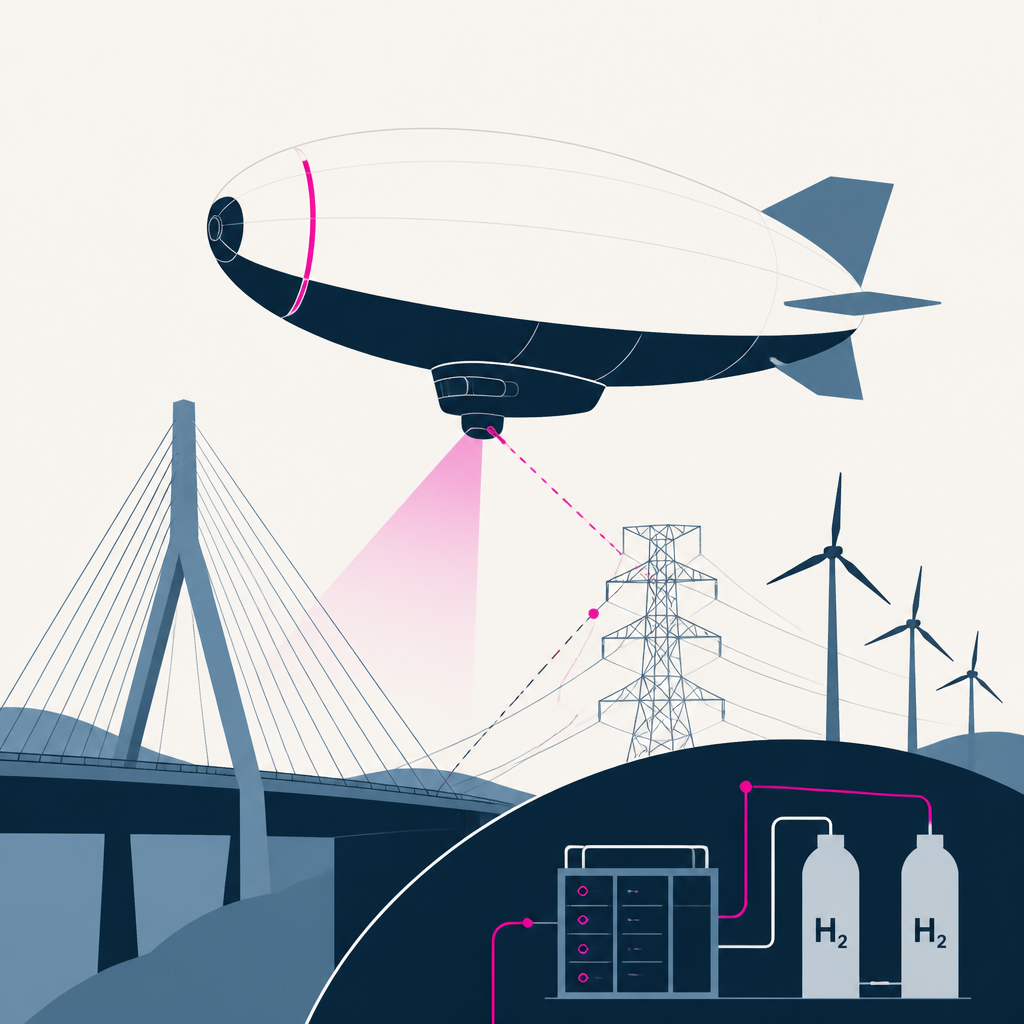
HyLight raised €13 million to industrialise its autonomous hydrogen-powered airships used for aerial inspection of critical infrastructure. The funding will support scaling its fleet from four to 15 aircraft within a year and recruiting 50 employees. It shifts from prototype development to faster commercial deployment, expanding operations and AI data analysis capacity across Europe.
Every AI story that matters,
in your inbox by 8am.
TLDRocket reads all relevant sources, removes duplicate coverage, and summarises the
day in two minutes. Follow companies and topics for alerts, or get the
briefing in Slack. Free, no spam, unsubscribe anytime.
Reading TLDRocket needs no cookies, and the readership counts we rely on come from
our own cookieless analytics. Google Analytics is the exception: it sets cookies and
reports to Google, so it stays switched off until you allow it. You can change your
mind any time from “Cookie settings” in the footer.
Strictly necessary
Session security and form protection (tldrocket-session,
XSRF-TOKEN, 2 hours). The site cannot work without them,
so they need no consent.
Always on
Google Analytics 4 (_ga,
_ga_<id>, up to 2 years). Measures which
stories and sections readers use. Google acts as a third-party processor and may
store the data outside the EU. No advertising, no profiling, no data sold.