AI adoption in financial services is expanding across institutions like OpenAI, Anthropic, Nubank, Morgan Stanley, and Fidelity, with the AIE NYC conference dedicating its main stage to AI in Finance in October. Companies are deploying AI agents for equity investing, corporate finance workflows, and customer-facing services, but require enterprise-grade infrastructure including governance, audits, evals, and sandboxing rather than generic models. This shift means finance teams must now manage AI skills as supply-chain security issues, implement verifiable AI with provenance tracking, and design systems where humans retain trust and control over agent decisions.
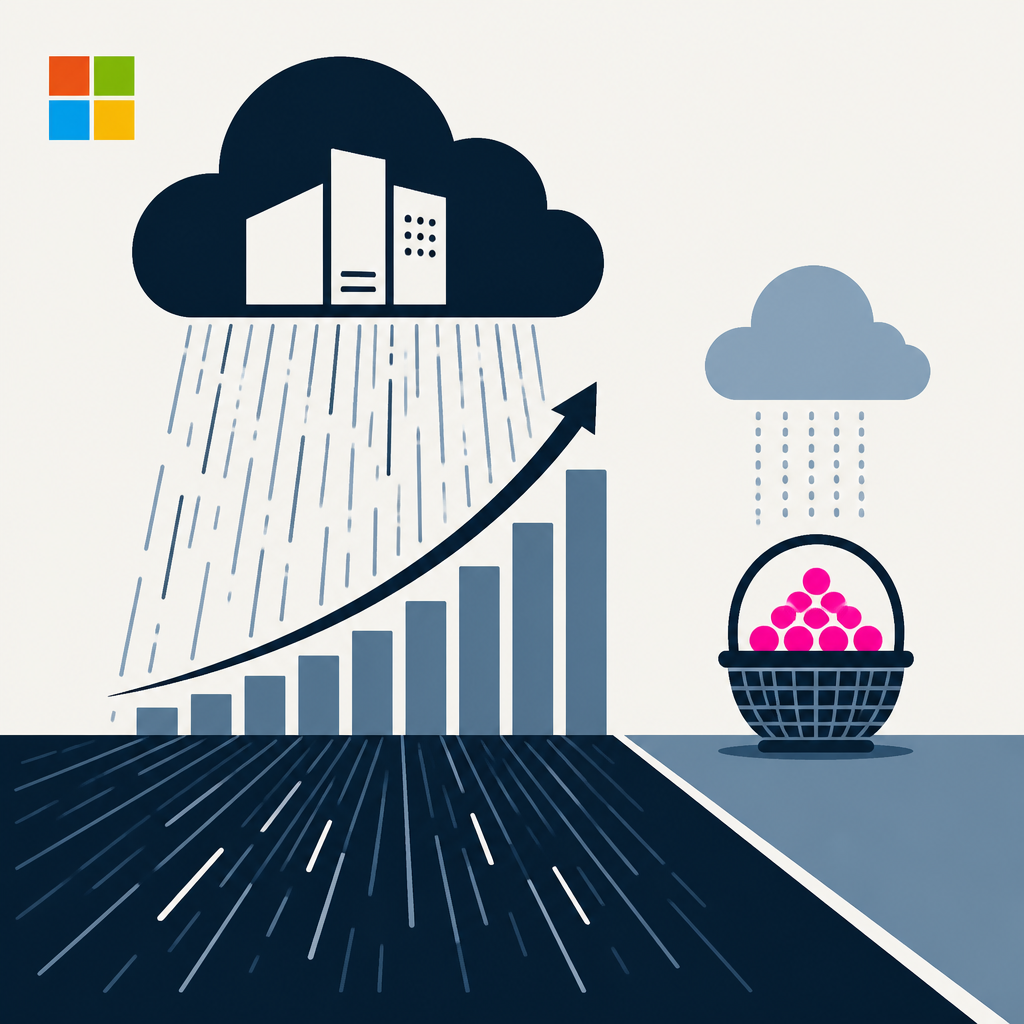
Microsoft reported $90 billion in quarterly revenue with 18 percent growth, driven by cloud services reaching $59.3 billion (up 27 percent) and Azure growing 43 percent. Microsoft 365 Copilot reached 30 million paid seats out of 450 million commercial customers, while capital expenditure climbed to $115.95 billion for the full fiscal year, up 80 percent. The strong results and $678 billion in customer commitments suggest demand for AI infrastructure, though industry concerns persist about whether heavy AI spending will ultimately prove profitable.
Meta CEO Mark Zuckerberg outlined the company's enterprise AI strategy beyond its June launch of business agents, including plans to sell APIs, compute directly to customers, and productivity tools. The company aims to monetize AI agents serving its existing advertiser base initially, with potential to expand to larger enterprise customers, while selling compute at a premium over acquisition costs. These initiatives could create new revenue streams independent of advertising and subscriptions, though Zuckerberg acknowledged enterprise sales represent a different business approach than Meta's historical advertising model.
Shan Rizvi argues that knowledge graph architecture, moving beyond simple retrieval-augmented generation, enables enterprises to build traceable AI reasoning systems they own and control. A medical knowledge graph built with Neo4j handling millions of nodes demonstrated that production deployment requires careful attention to latency, with single-hop retrieval for simple queries and recursive traversal reserved for complex relational reasoning. Organizations that structure their data as domain ontologies rather than unstructured search indexes will gain competitive advantage by accumulating proprietary intelligence that improves over time.
Enterprises are adopting knowledge graphs as a scalable intelligence layer to ground generic AI models in business context and enable reliable production systems. Microsoft's supply chain work demonstrated the approach by building 10 to 15 production agents in weeks rather than months, with the enterprise knowledge graph market projected to grow from $1.9 billion today to nearly $10 billion by 2032. This shift means companies can now develop AI agents in days instead of weeks by reusing semantic layers rather than rebuilding context for each new application.
CommonThread AI's CEO argues that graph databases are essential for connecting fragmented enterprise data to unlock business value from AI applications. The company positions graph technologies as a solution to data silos that prevent different business systems from working together effectively. By unifying data relationships through graph databases, enterprises can build larger context windows that enable more adaptive AI-driven decision-making.
Amazon introduced Bedrock AgentCore, a system that uses AI agents and MCP servers to automatically synthesize answers from multiple disconnected enterprise databases without requiring custom integration code. The architecture connects to existing systems like Redshift, Aurora, S3, and custom data sources through pre-built connectors, applies access policies, and lets users ask natural-language questions that the agent orchestrates across the entire stack. Organizations can now configure cross-system business intelligence through configuration rather than building custom engineering pipelines, reducing the time to get actionable insights from hours to seconds.
Encore AI, a startup that trains voice agents by analyzing customer interactions and employee playbooks, raised $30 million in Series A funding led by Team8. The company has grown annual recurring revenue more than 5x since its seed round 18 months ago and serves over 40 enterprise customers, mostly financial institutions. Encore plans to use the funding to expand U.S. sales and deploy its platform with more large financial institutions as it competes against established CRM vendors.
Organizations investing in AI for developer productivity often focus on code generation, which accounts for only 21% of developer time, leaving 79% of workflow untouched and limiting throughput gains to 5-10%. The real value comes from AI that reduces friction across the entire software development lifecycle—requirements translation, code review, testing, and deployment—integrated into mature CI/CD pipelines with strong governance. Traditional companies like banks and telecoms that already have rigorous engineering practices and governance frameworks see the most measurable returns because AI amplifies existing maturity rather than creating it from scratch.
Modus, a startup exiting stealth with $10 million in seed funding, has built a "context warehouse" that continuously maps how a business operates across its systems and delivers only relevant information to AI agents when needed. The platform crawls sources like GitHub, Jira, and Snowflake using a Context Miner, then assembles real-time briefs via a Context Composer to reduce token waste on irrelevant tasks. By pre-processing context in the background rather than at query time, Modus helps enterprises reduce costs by ensuring expensive frontier models receive only the precise information required to complete their assigned tasks.
Enterprises are adopting graph databases as a central enterprise knowledge layer to ground AI systems in trustworthy data outside the models themselves, moving beyond experimental AI deployments. Independent research from the UK's National Innovation Centre for Data found that GraphRAG made agents 80% more truthful and answered twice as many questions compared to vector-only retrieval. This architectural shift enables faster value delivery in production systems, as demonstrated by a tax agency identifying over $100 million in fraud within 48 hours of implementing graph-based data modeling.
DoorDash, Instacart, and Uber Eats each integrated large language models into their search systems using different architectural approaches: DoorDash uses LLMs mostly offline to enrich and parse queries against an existing knowledge graph, Instacart combines offline RAG caching with real-time fine-tuned models at the query understanding layer, and Uber Eats deployed a two-tower embedding system with fine-tuned Qwen models. DoorDash achieved a 30% lift in carousel trigger rates, Instacart improved query rewrite coverage from 50% to 95% with 6% reduced scroll depth on tail queries, and Uber Eats reduced latency by 34% through ANN parameter tuning plus quantization. Each company's choice depended primarily on existing infrastructure rather than model selection, establishing patterns for how LLMs integrate into production systems across different constraints.
Adomate is a platform that aggregates competitor ads and marketing data to automatically generate ad concepts for performance teams. The system pulls data from Meta Ad Library, Meta Ad Manager, and review sites like Trustpilot, then uses configurable workflows to turn data points into ad-creative concepts that users can review and publish directly to Meta. Users gain a scalable creative research process that reduces manual work and allows more time for strategic creative decisions.
Prefactor released a platform that monitors AI agent behavior in real-time, automatically evaluating runs for quality, drift, and risk, then pausing or blocking problematic actions without human intervention. The system installs via CLI and SDK in minutes for frameworks like LangChain and Claude, scoring every agent call through custom evaluation metrics including LLM-as-judge and data-risk detection. Teams can now enforce policies at runtime rather than merely observing agent failures after they occur, converting static monitoring dashboards into automated control loops.
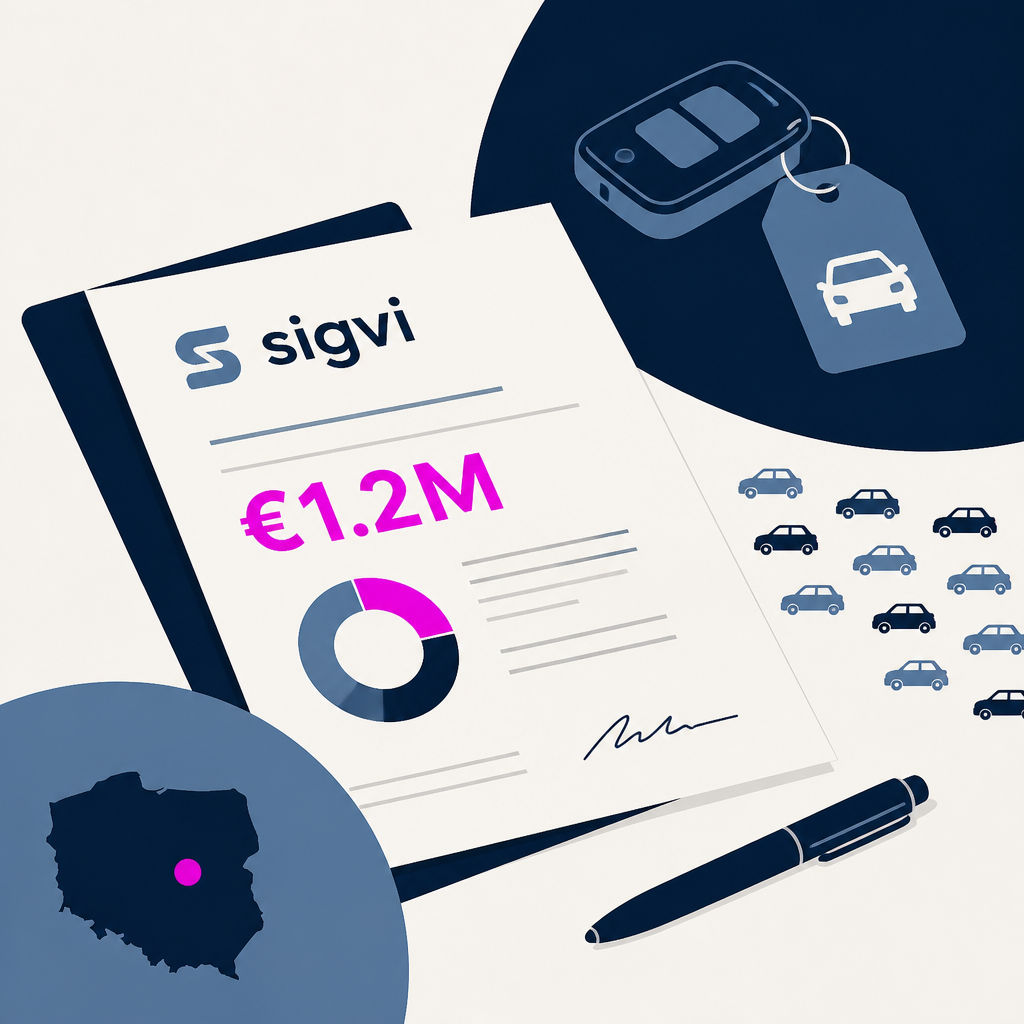
Sigvi, an AI platform automating car rentals for independent fleet operators, raised €1.2 million in pre-seed funding led by Superhero Capital. The company currently manages over 200 vehicles across Poland since launching in June 2026 and prices rentals roughly 30 percent below traditional car rental brands. The funding will accelerate product development and expansion into additional European markets where many rental processes remain manual.
Every AI story that matters,
in your inbox by 8am.
TLDRocket reads all relevant sources, removes duplicate coverage, and summarises the
day in two minutes. Follow companies and topics for alerts, or get the
briefing in Slack. Free, no spam, unsubscribe anytime.
Reading TLDRocket needs no cookies, and the readership counts we rely on come from
our own cookieless analytics. Google Analytics is the exception: it sets cookies and
reports to Google, so it stays switched off until you allow it. You can change your
mind any time from “Cookie settings” in the footer.
Strictly necessary
Session security and form protection (tldrocket-session,
XSRF-TOKEN, 2 hours). The site cannot work without them,
so they need no consent.
Always on
Google Analytics 4 (_ga,
_ga_<id>, up to 2 years). Measures which
stories and sections readers use. Google acts as a third-party processor and may
store the data outside the EU. No advertising, no profiling, no data sold.