
Modus’s operandi: To give AI agents just the right amount of context
The New Stack Paul Sawers
Modus left stealth with $10M to give AI agents a live, constantly updated map of the company. Instead of stale docs, it feeds agents only the exact context they need, cutting wasted token spend.
Based on reporting by The New Stack, Paul Sawers — read the original for the full story.
Summary, retelling and take written by AI under human oversight; images are AI-generated illustrations. How we work · Report an error
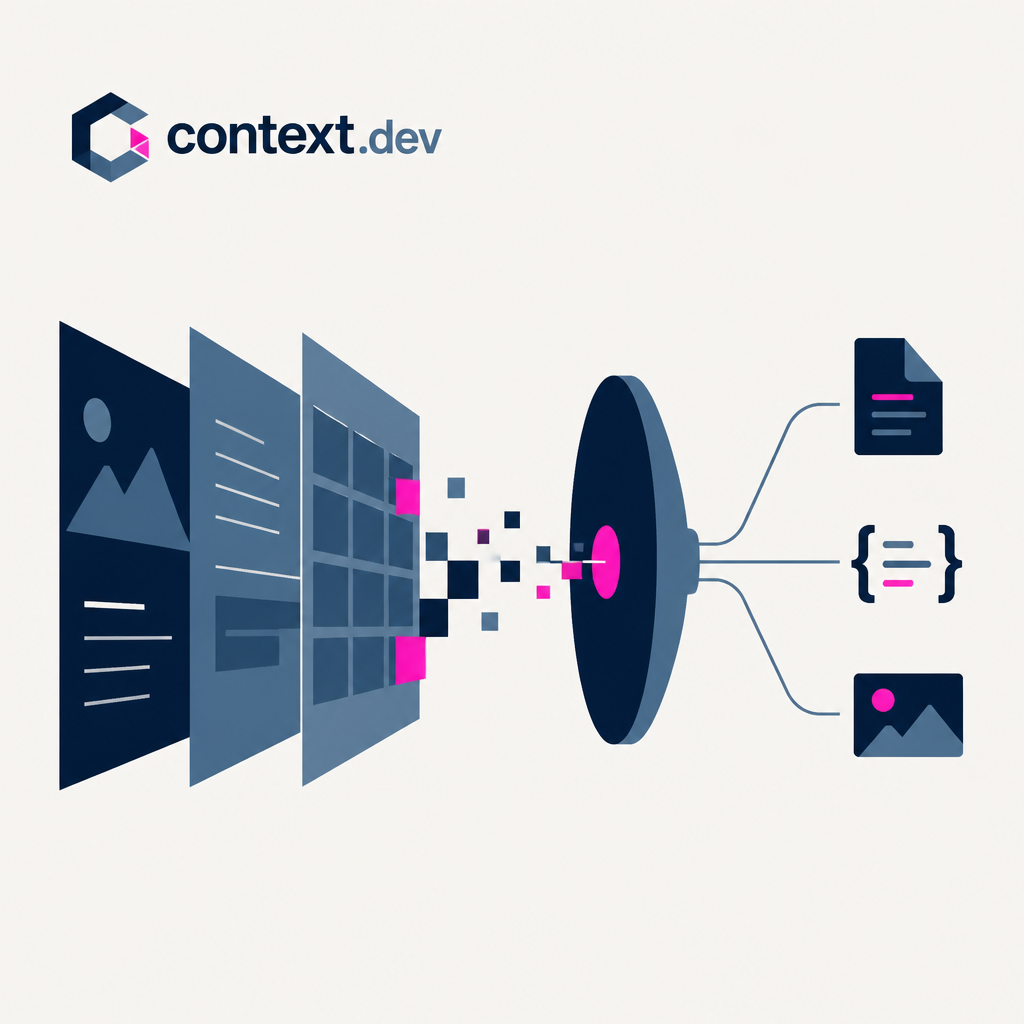
Every company plugging AI agents into its internal systems runs into the same wall: the agent doesn't actually know how the business works. Right now the fix is often a Markdown file someone updates by hand, if they remember to, whenever the org chart or the codebase shifts. Modus, exiting stealth this week with $10 million in funding, is betting that approach doesn't scale and is building what it calls a context warehouse instead — a layer that sits next to a company's data warehouse and continuously tracks how the business actually operates, so an agent gets handed only the slice of that picture it needs for the task in front of it.
Under the hood, Modus crawls sources like GitHub, dbt, Jira, Snowflake and Postgres through something it calls a Context Miner, which runs continuously rather than on a schedule. A second system, the Context Composer, turns whatever the miner finds into short, purpose-built briefs — Modus calls them dynamically generated skills — assembled the moment an agent is given a job. CTO Tomer Mesika describes the miner as guided by its own internal logic about what to check, how often, and when to dig deeper. Co-founder and CEO Daniel Shimoni frames the whole idea as the missing counterpart to data warehousing: companies built years of infrastructure to store data, he says, but nothing equivalent exists for the understanding layered on top of it. Getting that context right the first time is hard, Shimoni says, but keeping it accurate as the business changes is the harder problem, which is why Modus is designed to keep learning and refeeding only what's current.
The pitch leans hard on cost, which tracks with where enterprise AI anxiety has landed this year — companies hopping between model providers chasing cheaper tokens, whole budgeting exercises built around price per token. Mesika argues frontier models are wasting meaningful chunks of their token budget on menial busywork, like combing through pull requests or Jira tickets just to figure out what's relevant before the actual task starts. Rather than have a cheap model sort through that at question time, Modus does the sorting continuously in the background using small language models alongside search engines, vector search and a graph database built up in advance. By the time an expensive frontier model gets involved, the idea is it only ever sees a finished brief.
Modus is aiming the product at engineering leadership, CTOs, VPs of R&D, and data teams — plus what Shimoni calls a newer category of AI teams, people who didn't really exist as a job title last year and are now carrying the mandate to scale AI across an organization. Shimoni and Mesika both came out of data-heavy companies, Lusha and Cyera respectively, before leaving in September 2025 to build Modus together, after a year of comparing notes on a problem they kept hitting from different angles. The $10 million seed round, led by Insight Partners with Soma Capital and a handful of angel investors including people from Cyera and Wix.com, closed shortly after the company was founded, and Modus started hiring its first employees in January 2026.
What's notable is how unsurprised the founders seem by any of this. Shimoni says the team could already tell last year that model capability wasn't the bottleneck holding AI systems back — it was whether those models had access to the right context at the right moment. That's become one of the loudest refrains in AI circles this year, and Modus is essentially betting its existence on the idea that the gap between a smart model and a useful one is entirely about what surrounds it.
My take — AI-written commentary, not fact-checked reporting
Every enterprise AI cycle produces a new mandatory layer with a fresh name, and "context warehouse" is clearly this year's entry, right on schedule as companies discover that a smart model fed garbage still gives garbage answers. The cost argument is the sharper hook here — nobody wants to hear that their expensive frontier model spends half its effort digging through Jira tickets, and that pain is real regardless of whether Modus is the company that fixes it. The bigger question nobody's pitch deck answers yet is whether a system built to track a business gets outpaced by that same business changing faster than the miner can learn.
Read more about this at: The New Stack
Related stories
 Launch HN: Context.dev (YC S26) – API to get structured data from any website
context.dev · 2 months ago ·
37
Launch HN: Context.dev (YC S26) – API to get structured data from any website
context.dev · 2 months ago ·
37