Prefactor monitors and controls AI agent runs in real-time
Prefactor
Prefactor watches AI agents live and can pause risky moves mid-run. It doesn't just chart failures after the fact — it stops them before they land.
Based on reporting by Prefactor — read the original for the full story.
Summary, retelling and take written by AI under human oversight; images are AI-generated illustrations. How we work · Report an error
Every company running AI agents in production eventually hits the same wall: you can see what an agent did, but by the time the dashboard updates, it's already done it. Prefactor is built specifically to close that gap. Instead of just logging traces and handing you a chart to read after the fact, it scores every agent run the moment it happens, checking for quality, drift and risk, and then wires that score into an actual action.
Getting it running doesn't require ripping out your stack. Prefactor drops in through TypeScript and Python SDKs with native support for LangChain, Claude, Vercel AI, OpenClaw and LiveKit, and the company claims install-to-first-traced-run takes under five minutes. Each model call, tool invocation and decision becomes a span, evaluated with whatever mix of LLM-as-judge scoring, technical checks and qualitative metrics a team defines.
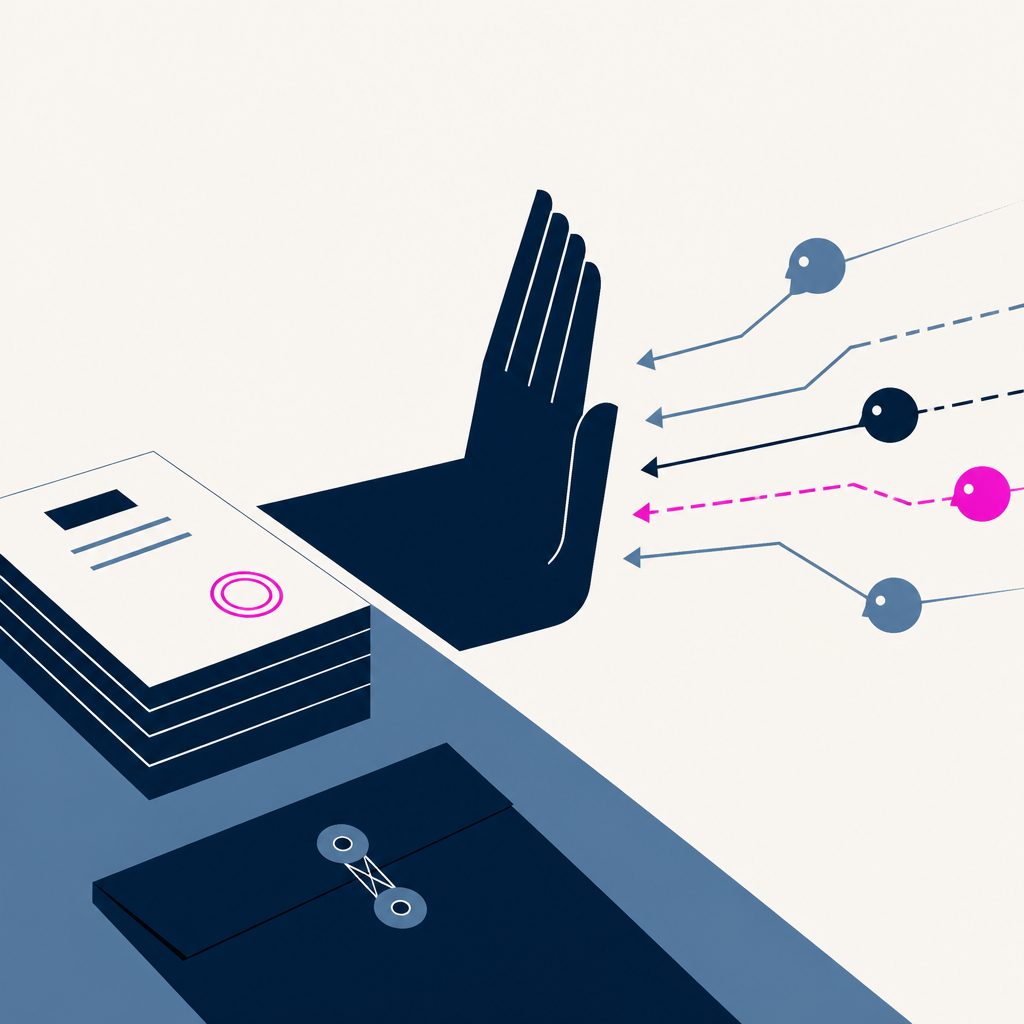
The part that actually separates this from a monitoring dashboard is enforcement. When a run crosses into sensitive territory — the source's own example is an agent about to issue a refund — Prefactor can pause execution and hold the action for a human to approve, modify or reject, all logged and enforced at runtime through the SDK or API. That's a meaningfully different promise than 'we'll show you the leak after it happened,' which is the failure mode Prefactor explicitly calls out as the core problem with existing observability tools.
There's also a software-shipping layer bolted on top: agents get versioned, and promotion from dev to staging to production only happens once evals pass, with instant rollback if a new version underperforms. Custom spans let teams pull in outside context — a GitHub pull request, a Linear ticket, a customer's tier from a database — so evaluations are grounded in real operational data rather than just the model's own output. On the security side, Prefactor leans on least-privilege access, full audit trails, sensitive-data detection across 17 categories, and SSO, with SOC 2 Type II certification still in progress and role-based access control on the roadmap.
One quoted customer, a head of AI platform at a financial services firm, described running forty agents in production with no reliable way to know which ones were still working properly — until Prefactor gave them, in their words, 'the brake pedal when one wasn't.' Prefactor is offering the first 25,000 spans a month free for teams that want to test that claim on their own agents.
My take — AI-written commentary, not fact-checked reporting
Everyone building AI agents right now loves to show off a dashboard, but a dashboard that tells you an agent leaked customer data an hour ago isn't safety, it's a eulogy. The interesting bet here is the enforcement layer — actually holding a refund or a risky action for a human — because that's the piece most
Read more about this at: Prefactor