GotEmail launched today as a native Mac mail app that combines Gmail, Outlook, iCloud, and any IMAP account in one window. It offers AI drafts and summaries on request. The result is a pay-once, every-Mac email app with faster sign-in code access.
The Drive AI launched a business-focused AI agent that can organize, find, create, and automate work across company file services using plain-English instructions. It is launching today and is described as the 5th launch from The Drive AI. It adds an approval step where the agent shows a plan before making changes, with edits that can be undone.
Dell’s West Coast approach to selling AI infrastructure is shifting as Silicon Valley buyers move from AI pilots to production and prefer building their own stacks.
Phasis developed a platform to orient enterprise AI agents using its “World API” and maintained “Worlds” as evidence-backed reality layers. It built an endpoint called “/orient” that returns relevant world frames for an agent to start with, including current state, changes, evidence, and uncertainties. This adds an orientation step before agents search, plan, or strategize so they act with continuously updated domain understanding.
Andrej Karpathy said most people still do not understand what AI systems can do, and the gap is widening as only a tiny group has access to frontier capabilities. He estimated about 5,000 people have access to frontier systems inside the labs. As a result, enterprise software companies like Box are betting on agent swarms and workflow automation to bring more advanced AI into day-to-day business use.
Blueprints AI says it uses AI to turn a 2D sketch or PDF into code-compliant, permit-ready construction blueprints in minutes and is unveiling a second-generation version at TechCrunch Disrupt. The first-generation subscription costs between $3,200 and $8,500 per month. Version 2 lets customers change one design detail and have the whole project update and be checked against local building codes while keeping licensed architects as the final reviewers.
Loops raised $3.5M to build a unified AI layer for e-commerce retailers that links product discovery, Q&A, and virtual try-on into one connected shopping journey. The seed round was led by Andreessen Horowitz’s a16z Speedrun and included participation from NTT Docomo and others. Retailers that adopt Loops can replace siloed AI features with an AI system tied to their product catalogs and shopper intent, enabling more end-to-end recommendations and faster in-session answers.
Scarlet, founded by former Babylon Health engineers, raised a Series B financing round to speed certification of AI medical devices via regulatory review. The company secured $50 million led by Headline, alongside Notion Capital joining other existing investors. The funding will be used to expand in the US and Asia-Pacific and hire more AI reviewers and engineers to support faster device approvals.
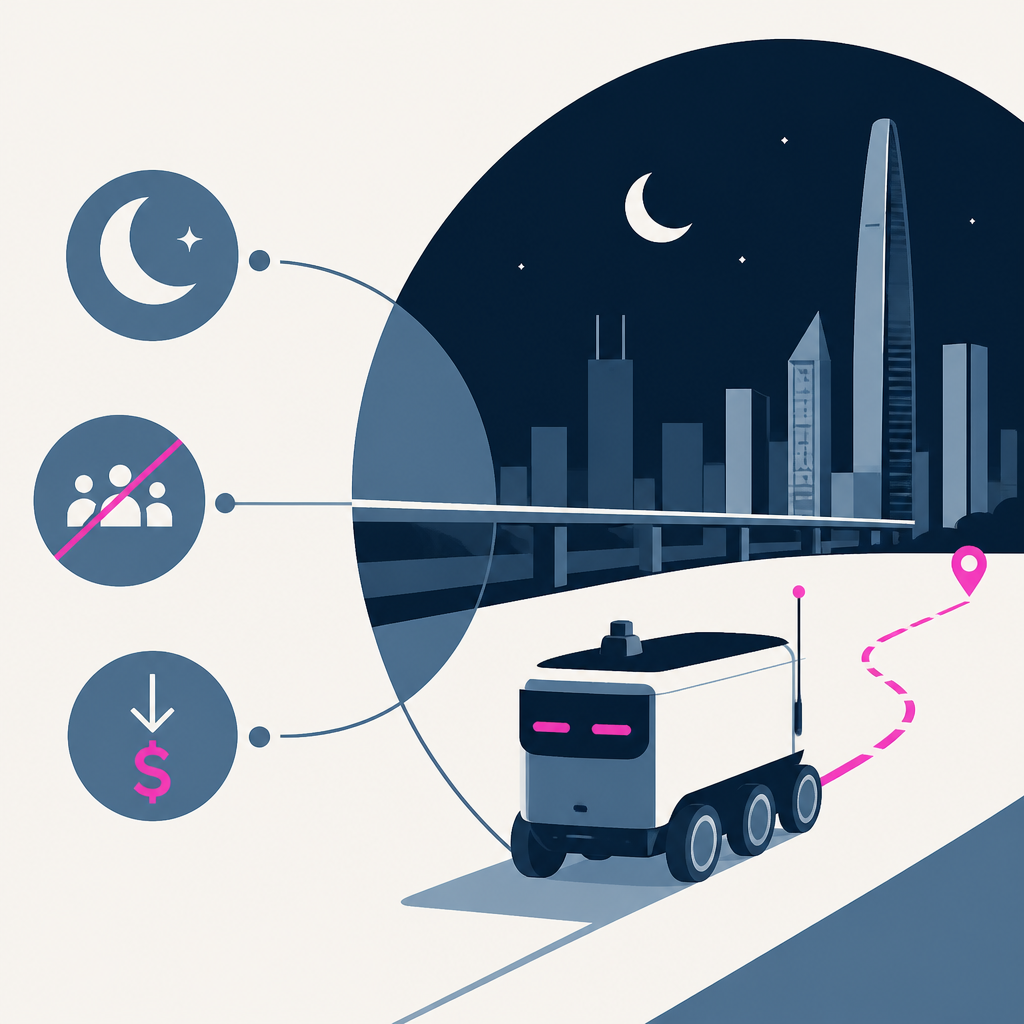
Shenzhen opened nighttime deliveries using driverless delivery robots, aiming to use idle infrastructure more effectively at night.
It cites night operations enabling reduced pedestrian traffic and lower congestion, with cost savings from eliminating the need for human night shifts.
The shift moves delivery activity to robot-run nighttime operations, reducing road noise and congestion while lowering labor costs.
1Komma5° raised €70 million from existing and new backers instead of proceeding with an IPO. The company valued itself at $1.35 billion (about €1.2 billion) and plans to invest more than €100 million next year into Heartbeat AI. As a result, its AI-based home energy management system will expand while the IPO plans remain on hold pending next year’s performance.
Klarent, founded by former Google engineers, raised $8M to automate enterprise software testing with AI agents that write and reuse deterministic test code rather than run it during application execution. Mosaic Ventures led the seed round, while Klarent’s agents support about 3,500 tests per day for a customer and a human-in-the-loop checks each result. The funding will be used mainly to expand its US and UK sales teams and grow engineering, increasing headcount beyond its current 25 employees.
BotMan AI built an AI-powered migration pipeline that uses knowledge graphs to capture legacy application dependencies, business rules, and data models before rewriting systems into a new architecture. The approach involves ingesting the whole application at once to migrate it fully autonomously. It also enables AI agents to reuse business context by linking unstructured documents to entities like people, projects, and products.
Every AI story that matters,
in your inbox by 8am.
TLDRocket reads all relevant sources, removes duplicate coverage, and summarises the
day in two minutes. Follow companies and topics for alerts, or get the
briefing in Slack. Free, no spam, unsubscribe anytime.
Reading TLDRocket needs no cookies, and the readership counts we rely on come from
our own cookieless analytics. Google Analytics is the exception: it sets cookies and
reports to Google, so it stays switched off until you allow it. You can change your
mind any time from “Cookie settings” in the footer.
Strictly necessary
Session security and form protection (tldrocket-session,
XSRF-TOKEN, 2 hours). The site cannot work without them,
so they need no consent.
Always on
Google Analytics 4 (_ga,
_ga_<id>, up to 2 years). Measures which
stories and sections readers use. Google acts as a third-party processor and may
store the data outside the EU. No advertising, no profiling, no data sold.