Brighteye Ventures secured a $72M first close for Fund III focused on its “HumanOS” approach beyond edtech. The fund targets €100M (about $115M) with a final close expected in the first half of 2027. The company plans to invest in up to 35 HumanOS companies with over 90% of capital in $0.5M–$4M core cheques and the rest in smaller idea-stage bets.
Profound raised $180 million to improve how brands are discovered and cited in AI services by analyzing consumer prompts. The Series D was led jointly by Sequoia Capital and Kleiner Perkins at a $1.8 billion valuation. The funding will be used to post-train or customize AI models for marketing use cases, plus build a benchmark for measuring how well the models automate those tasks.
NVIDIA CEO Jensen Huang appeared at Salesforce Dreamforce to back Salesforce’s launch of Koa, Salesforce’s first CRM reasoning model built on NVIDIA Nemotron 3 Super.
Meta announced that its WhatsApp Business Tools MCP server lets AI coding agents like Claude and Codex perform WhatsApp Business onboarding, phone verification, template management, and webhook setup. The company said WhatsApp paid messaging crossed a $2 billion annual run rate in Q4 2025, and the new MCP server is rolling out gradually in beta. Developers can hand setup and ongoing configuration tasks to agents instead of manually switching between Meta settings, API documentation, and code tools.
CADDi raised $114 million in a Series D round that valued the manufacturing AI software startup at $1.2 billion. The valuation more than doubles from the $470 million CADDi reported in March 2025. The funding will be used to expand its AI product lineup and models for manufacturing data, grow in North America, and hire more staff, increasing customer support for adoption.
theCUBE will livestream coverage of Certinia’s “at Dreamforce” event focused on how Certinia’s Veda platform and acquisitions support professional services AI that connects operational data, project context, and human judgment. The event coverage is on Sept. 18. The focus shifts from measuring agent autonomy to assessing whether the AI capabilities change services firms’ operating models while preserving trust and accountability.
Azure SRE Agent analyzes telemetry and incident context to identify root causes, recommend or prepare fixes, and increasingly manage incidents with human-governed autonomy inside Microsoft and connected systems. The article says the agent has handled more than 1.8 million incidents, with many mitigated in minutes, and that more than 3,000 service teams already use it. Engineers shift from manual monitoring and triage to approving governed agent actions and reviewing generated PRs, while scaling reliability workflows through context, connectors, and evaluation metrics.
TechCrunch is hosting a Real World AI Stage session at TechCrunch Disrupt 2026 on scaling a prototype into production across industries including space communications, autonomous systems, and AI infrastructure. The event runs October 13–15 in San Francisco and includes 10,000+ founders, investors, and operators with 250+ sessions. The focus shifts from proving a concept in the lab to addressing manufacturing, infrastructure, reliability, and day-to-day operations required for deployment.
Statable Analytics launched a web analytics service aimed at being usable by humans and AI agents via an MCP connection. The page shows it has 240 followers. It offers a simple dashboard plus agent integrations for reading reports and configuring tracking, with no cookies and EU-hosted data in most cases.
Salesforce introduced Koa, its first reasoning model, built on Nvidia’s open-weight Nemotron and post-trained for sales, marketing, and customer-support tasks using synthetic data. Koa is positioned as an open-weight alternative to closed frontier models within Salesforce’s Agentforce platform. Salesforce’s agents can route long-running, multi-step reasoning work through an enterprise-ready model (via its AI gateway) while keeping customer data in Salesforce and reducing token usage versus frontier options.
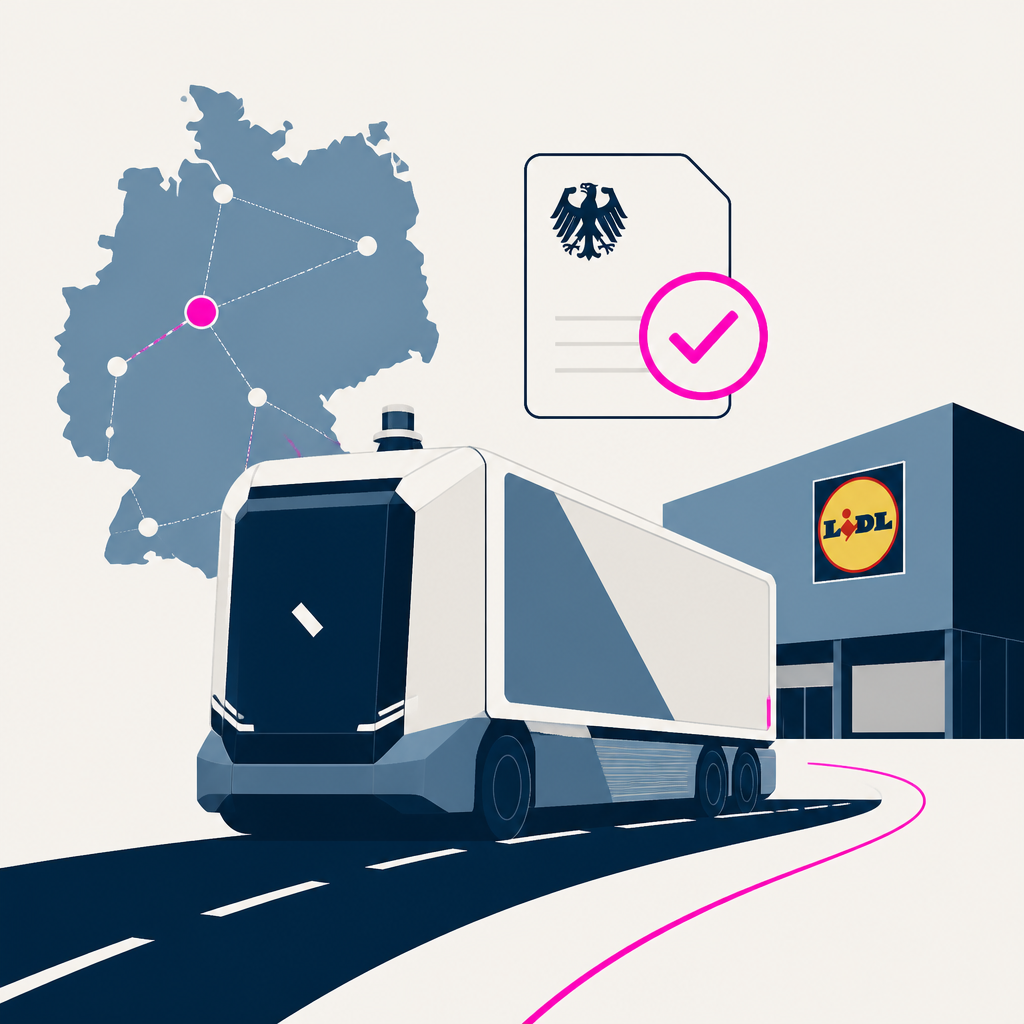
Einride and Lidl deployed Germany’s first cab-less SAE Level 4 autonomous truck for daily deliveries on public roads. The rollout is running under an official permit from the Federal Motor Transport Authority (KBA). It expands autonomous logistics from pilots into everyday retail operations and enables planned route expansion toward a multi-stop model for Lidl’s network.
Meta launched global Meta One subscription bundles that add extra Meta AI usage alongside its existing app subscriptions right after introducing its Muse AI assistant. The bundles are available globally starting today and come in several tiers for individuals, creators, and businesses. Meta says the core experience and Meta AI will remain free, and it plans to expand the bundles over time to include additional AI-related products like Edits and AI glasses.
Jack & Jill raised a $40 million Series A led by Air Street Capital to fund its dual-agent recruiting marketplace. The round brings total funding to $60 million after a $20 million seed raised ten months earlier. It plans U.S. expansion with launches in San Francisco in January and New York in June, while growing a candidate network reported at 350,000 and continuing its agent-based introductions instead of keyword matching.
Directus launched Monospace as its 5th release, positioning it as a governed API layer that connects enterprise data to app builders, business teams, and AI agents.
Ramp launched in the UK and added ElevenLabs as a client, positioning its AI token spend platform to attract more UK startups. Ramp said AI spending across its customers has grown about 21 times since June 2025. The company is expanding its spend management offerings for UK businesses, including breaking down token costs by model and team and partnering with Visa to support corporate cards.
SimpliSafe launched the Video Doorbell Series 2, adding an AI-powered proactive security feature that can bring a live monitoring agent to your front door when suspicious activity is detected. The doorbell costs $199.99 and Active Guard Outdoor Protection starts at $49.99 a month. As a result, doorbell alerts can trigger agent “see, speak” interventions using on-device AI plus cloud computer vision and facial recognition, instead of only recording or notifying you.
EnforceShield secured €1.7 million in seed funding to expand its SaaS platform for automated online intellectual property enforcement. The company says its platform removes more than 33,500 IP violations per month across its e-commerce customer base. It will use the funding to extend its AI agents to handle repeat offenders, escalations, and broader enforcement workflows, and to expand into the US and across the IP lifecycle.
Zero raised a $10.3 million seed round to build AI agents intended to replace conventional CRM tools, with Primary Venture Partners leading the investment. The funding follows a $2.7 million pre-seed in December 2024, bringing Zero’s total funding to $13 million. Zero will open a New York office, expand its team from 13 toward 20 people by the end of the year, and use the next 18 months to validate “ambient monitoring” as more valuable than automated outbound messaging.
Zero, a Finnish startup challenging CRM incumbents Salesforce and HubSpot, raised a $10.3m seed round with backing that includes founders of Lovable and Langdock.
LokalBot launched its second release, offering a Mac app that searches saved meeting transcripts and chosen screen text with links back to the original sources. It is free and open source for Mac and runs locally by default. Users can find and review what they said or saw on their Mac and decide what to follow up on using those saved sources.
MosMos launches a voice-writing app that converts individual thoughts and multi-speaker meeting conversations into structured text. It notes that it is launching today. As a result, users can get searchable, styled writing with a personal glossary and timestamped meeting notes including summaries, decisions, and action items.
Aron Inc. launched an AI procurement automation platform with $8M in funding to automate parts of the RFQ and contract review workflow for procurement teams. The seed round was for $6 million. The service adds AI agents that handle supplier email follow-ups and organizes bid data, while also scanning contracts and flagging invoice and renewal issues to shorten the RFQ workflow by an average of 21%.
Every AI story that matters,
in your inbox by 8am.
TLDRocket reads all relevant sources, removes duplicate coverage, and summarises the
day in two minutes. Follow companies and topics for alerts, or get the
briefing in Slack. Free, no spam, unsubscribe anytime.
Reading TLDRocket needs no cookies, and the readership counts we rely on come from
our own cookieless analytics. Google Analytics is the exception: it sets cookies and
reports to Google, so it stays switched off until you allow it. You can change your
mind any time from “Cookie settings” in the footer.
Strictly necessary
Session security and form protection (tldrocket-session,
XSRF-TOKEN, 2 hours). The site cannot work without them,
so they need no consent.
Always on
Google Analytics 4 (_ga,
_ga_<id>, up to 2 years). Measures which
stories and sections readers use. Google acts as a third-party processor and may
store the data outside the EU. No advertising, no profiling, no data sold.