Nous Research raised a $90 million Series B to confirm its $1.5 billion valuation and launched “Hermes for Businesses.” The funding round values the company at $1.5 billion. It will push Nous into enterprise deployments of customized multi-step AI agents that keep customer data private and secure, aiming to grow revenue beyond $100 million in 2026.
Cisco expanded Webex to add AI agents that can participate in meetings and calls, and to connect customer-service work to continue after interactions end. Most features and products are planned for early 2027, with Dialog beta targeted for the first quarter of 2027. Webex gets a redesigned, personalized meeting view plus new control, security, and integration layers (including planned Claude and Dots integrations) and more on-prem AI and workplace hardware/software updates.
Aston Martin is using back-end AI in operational systems while keeping AI agents off its customer-facing website. The company screens each AI idea first for its impact on profit and loss, and then for efficiency gains. It adds governance by assigning people to own each agent’s outcomes and focuses on fixing data and processes before scaling AI on top of its ERP, with use-case timelines shrinking from quarters to weeks.
Kubernetes is the dominant container orchestration platform, but its development and operations teams still clash over self-service speed versus operational stability. The CNCF says 82% of container users run Kubernetes in production. AI-driven automation is suggested to help teams monitor clusters, check logs, and predict outages while easing Kubernetes management and scaling pressures from AI inference workloads.
Midwest Wheel is building toward AI agents that can fix operational problems by tying new capabilities to a single Infor business system and using agentic AI governance to decide what runs automatically versus with human oversight. The company embedded AI features after moving to the cloud, including automation that scans emailed PDF invoices into its system and a product recommender in order entry, with “just a few weeks” to build the new tools. The approach shifts AI from merely identifying issues to taking action under defined rules, while keeping humans in the loop for tasks that touch cash or accounts.
Claude for Google Workspace was launched so users can draft and edit in Google Docs, analyze spreadsheets, write formulas, build charts, and make Slides without leaving their file.
shippedit.me lists a product launch page for a set of SEO/launch offerings, including AI-related features like “AI fix cards” and an “AI CRM” labeled for modern GTM teams. The page specifically promotes a “Weekly launch battles” program and a permanent page with dofollow backlink, AEO & CRO audits, competitor monitoring, and analytics. As a result, it directs visitors to tools and offerings aimed at launch growth and marketing workflows rather than reporting new AI research or policy changes.
Strac Comply launched self-serve compliance automation that connects AWS, Google Workspace, Okta, GitHub, and Slack and runs continuous tests for SOC 2, ISO 27001, HIPAA, PCI DSS, and more.
The platform costs $4,995 per year and offers a 14-day free trial with no credit card.
It adds continuous compliance testing and detects AI apps or agents in a workspace, mapping which customer data they can access, and can be run from a dashboard or via Claude Code through MCP.
Amazon Quick and Amazon Bedrock Knowledge Bases add real-time ACL enforcement to RAG by verifying user permissions against the authoritative data source at query time. The approach reflects permission changes within moments instead of hours or days after access is revoked. It reduces stale/incorrect permission exposure by combining cached, pre-retrieval filtering with per-query checks, enabling authorized-only documents to be passed to the LLM, alongside Bedrock Guardrails for responsible AI controls.
TheCUBE’s coverage of ‘The AI ROI in Contact Center Summit’ described how contact centers are shifting from measuring call speed toward blending agentic AI with humans to resolve customer issues and improve trust. Only 66% of actual users said contact centers have gotten better with AI, compared with 99% of business practitioners. Companies are therefore moving to “conversation to completion” metrics and hybrid operating models that preserve context across handoffs and assign AI to high-volume, low-stakes work while humans handle complex cases.
Infor is developing industry-specific AI agents for manufacturing, aerospace and defense, automotive, and food and beverage to reduce hallucinations in enterprise workflows. Its 2026.10 release adds security and scope guardrails, building on Infor’s existing industry applications with micro-vertical configuration. As a result, some agent actions can proceed autonomously, but moving orders between customers still requires human approval and Infor plans to hire domain experts to improve business-context accuracy.
Infor is rolling out AI-powered process automation that embeds industry-specific agents and workflows into its applications, pairing that with implementation expertise from forward-deployed engineers. It says the prototype-to-production timeline is now about one to two weeks, or at worst three weeks. As a result, customers move faster to production while getting observability and auditability for automated decisions.
Qlik built Qlik Answers, a grounded, source-cited enterprise AI assistant on Amazon Bedrock, and has expanded its use since its February 2026 general availability. Since launch, Qlik’s Discovery Agent has surfaced more than 100,000 discoveries, and most Qlik Cloud accounts with agentic tools enabled are actively using them. The system’s architecture now separates fast routing from deeper reasoning and uses Bedrock Guardrails plus grounding-validation to deploy safely and at regional scale.
Cornerstone OnDemand built Orion AI, a multi-agent system using Amazon Bedrock and Strands Agents to automate database diagnosis and operational workflows that previously required manual handoffs. Database diagnosis time fell from 45 minutes to 10 minutes, a 78% reduction. The change turned reactive, multi-step firefighting into faster, guided investigations with single-interaction lifecycle handling and reduced alert noise.
Endeavor Catalyst launched Fund V and increased its Europe focus with a total fund size of $320 million. It has already made more than 90 European investments across 10 countries. The shift expands its European investment activity and it plans to deploy an additional $25 to $30 million in the rest of 2026.
TechCrunch Disrupt 2026 will host interactive roundtables during October 13–15 in San Francisco that cover topics including AI, fundraising, hiring, enterprise software, and physical AI. The lineup includes 10,000+ founders, investors, operators, and tech leaders attending Moscone West for three days. Attendees can save $100 on their pass (and get 50% off a second pass) to join the sessions and ask questions with founders and experts.
Endeavor Catalyst is rolling out its oversubscribed Fund V and increasing its focus on Europe as it deploys the new fund. Fund V totals $320 million, and the firm expects to invest an additional $25 million to $30 million during the rest of 2026. As a result, Endeavor will make more Europe-linked investments and continue backing Endeavor Entrepreneurs, including in deep tech, foundational AI, and cloud infrastructure.
TechCrunch Disrupt 2026 will take place at Moscone West in San Francisco in six days, bringing 10,000+ people together for startups and technology sessions and competitions. Discounted online pass pricing is available before doors open on October 13, with savings of up to $100 and 50% off a second eligible pass, while a $75 Expo+ Pass is available for laid off attendees. The event adds a limited-time, discounted registration window (and pricing options) that changes how people buy passes before the conference starts.
PlannerPal raised $6 million, led by Mercia Ventures, for its AI platform used by UK financial advisers. The round says it is used by more than 250 UK advice firms, including 20% of the top 20 wealth managers. With the funding, PlannerPal plans to expand engineering and product teams, support customer rollouts, and push further into client-intelligence features beyond meeting notes, including mortgages.
Stuut raised a $52.5M Series B led by Insight Partners to deploy AI agents that track invoice chains across enterprise order-to-cash workflows. The round closed in 24 hours, following a $29.5M Series A 10 months earlier and lifting total funding to $93M. Stuut says the software shifts collections and payment matching from staff effort to automated workflows and expands it to more enterprises.
Konsileo, a UK insurance broker, raised £5 million in equity funding to scale its technology-enabled broking operations.
The funding was led by long-term shareholders Committed Capital and ACF Investors, and Konsileo employs more than 220 people while arranging more than £85 million in annual insurance premiums.
It will use the money to further develop its end-to-end platform and expand its broker network, including integrating AI into workflows.
SquadRoom launched with AI workflow automation that assigns tasks to a lead agent and specialist agents, then shows a step-by-step report with sources after you return. It starts with 21 followers on the page. Users can bring their own AI key and can run a live demo without signing up, with items requiring approval held back until you OK.
DIGITALEUROPE’s Director-General Cecilia Bonefeld-Dahl argues that Europe is not turning its digital companies into global leaders because funding is too slow and regulation and procurement are too complex. She cites an estimated €800 billion investment gap between Europe’s about €130 billion of venture capital and the US’s about €930 billion. She urges faster funding cycles (including cutting application-to-money timelines toward 3 months), more public-sector buying from scaleups, and better-aligned AI and medical-device regulation rather than relying on regulation alone.
Cori Clinical raised $4 million in a seed round for its AI platform that consolidates prior trial knowledge with external regulatory and registry information to produce trial protocols and plans. The company estimates its approach can cut average clinical trial set-up costs by at least 33% and says an internal AI review identified 82% of protocol errors as avoidable. Cori will use the funding to expand delivery capacity, grow its team, and deepen its regulatory and clinical intelligence while building more CRO and pharmaceutical relationships.
Circeus argues that business AI adoption is slow because AI is often added as a separate assistant instead of being embedded into the software systems that already run everyday workflows. It says meaningful workflow implementation in the everyday economy is closer to 4–5%, about one in twenty. The company’s approach is to acquire mission-critical software businesses and evolve their products into AI-native systems with bounded actions, human approval, and ongoing measurement of task completion and errors.
Google has rolled out an update for Pixel Buds 2A and Pixel Buds Pro 2 with new features including sleep detection tied to a Pixel Watch. The sleep feature pauses music, silences notifications, and turns off touch controls when you fall asleep while wearing a Pixel Watch. It also adds tap-to-mute for microphone control during calls on Pixel phones and other shared updates to both earbud models.
Croatian finance and startup executives discussed how AI is changing finance teams, alongside remarks on launching startups in Croatia and the region’s engineering talent. The panel centered on whether AI will shrink finance teams, and it also noted Farseer’s $7.2m Series A round. As a result, speakers expect finance roles to shift toward more analytical interpretation while some work automation increases and costs rise during AI experiments.
Atlassian announced the Agentic Multiplayer Protocol to let human workers and AI agents collaborate in the same governed workspace with shared context and task controls. Atlassian said its expanded Model Context Protocol server exposes 200 tools and handles about 15 million tool calls daily. As a result, Atlassian’s Rovo Work, Loom, and agent tooling are geared toward longer, human-reviewed tasks and richer integration with Teamwork Graph and external data platforms.
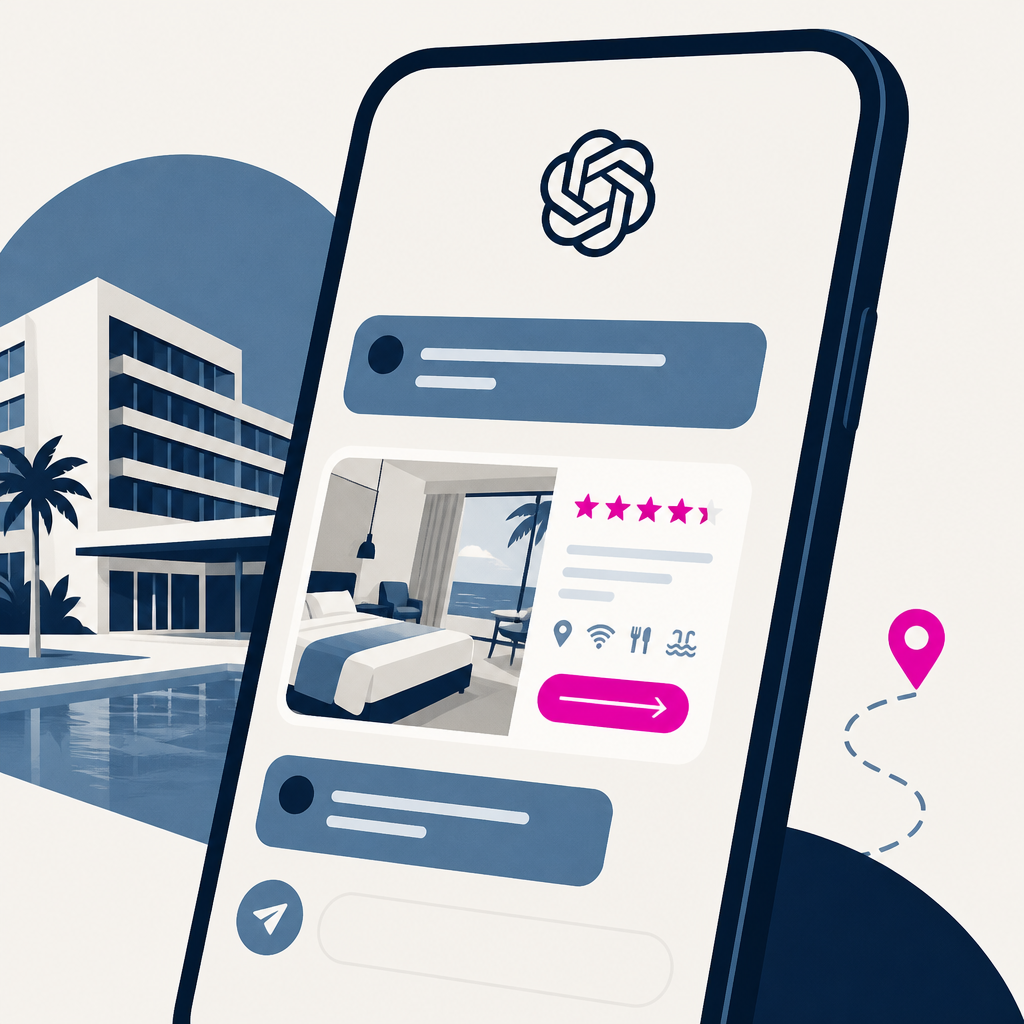
Radisson Hotel Group partnered with Accenture to build a ChatGPT plugin that helps travelers discover, compare, and book hotels while planning trips. The plugin is built with OpenAI technology. As a result, hotel search and booking moves into ChatGPT for more direct in-chat hotel planning and transactions.
kōdlo is launching an end-to-end sales workspace that unifies prospect matching with a knowledge hub and an agent that creates personalized sales outputs from uploaded documents. It offers a free option (the only stated timing/detail is that it launches today). This adds a single place to manage client data, team collaboration, and tasks while integrating Claude Desktop/ChatGPT Work or code agents via the kōdlo MCP for context orchestration.
Leanback launched its second release, presenting itself as a personal AI assistant for engineering teams. It promises to produce an action plan in Slack using inputs like tickets and calendars after checking in with the team. As a result, teams can manage engineering work from Slack with the assistant providing the planned next steps.
Every AI story that matters,
in your inbox by 8am.
TLDRocket reads all relevant sources, removes duplicate coverage, and summarises the
day in two minutes. Follow companies and topics for alerts, or get the
briefing in Slack. Free, no spam, unsubscribe anytime.
Reading TLDRocket needs no cookies, and the readership counts we rely on come from
our own cookieless analytics. Google Analytics is the exception: it sets cookies and
reports to Google, so it stays switched off until you allow it. You can change your
mind any time from “Cookie settings” in the footer.
Strictly necessary
Session security and form protection (tldrocket-session,
XSRF-TOKEN, 2 hours). The site cannot work without them,
so they need no consent.
Always on
Google Analytics 4 (_ga,
_ga_<id>, up to 2 years). Measures which
stories and sections readers use. Google acts as a third-party processor and may
store the data outside the EU. No advertising, no profiling, no data sold.