
DIGITALEUROPE: Europe can’t regulate its way to tech leadership
Tech.eu Cate Lawrence

DIGITALEUROPE says Europe keeps overregulating its tech sector. Its warning: the bigger problem may be too little risk-taking, not too little money.
Based on reporting by Tech.eu, Cate Lawrence — read the original for the full story.
Summary, retelling and take written by AI under human oversight; images are AI-generated illustrations. How we work · Report an error
Europe has plenty of promising tech companies. Turning them into global giants is the hard part, and Cecilia Bonefeld-Dahl thinks the continent keeps choosing the wrong tools to fix that problem.
The DIGITALEUROPE director-general says Europe needs faster funding, less regulatory clutter, stronger public procurement and a much greater appetite for backing its own scaleups. Her group is not a small club: 137 corporate members, 45 national trade associations and a network that reaches more than 56,000 businesses across 30 European countries. It also has an office in the US, which Bonefeld-Dahl says became necessary because nobody was really speaking up for European tech in Washington, even though DIGITALEUROPE members have invested €1.7 trillion there over the last few years.
Bonefeld-Dahl has spent more than 25 years in tech, entrepreneurship and policy. She came to Brussels from the tech world about nine years ago and found the place oddly unexcited about technology. The tone, she says, was more about risk and regulation. That irritation now shapes her agenda: AI, cloud, cybersecurity, defence tech, scaleup funding, digital skills and international cooperation.
One of DIGITALEUROPE’s main answers is visibility. Its Future Unicorn Awards, launched in 2018, spotlight European scaleups that could become major tech companies. The list of winners runs from Corti to Multiverse Computing, Pactum and Quandela, while the Dual-Use Technology Award has gone to Quantum Systems and Sateliot. In September, the group added a Transatlantic Dual-Use Unicorn Award with partners in Ukraine and the US, aiming to connect companies with capital, customers and deployment partners. Bonefeld-Dahl says the awards community has about 250 alumni and that around 50 of them get funded within the first year through bodies like the EIB, EIF and EIC, or through private investment.
But the bigger fight is still money. Bonefeld-Dahl wants the next EU budget to move more funding into technology, scaleups and resilience. She wants EIB and EIF processes cut from six months to three from application to cash. She also welcomes the new EU Scaleup Fund, a €5 billion growth-stage vehicle that includes a €1 billion Commission commitment, while arguing Europe still needs several more funds on top of it. Her comparison is blunt: about €130 billion in VC funds in Europe versus about €930 billion in the US, leaving what she calls an €800 billion gap.
And she does not think the answer is just more regulation. The AI Act, she argues, already shows the problem. In areas like medtech, companies can end up trapped between overlapping rulebooks rather than given a clean route to market. She also wants pension funds, employment rules, taxation of capital and fragmented national systems addressed, because Europe still makes it too easy for companies to stay small, stay local, and eventually leave.
The real fix, in her view, is for Europe to become a customer, not just a referee. She points to UK procurement targets, NATO’s test centres, and the defence sector’s habit of trying products before buying them as models worth copying. “Buy more from scaleups. Try more innovation,” is the basic pitch. The continent keeps saying it wants sovereignty. Bonefeld-Dahl’s point is that sovereignty without customers is just a slogan with better stationery.
My take — AI-written commentary, not fact-checked reporting
Europe’s tech debate has become a lovely little ritual: announce another law, then act shocked when startups spend their best hours decoding it. Bonefeld-Dahl is right to push back. If Europe wants champions, it has to buy from them, fund them, and stop mistaking caution for strategy.
Read more about this at: Tech.eu
Related stories
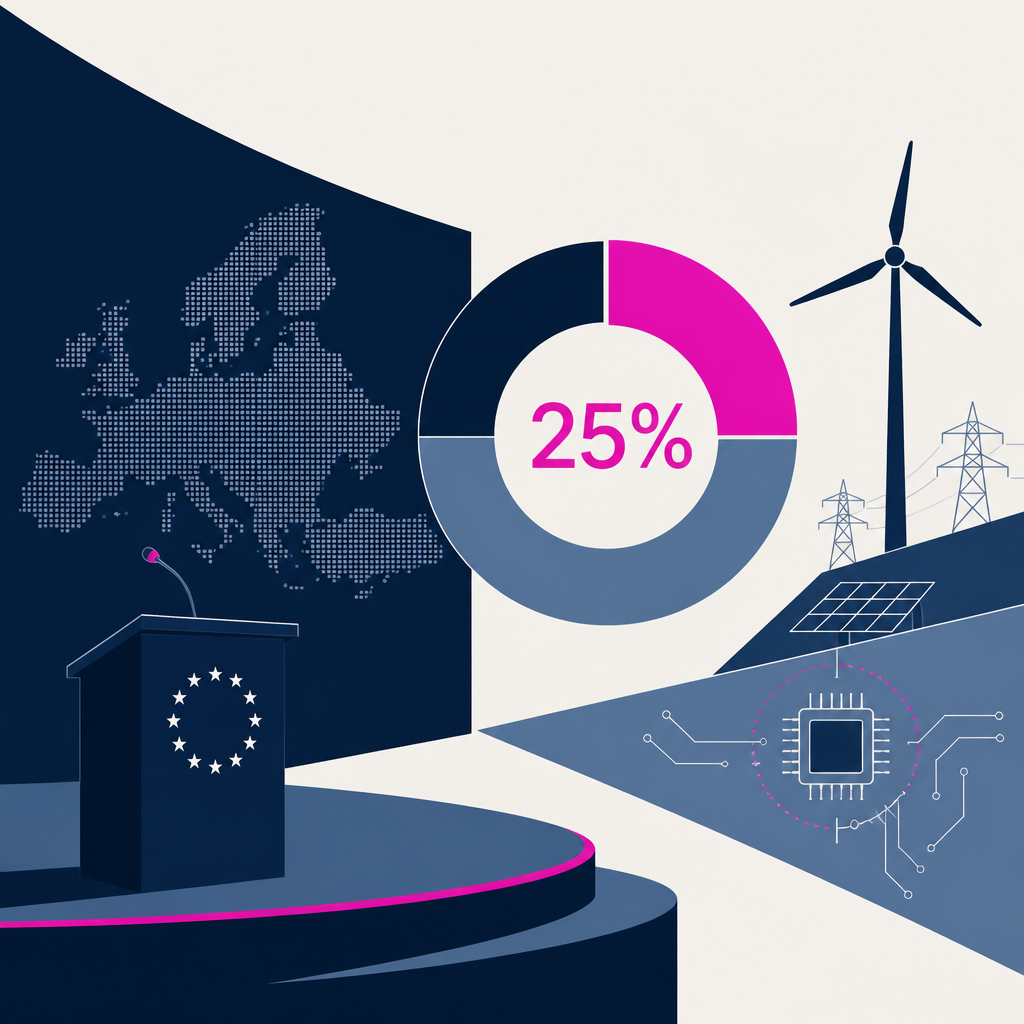 Tech leaders call for 25% of EU budget to secure Europe’s energy and digital future
Tech.eu · 3 weeks ago ·
32
Tech leaders call for 25% of EU budget to secure Europe’s energy and digital future
Tech.eu · 3 weeks ago ·
32
 Europe at "acute risk of marginalisation" unless billions in AI funding committed, warns new report
Tech.eu · 3 weeks ago ·
13
Europe at "acute risk of marginalisation" unless billions in AI funding committed, warns new report
Tech.eu · 3 weeks ago ·
13
 Europe's tech sovereignty is facing its biggest test yet
Fortune ·
53
Europe's tech sovereignty is facing its biggest test yet
Fortune ·
53