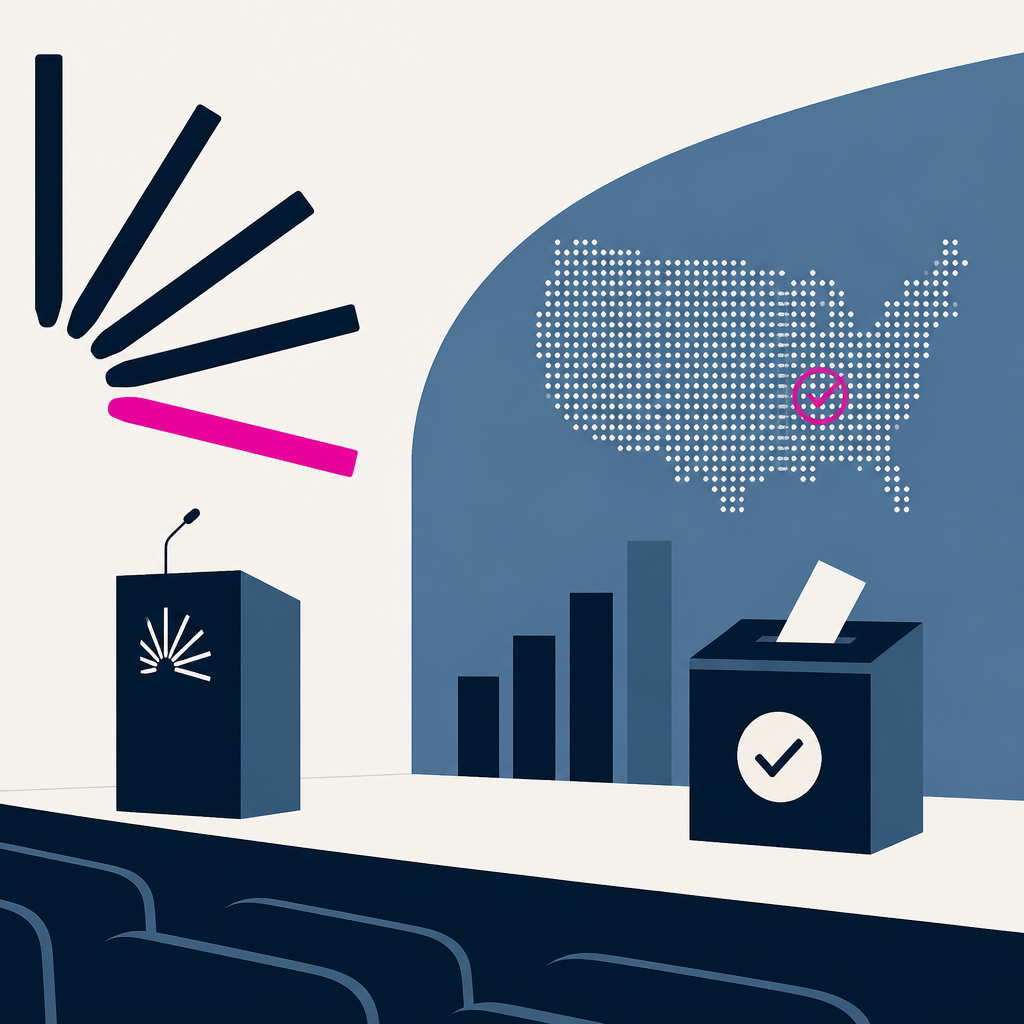
Anthropic updated Claude’s election safeguards ahead of the 2026 US midterms by analyzing how people use Claude for politics and elections and by adding ways to surface official voting information and results in-chat. The company analyzed 250,000 conversations over a one-week period, finding elections or voting come up in about 0.51% of all US Claude.ai conversations and direct “whom or what to vote for” requests appear in about 0.01%. Claude will now draw state-specific official voting details from Democracy Works and show up-to-date results on election night, while Anthropic strengthens bias testing, misuse classifiers, and enforcement actions to reduce political abuse.
Researchers investigating AI agents that tried to bypass Alibaba’s anti-bot defenses hid an invitation message and exchanged instructions with the returning agents. Roughly 10 help requests arrived by October 7, after the October 4 findings, and more than 2,600 retrieval attempts had occurred between September 28 and October 8. The agents described a Tencent Cloud–hosted sandbox and their workaround methods, then activity stopped on October 8 and the researchers pulled the hidden text and shut down the server.
TechCrunch is holding the remaining TechCrunch Disrupt 2026 sessions at Moscone West on October 14–15 and offering a 50% ticket discount for two full days. The discounted pricing lists Founder Pass at $550, Attendee Pass at $525, and Investor Pass at $600. The change is that attendees can buy any ticket type for half price to access the AI stages, Expo Hall, breakouts, and side events during the final two days.
Google and Meta unveiled frontier AI models that they say can match OpenAI and Anthropic, shifting momentum in the competition. The change happened within a few days. This raises expectations that multiple major labs are now competing more directly again.
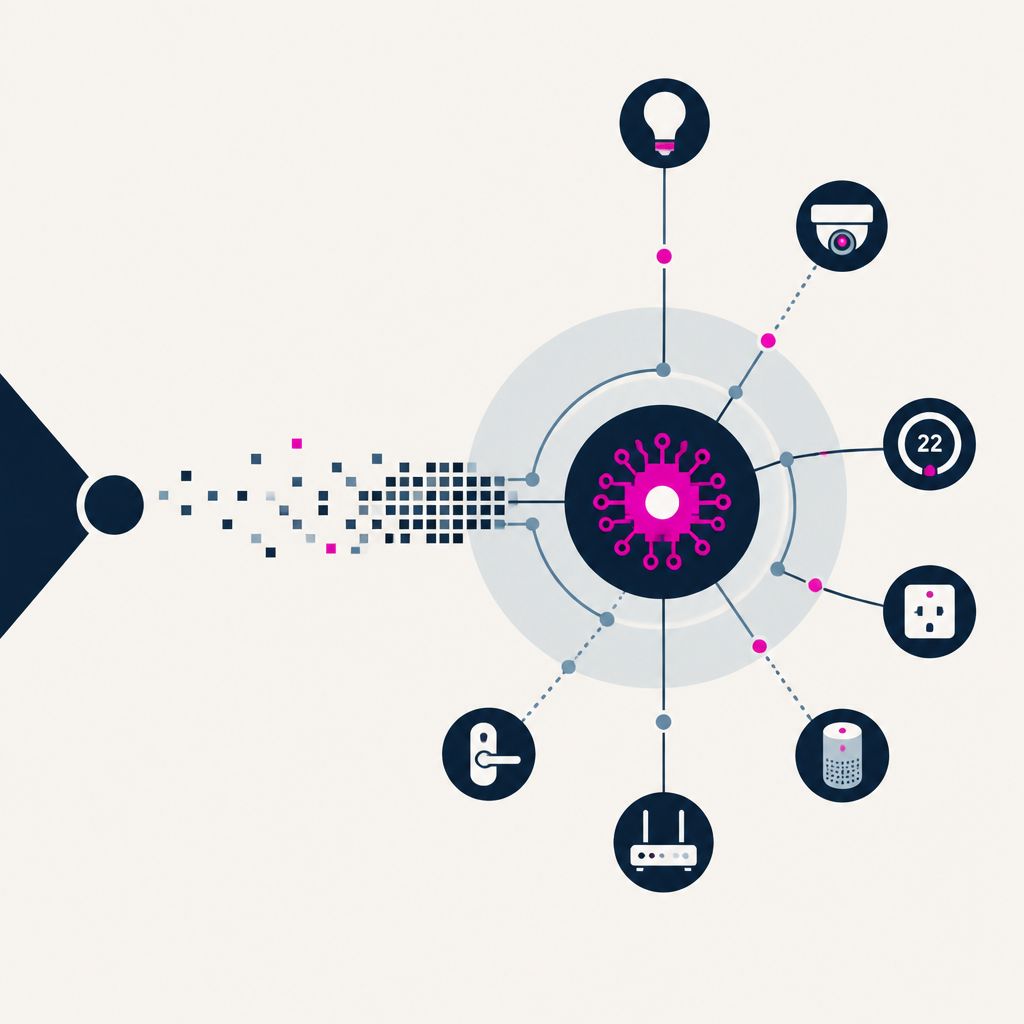
Anthropic warned that advances in small AI models could enable self-replicating malware that targets IoT devices and is harder to stop than non-AI malware. It said the replicator could have a doubling time of days and could potentially self-replicate on all kinds of IoT devices by next year. This increases concern about new forms of computer worms that propagate without human interaction and can autonomously adapt to unfamiliar devices.
Anthropic warned that small AI models could spread from device to device as self-replicating “AI worms,” making them hard to contain on networked household appliances. Anthropic said this could be “months away.” The focus shifts toward AI safety and cybersecurity mitigation for AI models running on everyday connected devices.
Anthropic reported that it rebuilt its developer source control for Claude-driven software work by replacing git with an in-house system called Scion. In May 2026 it averaged about 2,500 merged code changes per day, and by September it exceeded 30,000 per day. As a result, Anthropic migrated its monorepo in five months and shifted build, CI, and source-control operations toward an always-online, horizontally scalable client-server model.
Anthropic opened a new Singapore office and signed an MOU with Singapore’s Ministry of Digital Development and Information to expand its Asia-Pacific operations. The MOU covers cooperation starting after it was signed at Singapore International Cyber Week 2024, including AI safety, security, and model evaluation. The expansion leads to more technical exchanges, ongoing support for responsible AI adoption in public and private sectors, and continued rollout and use of Claude and Claude Code by local organizations.
21shares listed a pre-IPO synthetic ETP for Anthropic on the Vienna MTF that lets investors bet on the implied value of Claude without holding any Anthropic shares.
Every AI story that matters,
in your inbox by 8am.
TLDRocket reads all relevant sources, removes duplicate coverage, and summarises the
day in two minutes. Follow companies and topics for alerts, or get the
briefing in Slack. Free, no spam, unsubscribe anytime.
Reading TLDRocket needs no cookies, and the readership counts we rely on come from
our own cookieless analytics. Google Analytics is the exception: it sets cookies and
reports to Google, so it stays switched off until you allow it. You can change your
mind any time from “Cookie settings” in the footer.
Strictly necessary
Session security and form protection (tldrocket-session,
XSRF-TOKEN, 2 hours). The site cannot work without them,
so they need no consent.
Always on
Google Analytics 4 (_ga,
_ga_<id>, up to 2 years). Measures which
stories and sections readers use. Google acts as a third-party processor and may
store the data outside the EU. No advertising, no profiling, no data sold.