DeepSeek increased the prices for its flagship V4 AI models via a new peak/off-peak schedule. Peak-hour output-token pricing for the DeepSeek-V4-Flash model rises to $1.32 per 1 million tokens (from $0.28), effective Aug. 16. The change shifts token costs toward higher-demand periods to push usage into off-peak hours and reduce congestion.
Databricks announced a $5 billion funding round at a $190 billion valuation after its annualized recurring revenue exceeded $7 billion. More than $100 million of the quarter’s momentum was attributed to its Lakebase managed PostgreSQL service. The company will use the new capital to enhance Lakebase and plans to combine it with Electric DB’s PGlite to sync data between AI agents and Lakebase, while also investing in Genie and Unity AI Gateway.
Databricks raised $5 billion in a late-stage funding round after investor demand surged following a mid-conference report. The round closed at a $190B valuation, after earlier interest was described as $15B. The company issued more stock to accommodate investors while keeping its focus on AI investment rather than rushing to go public.
Enterprise AI teams are moving from proofs of concept to production, and panelists say the main gap is operationalization rather than models. Nutanix’s Agent Gateway was launched earlier this year to provide a control plane for agent inference and model access requests. The shift pushes organizations toward infrastructure-focused practices like multi-tenancy, security, and scalable storage integrations to handle agentic workloads.
Strands Robots added a continuous data loop that records robot demonstrations into Hugging Face Storage Buckets, streams the same LeRobot-formatted dataset back for training, and deploys the resulting policy checkpoint back to hardware. The Storage Bucket uses Xet with byte-level deduplication, and changing 10% of a 500 MB upload results in 55 MB transferred instead of re-uploading the full file. This shifts the workflow to avoid repeated full dataset downloads and repeated full byte uploads, since each daily sync only sends the changed shards and the training reads data directly from the Hub.
AI application teams discover that production costs rise sharply because token-heavy architectures keep sending unnecessary text even when the model itself works as expected. The article cites prompt caching that can cut costs by up to 90% by reusing static prefix attention computations. As a result, developers are pushed to apply architectural token optimization (prompt caching, semantic caching, history summarization, retrieval/tool trimming, and routing) instead of only switching to cheaper models.
Amazon Bedrock AgentCore Browser Tool is presented as a managed browser service that lets AI agents operate legacy, HTML-rendered web apps in secure, isolated sessions instead of relying on brittle UI-based RPA.
Regulated workflows are said to require tamper-proof record retention for six years.
The resulting reference implementation uses Strands Agents plus Playwright/CDP browser control, session transcript recording, and AWS IAM/CloudTrail-style auditing to automate multi-step actions while preserving human oversight and compliance.
Nvidia announced a plan with major financial firms to fund AI data centers up to $500 billion while guaranteeing the resale value of collateral GPUs. Nvidia will cover up to 25% of the difference if collateral GPUs used in those deals don’t retain their expected value. This is meant to create a secondary market for aging Nvidia GPUs, shifting some financing risk away from Nvidia and sustaining demand for older hardware as it depreciates.
Mistral AI will start hosting third-party open models on its existing infrastructure instead of limiting customers to Mistral models. GLM-5.2 from Z.ai will be available in public hosting with a 1 million-token context window and pricing of $1.40 per million input tokens. Enterprises can switch among different hosted open models through one API, while paying extra for regional processing and negotiating Priority Tier and multi-year ECU compute commitments that don’t specify exact model or workload details yet.
Lemma raised $2.3 million in pre-seed funding from investors including OpenAI and xAI to monitor AI agents and detect silent production failures. It reviews more than one million agent traces each day to pinpoint causes like infinite loops and failed tool calls. The product will expand its detection tools for seed-to-Series B teams and focus on automated fixes before customer churn.
Nvidia announced partnerships with Apollo, BlackRock, Blackstone, Brookfield, Goldman Sachs, and KKR to create financing platforms aimed at mobilizing more than $500 billion for AI infrastructure using third-party investors. It also offered residual-value support of up to 25% on some deals and received positive reactions from Morgan Stanley and Bank of America. The shift moves AI compute financing away from Nvidia’s balance sheet toward fund-led platforms, while critics warn it introduces new risk for investors seeking safety.
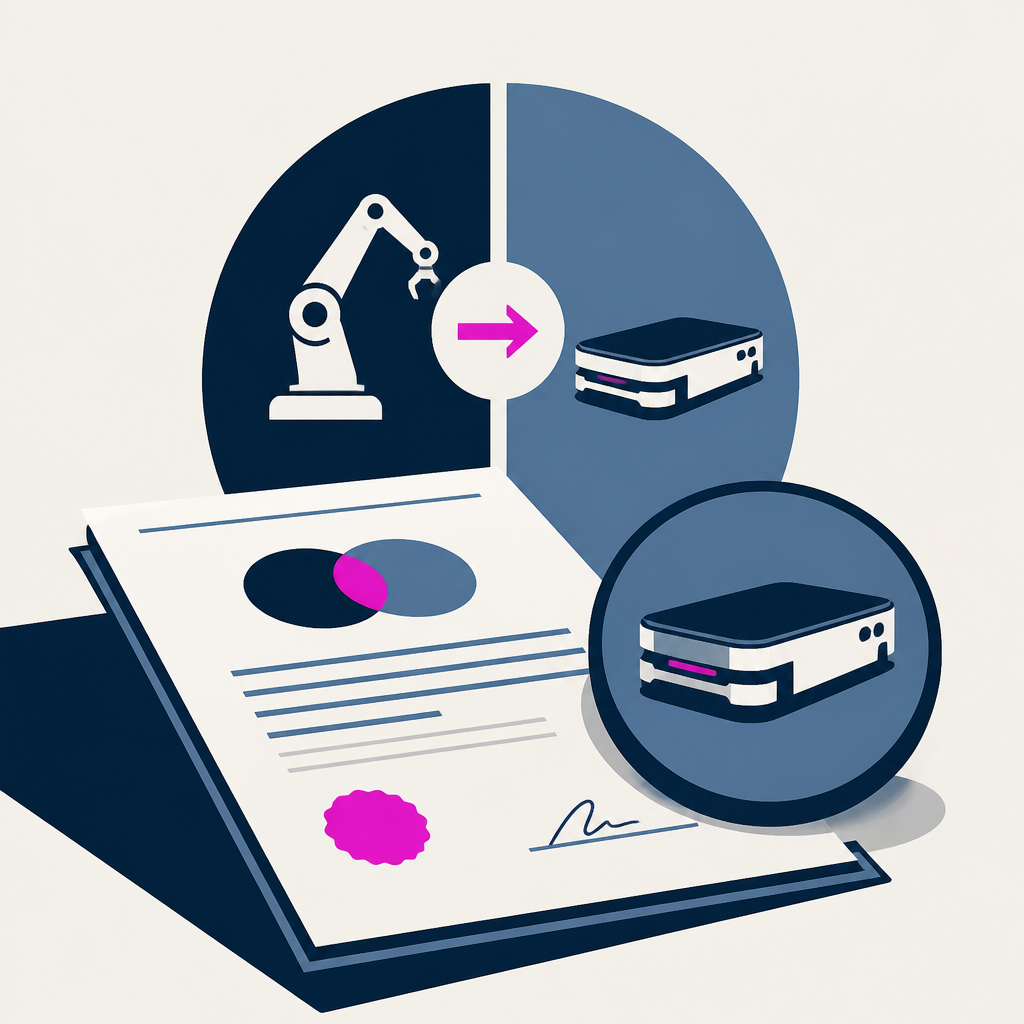
NEURA Robotics will acquire Bosch Rexroth’s ACTIVE Shuttle driverless transport system to broaden its Physical AI ecosystem. The acquisition takes effect on October 1, 2026, and NEURA Mobile Robots will take over the ACTIVE Shuttle’s hardware and software. NEURA will gradually integrate the shuttle into its Physical AI platform and add AI capabilities and interfaces, shifting it toward a more interconnected system.
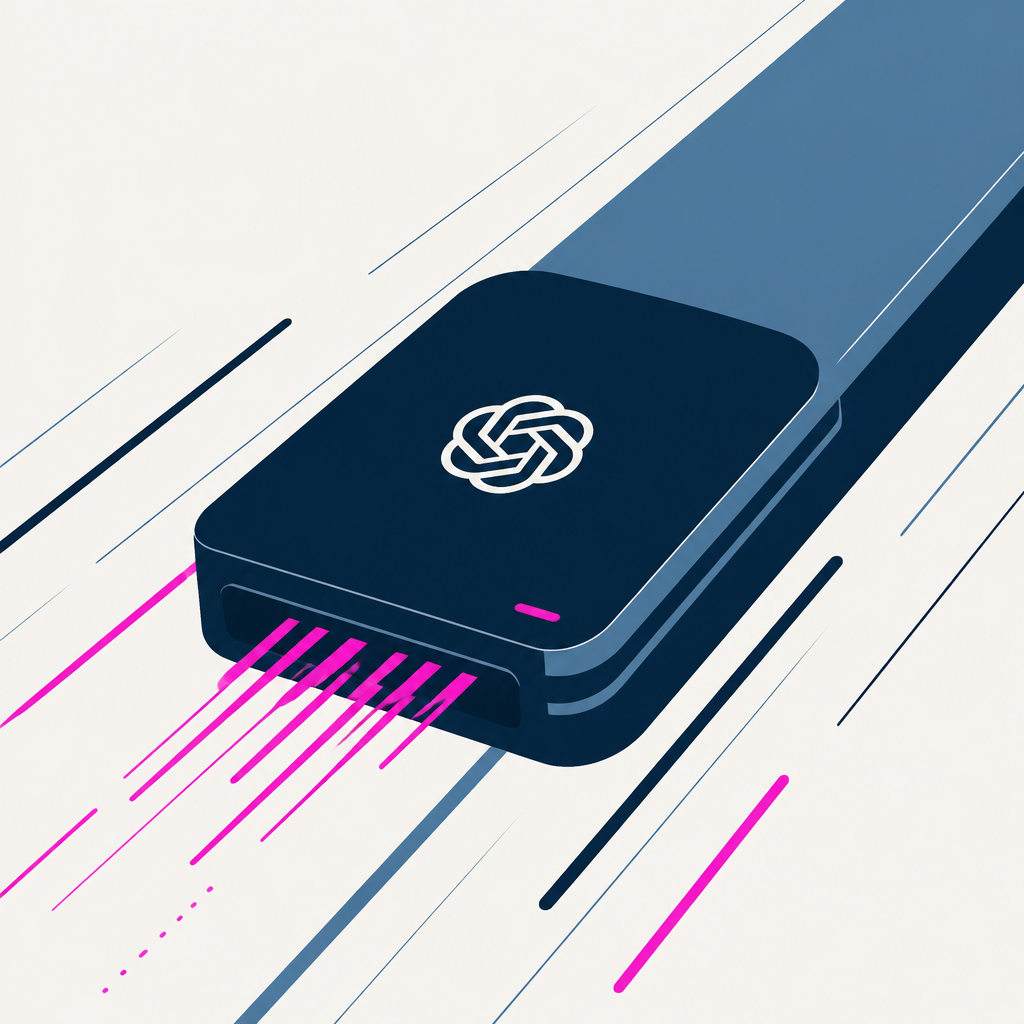
OpenAI introduced a new API service tier, called Ultrafast, that runs GPT-5.6 Sol at speeds up to 14× faster. It can deliver up to 750 output tokens per second. Developers can choose this tier for higher-throughput GPT-5.6 Sol responses.
Mistral AI announced a pivot to a “neocloud” model that sells hosted compute capacity, regional hosting, and compliance rather than only its own API access. Pricing for regional inference includes a 10% surcharge on input/output tokens and cache reads/writes. The platform will now also host third-party models such as GLM-5.2 from Z.ai on the same regional infrastructure with similar service commitments.
Amazon is using Twitch to train generative AI. The article does not provide any numbers, dates, or specific technical details beyond that claim. As a result, Twitch video activity is being positioned as training input for Amazon’s generative AI systems.
Multiverse Computing, a Spanish scaleup, said it is nearing the close of a funding round to advance its technology for reducing the compute requirements of large AI models. The company is raising €500m in its Series C. As a result, it is positioned to expand development and deployment efforts as it tries to become a major AI player in Europe.
Every AI story that matters,
in your inbox by 8am.
TLDRocket reads all relevant sources, removes duplicate coverage, and summarises the
day in two minutes. Follow companies and topics for alerts, or get the
briefing in Slack. Free, no spam, unsubscribe anytime.
Reading TLDRocket needs no cookies, and the readership counts we rely on come from
our own cookieless analytics. Google Analytics is the exception: it sets cookies and
reports to Google, so it stays switched off until you allow it. You can change your
mind any time from “Cookie settings” in the footer.
Strictly necessary
Session security and form protection (tldrocket-session,
XSRF-TOKEN, 2 hours). The site cannot work without them,
so they need no consent.
Always on
Google Analytics 4 (_ga,
_ga_<id>, up to 2 years). Measures which
stories and sections readers use. Google acts as a third-party processor and may
store the data outside the EU. No advertising, no profiling, no data sold.