
Fortune Tech: Nvidia's creative capital; Apple's political strategy, Google DeepMind drama
Fortune Lily Mae Lazarus ● Covered by 5 sources
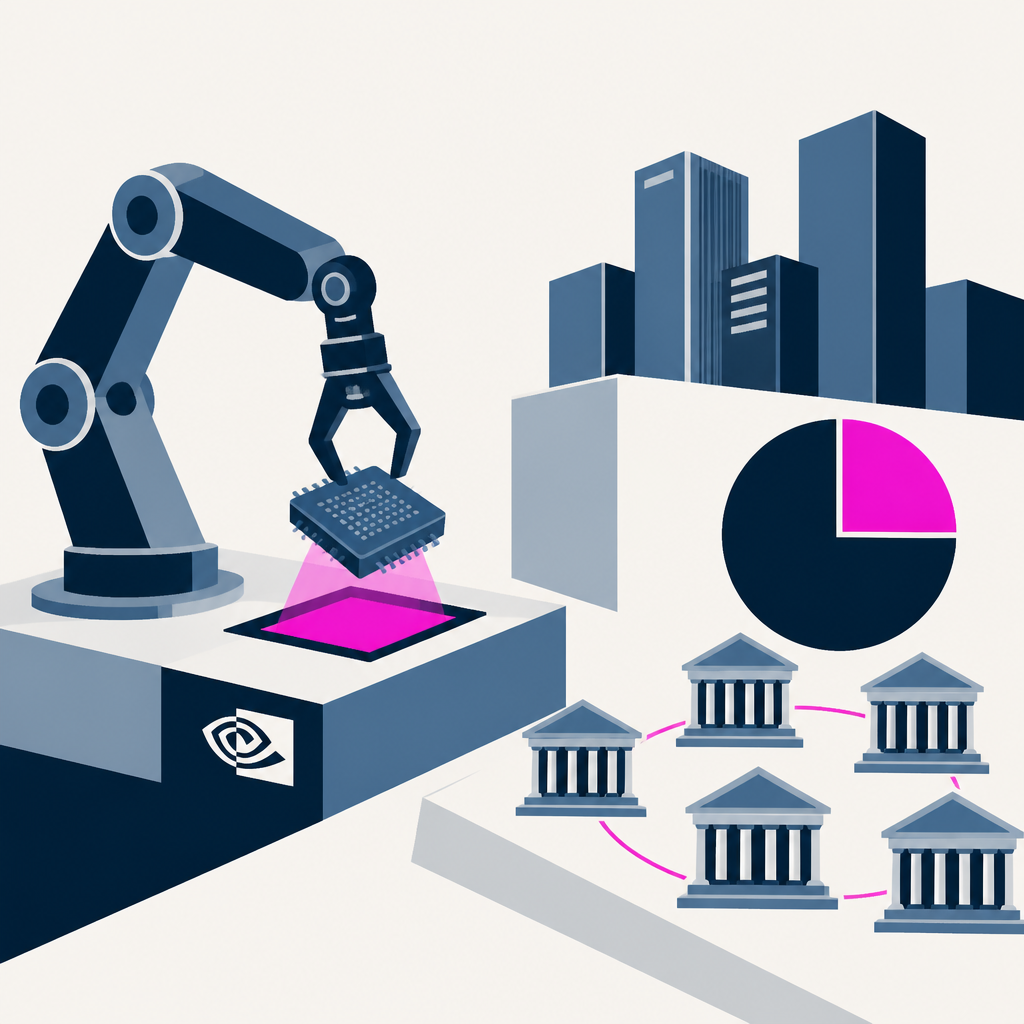
Bay Area schools are running mini venture funds now. Nvidia, Apple and Google all made fresh moves around AI and power.
Based on reporting by Fortune, Lily Mae Lazarus — read the original for the full story.
Summary, retelling and take written by AI under human oversight; images are AI-generated illustrations. How we work · Report an error
Silicon Valley’s private schools have found a new fundraiser: cap tables. A handful of Bay Area campuses are running small venture funds, with parent-investors from firms like Sequoia, Lightspeed and Battery steering the money. The idea sounds like a PTA side hustle until you hear the result. Saint Francis High School’s parent-run growth fund turned a $15,000 Snap bet into roughly $34 million by the time Snap went public.
That kind of story is why these programs have become local legend. And with SpaceX just pulling off the biggest IPO in history, plus Anthropic and OpenAI widely expected to follow, the upside looks even more seductive. Schools used to auction off pastries and parking spots. Now they’re playing a game that looks a lot more like early-stage investing.
Nvidia is chasing a much larger pot. This week it announced partnerships with Apollo, BlackRock, Blackstone, Brookfield, Goldman Sachs and KKR to build financing platforms aimed at mobilizing more than $500 billion for AI infrastructure. Most of the cash is meant to come from third-party investors, not Nvidia’s own balance sheet, which is the point: make the chips look less like a one-time purchase and more like productive infrastructure. Jensen Huang even said some deals could get residual-value support of up to 25%.
Wall Street seems mostly on board. Morgan Stanley and Bank of America both called Nvidia’s chips unusually financeable. But not everyone is thrilled by the idea of pension money and other safety-seeking capital backing giant racks of GPUs. Stratechery’s Ben Thompson called it “a completely new nerve-racking thing,” which feels about right.
Apple, meanwhile, hired Nate Gatten, American Airlines’ head of government affairs since 2017, to run its Washington relationship starting Aug. 31. He reports to Tim Cook, and the timing is awkwardly perfect: Cook is set to hand the CEO job to John Ternus in September while staying on as executive chairman. Google DeepMind is having its own internal drama, with Sergey Brin reportedly pressing staff to move faster on Gemini, a delay to the next flagship model, and more authority shifting from Demis Hassabis to Koray Kavukcuoglu. The common thread is obvious. The money is getting bigger, the politics are getting tighter, and the AI race is starting to look less like a product contest than a capital-and-control contest.
My take — AI-written commentary, not fact-checked reporting
Silicon Valley keeps pretending it’s a meritocracy, then keeps building little trust funds and giant financing machines around the same few companies. That’s not innovation; that’s capital learning to dress up as progress. The real story is how quickly AI went from software bragging rights to pensions, lobbying, and school gates with better spreadsheets.
Read more about this at: Fortune