
NEURA Robotics acquires Bosch Rexroth’s ACTIVE Shuttle to expand Physical AI ecosystem
Tech.eu Cate Lawrence
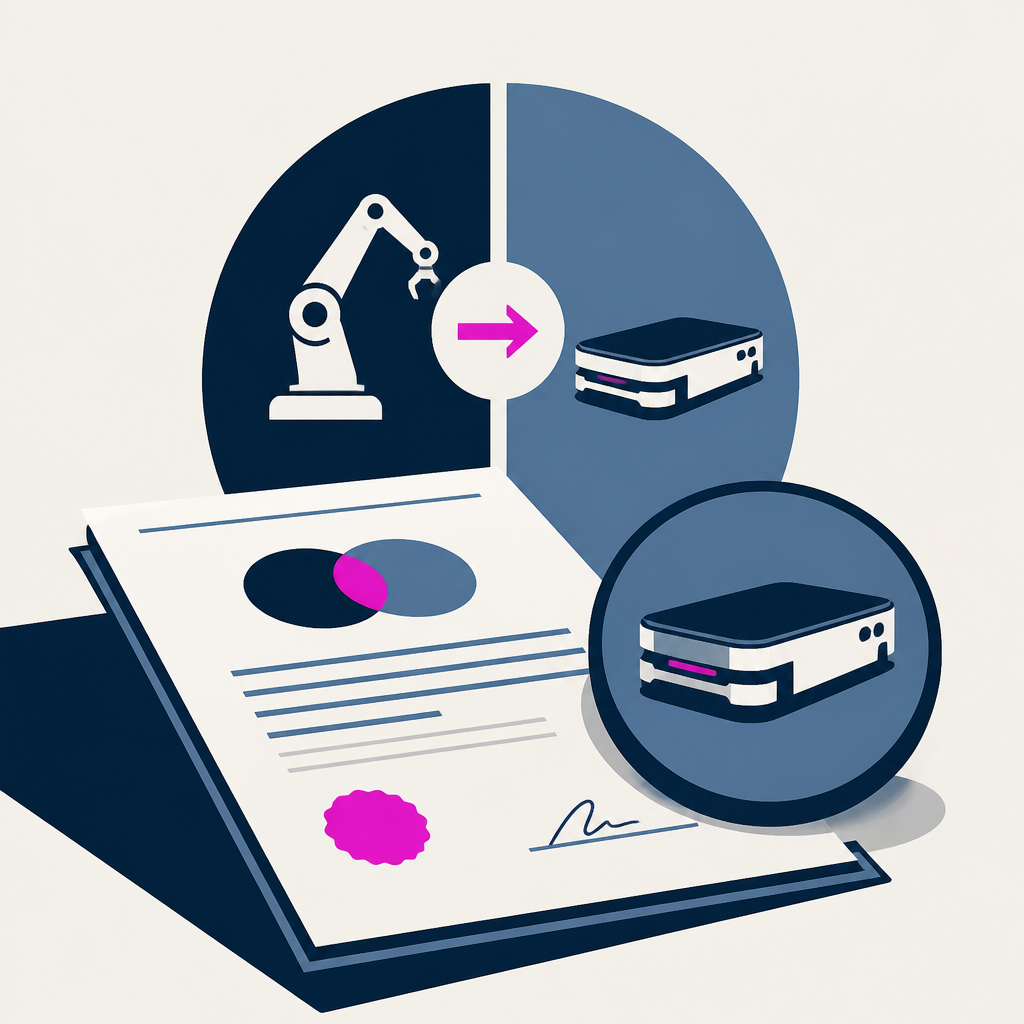
NEURA Robotics is buying Bosch Rexroth’s ACTIVE Shuttle on Oct. 1, 2026. It’s not just a sale — NEURA wants to plug the shuttle into its broader Physical AI stack.
Based on reporting by Tech.eu, Cate Lawrence — read the original for the full story.
Summary, retelling and take written by AI under human oversight; images are AI-generated illustrations. How we work · Report an error
NEURA Robotics is taking over Bosch Rexroth’s ACTIVE Shuttle driverless transport system, with the deal set to become effective on October 1, 2026. The shuttle already has a track record in industrial settings, where it moves small load carriers, feeds assembly stations, and handles transport work in production and logistics.
The acquisition gives NEURA Mobile Robots the hardware, the software, and the customer service side of the ACTIVE Shuttle. That matters because the platform isn’t being parked as a standalone product. NEURA says it will be folded gradually into its Physical AI ecosystem and expanded with AI features and links to the rest of the NEURA Group’s technology.
That broader push is the real story here. NEURA wants different robot types — mobile platforms, industrial robots, and humanoids — to share one physical AI infrastructure instead of each machine type getting its own separate intelligence stack. The idea is a common layer that helps robots see their surroundings, move on their own, learn new tasks, and coordinate with other machines.
The company has money to chase that plan. In June, it raised up to $1.4 billion in Series C funding to speed up development of its physical AI platform. Within that setup, NEURA Mobile Robots becomes the home for autonomous intralogistics and driverless transport systems, while founder and CEO David Reger is framing the move as part of a bigger European industrial bet: keep the expertise, connect it, and build an open ecosystem around it.
My take — AI-written commentary, not fact-checked reporting
This is the sort of move that makes more sense than another glossy robot demo. Buying a real, field-proven transport system beats starting from zero, and the open-ecosystem pitch is a lot more convincing when there’s actual hardware underneath it. The robotics industry has spent years pretending every machine should be a snowflake; boring interoperability is where the useful stuff usually starts.
Read more about this at: Tech.eu
Related stories
 NEURA Robotics acquires ADLATUS to bring Physical AI to autonomous cleaning
Tech.eu · 1 month ago ·
21
Germany’s Neura Robotics Launches Its Own A.I. Model for Robots
Trending Topics · 5 days ago ·
43
Physical AI Takes the Wheel: How the World’s Robotaxi Leaders Are Building With NVIDIA Technologies
NVIDIA Blog · 1 month ago ·
43
NEURA Robotics acquires ADLATUS to bring Physical AI to autonomous cleaning
Tech.eu · 1 month ago ·
21
Germany’s Neura Robotics Launches Its Own A.I. Model for Robots
Trending Topics · 5 days ago ·
43
Physical AI Takes the Wheel: How the World’s Robotaxi Leaders Are Building With NVIDIA Technologies
NVIDIA Blog · 1 month ago ·
43