Stripe confirmed it is buying OpenRouter, and the deal was reported to involve payments between multiple parties rather than a disclosed public price. The New York Times said Stripe paid $7.5 billion, up from OpenRouter’s $1.3 billion valuation in May, with founders reportedly receiving $1.5 billion. The acquisition is expected to let Stripe embed itself in AI-related capital flows by using OpenRouter’s model-routing capability while OpenRouter continues operating independently for now.
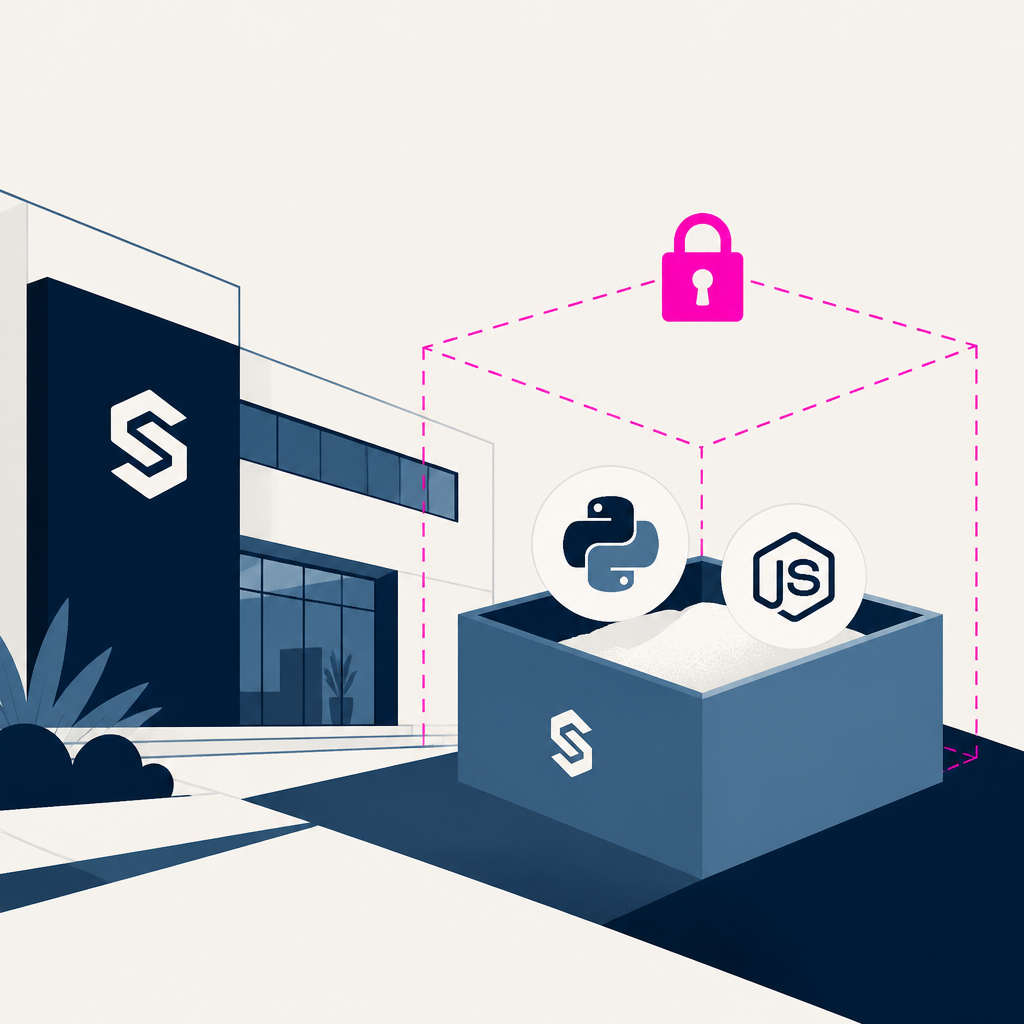
smolmachines.com was tested for use as a secure sandbox for running untrusted Python and JavaScript. The initial Claude Code for web setup ran on Linux 6.18.5-fc-v20 with 4 vCPU and 15GB RAM but failed because /dev/kvm and CPU virt flags weren’t available, so smolvm couldn’t run. The work therefore switched to a GitHub Actions Ubuntu runner that does expose /dev/kvm and ran the test suite there instead.
Stripe agreed to acquire AI model routing startup OpenRouter, reported as a $7.5 billion-or-more deal.
The New York Times cited $7.5 billion as the figure, while other outlets placed it above $8 billion or above $7 billion.
The product is expected to remain the same, with OpenRouter’s routing continuing unchanged while Stripe uses it to route AI requests and collect about 5% of inference spending through the platform.
AWS describes an end-to-end mortgage document intake pipeline that uses the GAIIC IDP Accelerator to classify and extract documents and Amazon Quick Automate to route validated data into downstream systems. The example mid-size lender processing about 50,000 loans per year cuts document processing time from 15–20 minutes per file to under 6 minutes per file. As a result, document handling scales without temporary staffing and the pipeline extends across other loan types while reducing manual keying errors and rework.
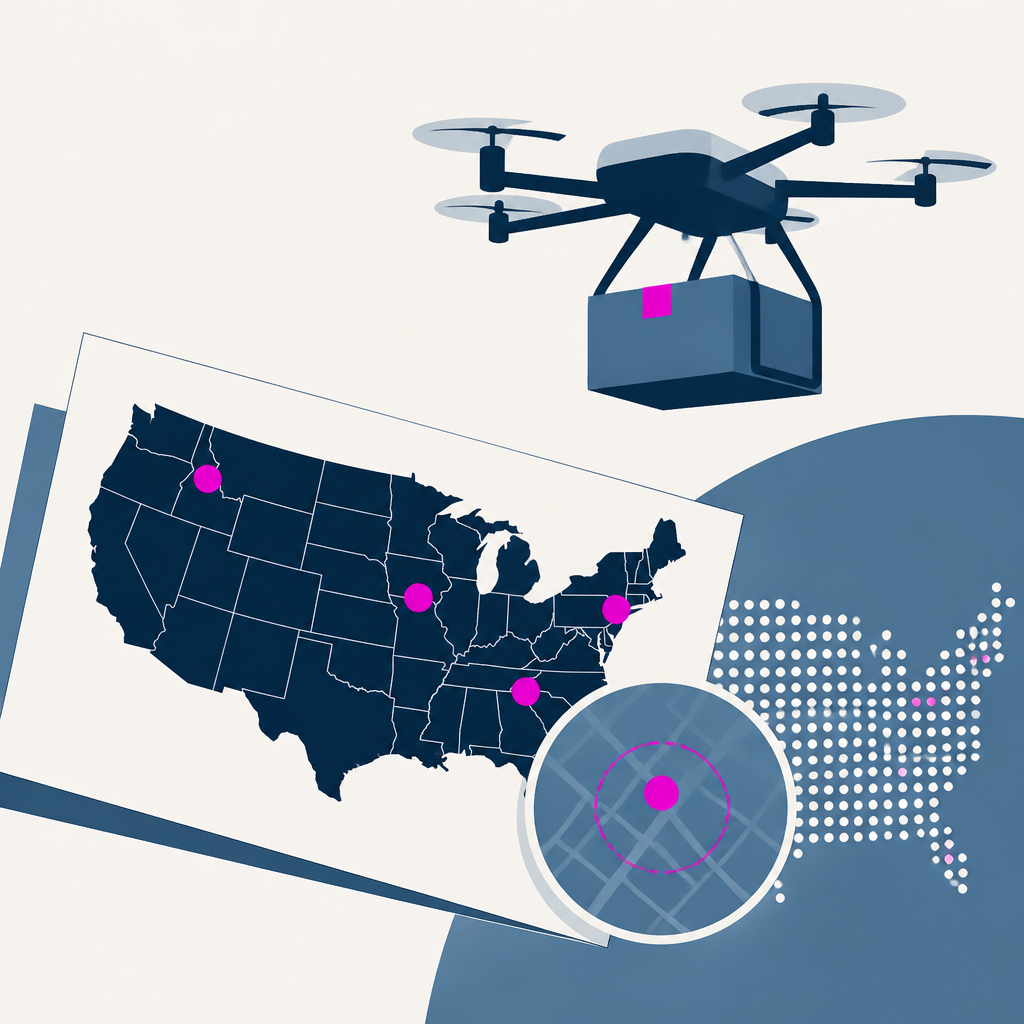
Amazon is expanding its Prime Air delivery drone service to cover nearly 500 US cities and towns by the end of 2026. The rollout includes launching Prime Air in Chicago, Cleveland, Atlanta, Syracuse, and Boise, with each service area covering about 175 square miles. This expansion will bring drone delivery to many more neighborhoods while increasing concerns about noise from daily drone flights.
AI inference workloads are pushing data center design beyond GPU performance toward storage latency, network bandwidth, data movement, and power as organizations deploy generative and agentic apps in production. Kioxia reported random-read performance improved by 76% and random-write performance by over 100% moving from CM7 to its BiCS8-based CM9 drives. Systems increasingly use coordinated full-stack architectures—such as storage supporting cached context—to hit latency and throughput goals while managing power limits and data “gravity” concerns.
Fanatics Betting and Gaming built a multi-agent customer support system on AWS to handle sports-betting questions that vary by U.S. jurisdiction and spike during live events. It routes messages through a Responsible Gaming classifier that uses Amazon Nova 2 Lite for compliance checks, with high-severity signals immediately transferred to human agents. The result is faster, more accurate responses with reduced dependence on human-only queueing while letting the team add new tools and knowledge domains without rebuilding the whole chatbot.
KnowledgeForge mines resolved ITSM incident tickets that never became knowledge base articles and also cleans up the existing knowledge base by classifying, deduplicating, scoring, and improving articles. It flags duplicates using Amazon S3 Vectors by starting with a cosine distance threshold of 0.05 (and a top-K of 5) for nearest-neighbor matches. Knowledge-manager-reviewed drafts are then curated into an embedded, deduplicated knowledge base so the next generation run can reuse those vectors as grounded reference context.
A Salesforce data architecture executive argues that layered data stacks using knowledge graphs provide the context enterprise AI needs beyond simple retrieval. The approach centers on a semantic “metadata layer” that maps business terminology to underlying data columns and tracks where customer truth exists across “dozens of copies.” It shifts governance and access control up the stack so access policies can be described semantically alongside data descriptions for more trustworthy conversational answers.
Neuralk’s Alexandre Pasquiou argues in a podcast that language models can summarize spreadsheet data but are structurally mismatched for reliable next-step prediction on structured business tables. He says Seldon is designed to handle about 20 million rows and 600+ columns for predictive workloads. The takeaway is a shift toward specialized tabular foundation models used behind tools like ChatGPT, Claude, and Excel for forecasting and other prediction tasks rather than expecting LLMs to do the predictive work themselves.
The “Local” page links to a discussion about running local AI on a Mac with no friction. It claims “Zero (!) friction,” i.e., 0 friction. No further technical or policy changes are specified in the provided text.
Stripe is acquiring AI startup OpenRouter to add a multi-model routing layer to its AI spending products. The reported deal price is $7.5 billion, with a closing expected in the coming weeks. OpenRouter’s name, product, roadmap, and integrations are set to stay the same, and routing decisions will continue to be user-driven.
Stripe agreed to acquire OpenRouter, an LLM model-routing gateway that launched in 2023 and grew from 4 models to a large multi-provider interface. OpenRouter’s token usage grew to a 4.5+ quadrillion-token annual run rate and it now supports 500+ models across 80+ providers. The deal shifts OpenRouter under Stripe, expanding Stripe’s AI infrastructure position for model access, routing, and related enterprise controls.
Actx0 is presented as memory infrastructure for AI agents. The page gives no specific number, date, or benchmark. As a result, there’s not enough concrete information here to determine what changes beyond a general focus on AI-agent memory infrastructure.
Oakley Capital agreed to acquire a majority stake in Graphwise, an enterprise AI data platform company formed in 2024 from a merger. Graphwise has grown organic ARR by over 30% per year. The deal hands control to Oakley, enabling management to accelerate international expansion and pursue additional acquisitions.
VentureBeat hired Rob Strechay as its first Lead Analyst to expand VentureBeat Research focused on enterprise AI decision-makers. Strechay will initially focus on cloud infrastructure, advanced data infrastructure, platform engineering, DevOps orchestration, observability, and where AI meets enterprise security, and his June VB Pulse survey covered 145 enterprises. VentureBeat plans deeper technical research and will expand the VB In Conversation interview series to deliver production-focused architectural and deployment insights.
Nebius, an Amsterdam-based AI infrastructure provider, is issuing $4.5 billion in convertible bonds due in 2030 and 2034 to fund data centre expansion and GPU purchases. The company is raising $2.75 billion in notes maturing in 2030 and $1.75 billion due in 2034. This capital supports Nebius's existing multi-billion-dollar supply contracts with Meta and Microsoft and enables further buildout of its GPU-powered cloud infrastructure.
Etched, a startup making inference chips for running trained AI models, raised $700 million at a $21 billion valuation in a round led by trading firm Jane Street, which also became its first production customer. The funding round valued the company at double its July valuation of $10.3 billion, with over $1 billion in customer orders already secured. Etched's competitive position strengthened after Groq was acquired by Nvidia and Cerebras went public, leaving few independent inference chip makers still operating.
The article reports that its five “boom-or-bubble” gauges for AI investment are not yet in the red, with AI revenues still rising. AI revenues reached $126 billion over the last twelve months as of July, while semiconductor stocks saw a severe correction that cooled some public valuations. It updates its capex counting methods and warns that funding quality has deteriorated since Sep 2025, with the gauges’ base case turning red during 2027 if economic strain and risk materialize.
IBM announced a modular cryogenic architecture that links quantum processors using both quantum and classical links so computations can span multiple chips. Each modular cryogenic cell is expected to support at least 2,000 qubits, and IBM says it has already demonstrated two coupled cryogenic cells. The design shifts from isolated cylindrical cryostats to box-shaped, side-by-side cells with scalable wiring area and chamber volume, enabling easier upgrades and multi-chip fault-tolerant systems.
Relativity Networks raised $22 million in funding to deploy hollow-core fiber optic cables that transmit data 30% faster than conventional fiber by routing light through a vacuum chamber instead of glass. The company achieved a signal latency reduction from five microseconds per kilometer to three and a half microseconds, with a hyperscaler also committing to a $40 million follow-on order. This speed improvement allows data centers to span larger geographic distances before latency becomes problematic, potentially reshaping where AI infrastructure can be built as compute scales across multiple campuses.
Memory prices have surged 500% in 12 months, with 128GB DDR5 kits now ten times more expensive than historical lows, while hyperscalers have locked in nearly all global DRAM production capacity through 2027 with advance deposits. DRAM chips now cost over half as much per kilogram as solid gold, reversing Moore's Law for memory as AI infrastructure demand outstrips supply. This shortage is forcing AI companies to secure multi-year supply commitments and fundamentally reshaping hardware economics for training and inference systems.
Nvidia and major financial firms including Apollo, BlackRock, Blackstone, Brookfield, Goldman Sachs, and KKR are collaborating on a $500 billion financing program to establish compute as a tradeable asset class. The deal treats GPU chips as revenue-generating assets with long operational lifespans and fungible characteristics. This creates a new investment vehicle for hardware infrastructure, though the excerpt does not detail how this affects existing cloud or AI markets.
The page “NobodyWho” promotes running AI models on any device. The only concrete detail provided is that it supports “any device.” No other changes, dates, or technical specifics are described, so the impact is unclear.
Cloudways offers a fully managed setup to run OpenClaw and Hermes without setup steps.
The specific products named are OpenClaw and Hermes.
It changes by removing user setup and shifting responsibility to Cloudways as the managed service provider.
Every AI story that matters,
in your inbox by 8am.
TLDRocket reads all relevant sources, removes duplicate coverage, and summarises the
day in two minutes. Follow companies and topics for alerts, or get the
briefing in Slack. Free, no spam, unsubscribe anytime.
Reading TLDRocket needs no cookies, and the readership counts we rely on come from
our own cookieless analytics. Google Analytics is the exception: it sets cookies and
reports to Google, so it stays switched off until you allow it. You can change your
mind any time from “Cookie settings” in the footer.
Strictly necessary
Session security and form protection (tldrocket-session,
XSRF-TOKEN, 2 hours). The site cannot work without them,
so they need no consent.
Always on
Google Analytics 4 (_ga,
_ga_<id>, up to 2 years). Measures which
stories and sections readers use. Google acts as a third-party processor and may
store the data outside the EU. No advertising, no profiling, no data sold.