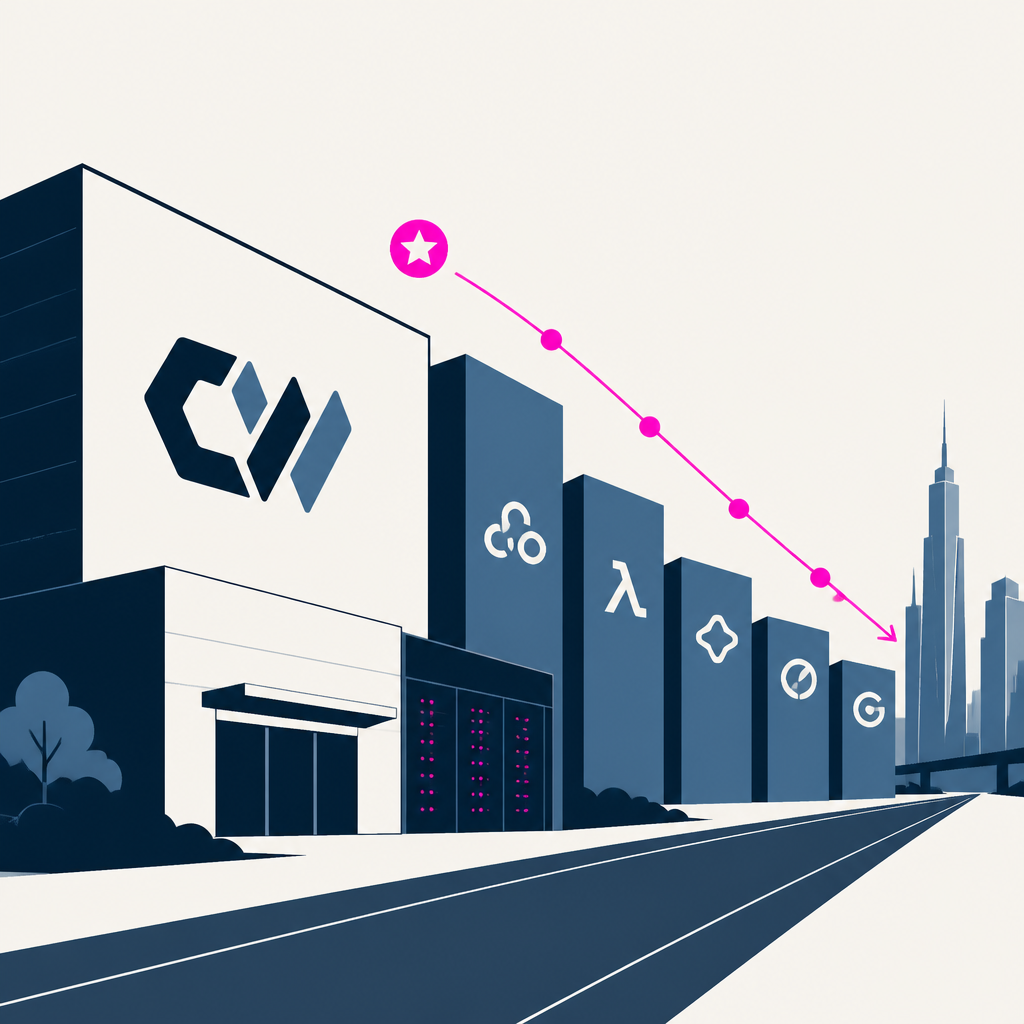
GPU neocloud providers CoreWeave, Nebius, Lambda, Crusoe, and Groq were compared on published GPU pricing and contracted power in 2026.
Lambda’s lowest published B200 on-demand rate was $6.69 per GPU-hour.
The result is a buyer-focused ranking that highlights CoreWeave as the only SemiAnalysis ClusterMAX 2.0 Platinum-rated option and notes different GPU offerings, contract tiers, and roadmap differences across the five.
Starcloud Inc. raised $250 million to build AI data centers in orbit at a $2.3 billion valuation led by Manhattan West. The company says Starcloud-2 will launch in 2027 with onboard AI chips and storage to run both training and inference. This shifts more data analysis from ground processing to faster in-orbit analysis and streaming, supported by plans to mass-produce 200-kilowatt Starcloud-3 satellites.
Nvidia announced a partnership with data center infrastructure developer Cloverleaf Infrastructure to support building AI-focused data centers. Cloverleaf was founded in 2024 and raised $300 million that year, and Nvidia’s minority investment is reported to total several hundred million dollars. The deal increases Nvidia’s direct involvement in financing and developing the power and infrastructure sites that enable continued AI hardware purchases.
The Algorithmic Bridge·1 month ago·
34
● 6 sources
The U.S. has seen growing public backlash against AI-industry expansion, especially through opposition to local data centers that supporters link to AI services and resource use. Polls cited in the piece say 75% of Americans oppose local data-center development. The author argues this sentiment is driving politicians to halt or propose moratoriums on data-center projects rather than persuading voters with technical reassurances.
Bumble’s ex-CEO Lidiane Jones has been named CEO of Integral Ad Science as part of a roundup of female executive moves across industries. The article also notes Denise Dresser is out as chief revenue officer at OpenAI on top of other appointments at AI-related firms. These changes update leadership rosters at multiple companies, including AI infrastructure, AI engagement, and AI tooling providers.
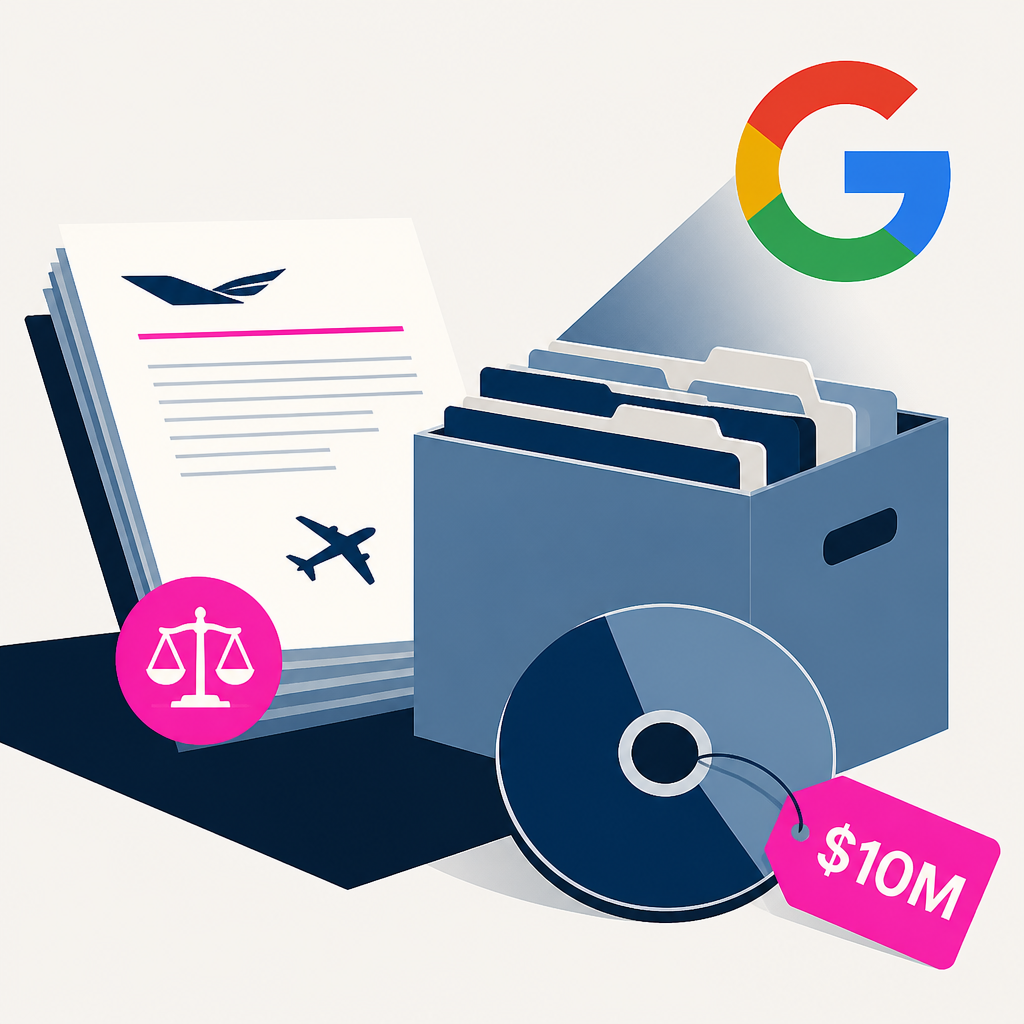
The Association of Flight Attendants-CWA objected in US Bankruptcy Court to Google’s $10 million bid to buy Spirit Airlines’ internal digital records, including employee emails, saying the privacy terms protect consumers more than employees. The auction awarded the dataset to Google for $10 million over a $7.5 million offer from Mercor. The dispute seeks to require stronger de-identification/confidentiality safeguards for employee data rather than stop the sale entirely.
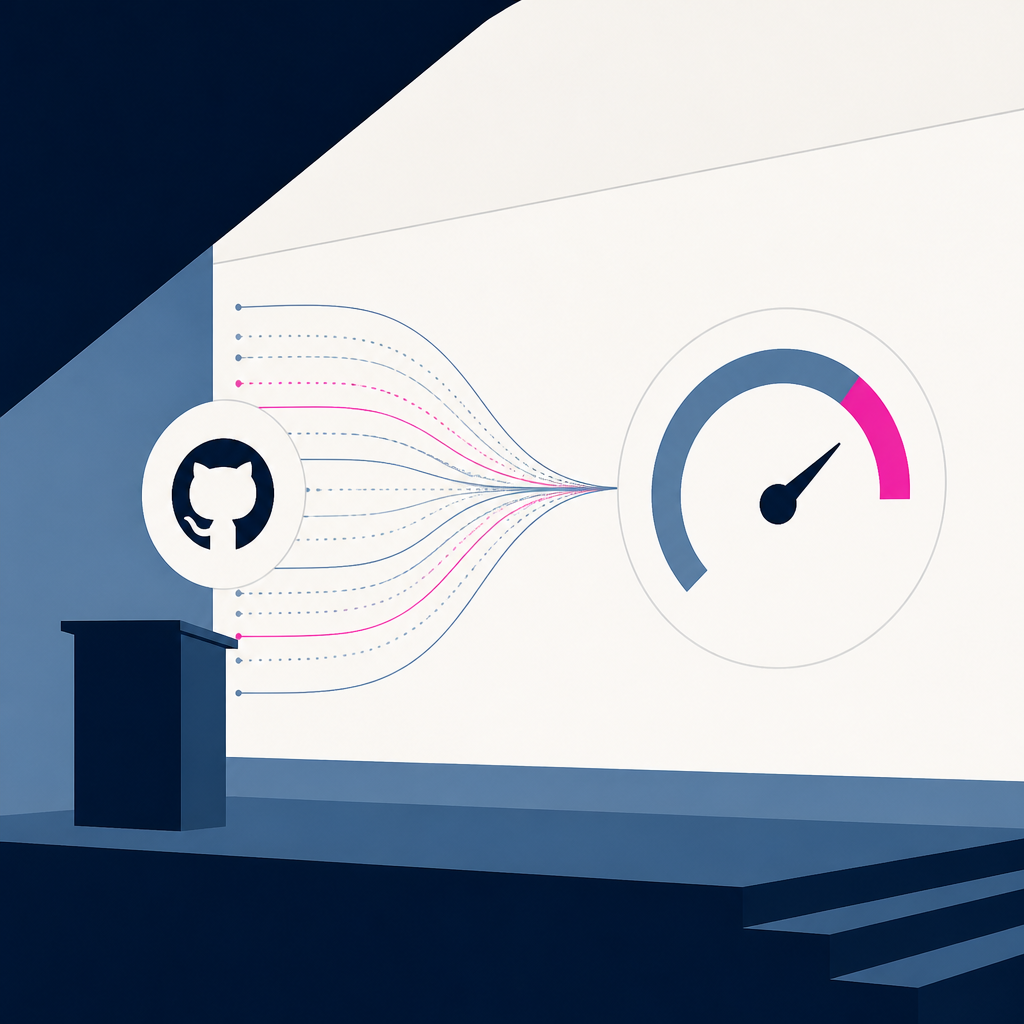
ReWeaver AI DriftDetector provides a way to get a drift score for any GitHub repo.
The input target is “any GitHub repo.”
Because the article only contains that brief description, there are no stated changes or results beyond access to the drift score feature.
AWS introduced the Agentic Data Operations Platform (ADOP) to use AI agents on Amazon Bedrock to generate and govern data-engineering artifacts from Bronze to Gold, with engineers reviewing and CI/CD deploying deterministic outputs. In the default example workflow, ADOP runs the onboarding pipeline daily at 03:00 UTC. This shifts engineers toward shipping data products and moves compliance controls to build-time onboarding via an enterprise “architectural contract” instead of downstream gates.
A webinar promoted a semiconductor analytics platform to speed multi-domain root cause analysis for yield excursions by using agentic AI and push-down compute instead of siloed dashboards. The session includes a live demonstration using Spotfire Industry Pro across “billions of data points.” As a result, engineers are expected to investigate yield/process issues faster while connecting metrology, tool traces, chemical analysis, and facilities systems without moving data.
Stripe bought OpenRouter and Ramp released its internal model router about 70 minutes earlier, shifting model selection from app configuration to runtime routing. OpenRouter serves more than 400 models from over 80 providers and processes more than 10 trillion tokens a day. Routing is changing how teams control AI costs by adding a middleware layer that can pick models per request and requires new telemetry to monitor quality and spending.
Data-center buildouts became a midterm politics issue because opponents frame them as part of the push for AI. A Wall Street Journal analysis cited in the article says big tech has $3 trillion more in off-balance-sheet commitments than it looks like. As a result, OpenAI is described as slowing and trailing Anthropic while dealmaking and acquisitions—like Stripe’s $7.5 billion buy of OpenRouter—continue to expand AI infrastructure and routing for enterprises.
Starcloud added a $250 million extension to its March Series A as it builds satellites for AI inference in orbit and plans more orbital data center capacity amid tighter launch options. The extension values the company at $2.3 billion. It will expand manufacturing, push Starcloud-3 toward SpaceX’s Starship, and fund a near-term plan to launch two 8 kw Starcloud-2 satellites starting in 2027.
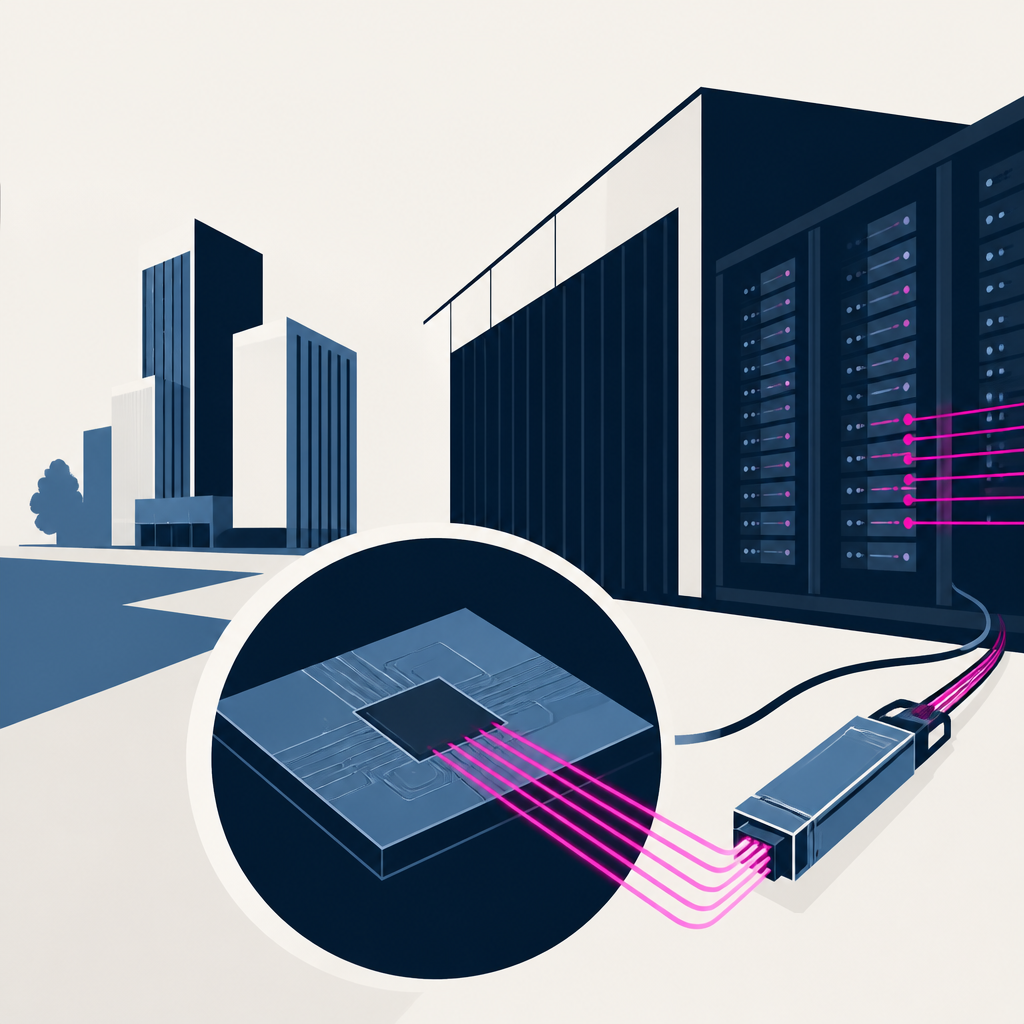
Solinide Photonics raised a €4M seed round to commercialise silicon nitride photonic integrated-circuit technology for data-centre optical interconnects. The funding was closed with six investors and a plan to prepare for scalable manufacturing and an integrated rack-mounted product. This moves Solinide from demonstrated microcomb performance toward commercial readiness, launch, and real-world deployment, replacing racks of individual lasers with a single chip that outputs dozens of wavelengths.
AT&T said it is routing more internal AI work to open models rather than sending all tasks to expensive systems. The company reported that open-model coding cut costs by 56% while accepting about a 2% quality tradeoff. As a result, teams will need stronger measurement to decide which tasks the router can safely keep on cheaper models.
OpenObserve launched its AI Observability offering as its second release, focused on OpenTelemetry-native monitoring for agents and LLMs. It says an agent that cost $40 took 34 seconds, and OpenObserve traces sessions across models, tools, and services to show where time and money went. As a result, teams can detect loops, run online evals, and follow failures end to end through LLM calls, backend, and database alongside logs, traces, and metrics.
Poolside licensed its model factory and moved into a Nvidia deal while hiring 109 employees after Jensen took an investor role. The deal is described as $12B in reverse execuhire money. Founders are set to stay for $1B and employees are set to leave for $6B, changing the company from a normal exec-out payout into a pivot-supported continuation for the original mission.
Donald Trump said he would want an “AI plant” or data center because jobs, money, and taxes would be “just enormous,” while voters in multiple states are increasingly angry about the impacts of large facilities. Some campaigns have put the issue front and center, including a $200 million estimate of Nevada state tax breaks for data centers. As a result, candidates now attack or distance themselves from rivals’ data center positions and propose conditions like local approval and requiring developers to cover utilities and environmental costs.
Super Micro Computer said its independent board-led investigation found no evidence that current senior management knew about an alleged $2.5 billion hardware smuggling scheme involving Nvidia chips to China. The report was filed after DOJ charged co-founder and board member Yih-Shyan “Wally” Liaw in March 2026. The company says it has finished its internal probe and took personnel actions in sales and support related functions, but authorities in Taiwan and a separate New York grand jury subpoena are still active.
ShogunAI is presented as a personal AGI experience that runs on a user’s PC. The concrete claim is that it runs “on your PC.” The only change indicated is that it’s offered via a discussion/link page, with no verifiable technical or performance details provided.
Papers with Code built a hybrid search system using Hugging Face Jobs for offline embedding, Storage Buckets for durable artifacts, and Inference Endpoints for live query embeddings with a fallback to PostgreSQL full-text search when the endpoint fails.
Every AI story that matters,
in your inbox by 8am.
TLDRocket reads all relevant sources, removes duplicate coverage, and summarises the
day in two minutes. Follow companies and topics for alerts, or get the
briefing in Slack. Free, no spam, unsubscribe anytime.
Reading TLDRocket needs no cookies, and the readership counts we rely on come from
our own cookieless analytics. Google Analytics is the exception: it sets cookies and
reports to Google, so it stays switched off until you allow it. You can change your
mind any time from “Cookie settings” in the footer.
Strictly necessary
Session security and form protection (tldrocket-session,
XSRF-TOKEN, 2 hours). The site cannot work without them,
so they need no consent.
Always on
Google Analytics 4 (_ga,
_ga_<id>, up to 2 years). Measures which
stories and sections readers use. Google acts as a third-party processor and may
store the data outside the EU. No advertising, no profiling, no data sold.