
Solinide raises €4M to commercialise photonic chip tech for data centres
Startups Magazine Startups Editorial ● Covered by 2 sources
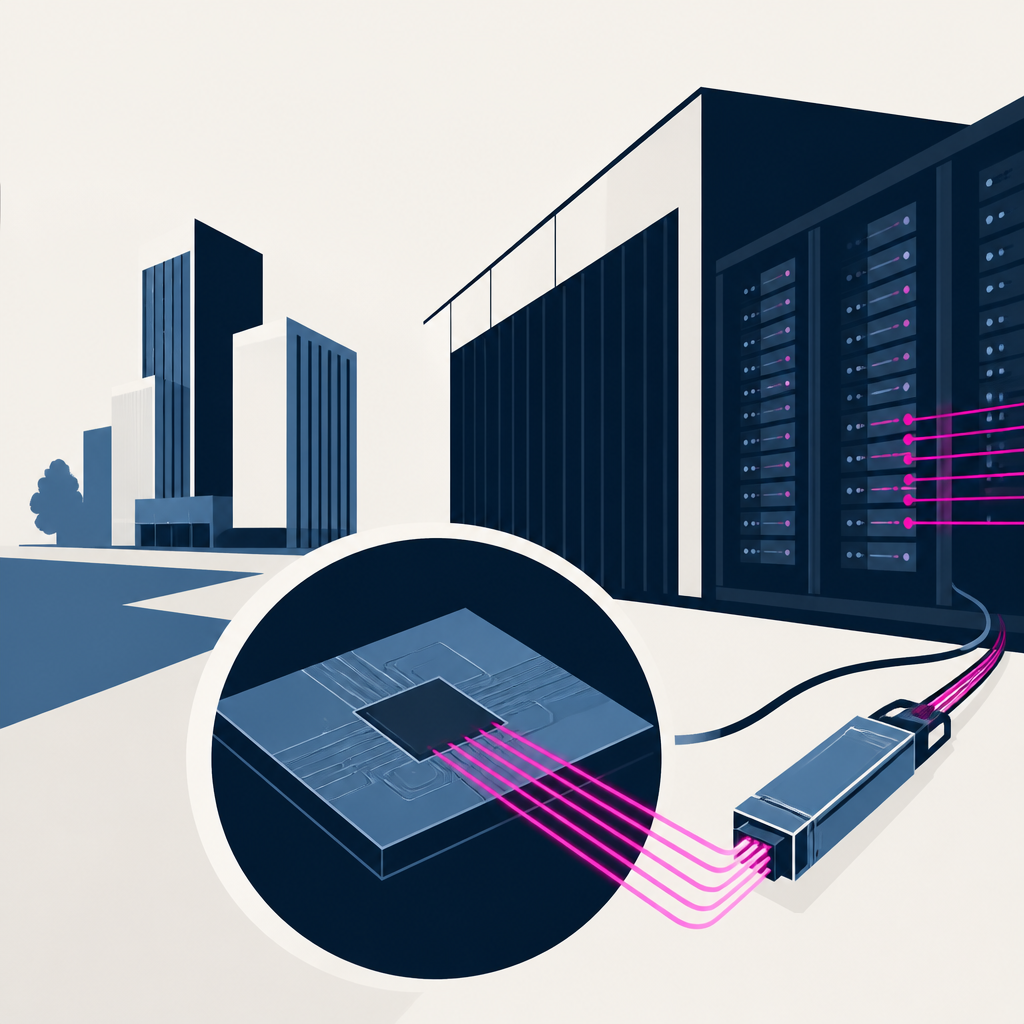
Solinide just raised €4 million to turn its photonic chip tech into a real product. The pitch: move more data in data centres without burning more power.
Based on reporting by Startups Magazine, Startups Editorial — read the original for the full story.
Summary, retelling and take written by AI under human oversight; images are AI-generated illustrations. How we work · Report an error
Solinide Photonics has closed a €4 million seed round to push its silicon nitride photonic integrated circuits from lab tech toward commercial use. The company says the money will help it get ready for scalable manufacturing and bring its patented approach into data centres.
That matters because AI infrastructure keeps demanding more data movement between chips, and the power bill is already a problem. Solinide’s answer is a chip-based system that can replace racks of separate lasers with one device generating dozens of precise wavelengths at once. In theory, that means more data over each fibre using less electricity, with less cost and a smaller footprint for every optical link.
The round was co-led by Navigare Ventures and PSV Hafnium, with Chalmers Ventures, Turbine Capital, Norrsken Evolve and Almi Greentech Fund also backing it. Solinide says the wider group brings industrial and company-building experience, which should help as the startup tries to move from technology readiness to commercialisation and market adoption.
Marcello Girardo, Solinide’s CEO, said the company has already shown its microcomb technology can meet datacentre-link performance needs and can be integrated into a rack-mounted product. The next step is less glamorous and more important: commercial readiness, launch, and actual deployment.
There’s also a regional angle here. Much of the AI and datacentre photonics supply chain sits in the US and Asia, and Solinide wants to strengthen Sweden and Europe’s position in semiconductor and photonics hardware. If it works, the upside reaches beyond AI data centres into telecommunications and other growth markets. If it doesn’t, it becomes another elegant answer to a very expensive problem.
My take — AI-written commentary, not fact-checked reporting
This is the kind of hardware bet Europe should make more often: boring on the surface, strategic underneath. Everyone loves to talk about AI models, but the real choke points are often the chips and the plumbing around them. A startup that can shave power off optical links is not sexy, which is exactly why it matters.
Read more about this at: Startups Magazine
Related stories
 Salience Labs secures $125M to scale photonic chips for AI data centres
Tech.eu · 5 days ago ·
1
Salience Labs secures $125M to scale photonic chips for AI data centres
Tech.eu · 5 days ago ·
1
 Lightspring raises €3.5M to tackle photonic chip manufacturing bottleneck
Tech.eu · 4 weeks ago ·
37
iPronics: Spanish Photonics Startup Raises $125 Million From Nvidia and Others
Trending Topics · 1 month ago ·
31
Lightspring raises €3.5M to tackle photonic chip manufacturing bottleneck
Tech.eu · 4 weeks ago ·
37
iPronics: Spanish Photonics Startup Raises $125 Million From Nvidia and Others
Trending Topics · 1 month ago ·
31