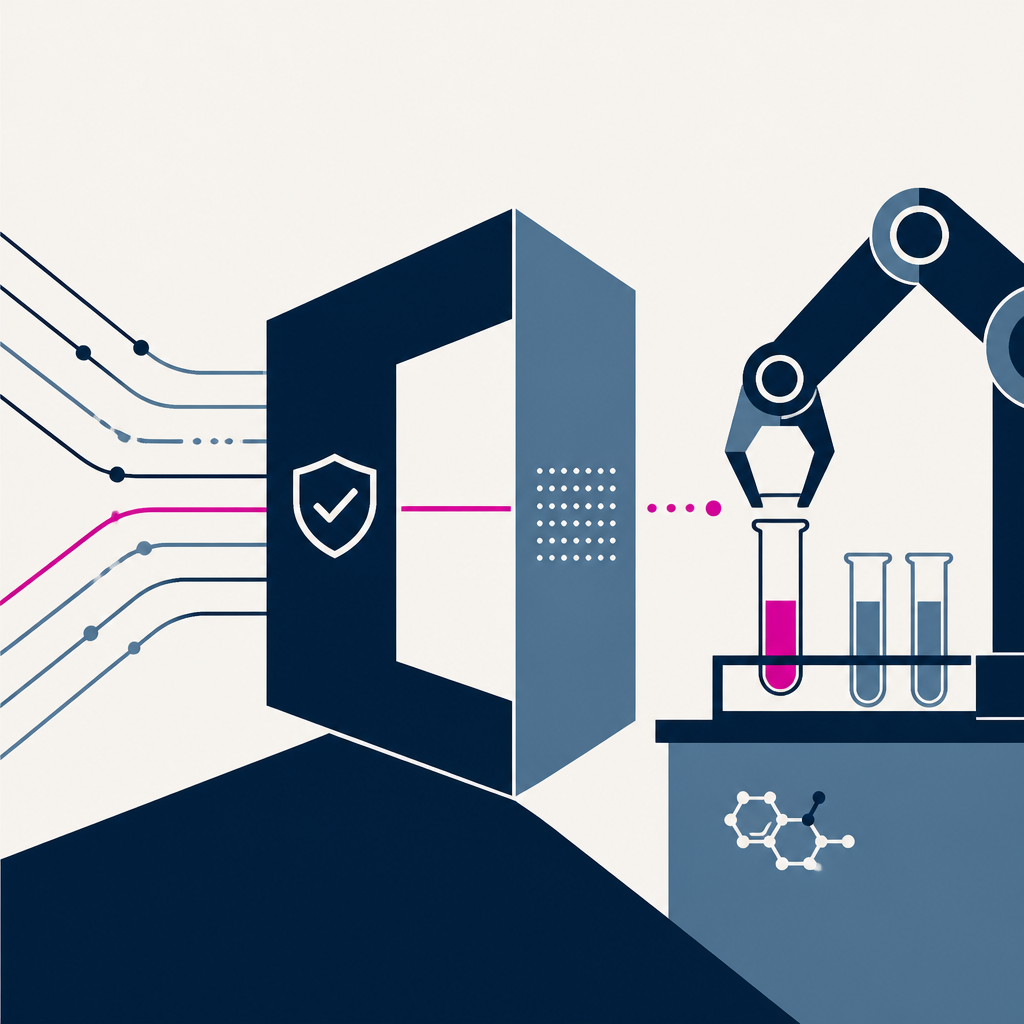
Imago Platform used a graph database to fix inaccurate AI answers in a knowledge-management app for warranty-policy lookups. It started after joining the Neo4j Startup Program, and the AI then produced correct results repeatedly instead of failing to reach 100% accuracy on its first client. The company now connects CRM/ERP systems with documents and email so agents can retrieve information in context and be traced step-by-step for observability.
Cerebras CEO Andrew Feldman said AI is nearing a point where it can function as a home appliance with personal assistants that run both on-device and via the cloud. He referenced Instinct, a startup valued at $10 billion, and said the assistants would be able to access credit cards. This framing shifts the focus from general AI use to local “agent” assistants in households, which would require security perimeter-style controls and could enable purchases for users.
The UK launched the Refugee Venture Fund to invest in high-growth businesses founded by refugees. The fund starts with £300,000 and plans to increase it to £500,000, aiming to invest £50,000–£100,000 per company. It will build a track record with early investments before moving to a planned £10 million fund focused on refugee-founded startups.
Simon Willison’s Weblog·22 hours ago·
20
● 2 sources
Anthropic redesigned its source-control system by building Scion and replacing Git after code-change volume increased. In May 2026 it averaged about 2,500 merged code changes per day, rising to over 30,000 per day by September. The switch introduced the “Antique” code review system and a new migration completed in five months.
Cerebras CEO Andrew Feldman pushed back on AI doomsday warnings at TechCrunch Disrupt 2026. He pointed to the idea that AI could kill all of humanity by the end of the decade. He argues leaders should emphasize AI’s upside while still being thoughtful and pushing for reasonable regulation, and he ties some negativity to data-center siting and community engagement failures.
Anchor Browser, integrated with Amazon Bedrock AgentCore payments, enables AI agents to automatically complete HTTP 402 Payment Required transactions for x402-protected APIs and web pages. The workflow uses an x402 payment exchange where the service enforces spending limits and authorizes payments inside a dedicated PaymentSession created for each browser session. As a result, agents no longer need to build or manage cryptographic payment signing, wallet/key handling, and retry logic in their runtime, and payment attempts become observable via CloudWatch.
Character.ai filed for bankruptcy after its AI chatbot business burned cash with high costs, low revenue, and major legal expenses. In 2024 it spent $13.8 million per month on AI compute, then fell to $10 million per month in 2025. The filings show the company shifting to cheaper inference and open-weight models, cutting staff, and adding ads/in-app purchases to reduce the operating loss while it continues running the platform during bankruptcy.
Deliverance AI introduced a “control plane” meant to govern enterprise AI agents in customers’ own environments for business continuity and sovereign control. The company says a joint HPE solution will let customers deploy its full-stack agentic operating system into their own environment within 90 days. This shifts deployments toward customer-controlled boundaries with policy enforcement, audit trails, and model-fallback routing plus plans for portable agent assets if suppliers change.
Flox Intelligence is building edge AI wildlife-deterrent devices for trains, airports, and roads that sense nearby animals and emit species-specific sounds. It expects to end 2026 with about $1.5 million in revenue. The company is expanding from roughly 150 live devices toward several thousand via a $10 million Series A, strengthening its broader software and AI system beyond wildlife.
Amazon explains how to manage AWS Marketplace Private Pricing Offer access for Amazon Bedrock across many AWS accounts by subscribing once in a central AWS Organizations management account and activating License Manager managed entitlements distribution. It provides two activation paths, including a lightweight one-time script that must be re-run with --apply --confirm-account-id ACCOUNT_ID to activate organization-wide grants. Teams can use manual one-time activation for trusted received licenses or deploy CDK automation that automatically verifies sellers, creates distributed grants, and activates them when they reach ACTIVE or WORKFLOW_COMPLETED so negotiated Bedrock pricing applies without console checking.
Satlyt, founded by a former Google and SpaceX product manager, raised an $8 million seed round to run AI models on satellites and ship its software on a SpaceX rocket this week. The company says its onboard use of DeepMind’s Gemma reduced transmission sizes related to software errors by more than 60%. Satlyt will focus on AI-driven onboard decision-making to cut downlink costs and test protocols for running cloud-style compute in orbit, with plans to attempt a shared compute system across two satellites next year.
Orca Security built Discovery AI on Amazon Bedrock to let users ask natural-language questions that are converted into Orca’s Sonar structured security queries. The company reports cutting query costs by 90 percent, input tokens by 93 percent, and latency by 75 percent versus its initial baseline. As a result, Orca can handle thousands of queries per day with about 15-second response times and reduce the need for users to know exact model names, operators, and schema navigation.
SpaceXAI’s Grok 4.7 was made available on Amazon Bedrock and used to build and test a tool-calling agent for long-horizon tasks. Grok 4.7 matched 18 correct runs out of 18 at the xhigh reasoning effort level and 15 out of 18 at low, with mean output tokens rising from 1,184 to 9,147. The results show you can tune the Grok 4.7 reasoning effort per request to balance cost (tokens) against agent accuracy, including for production monitoring.
Consus launched as an LLM gateway that routes AI requests through ITAR-restricted, CUI-compliant infrastructure and enforces compliance at inference time. It said it completed a FedRAMP equivalency audit against the 410 FedRAMP High controls. The change is that companies handling sensitive data can connect tools like ChatGPT/Claude or open-source agents through one endpoint with model names that include compliance suffixes, while Consus avoids storing prompts or completions.
Amazon SageMaker AI described kernel-level optimizations for fused mixture-of-experts (MoE) inference on NVIDIA H200 via vLLM, including a Hopper-specific fused-MoE change, backend routing tweaks, and Triton JIT recompilation fixes. The launch reports a 2–4% end-to-end throughput improvement on H200 from the “swap-AB for WGMMA utilization” optimization. These changes are integrated into AWS’s Large Model Inference container on SageMaker AI and into vLLM releases (for example, 0.24.0+ and 0.22.0+), improving throughput and time-to-first-token.
TheCUBE Pod discussed rising public skepticism about AI while focusing on how IBM is trying to build competitive advantage through an enterprise AI operating model and how the market is shifting toward inference. Marvell set a fiscal 2031 revenue target of $70 billion to $90 billion. The emphasis changes from training to inference and from model differentiation to infrastructure and orchestration built on Red Hat-based hybrid capabilities for deploying agents and managing AI.
TechCrunch Disrupt 2026 announced its Disrupt Stage lineup for October 13–15 at Moscone West in San Francisco, covering AI, robotics, transportation, social media, biotech, and venture capital.
European startup funding rebounded in September to €15.8 billion, with Britain taking nearly half. September’s total was almost five times August’s €3.2 billion, while funding rounds rose from 165 to 300. The surge is largely driven by a few mega-deals—especially Mistral (€3 billion) and Nscale—so excluding them the figure drops to about €9.9 billion and the headline totals become less informative.
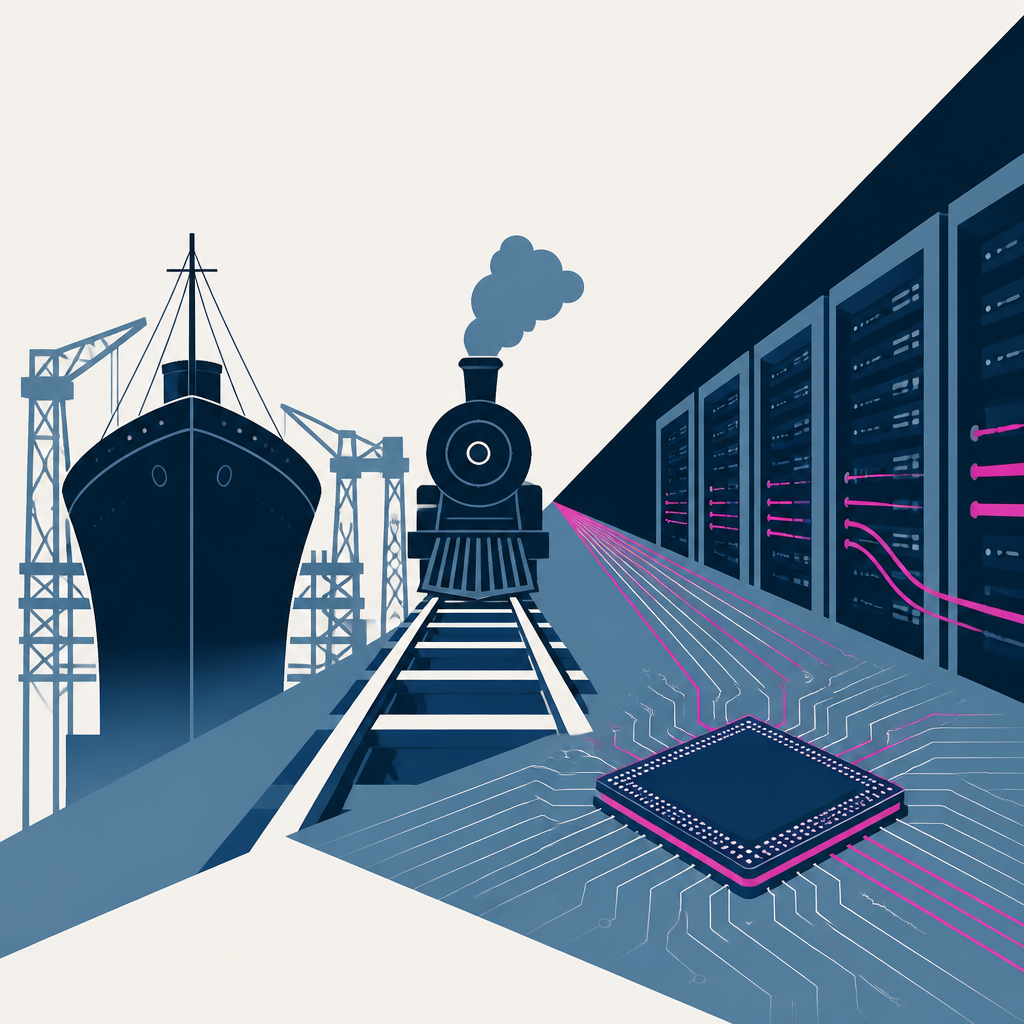
A VC argued that the shift enabled by AI depends on infrastructure, using the Industrial Revolution’s steel-ships-and-steam-engine buildout as the analogy for why countries gain long-term advantages. He pointed to 1890 as the moment when 80% of the world’s ships came from British shipyards and said that, similarly, models only win if they have enough compute. This reframes AI competition toward data-center capacity and execution by governments and industry rather than individual applications, with China’s expansion versus U.S. buildout needs becoming the key concern.
NVIDIA announced RTX Spark laptops and software updates, designed to bring gaming-PC and local AI agent capabilities together with RTX and CUDA on a single platform.
IBM Research demonstrated an open-agent-factory workflow that uses LLM agents to iteratively propose, verify, and synthesize alternative hardware designs for quantum error correction decoding. It reported a 52-times speedup versus the baseline in high-level synthesis estimates while spending about $26 in inference cost, and contrasted that with $299 for a proprietary configuration under a similar 100-hypothesis budget. Lower inference costs then enabled scaling the search (e.g., 100 to 200 hypotheses) and shifting effort toward broader verified exploration rather than just producing a single best design.
Open Intelligent UI released a launch demo where a chat agent renders explanations, comparisons, tools, and maps directly inside the conversation. The launch film runs for 54 seconds. As a result, user requests can trigger either text answers, native components, or sandboxed interactive UIs, with visualization routing handled by Jev and tables/charts produced by A2UI and Open Generative UI.
PostHog says it has built 10 AI products and learned that AI features can hurt product quality, so it should be added only when it targets real user jobs. The company reports its install wizard completes 2 hours of work in about 8 minutes and that it boosts paid conversion 5x and activation 2x. It changes its product approach toward agent-first workflows, shared AI infrastructure, reliability/observability, and continual context/tooling updates as models upgrade.
Perplexity Computer launched Projects so people and AI agents can collaborate on long-running tasks in shared workspaces backed by a persistent, concurrent, traceable Git-style repository. Submissions have a median latency under 1.7 seconds (p99 under 8 seconds) with stale-base conflicts forcing the losing writer to replay and resubmit on the new head. This replaces per-session isolation with month-spanning version history and automatic state convergence while keeping large files and parsed document text managed outside the repository.
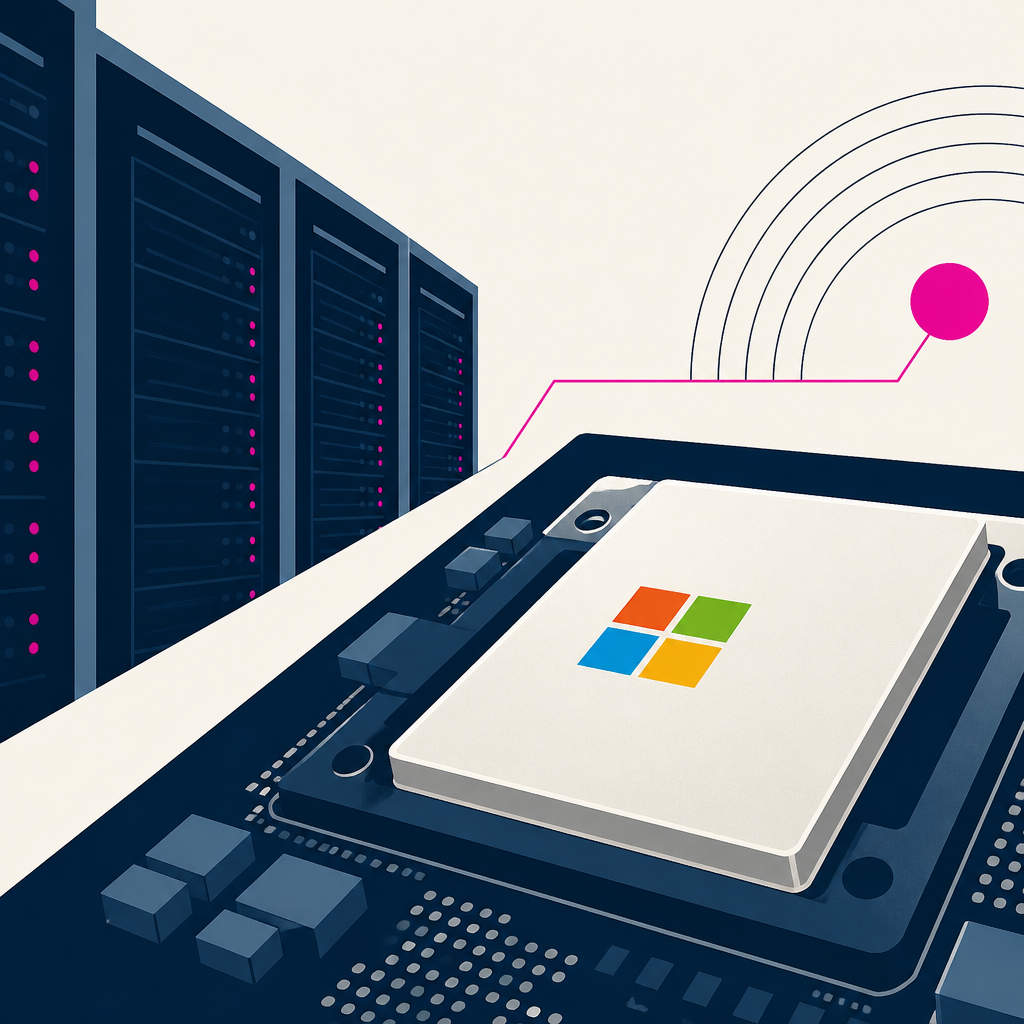
Microsoft is rolling out its next-gen Maia chips, with Maia 300 aimed at inference, for deployment in its server farms. Maia 300 is expected to deliver 40% more tokens per megawatt than leading GPU-based systems. As a result, Microsoft plans to increase capacity by stocking multiple gigawatts of its own chips and shifting more inference workloads to them.
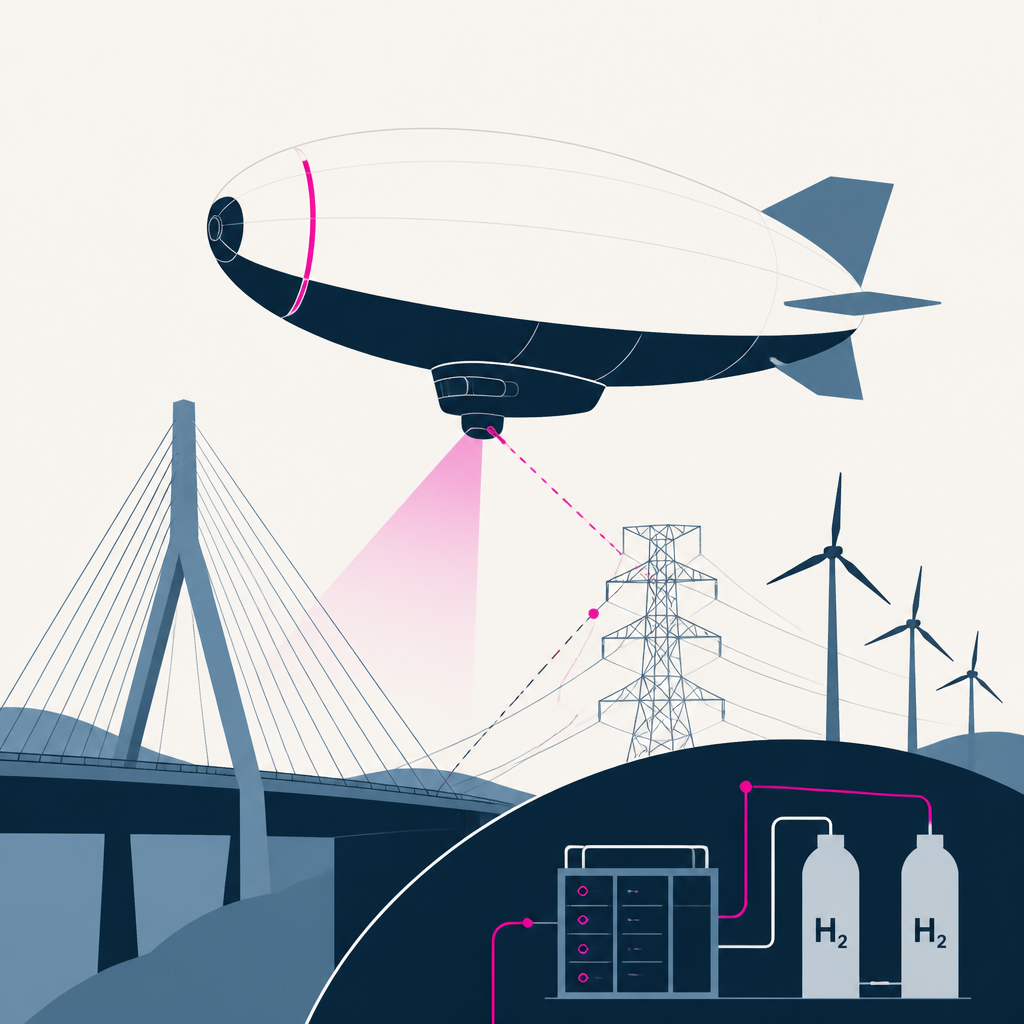
HyLight raised €13 million to industrialise its autonomous hydrogen-powered airships used for aerial inspection of critical infrastructure. The funding will support scaling its fleet from four to 15 aircraft within a year and recruiting 50 employees. It shifts from prototype development to faster commercial deployment, expanding operations and AI data analysis capacity across Europe.
DropForce Systems, a Vienna startup, raised investment for its STURM 01 FPV quadcopter and mobile “production cell in a case” concept for on-site assembly instead of ordering new drones. It secured a six-figure sum via BarnVentures and LNX GmbH, with BarnVentures taking a 20% stake. The funding changes its next steps by enabling pilot-customer testing of the drone and production cell while it prepares a patent and considers additional funding or a strategic partner.
The Official Microsoft Blog·1 day ago·
47
● 5 sources
Microsoft is putting Azure Maia 200 into production and planning to expand its Azure Maia chip family to multi-gigawatt deployments starting in 2027. Maia 300 is expected to deliver 40% more tokens per megawatt than leading GPU-based systems. Maia will become Microsoft’s primary inference system across Microsoft products and services, with Maia 300 production deployments beginning in 2027 to support long-context, lower-latency and multi-step agent workloads.
Apple announced the HomeView smart home hub at its “Welcome Home” event and released a reveal video for the device. It is a 7-inch square display priced at $299. It adds Siri AI control, video calls, HomeKit Secure Video camera footage, and includes a Matter controller and Thread Border Router.
Alchera Technologies, a Cambridge-founded AI and data startup for transport network planning, raised £2.7m in seed funding. Maven Capital Partners led the round with a £2m investment, alongside backers including the British Business Bank-linked South West Investment Fund, Innovate UK’s Investor Partnership, and existing investor Cambridge Applied Research. The funding expands its platform’s use by local authorities and transport operators, supporting faster analysis of road and bus networks from weeks to seconds.
Maven Capital Partners led Maven’s £2 million investment in Alchera’s £2.7 million seed round alongside Innovate UK’s £700,000. The funding will support Alchera’s use of machine learning to predict M25 traffic up to 2 years in advance for roadworks planning. Alchera plans faster product development and wider deployment to more councils and highway operators, targeting growth in its recurring customer base.
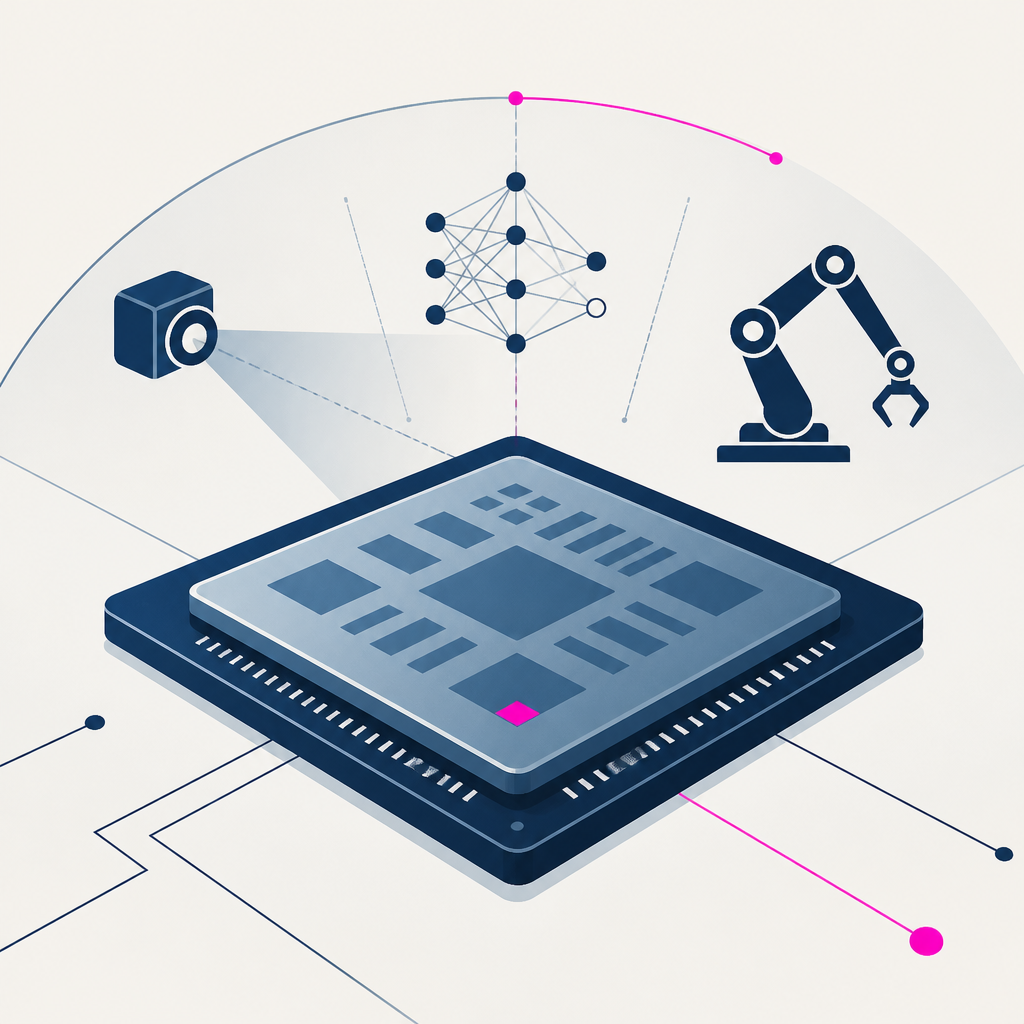
Ubitium raised $14 million in seed funding to develop a universal reconfigurable processor for physical AI machines that sense, run AI inference, and control movements. The round was led by Ibex Investors and brings Ubitium’s total seed funding to $18 million since it began in 2024. The company will use the money to push its UB410 processor toward commercialisation, with tape-out and evaluation-unit delivery planned for 2027.
Ubitium raised a €14 million seed round, led by Ibex Investors, to build drone-focused onboard intelligence on a unified chip architecture. The company’s seed funding totals €18 million since launching in 2024, with evaluation units for its next-generation UB410 planned for 2027. Ubitium will shift from its UB108 demonstration silicon to developing UB410 evaluation hardware and pursuing onboard sensing and AI workloads at the physical edge.
CarbonFarm raised €7 million in an oversubscribed Series A to expand its rice-focused MRV technology and project services aimed at cutting methane emissions from rice cultivation. It said improved water management can reduce emissions by up to 50% and water use by 30% without affecting yields. The funding will expand its operations to additional countries and scale up technology and project development to implement, finance, and measure decarbonisation across more partners.
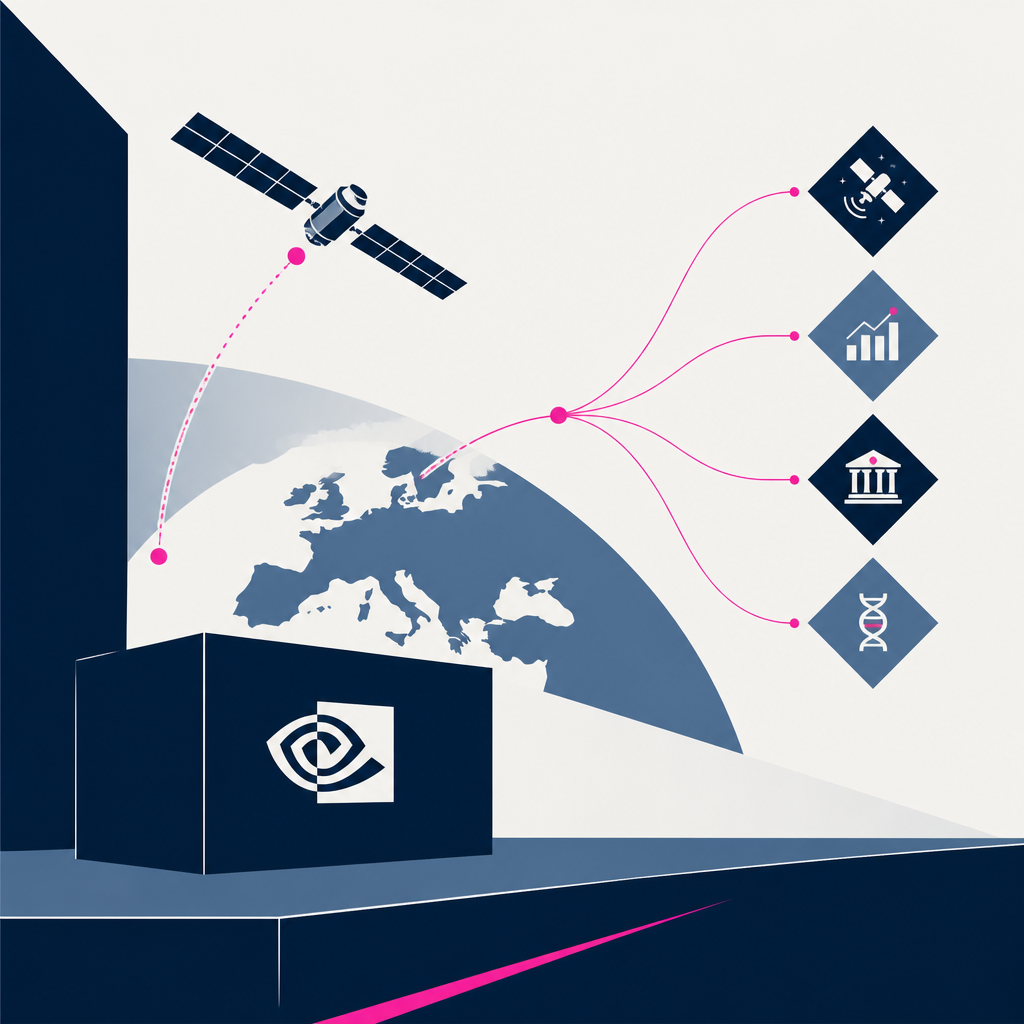
France-based companies are deploying agentic computing across space, finance, public services, and research using NVIDIA technology and models. Altair-1 launched this month as the first satellite in a $1 billion, 50-satellite constellation with on-board autonomous capabilities. The rollout expands from infrastructure and open model production into operational systems like edge satellite AI, sovereign workplace tooling for public agencies, and agent-building platforms for employees.
Exodus is launched to help move applications to Google Cloud Run using a coding agent that checks an app locally, compares current vs Cloud Run costs, and proposes required changes. It includes 50+ playbooks and can make the migration task-by-task or design a new Cloud Run app. As a result, developers can upgrade apps to Cloud Run with an agent-guided workflow rather than doing the migration manually.
Intel CEO Lip-Bu Tan and Broadcom CEO Hock Tan said capital access and AI ROI concerns could constrain the AI sector while also pointing to ongoing compute shortages. Intel disclosed it can meet only 50% of orders for AI-related CPU demand. The executives expect shortages to ease by 2028 or 2029 but warned the demand–supply imbalance could persist into 2030 and that investors may need more realistic expectations.
Every AI story that matters,
in your inbox by 8am.
TLDRocket reads all relevant sources, removes duplicate coverage, and summarises the
day in two minutes. Follow companies and topics for alerts, or get the
briefing in Slack. Free, no spam, unsubscribe anytime.
Reading TLDRocket needs no cookies, and the readership counts we rely on come from
our own cookieless analytics. Google Analytics is the exception: it sets cookies and
reports to Google, so it stays switched off until you allow it. You can change your
mind any time from “Cookie settings” in the footer.
Strictly necessary
Session security and form protection (tldrocket-session,
XSRF-TOKEN, 2 hours). The site cannot work without them,
so they need no consent.
Always on
Google Analytics 4 (_ga,
_ga_<id>, up to 2 years). Measures which
stories and sections readers use. Google acts as a third-party processor and may
store the data outside the EU. No advertising, no profiling, no data sold.