ParakeetAI launched its second version, ParakeetAI 2.0, to help job seekers practice interviews with an AI interviewer and interview transcription features. The first mock interview is free. The platform adds a question bank and real-time listening to the actual interview to draft answers.
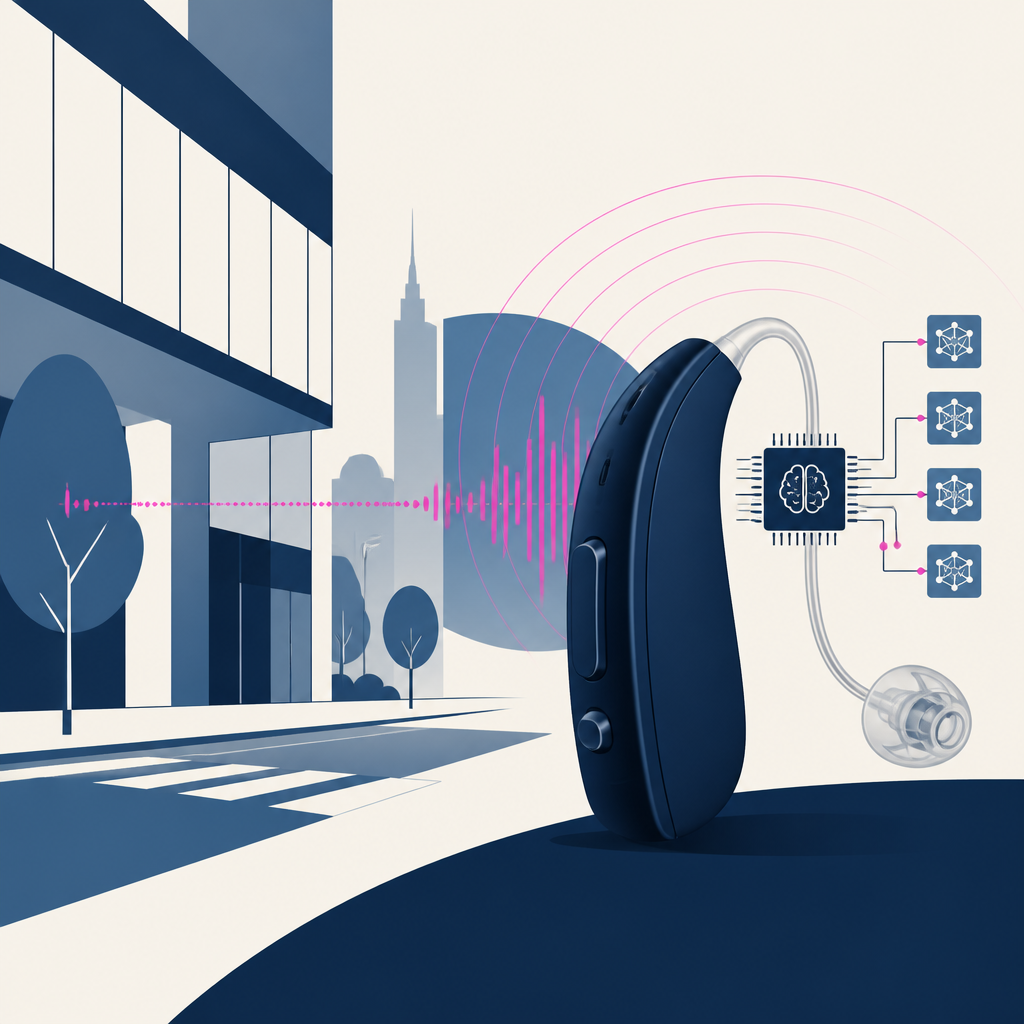
Starkey unveiled the Omega AI+ hearing aid as the successor to its prior Omega AI model, positioning it as a more continuous, wear-all-day option for improving hearing in noise. Its chip runs four deep neural networks at once, and the company says the new device can last 51 hours on a charge. The update expands AI features to stay enabled by default (Edge Mode), adds support for Auracast audio broadcasts, and broadens the lineup to more hearing-aid styles including smaller custom devices.
Bit Cloud introduced Bit Cloud 2.0 and Hope, its built-in AI builder, to help developers move from an AI prompt to apps teams can run, review, and maintain. The program emphasizes reuse of existing components such as authentication and integrations to avoid repeated work and lower token costs. It shifts app development toward shared infrastructure and collaboration, so multiple roles can build on the same foundation and use mobile workflows with staging previews, build checks, and code review.
Google launched Guided Vision in Gemini Live on compatible Android devices to provide real-time audio descriptions for items you point your camera at. The feature is launching “today.” It changes Gemini Live on Android by letting the AI read fine print and describe surroundings or objects through shared camera input, aimed at people who are blind or have low vision.
OpenAI launched Dots at DevDay, its always-on personal agent that can message proactively and orchestrate tasks across Codex/ChatGPT Work. The Pro 500 plan prices usage at 25x the $20 Plus plan multiplier. Dots is integrated into the ChatGPT sidebar and relies on tool connections for capabilities rather than user-added markdown personality files.
Legato launched its AI-based hearing glasses, Legato Frames, for purchase. The frames start at $999 and have 10–12 hours of battery life. The product adds on-device voice-vs-noise separation with dual speakers and supports Bluetooth streaming and prescription lenses, aiming to reduce cost and stigma versus traditional hearing aids.
Microsoft CEO Satya Nadella laid out a revised vision for Copilot to invite-only enterprise customer leaders, positioning it as an “OS for work.” The update adds coding and agent capabilities and brings the full power of Office into Copilot for the first time. Copilot shifts from a general assistant toward deeper, work-platform integration that changes how employees use Microsoft tools.
OpenAI MCP Extensions provides ChatGPT-specific capabilities for MCP so developers can build plugins that appear like native features. It adds support for sidebar entrypoints and file extension handlers that render custom viewers, plus 3 more extension types, including composer mentions and extended forms. Developers can install the Bits & Bolts Remote plugin and use the specified SDKs (@openai/mcp-extensions for TypeScript and openai-mcp-extensions for Python) to integrate these features.
Curiosity.ai rebuilt its entire website and design assets by using AI to restyle and redraw the site in multiple branded visual directions, then pick a winner via a live comparison game. The original rebuild covered all 67 pages, with the winning design rolled out on September 28 and additional style rounds used through September 29. The process replaced the prior brand with a monochrome scheme using one electric blue and generated design rules, and it removed the non-winning variants and their tooling.
Instinct’s harness is described as being reverse-engineered from a single-threaded chat experience that connects a main chat agent to task execution tools, including sandboxed computer use and background automation.
The piece says the per-user sandbox/VM cost is about $0.13 per hour.
It argues these design choices change the user experience toward faster, less interruptive task completion and persistent context, while raising the question of how Instinct monetizes if it stays free.
Barclays is expanding its collaboration with Anthropic to roll out Claude across its global operations for software development, legacy modernization, and customer support. Barclays expects Claude Code adoption to reach 50% of its developer population by the end of 2026, rising to a majority of software engineers in 2027. The rollout increases AI-assisted knowledge searching and email processing, including more than 16,000 colleagues using a Claude-powered assistant handling over one million searches and a platform processing about 120,000 emails per day.
Ancher launched Ancher 2.0 as an AI knowledge workspace that captures what users read, watch, and save and turns it into searchable knowledge and deliverables. The release is “Launching today.” It changes how users turn stored sources into research briefs, reports, presentations, and content in their own voice instead of organizing everything into folders.
Never Boring AI launched as an AI agent for LinkedIn that interviews users, drafts posts in their voice, and schedules them automatically. It supports English and French. This changes content planning by letting users delegate interviewing, writing, and posting to the tool instead of doing it manually.
Oogwai Beacon launched today to perform an Answer Engine Optimization audit by testing what search engines and AI assistants say about a site’s category using unbranded buyer questions. It reports results with inputs including ChatGPT and Gemini (and Claude for the full audit), with 20,000+ developers cited as using the company’s Context.dev API. The tool adds two checks—whether AI crawlers can read a site and whether engines recommend it—then lists specific gaps and fixes.
Cursor launched Remote Lite, letting you control the Cursor agent on your computer from your phone. It is free and MIT-licensed. Code still runs on your computer via a Cloudflare tunnel, with remote support for local, SSH, and agent windows plus push notifications when the agent needs input.
Communicate launched AI chatbot customer support tools that build support agents from help docs, files, and past replies. Plans start at $19/month. It adds a shared inbox with human handoff, website chat, and API or MCP connectivity, with a Product Hunt offer for 50% off the first monthly payment through October 9.
Crowny launched today as a MacBook notch app that puts functions like AI agents, music, timers, calendar, reminders, clipboard, files, games, and water reminders in the notch. It costs $5 for the first few users. The app changes how you access these tools by enabling quick interactions directly from the notch, including prompts for Claude Code, Codex, or Grok.
Every AI story that matters,
in your inbox by 8am.
TLDRocket reads all relevant sources, removes duplicate coverage, and summarises the
day in two minutes. Follow companies and topics for alerts, or get the
briefing in Slack. Free, no spam, unsubscribe anytime.
Reading TLDRocket needs no cookies, and the readership counts we rely on come from
our own cookieless analytics. Google Analytics is the exception: it sets cookies and
reports to Google, so it stays switched off until you allow it. You can change your
mind any time from “Cookie settings” in the footer.
Strictly necessary
Session security and form protection (tldrocket-session,
XSRF-TOKEN, 2 hours). The site cannot work without them,
so they need no consent.
Always on
Google Analytics 4 (_ga,
_ga_<id>, up to 2 years). Measures which
stories and sections readers use. Google acts as a third-party processor and may
store the data outside the EU. No advertising, no profiling, no data sold.