
Billion-dollar tech company Starkey unveils its newest hearing aid—saying the most human AI innovation may be one you wear
Fortune Sydney Lake
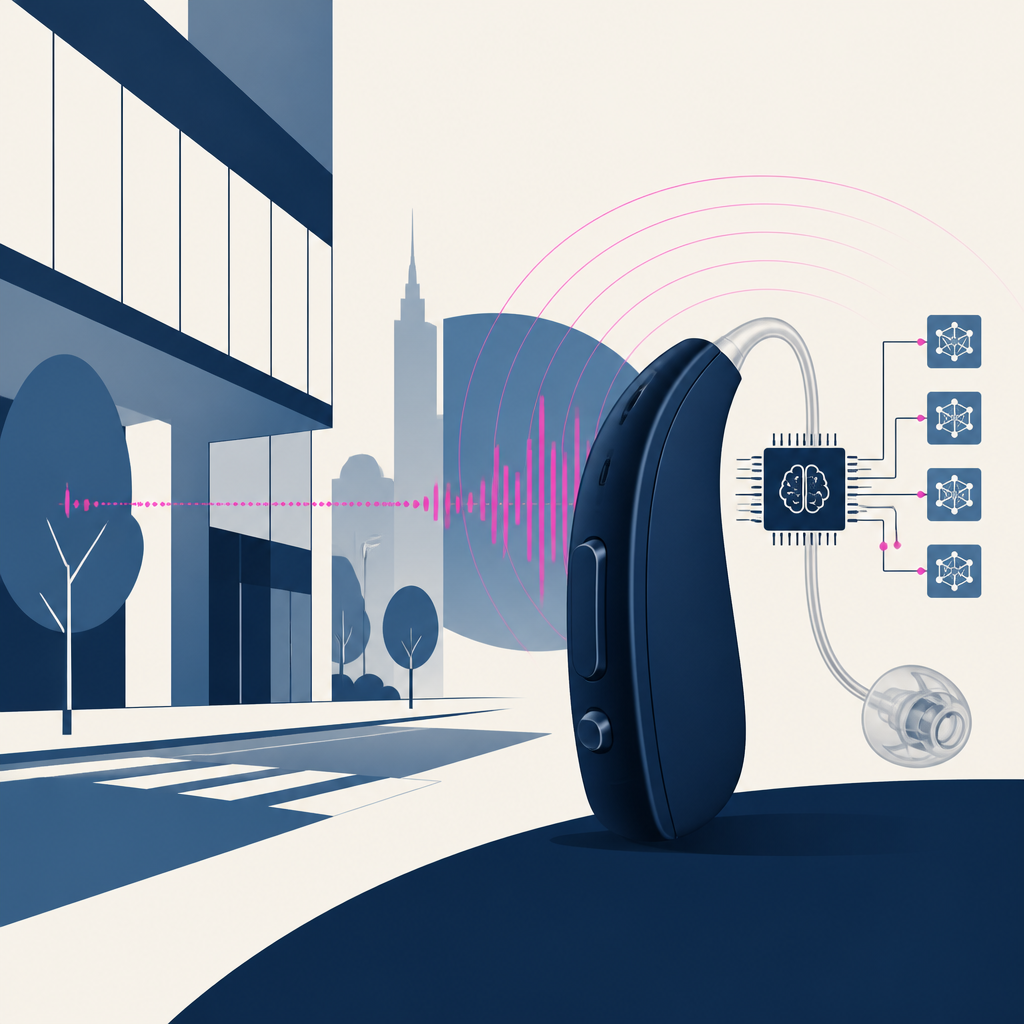
Starkey just launched Omega AI+, a hearing aid with always-on AI and new sleep tracking. It’s another sign hearing tech is turning into all-day wearables, not medical gadgets you stash away.
Based on reporting by Fortune, Sydney Lake — read the original for the full story.
Summary, retelling and take written by AI under human oversight; images are AI-generated illustrations. How we work · Report an error
Starkey has rolled out Omega AI+, its newest hearing aid and the follow-up to last year’s Omega AI. The company, which describes itself as a billion-dollar hearing tech business, is leaning hard into a simple idea: the most useful AI may be the kind people wear without thinking about it.
The pitch starts with the size of the problem. More than 1.57 billion people worldwide experience hearing loss, and the World Health Organization expects that figure to climb past 2.5 billion in the next 25 years. Starkey is trying to position itself not just as a hearing-aid maker, but as a company building for a much larger and more visible health issue.
Omega AI+ takes the AI story further than its predecessor. Starkey says the new chip runs four deep neural networks at the same time, with each one handling a different slice of the audio mix, from speech to background noise. It also adds what the company calls the world’s first DNN dual compressor, designed to make speech clearer without flattening sound into something unnatural. And the AI-driven Edge Mode no longer has to be switched on by the user.
That matters because Starkey wants these devices to work quietly in the background. The company says users can move through noisy settings — a windy walk, for example — and stay locked onto the person they’re talking to without constantly fiddling with the hardware. Dave Fabry, Starkey’s chief hearing health officer, said many patients want the benefits of AI at a subconscious level, with as little device interaction as possible.
Starkey is also pushing the products beyond pure hearing correction. Omega AI+ supports Auracast, adds sleep tracking, and brings AI features to more styles, including the company’s smallest custom hearing aids. It also keeps the remote-adjustment telehealth feature, shows battery life with LED lights, warns about wax buildup, can alert loved ones if it detects a fall, and is waterproof. Starkey says battery life reaches 51 hours, and that the devices are designed for 14 hours a day.
The broader message is clear: Starkey wants hearing aids to compete with the wearables crowd, not the pharmacy shelf. Apple’s AirPods and other gadgets are part of that conversation now, but Starkey’s argument is that discretion and all-day wear still matter most. In other words, the future of hearing tech looks less like a medical device and more like something people forget they’re wearing, which is probably the point.
My take — AI-written commentary, not fact-checked reporting
This is the right direction, and also the least glamorous one: make the thing disappear into daily life. The wearables race keeps getting sold as smart rings and wrist candy, while the boring device that helps people hear and actually wear all day keeps doing the real work. Funny how the future keeps showing up as something nearly invisible.
Read more about this at: Fortune