Firecrawl announced it closed a $75 million funding round for its AI-focused web scraping platform. The Series B round was led by Los Angeles venture firm Smash Ventures. The funding will be used to enhance its new Alexandria cloud service by adding more third-party data providers and launching a self-service licensing system soon.
jev-seo launched a free Rust CLI that audits websites for SEO/GEO checks like crawling, meta tags, schema validation, robots, and sitemaps. Semrush and Ahrefs charge $130+/month for similar mostly deterministic work. It removes subscriptions and paid API keys for core auditing, while optional Jev-powered semantic scoring and an MCP server require a free API key.
LaterOn.email launched LaterOn v2, a comprehensive email platform with agentic workflows for sending and receiving emails. It is launching today. The update adds an agent that monitors relevant messages, drafts context-aware replies, follows up on non-responses, and closes threads when goals are met.
OpenClaw chief architect Vincent Koc described how the project is shifting from single-agent, single-task demos to a system where many agents share sessions, context, and control across machines. In his own setup, he reported running about 60 to 70 agents across 6 to 7 machines and averaging 5B to 10B tokens per day (peaking at 54B in a single day) while deliberately stress-testing the architecture. The result is an agent “multiplayer” approach with a shared control plane, persistent intent and memory, interchangeable remote compute via Crabbox, and a focus on security and model routing to manage cost and risk.
Kaiku is launching as project management software for teams running work through AI agents, including an AI-focused task tracker and wiki. It includes built-in MCP servers for Claude Code and Cursor. It changes how agent-driven work is managed by letting agents use existing tracker APIs and by recording each agent run’s cost on the issue.
JetBrains launched JetBrains Air as an open system for agentic software development that spans its IDEs and surrounding tooling. The company says it is taking “one of the most significant steps in our 26-year history.” JetBrains Air consolidates its existing agent products—Air in IDEs, Air Teams, and Air Governance—while keeping an IDE-centered workflow for reviewing and verifying agent-generated code.
Anthropic merged Claude’s chat and Cowork into one interface that routes multi-step tasks in the same thread instead of forcing users to pick a mode, starting with Pro and Max subscribers. In head-to-head tests, ChatGPT’s Work mode completed API research in 1 minute 17 seconds with 649 output tokens while Claude’s merged app took 1 minute 44 seconds with 1,042 output tokens. Speed favors ChatGPT, while Claude’s merged experience provides more detail (more sources, extra context, and method notes), with both matching accuracy across all tests.
Strands Evals SDK and Amazon Bedrock AgentCore Evaluations added skill-focused evaluators to measure whether skill-equipped agents choose the right skill and follow its prescribed steps. The Skill Instruction Following evaluator rates each invoked skill on a five-level scale and uses evidence to detect skipped steps. Teams can use the per-skill results from recorded trajectories or OpenTelemetry traces to diagnose whether failures come from routing (wrong skill) or execution (partial instruction following) and turn those checks into deployment gates for regressions.
Rabbit is rolling out OS3, a standalone AI agent that runs without needing its R1 hardware. The cloud OS3 lets a single account add up to 5 devices. OS3 will run locally on Windows, Mac, and Linux and can be accessed via a desktop site, messaging apps, or the R1 device, with automatic selection of devices, files, apps, and AI models.
Meta is testing its Muse outbound-calling feature by routing some calls to human call-center agents rather than having Muse place the calls entirely by itself. The human-agent layer was referenced in a Sept. 16, 2026 beta expansion for US business outbound calls. As a result, Meta’s “AI agent” calls may involve human handling of user requests, raising internal concerns about privacy, user disclosure, and negative public perception before any public rollout.
Anthropic released Claude Opus 5.5 and reduced its API prices while adding a feature that can route certain requests to older models. The new model was priced at $4 per million input tokens and $20 per million output tokens, with cache reads dropping to $0.20 per million from $0.50. Pricing drops and efficiency improve, but some agent traffic may be handled by different model versions due to safety classifier rerouting, which can change downstream behavior and evaluation assumptions.
Paper2Agent converts academic papers plus their code and supplemental materials into interactive AI agents that can extract workflows and run the methods from the paper on new data. The team says it generated 22 validated AlphaGenome tools in about 45 minutes for under US$15 of compute cost. As a result, researchers can ask in plain English and get runnable analyses and visualizations, and multiple paper-derived agents can collaborate to propose and test hypotheses.
TechCrunch Disrupt 2026 announced five AI-safety sessions focused on deploying AI agents, enterprise AI, and real-world autonomous systems safely and securely. The event runs October 13–15 at Moscone West in San Francisco, with a pass discount deadline of September 25 at 11:59 p.m. PT. The agenda shifts founder focus toward safety, security, governance, testing, and robotics data pipelines rather than demos alone.
Jev was opened up to everyone, and builders shared examples of how they use it inside tools rather than as a general LLM. Grok 4.7 is reported as performing better than GPT-5.6-Sol and Opus 5 on benchmarks, but needing more tokens and losing cost efficiency. Claude Code reorganized projects into a single master chat in beta and will add AGENTS.md support via Claude Mods, while Speechmatics released an STT model with 25% lower cost than Deepgram Flux.
Heidi Health Trading announced it raised $340 million to expand its AI Care Partner aimed at increasing adoption of AI agents across health systems worldwide. The funding includes a $100 million Series C led by Blackbird and $240 million in growth investment from General Catalyst. The company says this will fund further growth and deepen deployment, building on products like Scribe and Evidence that support clinicians with documentation automation and research assistance.
NVIDIA released Isaac ROS 5.0, an open-source set of GPU-accelerated ROS packages for building robotics apps with AI agents. The update adds an agent-ready inference library for FoundationPose that speeds up object pose tracking by up to 5.5x. It expands support to ROS Lyrical and Ubuntu 24.04 and adds new skills/workflows plus Jetson platform coverage to move faster from development to on-robot deployment.
Parallel used GPT-6 Astra to let its agents research and synthesize labor-market data faster. The work took half the time and cost half as much as with prior models. As a result, Parallel could complete the same research task more cheaply and on a shorter timeline.
Gortex (a GitHub repo) shipped a local, no-dependency system that parses 257 languages into an in-process provenance graph and exposes it to coding agents via MCP, a CLI, and an HTTP/Web UI. It reports $168.69 in cost avoided (claude-opus-4) across 1,878 calls, saving 11,246,094 tokens against naive file reads. Developers can now use graph-based symbol lookups, call-chain and blast-radius queries, and AI-assisted PR review through the connected agents instead of repeatedly re-reading source files.
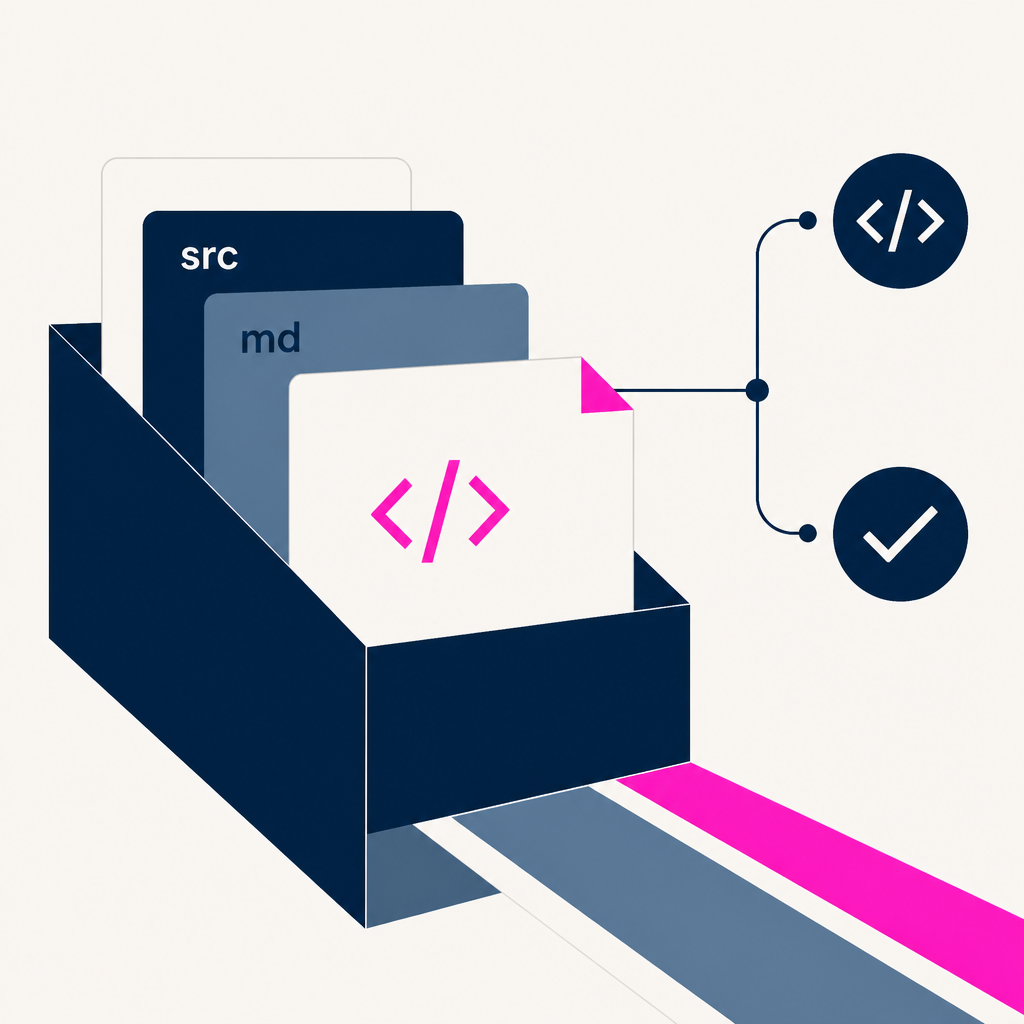
Carson Gross argues that agentic coding workflows should treat Markdown as source code by checking Markdown into /src alongside the code it describes, so it becomes the main basis for derived code and tests. He proposes a specific path change: creating a new /src/md directory to store curated, lower-level specifications instead of relying on ephemeral prompt sessions. This shifts teams from generating code/tests from prompts to maintaining and updating Markdown as a shared intent layer that humans and agents can both read in-repo.
Amazon blocked Meta’s Muse personal AI agent from shopping on Amazon.com after Meta failed to exclude Amazon from the experience and, Amazon says, Muse accessed accounts and appeared to capture credentials without approval. Amazon says people using Muse saw a popup on Sunday night stating continued access by an unauthorized AI agent violates its Conditions of Use. As a result, Muse users can’t complete purchases on Amazon through the agent unless Meta changes how it operates or Amazon reverses the block.
TypeSafe AI released the Jev AI model, which generates structured outputs from a predefined schema rather than writing text, and its API briefly stopped serving requests due to high developer demand. Jev reports end-to-end response times of 70 to 500 milliseconds and charges $0.042 per million input tokens with free output tokens. Developers are shifting toward schema-based “model routing” and other agent/tool workflows for faster, more type-safe automation, while independent verification and auditability of confidence and behavior remain open.
Meta patched its Muse macOS app after a zero-day vulnerability was found that could let attackers take control of the AI agent by redirecting transcription processing. The flaw, reported by Patrick Wardle, involved an undocumented Muse setting and could enable attackers who run local code to access Muse accounts. After the patch, Muse should no longer allow that setting to route transcription from Meta servers to an attacker-controlled endpoint, limiting account takeover risk.
Gamindo raised €1.4 million Seed funding for its corporate training platform that turns company content into interactive, measurable learning experiences. The round is €1.4 million. It also launches an AI workplace training vertical focused on teaching effective and responsible use of AI tools, and the new funding will be used mainly to accelerate product development and international sales.
SpaceX introduced Grok 4.7, its latest large language model, and evaluated it against multiple benchmarks while adding long-horizon processing and safety safeguards. SpaceX reports Grok 4.7 completed CursorBench 4.0 tasks at an average cost of $4.69 per task. The rollout changes pricing and availability by offering Grok 4.7 starting at $2 per million input tokens and $6 per million output tokens, plus a twice-faster version that costs twice as much.
Every AI story that matters,
in your inbox by 8am.
TLDRocket reads all relevant sources, removes duplicate coverage, and summarises the
day in two minutes. Follow companies and topics for alerts, or get the
briefing in Slack. Free, no spam, unsubscribe anytime.
Reading TLDRocket needs no cookies, and the readership counts we rely on come from
our own cookieless analytics. Google Analytics is the exception: it sets cookies and
reports to Google, so it stays switched off until you allow it. You can change your
mind any time from “Cookie settings” in the footer.
Strictly necessary
Session security and form protection (tldrocket-session,
XSRF-TOKEN, 2 hours). The site cannot work without them,
so they need no consent.
Always on
Google Analytics 4 (_ga,
_ga_<id>, up to 2 years). Measures which
stories and sections readers use. Google acts as a third-party processor and may
store the data outside the EU. No advertising, no profiling, no data sold.