
Why Read a Research Paper When You Can Turn It Into an AI Agent?
IEEE Spectrum Elie Dolgin
Paper2Agent turns academic papers into chatty, runnable AI agents. It can run methods from a study, not just explain them.
Based on reporting by IEEE Spectrum, Elie Dolgin — read the original for the full story.
Summary, retelling and take written by AI under human oversight; images are AI-generated illustrations. How we work · Report an error
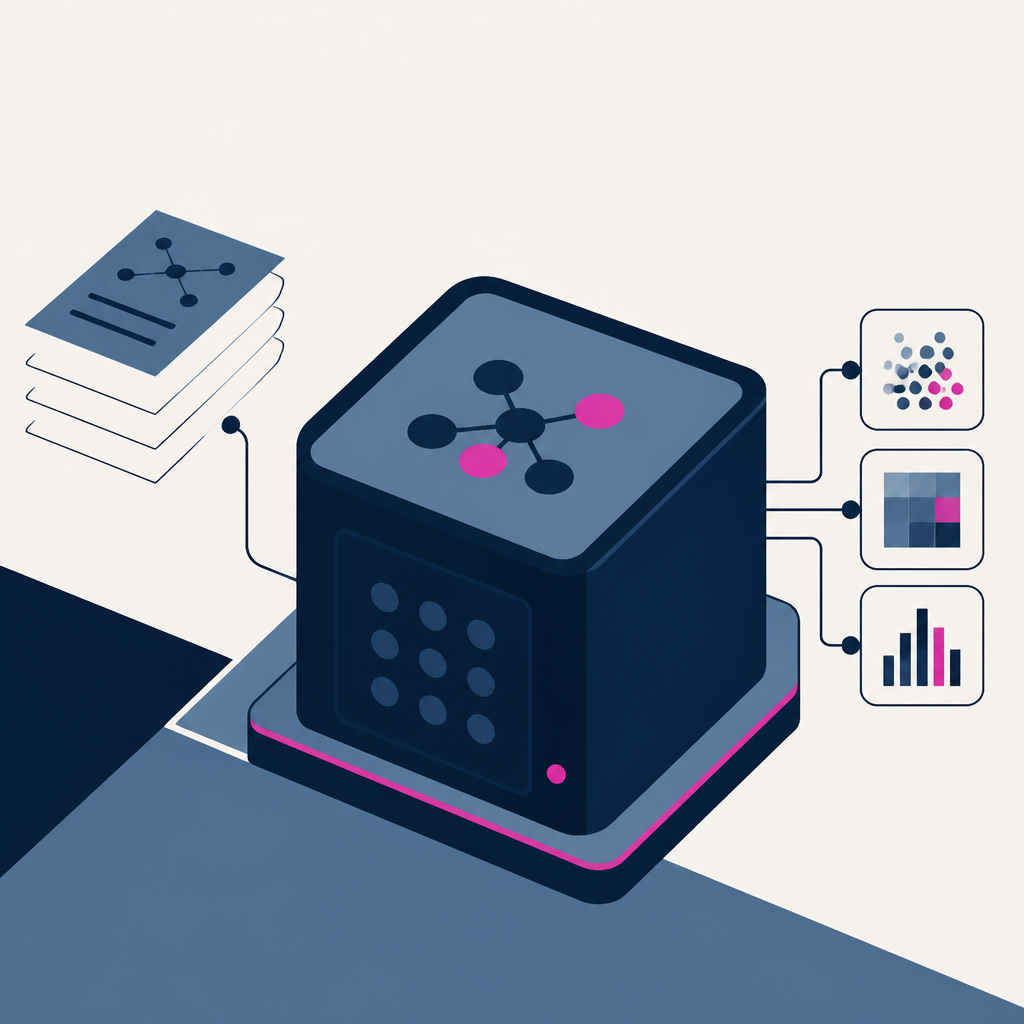
Reading a paper and then trying to reproduce the method on your own data is often where the fun ends. Paper2Agent is meant to fix that. The open-source system takes a paper plus its code, data, or other supplements, pulls out the workflow, and builds a tested toolkit you can query in plain English.
The Stanford team behind it, led by James Zou, describes the idea as more than a nicer interface. The pitch is that papers should stop being static records and become something interactive, even collaborative. The framework, which the researchers detailed in Nature on 16 September, can also connect methods from different papers and let them work together.
Their main proof-of-concept centered on AlphaGenome, the deep-learning model for predicting how DNA mutations affect gene regulation. Feeding Paper2Agent the documentation and code produced 22 tools in about 45 minutes on a personal laptop, with under US $15 in compute costs. The tools were tested automatically, repaired when needed, and then wrapped into a Model Context Protocol server that could plug into Claude Code or another compatible assistant.
The resulting agent did more than answer questions. It could run analyses, return results, and generate visualizations. In the researchers’ testing, it beat both standard Claude with the AlphaGenome codebase and Biomni, a specialist AI co-scientist tool.
Then things got more interesting. The team linked the AlphaGenome agent with two other paper agents and asked about the genetic basis of psoriasis. Together, the agents pointed to GPR137 as a likely causal factor and suggested 10 ways to check that idea. A human picked one test, and the analysis showed changes in gene activity that lined up closely with the psoriasis-linked variant in immune cells.
The limits were just as revealing. Out of 100 computational biology papers the team tried, 26 failed to become agents, usually because of incomplete code, missing documentation, or packages that wouldn’t cooperate. Zou frames that failure as useful evidence: if a paper can’t be agentified, something may be missing or inconsistent. He even imagines future papers arriving with an “agent availability” statement alongside the usual data and code notes.
My take — AI-written commentary, not fact-checked reporting
This is the rare AI-paper story that sounds less like hype and more like software hygiene with a purpose. If a paper can’t be turned into an agent, that’s not a tragedy; it’s a very public reminder that science still ships with broken installs and wishful documentation. That alone is a small civic service.
Read more about this at: IEEE Spectrum
Related stories
 Stanford Researchers Release Paper2Agent: Turning Research Papers Into AI Agents That Reproduce Results and Run on New Data
MarkTechPost · 6 days ago ·
51
Improving the academic workflow: Introducing two AI agents for better figures and peer review
Google Research · 5 months ago ·
5
Stanford Researchers Release Paper2Agent: Turning Research Papers Into AI Agents That Reproduce Results and Run on New Data
MarkTechPost · 6 days ago ·
51
Improving the academic workflow: Introducing two AI agents for better figures and peer review
Google Research · 5 months ago ·
5